

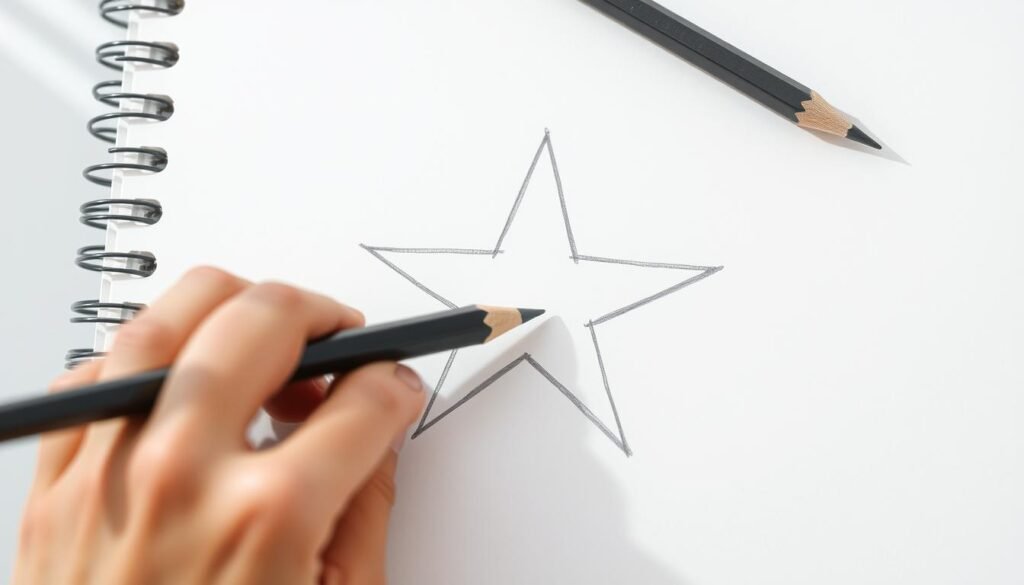
Did you know that drawing a star can be a fun and creative activity? It can be mastered in just a few minutes.
I will guide you through a simple tutorial on drawing a star. It’s easy to learn and fun to do.
In this tutorial, I will show you how to create a beautiful star. By the end, you’ll be able to draw one easily.
Key Takeaways
- Learn a simple method to draw a star
- Understand the basic steps involved in drawing a star
- Create a beautiful star in just a few minutes
- Improve your drawing skills with this simple tutorial
- Enjoy the process of creating art with this fun activity
Introduction to Drawing Stars
Stars have always been a symbol in art, and drawing them is rewarding. It’s not just about making a simple shape. It’s about the details that make your art special.
Why Stars are Fun to Draw
Drawing stars is fun and lets you explore your creativity. The star’s simple shape makes it easy for everyone to draw. You can start with simple shapes and then try more complex ones.
The Versatility of Stars in Art
Stars are used in many types of art, from kids’ crafts to professional art. They can add magic to a night sky scene or be a symbol in abstract art. This makes stars a great subject to learn.
| Art Form | Use of Stars |
|---|---|
| Children’s Crafts | Adding stars to night sky or creating star garlands |
| Abstract Art | Using stars as standalone symbols or patterns |
| Professional Art | Incorporating stars into complex scenes or designs |
For more detailed tutorials on drawing stars, visit DIY.org. They have step-by-step guides and tips for all artists.
Materials You’ll Need
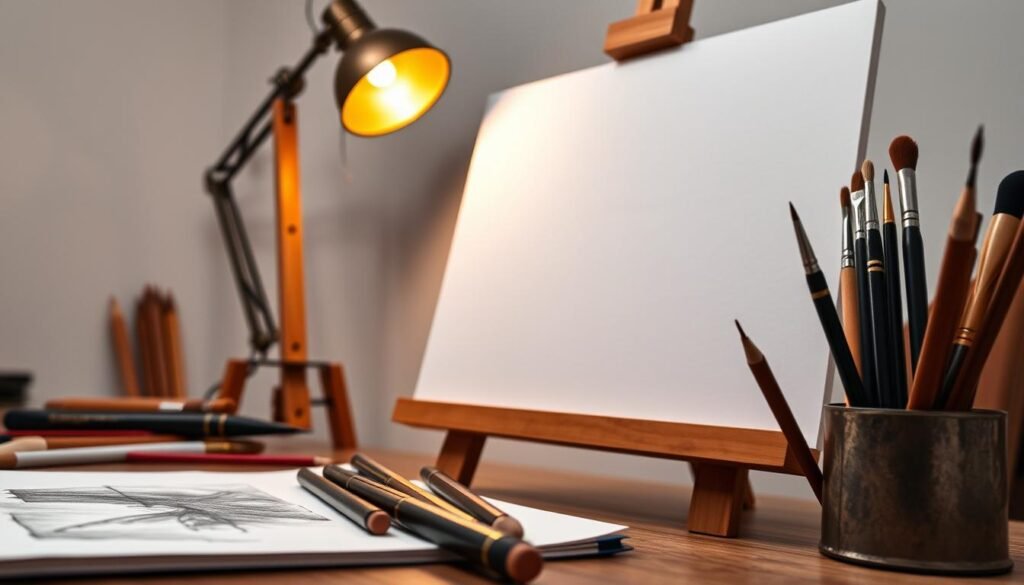
To start drawing a star, you’ll need a few basic materials. These tools help you draw precisely and beautifully. The right tools make the process smoother and improve your drawing experience.
The quality of your materials greatly affects your drawing. Choosing the right tools is crucial for creating a star that meets your expectations.You can learn more about how-to-draw-a-bear.
Essential Drawing Tools
To begin drawing a star, you’ll need some fundamental tools. These include:
- A pencil for sketching the initial outline. A graphite pencil (HB or 2B) is ideal for this purpose.
- Paper that is suitable for drawing. Smooth paper is preferable as it allows for more precise lines.
- An eraser to correct any mistakes. A kneaded eraser is highly recommended because it can be molded into different shapes to erase small areas.
- A ruler or straightedge to help draw straight lines if needed.
Optional Tools to Enhance Your Drawing
While the basic tools will get you started, there are several optional tools that can enhance your star drawing:
- Colored pencils or markers can add a vibrant touch to your star. They are perfect for creating a more dynamic and engaging piece.
- A compass can be useful for drawing perfect circles or arcs, which can be helpful in creating symmetrical stars.
- Blending stumps or tortillon can be used to smooth out pencil marks and create subtle shading.
- Sketching pens or fine liners can be used to outline your star, adding a professional finish.
By equipping yourself with these materials, you’ll be well-prepared to draw a star that is not only precise but also visually appealing. Whether you’re a beginner or an experienced artist, having the right tools is key to unlocking your creative potential.You can learn more about how-to-draw-naruto.
Understanding Star Shapes
To draw stars well, you need to know about the different shapes. Stars aren’t just simple five-pointed shapes. They come in many forms, each with its own look and challenges.
Different Types of Stars
Stars are grouped by how many points they have. The most common types are:
- Five-pointed stars, often used in flags and emblems.
- Six-pointed stars, commonly seen in Jewish culture and known as the Star of David.
- Multi-pointed stars, used for decorative purposes and in various cultural symbols.
Each star type has its own drawing method. For example, a five-pointed star can be drawn using a circle and dividing it into five parts.
| Type of Star | Number of Points | Common Use |
|---|---|---|
| Five-pointed Star | 5 | Flags, emblems, and general decorative purposes. |
| Six-pointed Star | 6 | Jewish culture, symbolizing the Star of David. |
| Multi-pointed Star | Varies | Decorative art, cultural symbols, and patterns. |
Common Mistakes to Avoid
Beginners often make a few common mistakes when drawing stars. These mistakes can be fixed with practice and patience.
- Uneven points: It’s important to make sure the star’s points are evenly spaced for a balanced look.
- Inconsistent size: Keeping the star’s size the same is key, whether you’re drawing one or many.
- Incorrect geometry: Knowing the geometric rules helps avoid shape and size mistakes.
Knowing these common mistakes helps you improve your star-drawing skills. This way, you can make your artwork look more professional.
Basic Techniques for Star Drawing
The foundation of star drawing is built on a few simple yet crucial techniques. Mastering these basics will significantly improve your drawings.
Using Basic Shapes as Guidelines
One key technique is using basic shapes as guidelines. For example, a circle can help draw a star with evenly spaced points. Starting with simple shapes makes the drawing process more manageable and helps achieve better proportions.
The Importance of Symmetry
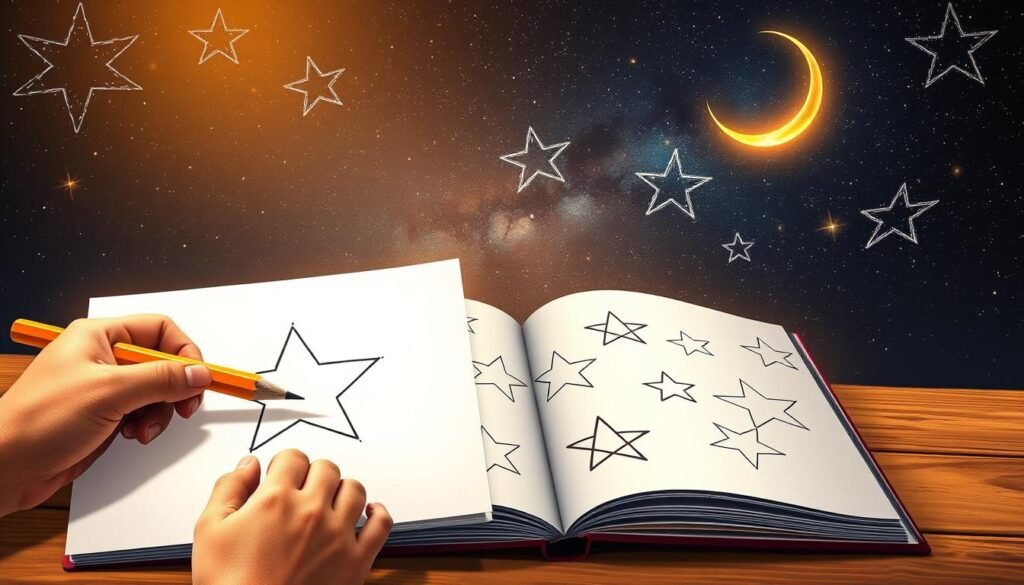
Symmetry is crucial when drawing stars. It ensures the star looks balanced and aesthetically pleasing. To achieve symmetry, use guidelines or simple geometric shapes to help draw evenly spaced points.
Tips for Smooth Lines
Achieving smooth lines is another critical aspect of drawing stars. To do this, use a steady hand or a ruler for drawing guidelines. Practicing regularly will also improve your ability to draw smooth, flowing lines.
| Technique | Description | Benefit |
|---|---|---|
| Using Basic Shapes | Start with simple shapes like circles or polygons. | Helps achieve better proportions and symmetry. |
| Symmetry | Ensure that the points of the star are evenly spaced. | Results in a balanced and visually appealing star. |
| Smooth Lines | Use a steady hand or a ruler for guidelines. | Enhances the overall appearance of the star. |
Step-by-Step Guide: Drawing a Five-Pointed Star
In this section, we’ll explore how to draw a five-pointed star. It’s a fun and rewarding skill. Drawing stars can boost your artistic abilities. With practice, you’ll make perfect stars every time.
Starting with a Simple Outline
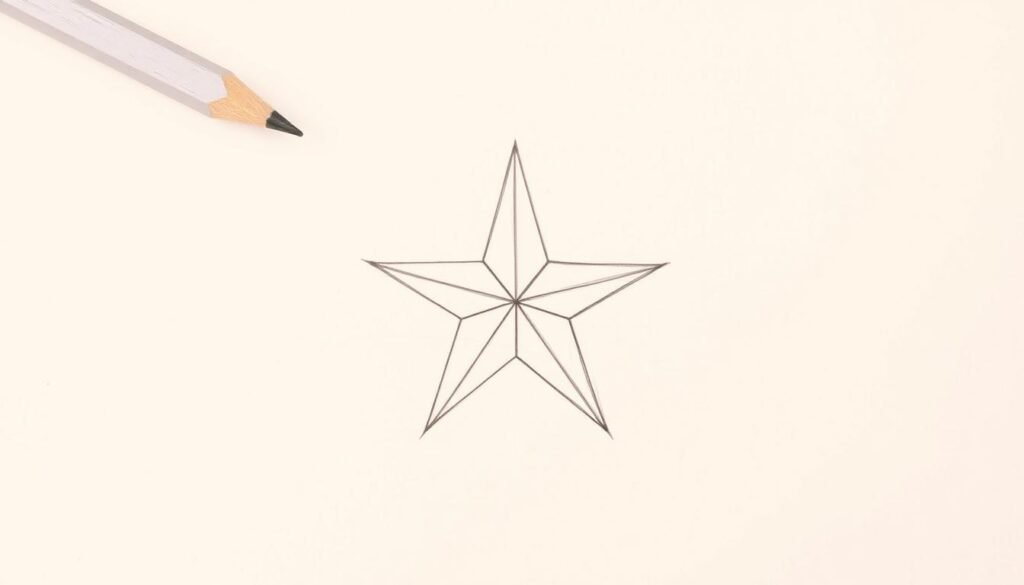
To start, draw a simple outline for your star. You can draw a pentagon or use a compass. This will help you mark points for your star’s shape. For an easier guide, check out a simple star drawing guide online.
Refine Your Shape
After your outline, refine your star’s shape. Connect the dots or points you marked. Make sure your lines are smooth and points are even. This step is key for a symmetrical and beautiful star.
Adding Details and Decoration
Once your shape is refined, add details and decorations. You can shade, add patterns, or color your star. The options are endless, and it’s a chance to show your creativity.
| Step | Description | Tips |
|---|---|---|
| 1 | Sketch a simple outline | Use a compass or protractor for accuracy |
| 2 | Refine your star’s shape | Ensure symmetry and smooth lines |
| 3 | Add details and decorations | Experiment with different patterns and colors |
By following these steps and practicing, you’ll get better at drawing five-pointed stars. You can then try more complex designs and artistic variations.
Variations: Drawing Different Stars
The world of star drawing is vast, with many shapes and styles to explore. As you get better at drawing, try different types of stars to make your artwork more interesting.You can learn more about how-to-draw-people.
Six-Pointed and Eight-Pointed Stars
Drawing six-pointed and eight-pointed stars requires understanding their geometry. A six-pointed star is made by overlapping two equilateral triangles. To draw an eight-pointed star, start with a square and extend lines from the corners.
- For a six-pointed star, begin with two interlocking triangles.
- For an eight-pointed star, use a square as your base and extend the corners.
Cartoon vs. Realistic Styles
The style you choose greatly affects your artwork’s feel. Cartoon stars are playful and exaggerated, while realistic stars focus on detailed appearances.
For a cartoonish look, simplify the star shape and use bold lines and bright colors. A realistic approach might include shading and highlighting for a three-dimensional look.
For more inspiration on drawing stars, check out https://ginangiela.com/easy-star-drawing-ideas-for-beginners/ for ideas and tutorials.
Coloring Your Star
Now that we’ve drawn our star, let’s dive into colors and shading. This step adds depth and character to your artwork. It turns a simple outline into a vibrant visual masterpiece.
Choosing Color Schemes
Picking the right colors is key to bringing your star to life. You can choose colors that match your artwork’s theme or your favorite hues. For a cohesive look, try analogous or complementary colors for contrast.
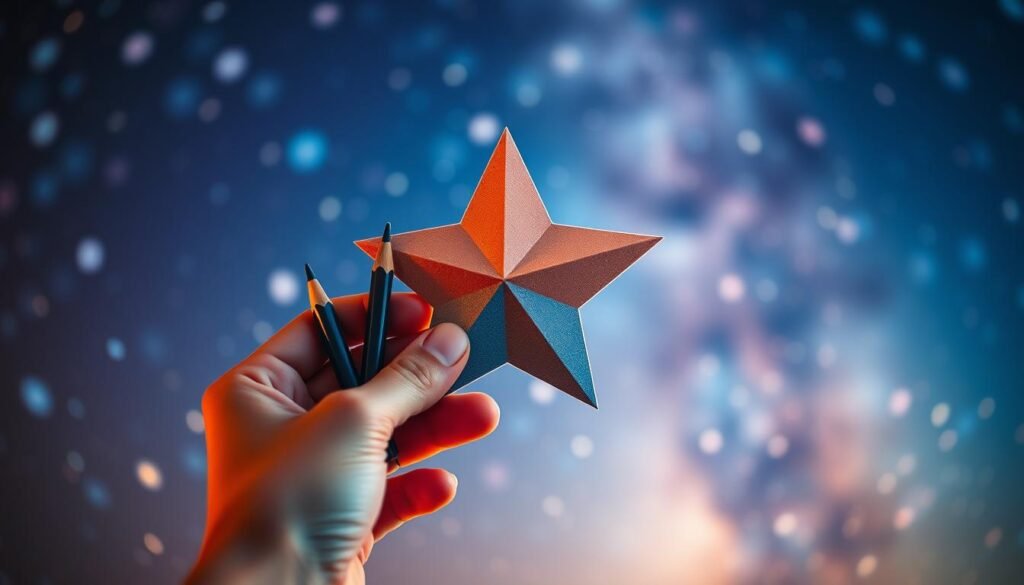
For example, a star in the night sky might use blue and purple shades. Add gold for the star. Trying out different colors can help you find the perfect look.
Techniques for Shading and Highlighting
Shading and highlighting add depth to your star drawing. Shading creates dark and light areas for a 3D look. Use hatching or cross-hatching for the best results.
Highlighting adds light touches to make your star shine. Use a white or light pencil for highlights. Or, leave some areas blank for the brightest spots. As “The right use of light and shadow can make your artwork come alive.”
For more tips on drawing stars and techniques, check out https://tatyanadeniz.com/how-to-draw-star/. It covers the basics and advanced methods.
Mastering coloring, shading, and highlighting can turn your star drawings into breathtaking art. They will captivate and inspire everyone who sees them.
Incorporating Stars into Artwork
Stars can be easily added to bigger art pieces to make them look amazing. Whether you’re making digital art or traditional drawings, stars can give your work a special touch.
Using Stars in Backgrounds
Stars are great for backgrounds because they add depth and interest. To get a starry night look, scatter stars of different sizes and brightness across the background.
Tips for Creating a Starry Background:
- Use a dark blue or black background to make your stars stand out.
- Vary the size of your stars to create a sense of depth.
- Experiment with different shading techniques to give your stars a more realistic appearance.
Complementing Other Elements
Stars can also enhance other parts of your artwork. For instance, they can frame a central figure or add a celestial feel to a landscape.
Consider the following when using stars to complement other elements:
| Element | How Stars Complement It |
|---|---|
| Landscape | Stars add a night sky effect, enhancing the overall atmosphere. |
| Central Figure | Stars can be used to create a halo effect or to frame the figure, drawing attention to it. |
| Abstract Art | Stars can add a sense of wonder and magic to abstract compositions. |
Adding stars to your artwork can make it more visually appealing and tell a story. Try out different techniques and styles to see what works best for you.
Advanced Techniques for Star Design
Exploring advanced star techniques can help you make more detailed and intricate star designs. Once you get the hang of basic star drawing, you can try out more complex methods. This will improve your artwork.
Exploring Patterns and Textures
Adding patterns and textures to your star drawings can make them more interesting. You can use hatching, cross-hatching, or stippling to do this. These techniques help create unique and eye-catching star designs.
For example, you can use a fine-tip pen to draw detailed patterns inside your stars. Or, you can play with different shading techniques to give your stars depth. The most important thing is to keep trying and find what works best for you.
Combining Stars with Other Shapes
Mixing stars with other shapes can make your artwork more complex and interesting. You can pair stars with geometric shapes like circles or triangles. Or, you can use organic shapes like leaves or flowers. This mix can lead to truly unique and captivating art.
Let’s look at a simple table that shows some basic combinations and their effects:
| Shape Combination | Effect |
|---|---|
| Star + Circle | Creates a sense of harmony and balance |
| Star + Triangle | Adds a dynamic, energetic feel |
| Star + Organic Forms | Introduces a natural, whimsical element |
By trying out these advanced techniques, you can really boost your star drawings. Whether you want to add fine details or mix stars with other shapes, the key is to have fun and keep experimenting.
Common Challenges and Solutions
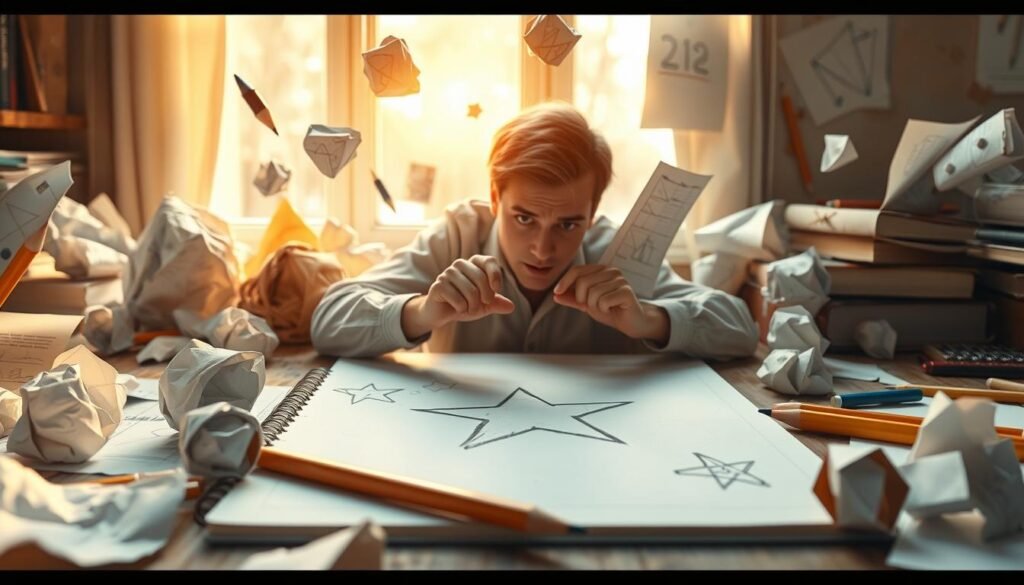
Drawing stars can be tricky, but with the right approach, you can get better. It’s all about precision and practice to draw stars perfectly.
One big challenge is making symmetrical points and smooth lines. Let’s look at some common problems and how to solve them.
Dealing with Imperfections
Everyone makes mistakes when learning. Even pros have small errors. The trick is to reduce these mistakes with better technique and more practice.
To tackle these issues, try these tips:
- Use a light box or tracing paper for better accuracy.
- Practice drawing stars without aids to improve your skills.
- Use a ruler or straightedge for sharp, clean lines.
As artist and instructor, Jane Doe, notes, “The secret to drawing perfect stars lies in the subtleties of your strokes and the patience you bring to your craft.”
Practicing for Improvement
Regular practice is key to getting better at drawing stars. Make time each day to practice drawing different star shapes.
| Practice Technique | Description | Benefit |
|---|---|---|
| Freehand Drawing | Drawing stars without any aids. | Improves hand-eye coordination and fine motor skills. |
| Tracing | Using a light box or tracing paper to draw stars. | Enhances accuracy and precision. |
| Repetition | Repeatedly drawing the same star shape. | Builds muscle memory and improves technique. |
Practicing regularly will help you overcome common challenges and improve your overall drawing skills.
By understanding common challenges and using the right solutions, you can draw stars better. Remember, practice is essential to master any drawing skill.
Conclusion and Next Steps
Now that you know how to draw a star, it’s time to learn more. Start with other simple shapes. Learning to draw can be a fun and creative journey.
Simple Shapes to Explore Next
Try drawing animals or characters next. You could draw a cow or a cartoon character like Sonic. These exercises will help you get better at drawing and feel more confident.
Keep Practicing
Practicing regularly is key to getting better at drawing. Make drawing a regular part of your routine. You’ll see your skills improve over time.
Follow drawing tutorials on social media like Pinterest, Telegram, Twitter, or Reddit. This will keep you updated with new tutorials and coloring pages.