

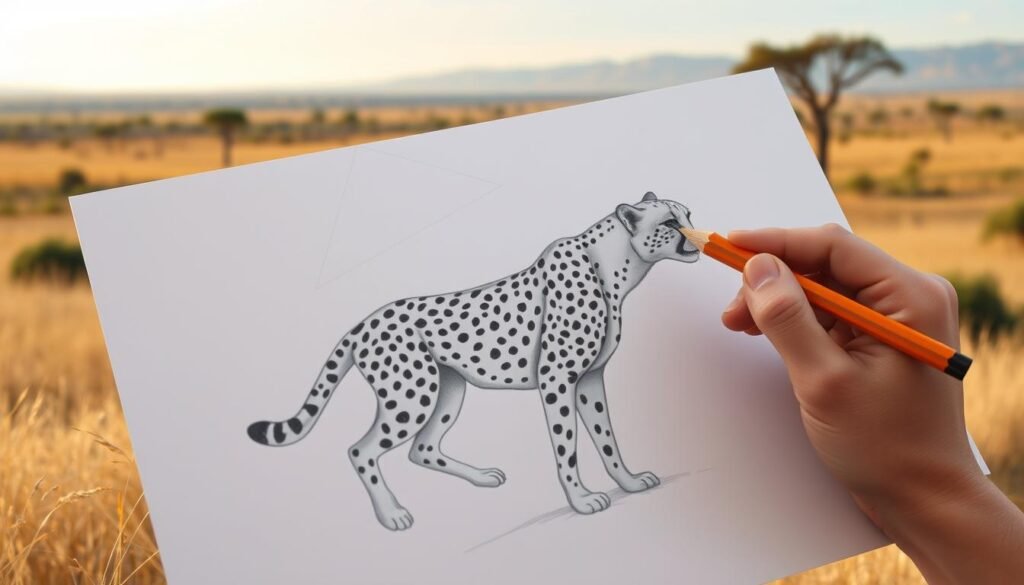
Imagine a creature that can accelerate from zero to sixty-two miles per hour in just three seconds. The cheetah, Earth’s fastest land animal, is a marvel of evolution. Its sleek, powerful form has captivated people for millions of years.
I am thrilled to guide you in capturing this magnificent feline on paper. This process is designed for everyone, from absolute beginners to seasoned artists looking to refine their skills. You will discover the unique anatomy that makes the cheetah so distinct.
We will focus on its iconic spotted coat and graceful body structure. This tutorial breaks down the process into simple, manageable steps. My goal is to make this drawing experience both accessible and deeply rewarding.
By the end, you will have created your own impressive artwork. You will also gain a greater appreciation for wildlife anatomy and improve your observational techniques. Let’s begin this creative journey today.
Key Takeaways
- The cheetah is the fastest land animal, a fact that influences its unique physical form.
- This guide is suitable for artists of all skill levels, including beginners.
- You will learn to capture the cheetah’s distinctive spots and sleek body shape.
- Following the step-by-step instructions will build your confidence in drawing animals.
- The process helps develop important observational and artistic skills.
- You can create a finished cheetah illustration by the end of the tutorial.
Materials and Preparations
A successful artistic project begins with the right preparation. This sets the stage for a smooth and enjoyable creative session. You only need a few basic materials to start.
Most projects require just a pencil and paper. Many tutorials also suggest markers for easy following. Some even offer printable PDFs for each step.
Gathering the Right Tools
Organize your pencils, eraser, and paper within easy reach. This simple act maintains your focus and creative flow. Having your tools ready prevents unnecessary interruptions.
It is also helpful to have reference images available. You can use printed photos or keep this guide open on a tablet. For more detail on patterns, other helpful tutorials offer great insights.
Setting Up Your Workspace
Create an optimal environment for your work. Good lighting is essential—natural light or a bright lamp works well. Ensure you have a clean, flat surface for unrestricted movement.how-to-draw-a-sunset
Set aside about 30 to 60 minutes for this activity. This gives you enough time to work through the steps without rushing. Approach the session with patience and a willingness to learn.
Remember, every artist makes mistakes. They are a natural part of the process. This mindset is especially great for kids and novice artists building confidence.
Step-by-Step Instructions: How to Draw a Cheetah
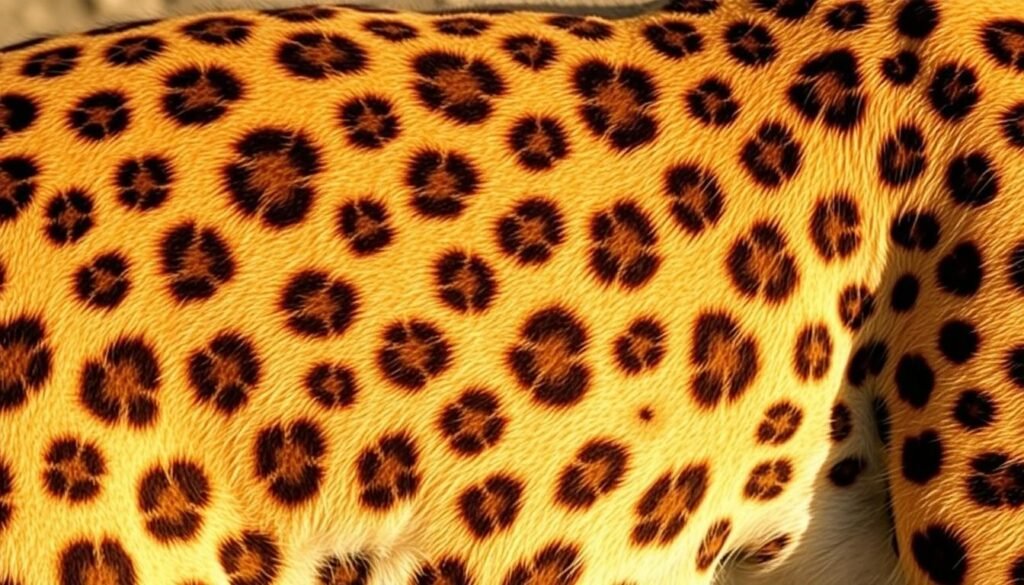
Mastering the art of rendering realistic spots transforms a basic outline into a convincing cheetah illustration. This phase brings your artwork to life with authentic details.
Incorporating Spot Patterns and Details
The signature spots create the distinctive appearance of this magnificent feline. Natural patterns vary in size and spacing across different body areas.how-to-draw-a-simple-rose
Round black markings measure approximately 1.2 inches on actual animals. They distribute evenly across the torso while becoming smaller on facial features and limbs.
| Body Area | Spot Size | Density | Special Characteristics |
|---|---|---|---|
| Back & Sides | Large (1-1.2 inches) | High | Follow body contours |
| Face & Head | Small (0.5-0.8 inches) | Medium | Avoid tear mark areas |
| Legs | Medium (0.8-1 inch) | Medium | Wrap around cylindrical forms |
| Tail | Varies | Low | Rings merge into solid tip |
Work section by section rather than randomly placing markings. This approach maintains consistency throughout your creation. The spots should wrap around the body’s contours for three-dimensional realism.
Leave specific areas spot-free, including the white chest and belly. The distinctive facial tear marks also remain clear of patterns. For additional guidance on feline anatomy, explore this comprehensive cheetah drawing resource.
Final details include subtle shading within spots and definition around facial features. The tail completes with black rings merging into a solid tip. These finishing touches elevate your artwork from simple sketch to professional illustration.
Tips, Techniques, and Common Pitfalls

Artistic growth comes from combining technical knowledge with creative experimentation. This section explores advanced methods to elevate your wildlife illustrations beyond basic outlines.
Understanding Cheetah Anatomy and Proportions
The streamlined form of these magnificent animals reflects their status as the fastest land mammal. Their unique body structure presents specific challenges for artists.
| Anatomical Feature | Artistic Importance | Common Mistakes | Solution |
|---|---|---|---|
| Long, muscular limbs | Conveys speed and power | Making legs too short or thick | Study reference photos for proportions |
| Deep chest and narrow waist | Creates aerodynamic silhouette | Overemphasizing chest size | Use gentle curves for natural flow |
| Small head relative to body | Enhances speed appearance | Drawing head too large | Measure head-to-body ratio carefully |
| Spotted coat pattern | Defines species identity | Random spot placement | Follow natural pattern flow |
Enhancing Details with Effective Line Work
Varied line weight adds depth and dimension to your illustration. Light lines suggest distant contours while bold strokes emphasize foreground elements.
This technique brings the distinctive spotted pattern to life. It helps differentiate individual spots from the base coat color.how-to-draw-a-spongebob-squarepants
Personalizing Your Artwork and Practice Strategies
Once you master basic anatomy through this tutorial, develop your unique style. Experiment with different poses and environments for your draw cheetah projects.
I recommend maintaining a dedicated sketchbook for animal studies. Regular practice builds confidence in rendering these magnificent big cats. For continued learning, explore this comprehensive cheetah drawing resource.
Remember that artistic skill develops through patience and consistent effort. Each attempt brings you closer to mastering wildlife illustration.
Conclusion
You have now completed a journey from basic shapes to a detailed illustration of the world’s fastest land animal. Following these easy steps allows anyone, especially kids and novice artists, to learn draw this magnificent creature.
The techniques you practiced today—observing proportions and applying the distinctive spotted pattern—are skills you can use for other animals and big cats. I encourage you to practice with different poses, like a cheetah running, to build confidence.
Remember, every artist begins with simple steps. Your dedication is the key to growth. For further guidance, revisit this comprehensive cheetah drawing tutorial anytime.
Keep exploring your creativity. This step-by-step process is just the beginning of your exciting artistic adventure.