

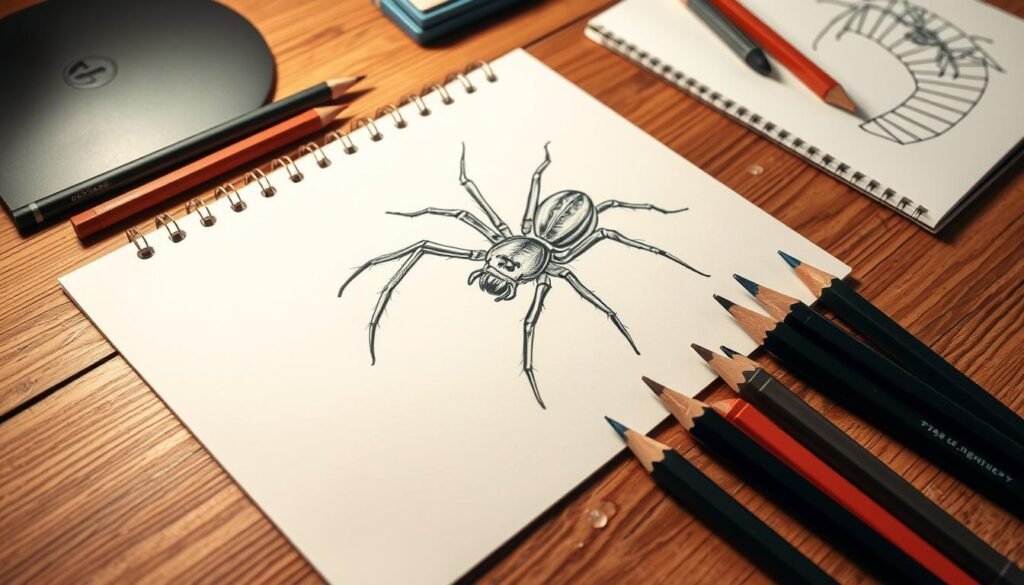
Did you know a spider’s body has only two main parts, unlike an insect’s three? This simple fact is the secret to creating an accurate illustration. Understanding this basic anatomy makes the entire process much less intimidating.
I designed this guide for everyone, from absolute beginners to artists wanting to refine their technique. You will find that creating a spider is easier than you might think. We break it down into clear, manageable stages.
This method focuses on building your creature from fundamental shapes. You will gain a solid foundation in spider anatomy. This knowledge allows for incredible customization later on.
Whether you’re preparing for Halloween, working on a school project, or simply exploring art, this step-by-step guide is perfect. It is an excellent activity for kids and adults alike. By the end, you will have the confidence to create your own unique arachnid artwork.
Key Takeaways
- Spiders have two main body sections: the cephalothorax and the abdomen.
- All eight legs attach to the front section, the cephalothorax.
- Starting with basic shapes is the key to an accurate drawing.
- This tutorial is designed for artists of all skill levels, including kids.
- Mastering the basic technique allows for easy customization of your spider.
- Understanding anatomy is the foundation for a realistic final result.
Gathering Materials and Preparing Your Workspace
Before your pencil touches the paper, a well-prepared workspace and the right tools can make all the difference in your artistic creation. I recommend gathering your supplies beforehand for a smooth, enjoyable experience. This preparation allows you to focus entirely on the creative process.
Choosing the Right Tools for Drawing
You can create a fantastic illustration with simple materials. A standard pencil for your initial sketch and a good eraser are essential. For the final lines, a fine-liner pen or a brush pen like the Tombow Fudenosuke creates excellent texture.how-to-draw-a-turtle
This brush tip mimics the hairy look of a spider’s body and legs beautifully. If you enjoy coloring, markers like Ohuhu Honolulu offer great shades for realistic tones. A white paint marker adds brilliant highlights for dimension.
Quality paper, such as Canson Illustration, handles markers well. But remember, basic supplies work perfectly. This technique is adaptable, making it a great project for autumn crafting for children or detailed adult art.
Setting Up a Comfortable Workspace
Find a spot with good, natural light if possible. A flat, clear surface is your best friend here. Keep all your tools within easy reach to maintain your flow.
I suggest having a reference image nearby for guidance. Don’t forget some extra paper for quick practice sketches. Getting that first circle and line just right on a scrap piece builds confidence for your final drawing.how-to-draw-a-house
Understanding Spider Anatomy for Accurate Sketching
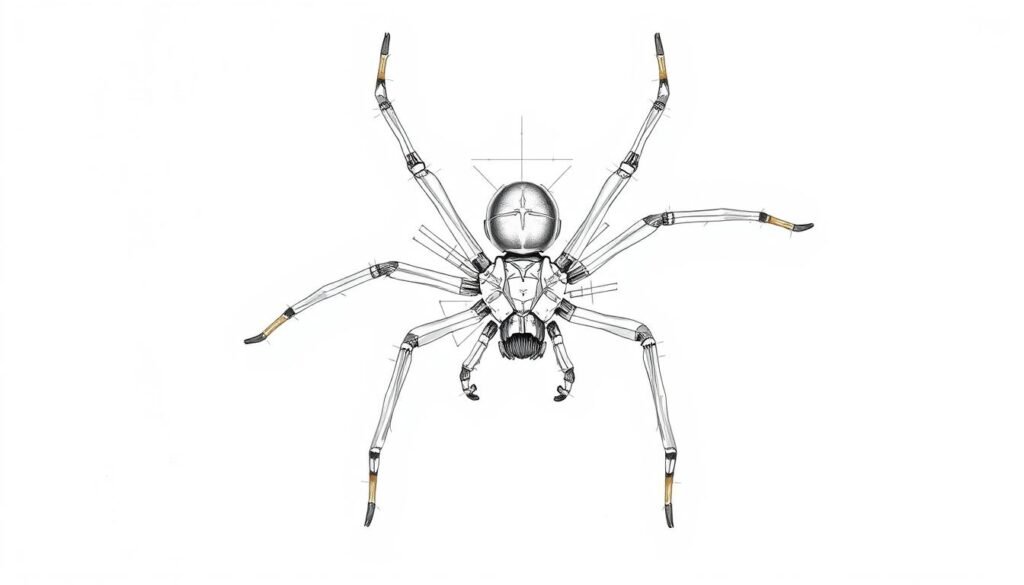
Spider anatomy holds fascinating secrets that transform simple sketches into authentic representations. Knowing these biological details separates amateur attempts from professional-looking artwork.
Exploring the Spider’s Two Main Body Parts
A spider’s body features two primary sections: the cephalothorax and abdomen. The cephalothorax combines the head and thorax into one unit. This distinguishes spiders from insects, which have three separate body segments.
All eight legs attach exclusively to the cephalothorax. Understanding this placement prevents common drawing errors where legs appear connected to the wrong section.how-to-draw-a-shark
Learning About Spider Legs and Their Structure
Spider legs consist of five distinct segments that create their characteristic jointed appearance. Each segment bends at natural points, allowing for realistic positioning in your artwork.
The legs connect high on the cephalothorax, creating that upward-reaching posture. This knowledge helps you learn draw more dynamic poses.
Fun Facts That Inspire Your Drawing
Spiders possess pedipalps near their front legs—small appendages used for sensing. They also have chelicerae containing fangs at the front of their head.
Most spiders have eight eyes arranged in specific patterns. Including these details adds remarkable realism to your spider illustration.
How to Draw a Spider: Step-by-Step Tutorial
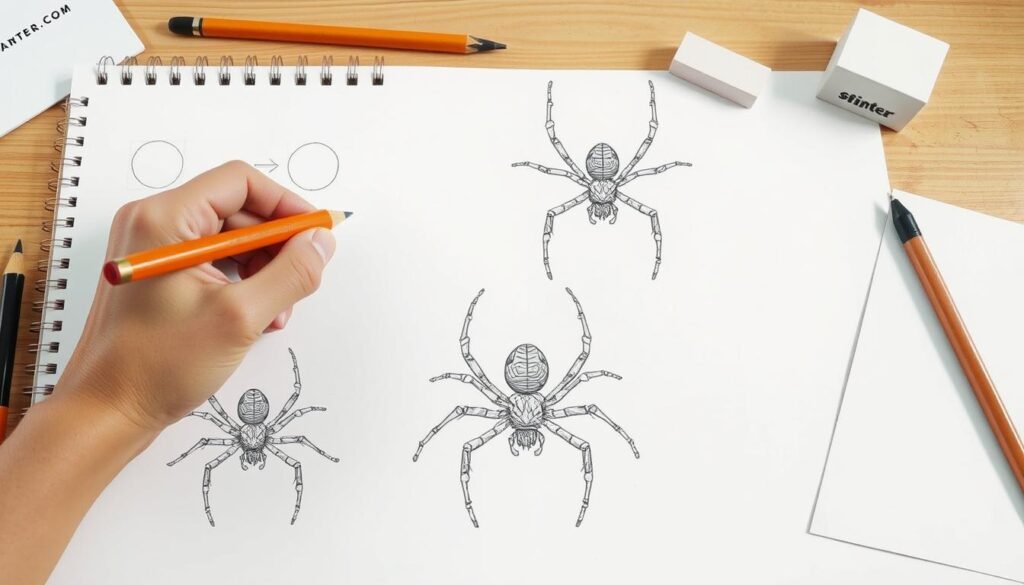
The moment has arrived to transform your knowledge into a detailed spider illustration through clear, sequential steps. I will guide you through each stage of this creative process.
Starting With Basic Shapes and Guidelines
Begin with one large circle for the main body section. An oval shape works equally well if your circle isn’t perfect. Add a smaller circle overlapping the first to form the two body parts.
Create guidelines for proper leg placement using straight lines in an X-pattern. These lines ensure anatomical accuracy in your final illustration.
Sketching the Head, Body, and Legs
Define the head using a wide U-shape beneath the large circle. Add chelicerae and small circles for eyes to give your creature character.
Follow the guidelines to sketch eight legs with their characteristic five-segment structure. The first pair angles inward while the second stands nearly vertical.how-to-draw-anime-eyes
Adding Details: Fangs, Eyes, and Texture
Include two small fangs at the front of the head area. Add texture with short lines on the body and leg joints for a realistic hairy appearance.
This approach helps you learn draw techniques that work for various spider species. Mark patterns on the head for additional detail.
Refining Your Drawing With Outlines and Personal Touches
Outline your creation with a fine-liner or brush pen, tracing only certain portions of the initial circles. Add thickness to legs with secondary lines.
Color your illustration starting with lighter tones and building shadows. Finish with white highlights for dimensional quality that makes your spider pop.
Conclusion
With your new spider drawing skills, a world of creative possibilities now opens up. You have mastered the fundamental techniques that form the foundation of realistic creature illustration.
I encourage you to experiment with different body shapes and leg positions. Try creating various spider species by adjusting proportions and adding unique textures. These drawing tutorials provide flexible methods suitable for all skill levels.
Your artwork serves multiple purposes, from Halloween decorations featuring a pumpkin companion to educational projects for kids. Consider sharing your creations in a social media post or using them for seasonal crafts.
Expand your skills by exploring additional tutorials featuring bats, ghosts, or other spooky characters. Regular practice builds confidence, and each new drawing strengthens your artistic portfolio.
This journey demonstrates that art remains accessible to everyone. I invite kids and families to continue exploring creative projects together throughout the year.