

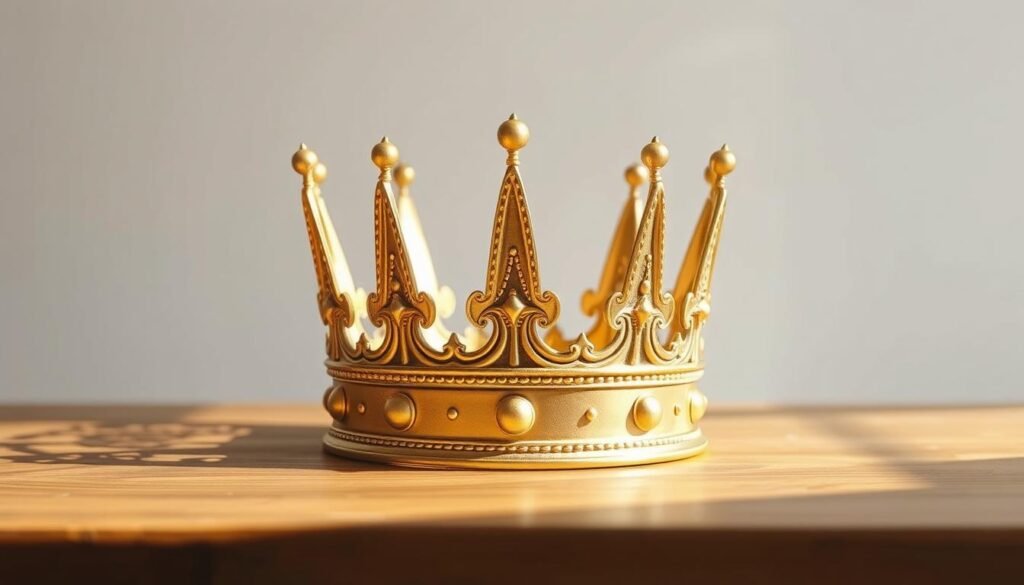
Did you know that crowns appear in over 80% of the world’s cultural histories as symbols of power and achievement? This universal appeal makes mastering their form a valuable artistic skill.
I will guide you through a process that simplifies this classic subject. My method blends traditional principles with practical shortcuts. This approach makes creating a regal design straightforward and enjoyable for all skill levels.
We will build the entire structure from basic geometric shapes. This foundational technique provides a clear path from initial sketch to final decorative details. You will gain the freedom to customize your creation, imagining anything from a jewel-encrusted king’s crown to a delicate, elegant design.
By carefully following my step instructions, you will develop both technical skill and creative confidence. Prepare your materials, and let’s begin this rewarding artistic journey together today.
Key Takeaways
- Master a foundational technique applicable to various crown styles.
- Build complex designs using simple geometric shapes as a starting point.
- Follow a logical progression that gradually adds complexity.
- Gain the creative freedom to customize your final piece.
- Develop both technical skill and artistic confidence.
- The process is designed to be accessible for beginners and experienced artists.
Gathering Tools and Setting Up Your Workspace
Proper preparation is the cornerstone of any successful artistic endeavor, and creating a regal symbol is no exception. Investing a small amount of time now to organize your materials and space will pay significant dividends throughout the creative process.
Essential Supplies and Materials
You will need just a few key items to begin. Gather a sheet of standard drawing paper, a reliable pencil, a good eraser, and some metallic colors for the final embellishments.
The right pencil is crucial. An HB or 2B grade offers excellent flexibility. You can sketch light, erasable guidelines and then apply darker pressure for the final lines and intricate details.
While metallic pencils or crayons perfectly capture a crown’s luxurious shine, you are not limited. Regular coloring tools can achieve a similar metallic effect with skilled shading applied later.
| Tool | Primary Use | Recommendation |
|---|---|---|
| Pencil (HB/2B) | Sketching guidelines & final lines | Allows for light and dark pressure control |
| Eraser | Cleaning construction lines | Keeps the final drawing clean |
| Metallic Colors | Adding regal shine and finish | Ideal for a realistic appearance |
Finding Your Drawing Space
Choose a comfortable area with ample room to move your arm. Good lighting is essential to see all the fine details clearly as you work.how-can-i-draw-an-elephant
Before starting your drawing, center yourself on the page. Lightly point to the middle of your paper with your finger or pencil. This simple action helps your eyes gauge the available space, ensuring a well-proportioned and centered composition.
This thoughtful setup allows you to focus entirely on the creative aspects of your drawing.
Understanding the Basic Shapes and Guidelines
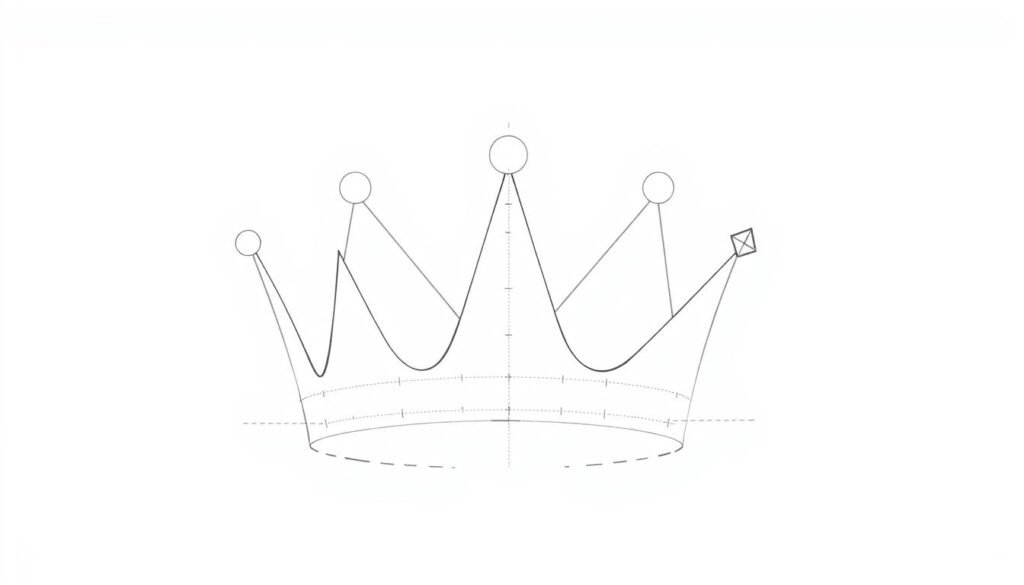
Professional artists worldwide rely on a fundamental technique: deconstructing intricate designs into basic building blocks. This approach transforms complex subjects into manageable components.
Using Simple Shapes for Foundation
Every regal symbol originates from elementary geometric forms. Triangles create distinctive peaks, while rectangles establish the headband foundation. Circles add decorative elements and curvature.
This systematic way of thinking allows you to build complex structures confidently. You can reference this comprehensive guide for additional shape-based techniques.
Establishing Key Guidelines
Construction guidelines serve as your artistic roadmap. Begin with an inverted T—one vertical line intersecting a horizontal line at the top.
These temporary marks ensure symmetry and proportion. Draw them lightly for easy erasure later.
“Great art begins with simple structures that support complex beauty.”
| Geometric Shape | Primary Function | Visual Impact |
|---|---|---|
| Triangles | Create peak structures | Defines regal silhouette |
| Rectangles | Forms headband base | Provides structural foundation |
| Circles | Adds decorative elements | Enhances dimensional quality |
Mastering these basic shapes and guidelines provides a solid foundation for any royal design project.
Mastering How to Draw a Crown

Building upon our geometric foundation, we now transform simple guidelines into the distinctive silhouette of royalty. This stage bridges abstract construction lines with the iconic form that symbolizes authority across cultures.
Drawing the Crown Headband
Begin by creating two parallel curved lines at the bottom of your construction framework. These marks establish the headband that would rest comfortably on a monarch’s head.
Connect these parallel curves with small curved lines at each side. This technique creates the three-dimensional appearance of a circular band. The method ensures your royal symbol has proper depth rather than appearing flat.how-to-draw-the-airplane
Shaping Peaks and Decorative Details
Extend three vertical lines upward from your headband. These guides determine the height and positioning of the distinctive peaks.
Place small circles at the top of each vertical line. These serve as decorative finials characteristic of traditional royal designs. You can later customize these into more elaborate symbols if desired.
The rectangular foundation at the base, combined with curved corners, establishes the circular shape essential for proper proportion. Mastering these foundational elements provides the structural integrity needed before adding intricate ornamentation.
Step-by-Step Instructions to Draw the Crown
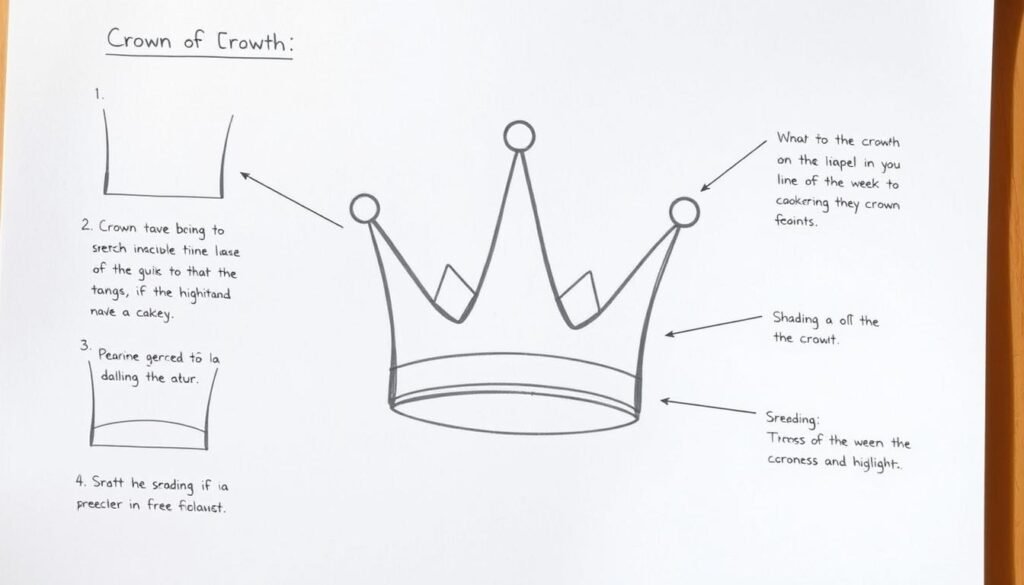
Executing the royal design involves building upon our foundation with precise, methodical instructions. I will guide you through each stage systematically.
Sketching Primary Lines and Structures
Begin by placing a dot near the page’s center. Mark another point two finger widths below it. Connect these points with a wide oval shape.
From each end of the oval, extend upward vertical lines. These determine the headband thickness. Connect them with a curved line matching the oval’s top curve.
Creating Triangles, Rectangles, and Circles
Add four new lines extending upward to define peak height. Connect these to form triangular shapes. Include smaller triangles behind the main peaks for depth.
Draw curved “V” shapes between the circles at the top. Add two more straight lines down each side for outer edges.
Adding Gems and Flourishes
Between the peaks, create arch shapes resembling small rainbows. Designate areas for jewels using rounded rhombus shapes.
Decorate the headband with three circles and two hexagons. Add symmetrical patterns to maintain balance throughout your creation.how-can-i-draw-an-elephant
| Construction Step | Primary Shapes Used | Visual Result |
|---|---|---|
| Foundation Setup | Oval, Vertical Lines | Basic Crown Structure |
| Peak Formation | Triangles, Curved Lines | Distinctive Silhouette |
| Decoration Phase | Circles, Arch Shapes | Ornamental Details |
Enhancing Your Crown with Shading and Final Details
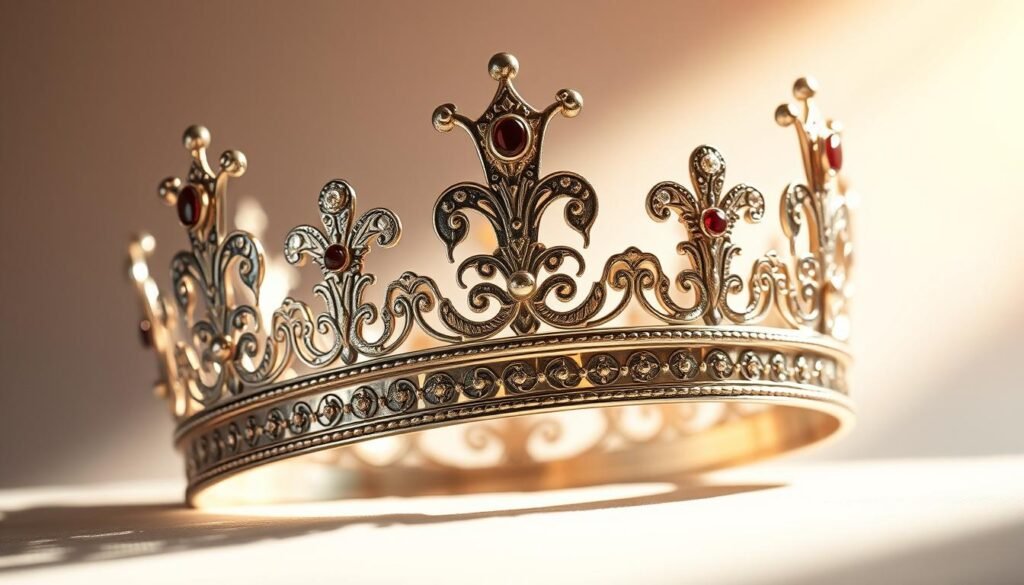
Shading and texture are the secret ingredients that transform a flat sketch into a majestic, three-dimensional object. This final stage focuses on applying light, shadow, and refined details to make your creation look realistic.
Incorporating Tone Values and Cross Hatching
First, decide where your light source is. This determines where shadows fall. Use simple hatching for lighter areas.
For deeper shadows, apply cross hatching. Draw intersecting lines. Use thicker lines under the crown’s base and on the shaded sides.
This technique defines the glossy surface. It makes the metallic material shine. For more advanced shading methods, this comprehensive guide offers excellent insights.
Final Touches on Ornamentation and Outlines
Enhance your drawing by doubling lines at the bottom. This makes the headband look thicker. Add curved lines to decorative elements for clarity.
Define your jewels with different shades. Use light tones on the top of each diamond or gem where light hits. Use dark tones at the edges.
Finally, trace your final lines with a black marker. Erase any pencil guidelines. Your regal crown is now complete, rich with details and dimension.
Conclusion
You have now completed a comprehensive journey from basic shapes to a finished royal emblem. Congratulations on mastering this classic artistic subject.
The techniques you learned today provide a solid foundation. You can create various styles, from a simple king’s design to elaborate creations. The basic structure remains consistent even when you customize decorative elements.
Remember that practice develops skill. Each time you make a crown, your proportions and details will improve. Experiment with different jewel placements and headband variations.
These skills transfer to other artistic projects. The method of breaking complex objects into simple shapes serves you well beyond this single subject.
Your finished work should look professional and dimensional. Continue exploring and developing your unique artistic voice.aeroplane-how-to-draw