

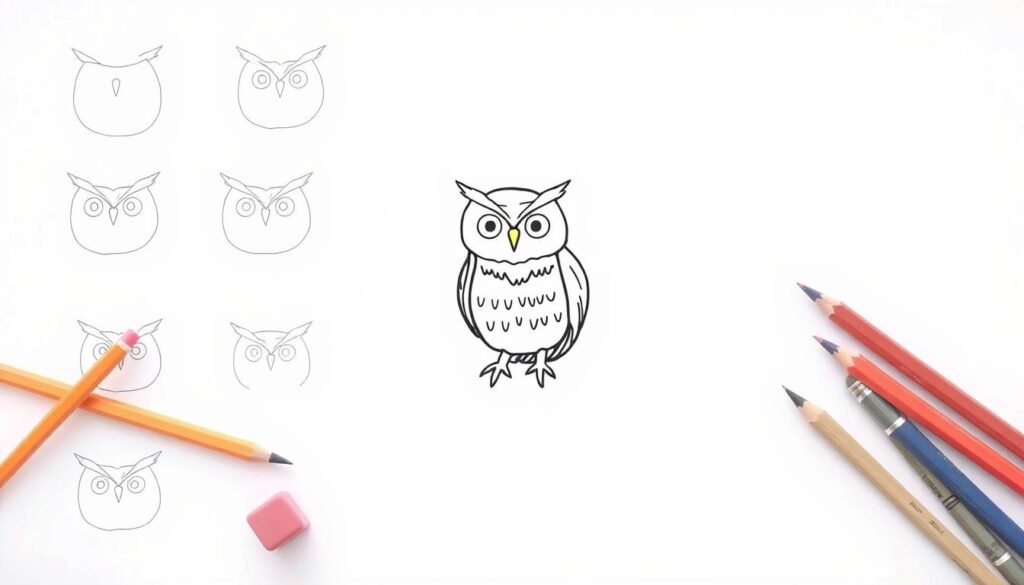
Did you know there are over 200 distinct species of owls in the world? This incredible diversity provides a vast well of inspiration for any artist. Each species boasts unique characteristics, from feather patterns to facial structures.
I find these birds to be excellent subjects for artistic exploration. Their large, expressive eyes and intricate plumage offer a wonderful challenge. This guide is designed to help you capture their essence on paper.
My approach breaks down the process into manageable stages. We will start with fundamental shapes. Then, we will build up to detailed textures and shading. This method works for various skill levels and artistic mediums.
Whether your goal is a whimsical cartoon or a realistic portrait, the core principles remain the same. Understanding basic anatomy is key. Yet, I always encourage creative freedom in your final piece.
Key Takeaways
- Over 200 owl species offer endless artistic inspiration.
- The guide covers multiple styles, from simple to realistic.
- Learn to leverage distinctive features like large eyes and facial disks.
- Master a progressive technique starting with basic shapes.
- The lesson adapts to your preferred tools, like pencils or markers.
- Gain confidence through structured, easy-to-follow instructions.
- Apply professional strategies for proportions and finishing touches.
Introduction to Drawing Owls
Among the most fascinating subjects for artists are owls, with around 200 species offering unique inspiration. Each bird presents distinct characteristics that translate beautifully into art. From majestic eagle owls to delicate elf owls, the variety is astonishing.how-to-draw-a-car
Barn owls showcase particularly interesting features with their heart-shaped facial disks. These function like satellite dishes for precise sound location. Such anatomical details make them compelling subjects for detailed artwork.
Why I Love Drawing Owls
I find creating owl artwork incredibly rewarding because of their expressive features. Their wide, captivating eyes immediately engage viewers emotionally. This connection is stronger than with many other animal subjects.
The artistic versatility of these birds allows for both whimsical and realistic approaches. You can explore various textures from fluffy body feathers to structured wing plumage. Each drawing owl session teaches something new about observation and technique.
Overview of the Drawing Process
My systematic approach begins with fundamental shapes and builds toward detailed textures. This method works for various skill levels and artistic tools. The time invested pays dividends as techniques apply to other subjects.how-to-draw-a-star
The process accommodates different artistic preferences. Some creators prefer spontaneous methods while others benefit from careful planning. Both approaches can yield stunning results with proper guidance.
Gathering Your Materials and Tools
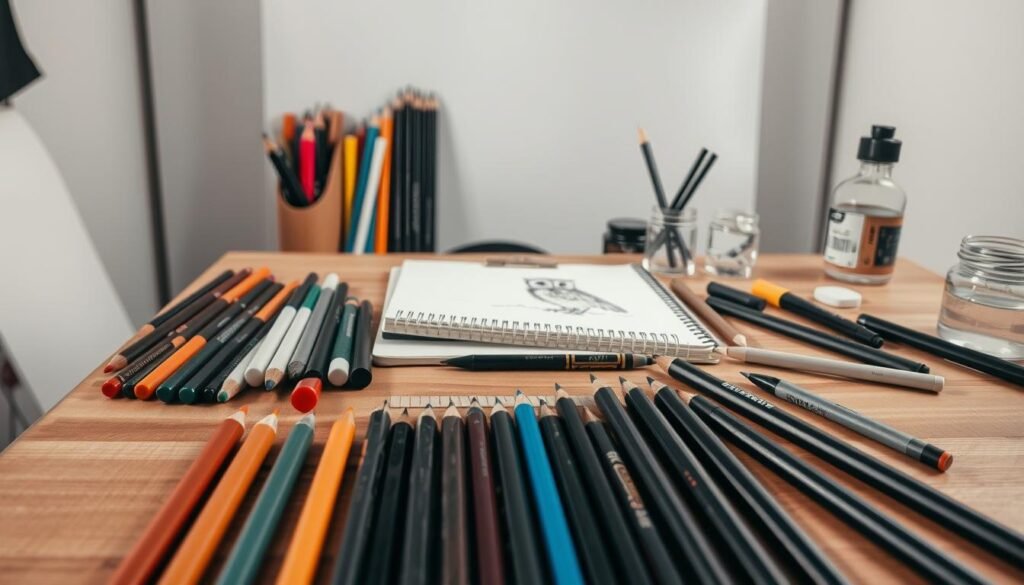
Selecting the right materials is the first practical step toward creating your owl artwork. You do not need expensive supplies to begin. I recommend using basic tools you already own.
Pencil, Markers, and Paper Options
A standard graphite pencil is my go-to tool for initial sketches. It allows for easy adjustments. You can then move to markers for bold colors or colored pencils for subtle shading.
The type of paper you choose matters greatly. Smooth surfaces are ideal for detailed pencil work. Heavier paper handles markers without bleeding.
I often use small Artist Trading Cards for practice. This paper format makes experimenting with color combinations quick and efficient.
Additional Art Supplies and Their Uses
Several other tools can elevate your art. A quality eraser is essential for corrections and creating highlights. White gel pens add brilliant specks of light to eyes and feathers.
Using toned paper provides a creative mid-tone foundation. This technique can speed up your shading process. It helps achieve a dynamic look with less effort.
| Paper Type | Best Use | Key Advantage | Consideration |
|---|---|---|---|
| Printer Paper | Quick sketches, practice | Widely available, cost-effective | Not suitable for wet media |
| Drawing Paper | Detailed pencil work, final pieces | Smooth surface for fine lines | Lightweight versions may buckle |
| Cardstock | Markers, mixed media | Durable, prevents bleed-through | Can be too textured for fine detail |
| Toned Paper | Advanced shading techniques | Built-in mid-tone for efficiency | Limited color options |
Understanding Owl Anatomy and Proportions
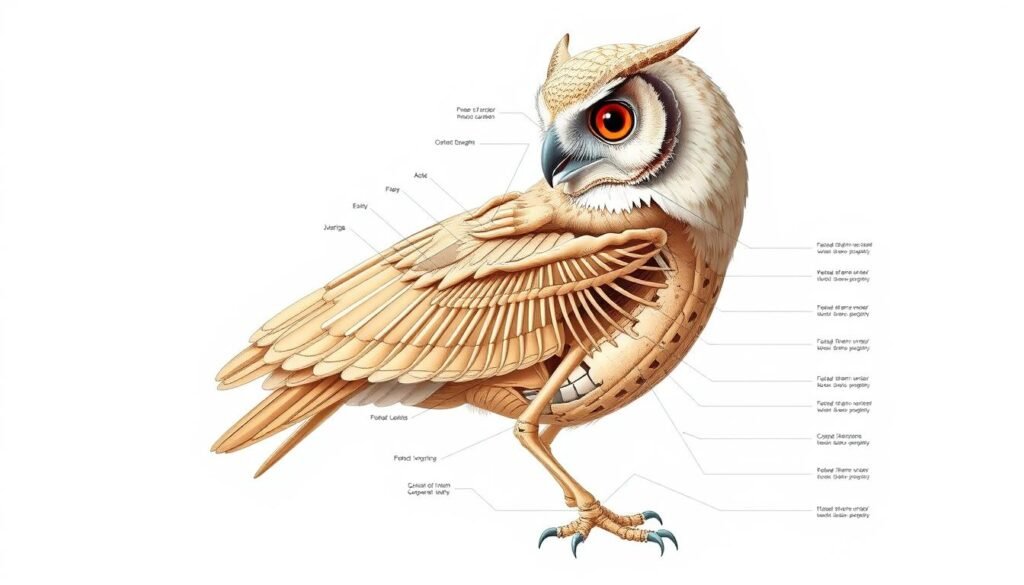
Anatomical accuracy separates amateur sketches from professional-looking owl artwork. I study these birds’ underlying structure to create convincing illustrations. Proper proportions form the foundation of realistic representations.
Key Features: Head, Eyes, and Beak
The head presents one of the most distinctive details in owl anatomy. Its width and height remain nearly equal, creating that iconic rounded shape. This proportional relationship immediately identifies the subject as an owl.
Large eyes dominate the face, positioned close together for an intense gaze. The small, hooked beak sits centrally between them. Feathers often partially conceal this important facial part.
Body, Wings, and Talon Details
The body maintains specific proportional relationships with the head. I use the 2.5:1 ratio as my guiding principle. This means the head fits into the overall body height approximately two and a half times.
Wings display fascinating feather patterns with elongated segments. Talons feature four toes, including one facing backward for perching stability. Different texturing techniques capture the varied feathers throughout the body.how-to-draw-a-turkey
These anatomical details provide endless opportunities for authentic artwork. Understanding them elevates any illustration of these remarkable owls.
Step-by-Step Sketching: Laying the Foundation
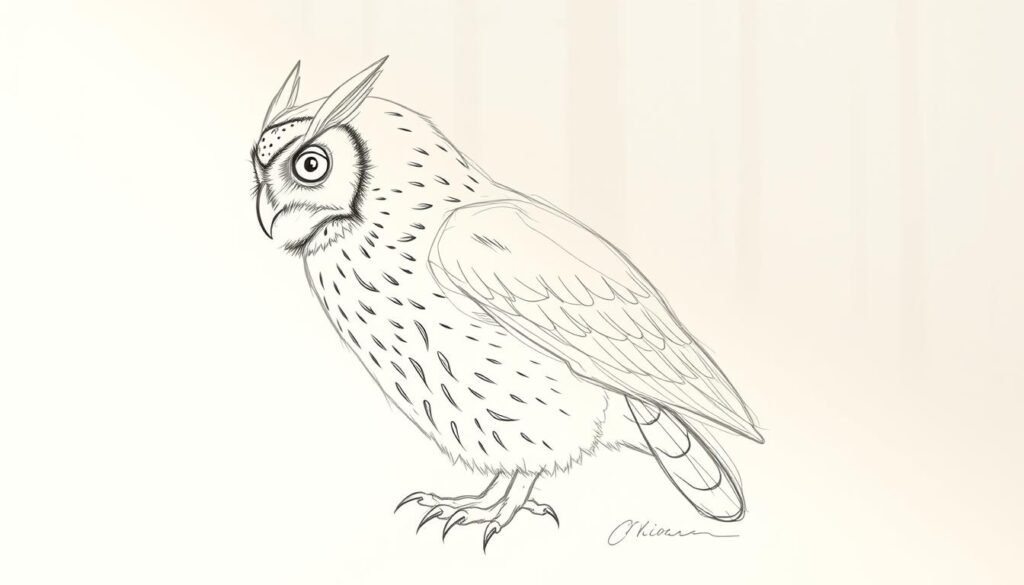
The initial sketching phase focuses on constructing the framework using simple geometric elements. This systematic approach transforms complex forms into manageable components. I begin with light, flexible marks that allow for easy adjustments.
Using Basic Shapes to Outline Your Subject
I start with fundamental geometric forms to establish the overall structure. A rounded square or oval creates the main owl body shape. This first step determines the subject’s position and scale on the paper.
For the head, I position a sideways oval that slightly overlaps the body. This creates a natural connection between these primary shapes. Two large circles mark the eye placement near the horizontal guideline.
The wings take form as teardrop shapes that are wider at the top. They taper to points at the bottom, overlapping the body outline. I draw small circles for facial features at guideline intersections.
Establishing Proportions and Guideline Placement
Proper proportions begin with dividing the head into quarters using crossing lines. This creates a crucial framework for symmetrical feature placement. The horizontal line guides eye positioning.
I maintain light, loose strokes throughout this foundational step. These guide lines serve as adjustable references rather than final contours. The geometric shape framework ensures accurate proportions before adding details.how-to-draw-a-bird
Each circle and shape contributes to the overall structure. This methodical approach builds confidence in the composition. The foundation supports all subsequent detailing phases.
Detailed Guide: How to Draw an Owl
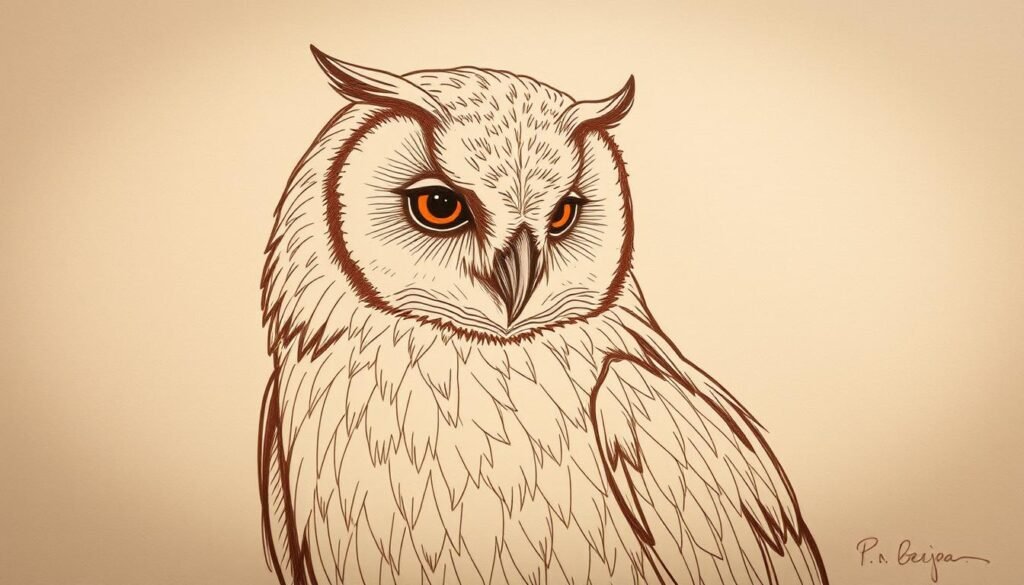
This phase bridges the gap between structural foundations and lifelike representation. I focus on transforming geometric shapes into organic forms that capture the bird’s distinctive character.
Refining the Sketch with Curved and Angular Lines
I begin replacing basic shapes with more natural contours. For the head, I use curved lines that follow the initial oval shape but add subtle variations.
The beak takes form as an upside-down triangle starting from the middle guideline. I extend two curved lines upward to create ear tufts, then bring them back down in triangular shapes.
Symmetry remains crucial throughout this process. I constantly reference my guidelines to ensure balanced features on both sides of the face.
Incorporating Texture and Feather Details
Texture development separates basic sketches from professional illustrations. I make contour lines less smooth, adding small waves to suggest fluffy feathers.
For the body, I use short hatches in small groups to build up texture gradually. The facial disk receives special attention with stippling for soft feathers.
Wing patterns emerge through careful marking of individual feather segments. I add a tree branch at the bottom using organic lines and texture details.
These refined details bring the artwork to life, capturing the owl’s unique characteristics through deliberate line work and surface development.
Inking and Coloring Techniques for a Lifelike Owl
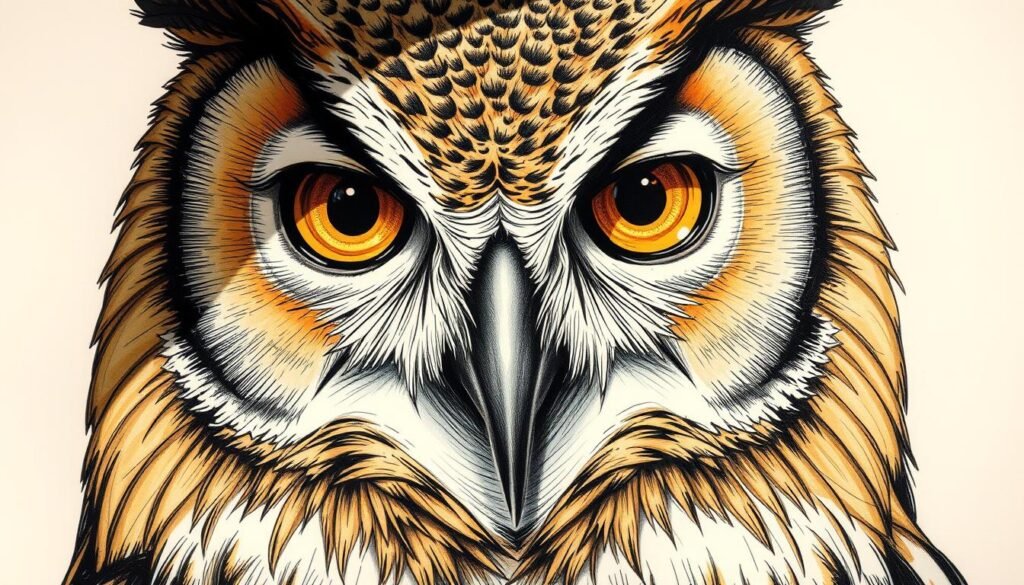
Inking and coloring bring your owl illustration to life with professional definition and vibrant personality. This critical stage transforms pencil sketches into finished pieces with contrast and polish.
Choosing the Right Inking Tools and Techniques
I use three ink liner sizes for realistic renderings. The 0.1 liner works for general work, darkening eyes with layered hatches. I leave small highlights and reflexed light lines for lifelike sparkle.
Directional strokes follow the rounded form of the head and body. This conveys three-dimensionality. The 0.2 liner creates darker areas with hatching and stippling for wing texture.
For fine details, the 0.05 liner adds white feathering to the facial disk. I avoid solid contour lines, keeping edges slightly fluffy to represent soft feathers. Different feather areas require varied approaches.
Methods for Adding Color and Texture
Markers like Tiki Hut Tan, Honey Brown, and Woodsy Brown create rich tones for fur and branches. I blend different colors together for visual interest. Bright choices like Summer Melon make eyes pop.
Background colors provide context while making the owl the focal point. White Gelly Roll pens add final highlights that suggest light catching on feathers. The patterns you choose allow endless possibilities.
| Liner Size | Primary Use | Technique | Effect Created |
|---|---|---|---|
| 0.1 | General work, eye detailing | Layered hatching | Builds darkness with highlights |
| 0.2 | Dark areas, wing patterns | Stippling and dense hatching | Creates texture and contrast |
| 0.05 | Fine details, fluffy textures | Light, scattered marks | Soft feather representation |
Troubleshooting and Tips for Perfecting Your Drawing
The journey from initial sketch to polished artwork often involves troubleshooting common issues that can frustrate beginners. I approach these challenges as natural steps in artistic development rather than failures.
Many students struggle with proportional relationships, particularly the head-to-body ratio. I recommend constantly checking facial symmetry using your guideline system.
Common Challenges and How to Overcome Them
Lifeless eyes frequently disappoint artists. I ensure highlights remain consistent and pupils maintain circular shapes unless depicting specific angles.
Flat texture results from overly uniform mark-making. Introduce irregularity to mimic natural feather patterns. Identify your light source early, leaving appropriate areas lighter.
Every artist was first an amateur who embraced the learning process.
Reference materials provide invaluable guidance without compromising creativity. Zoo visits or quality photographs reveal details no tutorial can fully capture.
Practice Exercises to Improve Your Technique
Structured repetition builds skills efficiently. My seven-day challenge involves creating one small artwork daily using artist trading cards.
This approach manages time commitment while encouraging experimentation. Focus on individual features like eyes or wing patterns during separate sessions.
| Day | Focus Area | Exercise Goal | Time Investment |
|---|---|---|---|
| 1 | Basic Proportions | Head-body relationships | 15 minutes |
| 2 | Facial Features | Symmetry and expression | 20 minutes |
| 3 | Feather Textures | Mark-making variety | 25 minutes |
| 4 | Light and Shadow | Value contrast | 20 minutes |
| 5 | Different Poses | Dynamic compositions | 30 minutes |
| 6 | Color Application | Harmonious palettes | 25 minutes |
| 7 | Complete artwork | Integration of skills | 40 minutes |
This systematic practice develops both technical ability and personal style. Remember that tutorials provide foundations for your unique artistic voice.how-to-draw-a-cow
Conclusion
Completing your first owl artwork marks a significant milestone. This lesson guided you from basic shapes to a detailed, colored creation. You now possess the skills to craft various owl artworks with confidence.
Remember the core steps. Begin with simple circles for the head and body. Refine the outline with gentle lines. Add defining features like large eyes on the face. Always ground your bird on a tree branch at the bottom for a natural look.
The final drawing should reflect your unique style. Explore different colors and patterns. Challenge yourself by illustrating other owls species. This art tutorial is for educational inspiration.
I encourage continued practice. Consider additional resources like video courses for further growth. Your artistic journey with these magnificent birds has just begun.