


Many artists make a critical mistake that drains the life from their landscapes. They leave the sky completely empty. A blank, blue expanse overhead can make even the most detailed scene feel flat and uninspired.
The secret to a dynamic sky lies in mastering one element: the cloud. These luminous, fluffy forms add depth, mood, and a sense of atmosphere. They transform a simple scene into a captivating piece of art.
In this guide, I will share my proven techniques for creating realistic clouds. You will learn that these formations are constantly shifting, with soft edges and unique lighting. Understanding their basic structure is the first step toward success.
I will walk you through a simple, effective process. This method works with graphite, charcoal, and other media. You will discover how a darker sky creates dramatic contrast, making your clouds appear brighter and more three-dimensional.
Key Takeaways
- Clouds are essential for adding depth and interest to any landscape or sky scene.
- Realistic clouds have soft, undefined edges because they are constantly changing.
- Observing actual clouds in the sky is crucial for understanding their natural shapes and light.
- A simple technique can make cloud drawing accessible, even for complete beginners.
- Creating a darker sky background enhances contrast and makes clouds appear more luminous.
- Understanding basic cloud formation saves time and reduces frustration during the artistic process.
Materials and Preparation for Drawing Clouds
The foundation of any successful artistic endeavor lies in thoughtful preparation, and sketching atmospheric elements is no exception. Proper tools and an organized space are critical for capturing the soft, ethereal quality of these forms.
Choosing the Right Tools and Paper
I prefer a medium-textured paper that holds graphite well. This surface allows for smooth blending, which is essential for creating soft edges.
Your pencil selection is a key part of the process. A range of graphite grades offers more control over value. Taking a bit of time to practice your pencil hold is also important. I hold my pencil near the end at a low angle. This lets me shade with the side of the lead for broad, soft coverage.
| Pencil Grade | Hardness/Softness | Ideal Use |
|---|---|---|
| 2H | Hard | Light, initial sketching |
| HB | Medium | General outlining |
| 2B | Soft | Core shading |
| 4B | Very Soft | Dark shadows and depth |
| 6B | Extra Soft | Rich, deep contrasts |
Setting Up Your Workspace for Success
Good lighting is non-negotiable. I always ensure my workspace has adequate light to judge values accurately. This prevents eye strain and helps me see subtle contrasts.
I arrange my pencils, erasers, and blending tools within easy reach. This logical organization saves time and keeps my workflow smooth. Having a reference photo or a view of the sky nearby is also helpful. It allows for constant observation of natural formations.
I recommend keeping scrap paper available. It’s perfect for testing shading pressure before working on your final piece. This simple step builds confidence and prevents mistakes.
How to draw a cloud: Basic Outlining and Shading

Creating luminous, three-dimensional forms relies on a simple but powerful principle: working the negative space. This approach is fundamental to achieving realistic results in your artwork.
Light Sketching for an Effective Outline
I begin with a very light touch. Using an HB pencil, I loosely map the cloud’s general shape. The goal is a faint guide, not a rigid prison.
I focus on capturing the overall mass. Remember, these formations have soft, undefined edges. A heavy outline will kill the natural feel before you even start shading.
Establishing Soft, Gradual Shading Techniques
Here is the core of the tutorial for perfect luminous clouds. I shade the sky, not the cloud. This builds contrast, making the white paper of the cloud appear to glow.
My process involves key steps:
- Apply medium-light pressure with a 2B pencil, carefully shading around the outline.
- Decrease pressure as I move down, creating a natural gradient in the sky.
- Add a second layer of strokes perpendicular to the first for even coverage.
The aim is a softly toned background. This makes the white shape of the clouds pop with realistic light and volume.
Blending Techniques and Adding Realistic Depth
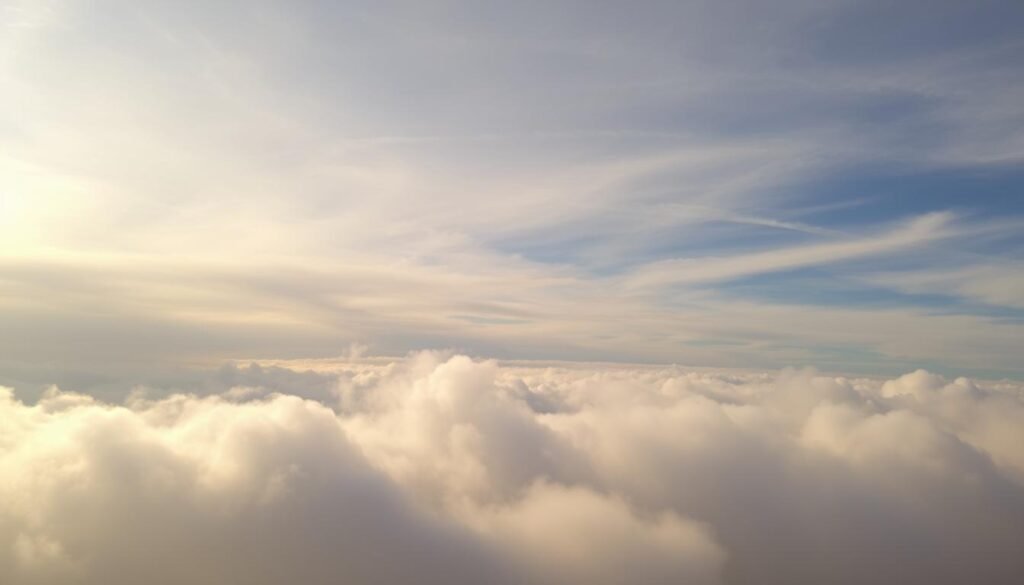
The true magic of realistic cloud rendering emerges during the blending phase. This step transforms flat shapes into voluminous, atmospheric forms. It is where softness and depth are born.
I build up values through multiple layers rather than trying to finish in one pass. This gradual approach is essential for smooth transitions between light and shadow.
Using a Tortillon and Pencil Pressure Effectively
My technique involves a constant dance between my pencil and a tortillon. I never complete all my pencil strokes before blending. Instead, I alternate between the two actions.
For the upper, brighter sections of the clouds, I use light pressure with a 2B pencil. I then follow with gentle blending. The lower areas, where shadows gather, require medium to heavy pressure for deeper values.
Creating Smooth Transitions with Layered Shading
I always begin with larger shapes, establishing the overall contours and value structure. Refining individual shadows comes later. This method prevents getting lost in small details too soon.
I pay close attention to the direction of my strokes, even when blending. Following the natural flow of the form enhances the three-dimensional illusion. Taking my time during this process is non-negotiable for achieving that soft, authentic quality.
Enhancing Your Cloud Drawing with Details

Attention to detail separates a good cloud drawing from a truly convincing one. This final stage is about refining the relationships between light, form, and atmosphere.
I step back to review the entire composition. This helps me see if all parts work together harmoniously.
Adjusting Contrast and Highlighting Key Areas
I often find that interior shadows are too bright. They can pull focus from the main subject. I carefully darken these areas to guide the viewer’s eye.
A final, gentle blend over the background sky unifies the scene. It makes the clouds appear to float naturally. For more advanced techniques, this cloud drawing tutorial offers excellent guidance.
Brightly lit formations cast reflected light. I add tiny highlights with a careful eraser touch.
Defining Natural Edges and Subtle Shadows
Real clouds are in motion, so their edges are rarely sharp. I soften any harsh lines to mimic this constant change.
The bottom portions typically hold the deepest shadows. Emphasizing this light-to-dark gradient adds volume. I refine the shapes of individual formations for clarity.
I ensure my gray tones feel atmospheric, not flat. The overall color harmony supports the mood I want to convey.
| Shadow Location | Characteristic | Recommended Action |
|---|---|---|
| Interior | Can compete with focal point | Darken if too bright |
| Bottom | Deepest, receives less light | Emphasize gradient |
| Edges | Soft, blurred, natural | Blend into the sky |
Conclusion
Capturing the ever-changing beauty of clouds is a rewarding artistic challenge. This guide has provided a foundational method to build your skills with confidence.
Remember the core principles: observe real clouds to understand their soft edges and light direction. The relationship between your cloud and the sky background is crucial for a floating effect. Apply pressure gently and build up gray tones in layers for smooth transitions.
Your art will improve with consistent practice over time. Start with a simple cloud tutorial to master the basic shapes. Each attempt teaches you a bit more about rendering these luminous forms. Soon, you will add dynamic sky scenes to all your paintings and drawings.