

Did you know that nearly 80% of aspiring artists find masculine features more challenging to capture than feminine ones? This subtle complexity makes mastering a boy’s portrait a significant milestone for any creative individual.
As an experienced artist, I have spent considerable time refining techniques for this specific subject. The process involves a keen eye for the jawline, brow, and overall facial structure that defines youthful masculinity.
This comprehensive guide distills my years of practice into an accessible format. My goal is to equip you with a reliable method, from initial sketch to final shading. You will learn to see the nuanced differences that create an authentic likeness.
Whether you are creating a standalone portrait or adding a character to a larger scene, this tutorial builds essential skills. It focuses on the cohesive relationship between features, not just individual parts. The result is a realistic representation full of character.
Key Takeaways
- Understanding the subtle structural differences between masculine and feminine faces is crucial.
- A strong foundational sketch is the most important step in the entire process.
- Attention to the jawline and brow ridge adds definition and age-appropriate character.
- Proper proportion techniques ensure a cohesive and realistic final portrait.
- This skill is versatile, applicable to both standalone art and complex compositions.
- With practice, capturing youthful masculine energy becomes an intuitive part of your artistic toolkit.
Introduction and Essential Materials
Throughout my artistic career, I’ve found that preparing with the right materials significantly impacts the quality of portrait work. This preparation becomes especially important when tackling the unique challenges of masculine features.
My Personal Drawing Journey
Early in my development as an artist, I recognized that masculine features demanded a distinct approach. This realization transformed my entire perspective on portrait creation.
Working with male subjects has become an essential part of my artistic practice. It allows for diverse character studies and deeper anatomical understanding.
The right tools in skilled hands can reveal character where others see only features.
Tools and Reference Materials
I recommend gathering quality materials before beginning any portrait project. The right supplies make a noticeable difference in the final result.
| Material Type | Essential Items | Brand Recommendations | Primary Use |
|---|---|---|---|
| Drawing Instruments | HB, 2B, 4B pencils | Derwent, Staedtler | Initial sketching and shading |
| Coloring Tools | Skin tone pencils | Prismacolor, Faber-Castell | Adding realistic color |
| Paper & Accessories | Smooth drawing paper | Strathmore, Canson | Providing ideal surface |
| Reference Materials | Photographs, mirrors | Personal collection | Accurate proportion guide |
Reference materials help capture proportions and lighting accurately. I always keep photographs and mirror reflections handy during my work sessions.
Investing in quality materials pays dividends over time. Good tools enable smooth blending and detailed work without technical limitations.
Understanding Proportions for how to draw a boy
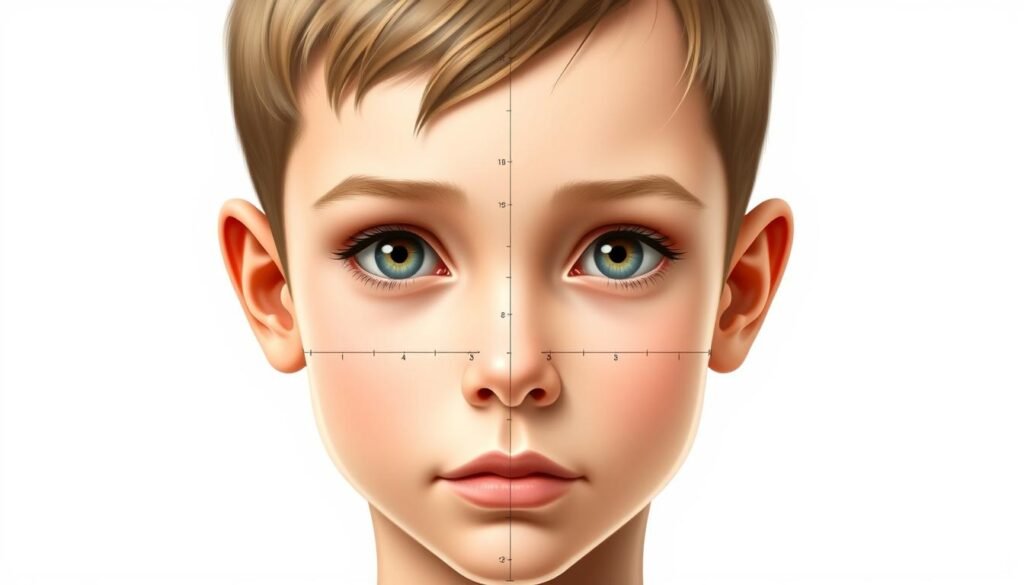
The cornerstone of any convincing portrait lies in a deep understanding of proportional relationships. I always emphasize that proper proportions are the foundation for a realistic and believable boy face. They ensure all facial features align correctly, creating a harmonious and natural look.
Emphasizing Head and Face Proportions
In my practice, I break the head into specific measurement zones. The eyes typically sit halfway down the skull. The nose begins at this eye line.
I make sure to teach that a youthful male head shape is generally more angular. It has a stronger jawline compared to girls. Younger subjects may still have softer features.
Accurate placement is key. The eyes are spaced about one eye-width apart. The width of the nose often matches the distance between the inner corners of the eyes.
Ear placement provides a great anchor. The top of the ear aligns with the eyes. The bottom of the earlobe falls in line with the bottom of the nose.
Balancing Body and Torso Shapes
For the body, I focus on shapes that reflect natural structure. The chest area is broader and more rectangular for older subjects. Younger boys have more cylindrical, less defined torso shapes.
This approach to proportions is vital for digital artists as well. Tools like Clip Studio Paint’s perspective rulers can help maintain these relationships.
| Body Area | Younger Boy Shape | Older Boy Shape |
|---|---|---|
| Head | Softer, rounder features | Angular, defined jawline |
| Torso | Cylindrical, less taper | Broad chest, tapers to waist |
| Key Differentiator | Subtle brow and jaw | Prominent brow ridge, strong chin |
Understanding these proportional differences is the first step. It separates a simple sketch from a character full of life.
Sketching the Basic Head and Facial Guidelines
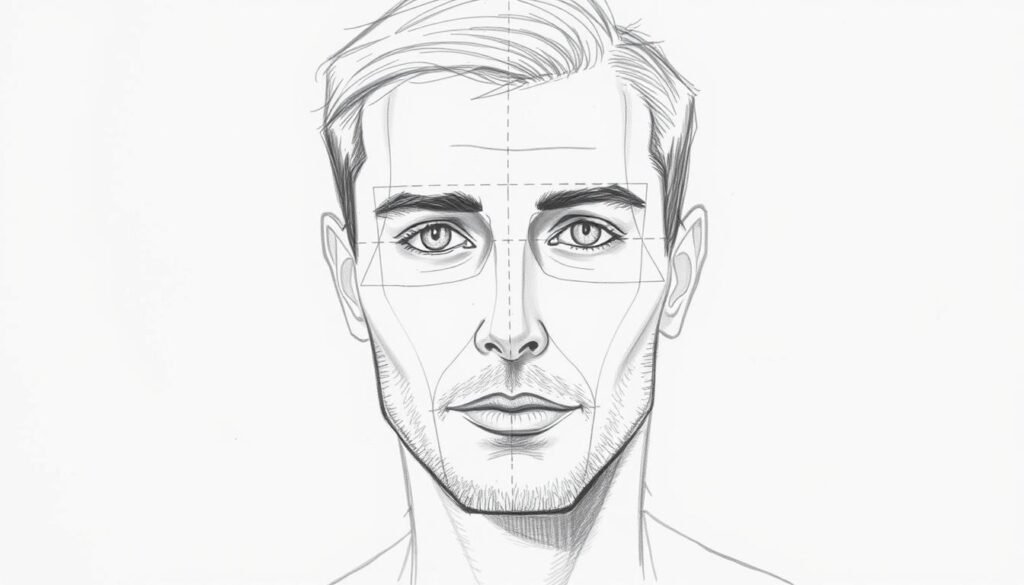
My approach to creating masculine portraits always begins with precise geometric shapes as building blocks. This foundational stage determines the entire character’s proportions and personality.
Drawing the Initial Circle or Oval
I start every portrait by lightly sketching the basic head shape. A perfect circle creates a youthful, rounded appearance. For more angular features, I draw oval shapes instead.
Position matters greatly at this stage. I place a small circle at the top head area to mark the hairline boundary. This prevents forehead distortion later in the process.
Establishing Vertical and Horizontal Guidelines
Symmetry begins with a central vertical line down the face. This crucial guide ensures balanced feature placement.
I then add approximately five horizontal lines across the head. These mark key positions: eyes, nose, mouth, hairline, and chin. The bottom line defines the jaw position.
Guidelines are the invisible architecture that supports visible artistry.
| Shape Type | Best For | Character Effect | Pencil Pressure |
|---|---|---|---|
| Circle | Youthful subjects | Softer, rounded features | Very light (H pencil) |
| Oval | Older characters | Angular, defined structure | Light (HB pencil) |
| Modified Oval | Specific face shapes | Custom character design | Adjustable pressure |
I make sure all guidelines remain faint and erasable. They serve as temporary reference points for accurate feature positioning.
Refining Facial Features with Detail
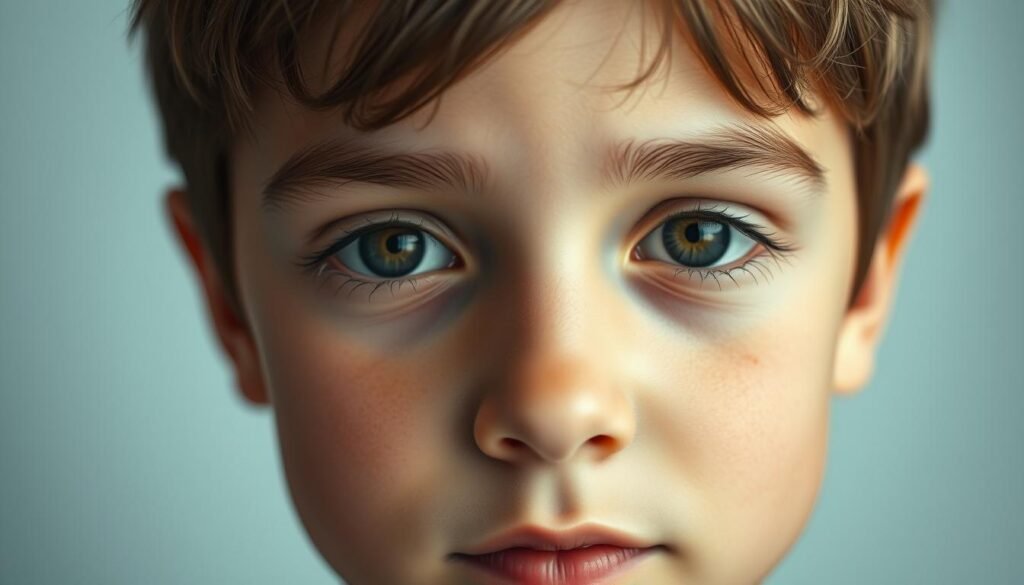
With the foundational structure established, I now focus on bringing individual facial components to life through careful detailing. This stage transforms basic shapes into recognizable human facial features that convey personality.
Placing the Eyes, Nose, and Mouth
I carefully position the eyes along the central horizontal line, shaping them with angular, arrowhead forms. This creates a more masculine appearance compared to rounded shapes used for girls.
When working on the nose, I make sure the bridge protrudes slightly to cast subtle shadows. The bottom of the nose aligns precisely with its guideline.
For the mouth, I position it between the nose and chin guidelines. The upper lip appears darker due to its downward angle creating natural shadowing.
Defining the Jawline and Ears
I create a strong, angular jawline that extends from below the ears to the chin. This structured approach distinguishes masculine features effectively.
Ear placement follows specific proportional rules. The top aligns with the eyebrow line, while the bottom of the earlobes matches the nose position.
Throughout this process, I maintain minimal eyelash detail and erase unnecessary guidelines once all features are firmly established. This refinement stage brings cohesion to the entire face.
Creating Expressive Character with Unique Details
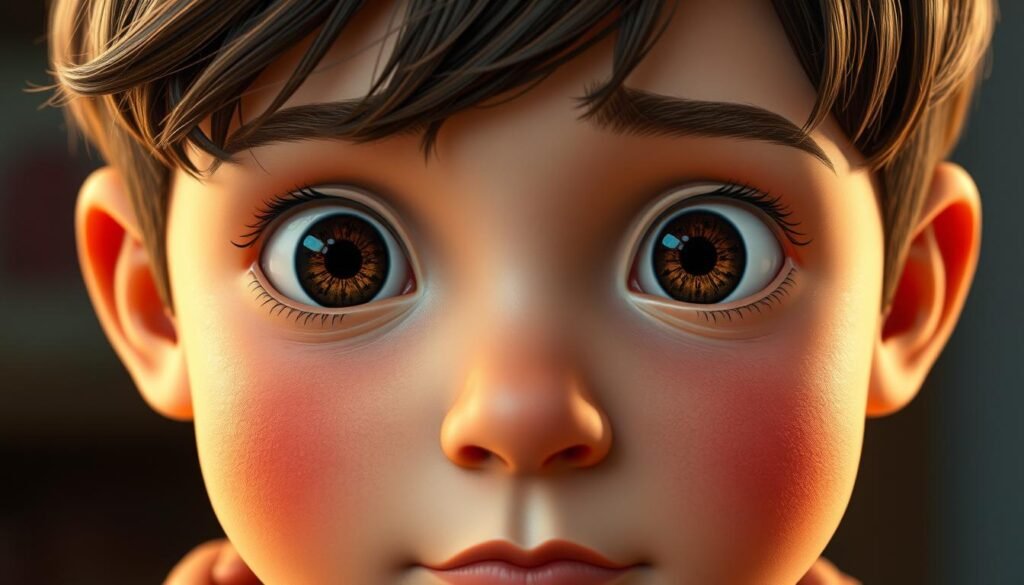
What separates a technically proficient sketch from a memorable portrait is the strategic addition of expressive character details. These subtle elements transform a generic representation into a person with distinct personality.
I focus on the eyes as the primary vehicle for emotion. The direction of gaze and eyelid shape convey specific attitudes. A slight eyebrow adjustment can suggest curiosity or determination.
When I want to add realism, I consider facial muscle tension. A relaxed jaw suggests calmness, while tightened features indicate intensity. These small details create authentic emotional resonance.
| Detail Type | Emotional Impact | Application Technique |
|---|---|---|
| Eye Direction | Conveys focus, mood, intention | Adjust pupil placement and eyelid shape |
| Mouth Curvature | Suggests happiness, skepticism, thought | Subtle line variations at corners |
| Brow Angle | Shows concentration, surprise, concern | Minimal line adjustments upward or downward |
| Head Tilt | Indicates curiosity, confidence, shyness | Slight rotation from center axis |
Personal touches like freckles or distinctive expressions make each portrait unique. These features give the realistic boy character specific identity.
The final portrait emerges when all details work together harmoniously. Each element contributes to the overall personality of the boy face.
Defining the Hairstyle and Accessories
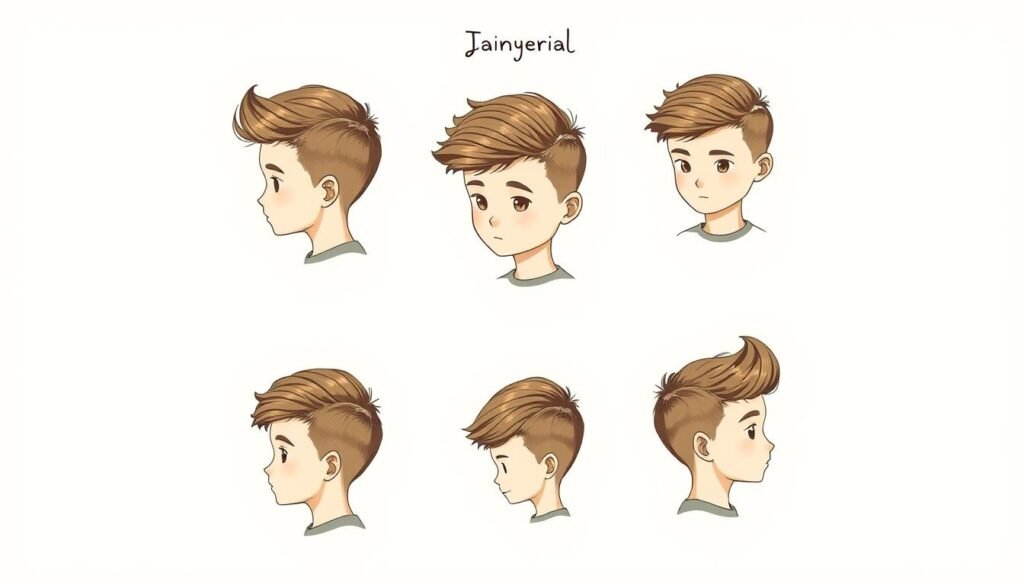
The hairstyle I select for a character instantly communicates personality before a single facial feature is detailed. This choice becomes one of the most defining characteristics in any portrait.
I approach hair as a crucial element that reveals age and personal style. Whether creating a neat cut or messy shag, the way I render texture significantly impacts the overall character.
Choosing a Signature Hairstyle
When sketching the hairline, I make sure it begins appropriately on the forehead rather than sitting directly on the top head. I create directional strokes following natural growth patterns from the crown outward.
I typically add more texture and volume than initially sketched. Pointed segments work for spiky styles, while flowing curved lines create natural movement for longer hair. This approach gives the head realistic contours.
Depth emerges when I vary stroke thickness. Thicker lines define the outer silhouette and shadowed areas. Thinner strokes represent individual strands catching light on the top head.
Customizing with Hats or Other Accessories
Accessories like baseball caps or beanies add personality and contemporary relevance. They provide interesting compositional elements that frame the face beautifully.
When working from the side view, I pay careful attention to how hair falls naturally over the ear. Maintaining volume at the crown while showing gravity’s effect creates believable details.
These finishing touches complete the character’s identity. The right hair and accessories make each drawing unique and memorable.
Sketching the Torso, Arms, and Legs
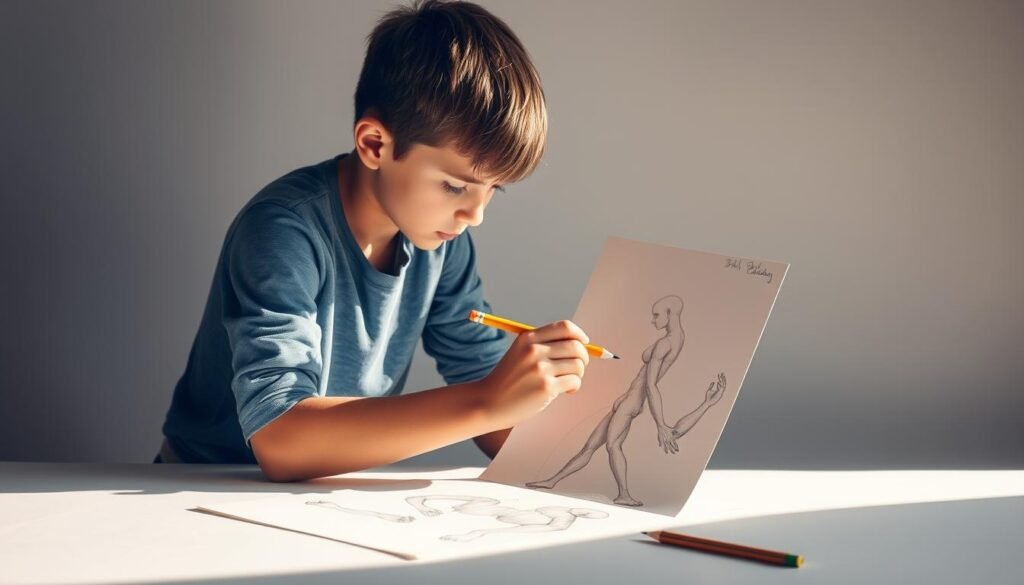
Building upon the facial foundation, I now extend the character’s form by establishing the body’s core structure. This systematic approach ensures proportional harmony throughout the entire figure.
Establishing the Body’s Core Shapes
I begin the body construction with two small circles positioned below the head. The upper circle represents the chest and shoulders, while the lower one indicates the waist and hip region.
From the center of the chest, I draw a vertical line extending to the bottom of the torso. Another straight line originates from the shoulder point, creating the foundational framework.
For the legs, I place my pencil near the side of the torso’s bottom and draw straight lines downward. These leg lines typically match the length from chest to torso bottom.
When I draw a boy’s body, I make sure the proportions reflect age-appropriate characteristics. Younger subjects feature more cylindrical torsos, while older ones show shoulder width development.
Arms emerge from straight or slightly curved lines extending from shoulder areas. Small circles at elbows mark joint positions for natural bending.
Clothing follows the underlying structure with simple shapes. A basic shirt covers the torso circles, while pants taper downward from the bottom of the shirt.
Small ovals at each leg’s bottom represent feet or shoes. This geometric foundation allows for easy refinement into a complete, believable figure.
Adding Color, Shading, and Final Touches
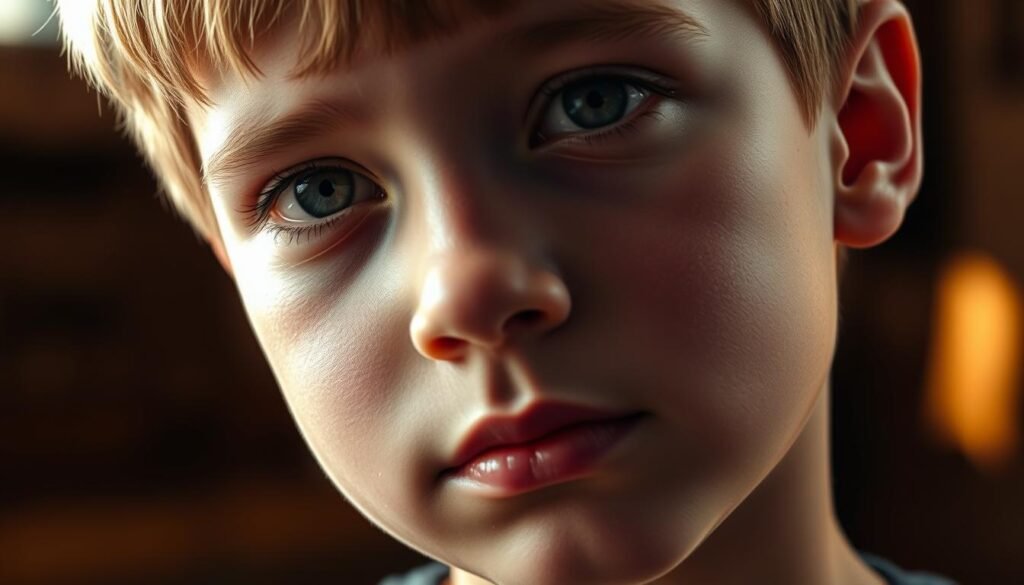
The transition from line work to full color represents a critical phase where the portrait truly comes to life. This stage requires careful consideration of light direction and consistent color application.
Using Colored Pencils for Dynamic Shading
I begin the coloring process with the eyes, using Derwent pencils in light, medium, and dark tones. This creates realistic depth in the irises. I build skin tones gradually with light pressure.
Strategic shading adds dimension to facial features. Darker colors go under eyebrows and along the nose sides. Lighter tones highlight forehead and cheekbone areas.
| Shading Area | Pencil Pressure | Color Intensity | Visual Effect |
|---|---|---|---|
| Eye sockets | Medium pressure | Darker tones | Creates depth |
| Cheekbones | Light pressure | Lighter tones | Adds highlight |
| Lip areas | Varied pressure | Medium-dark | Defines shape |
| Hair texture | Heavy pressure | Dark tones | Builds volume |
Enhancing the Drawing with Pen Outlines
Ballpoint pens add crisp definition to important features. I use them selectively on eye details and eyebrow strokes. This creates strong contrast without overwhelming the pencil work.
For hair texture, I combine markers and pens. Thicker strokes build volume while finer lines suggest individual strands. This layering process gives rich complexity to the final portrait.
Final assessment ensures balanced light and dark values. I step back to check overall harmony before adding any last details.
Conclusion
Developing the ability to capture youthful male characteristics accurately transforms an artist’s portrait capabilities. This process takes time and requires careful attention to subtle facial details.
I encourage you to practice regularly while using reference photos when needed. The techniques in this guide and the step-by-step approach provide a solid foundation for creating realistic portraits.
Remember that artistic growth happens gradually. Take breaks when tired and return with fresh perspective. Each drawing session strengthens your understanding of masculine features and proportions.
With consistent practice, you’ll develop the confidence to create compelling boy portraits that showcase your growing skills as an artist.