

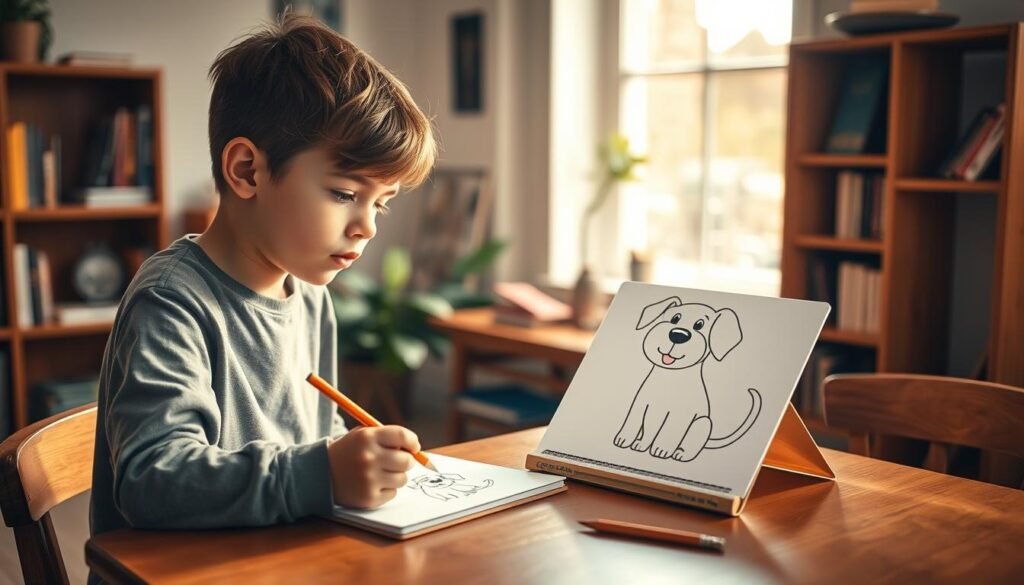
Did you know there are over 450 recognized breeds of dog? This incredible variety means endless inspiration for your artistic journey. I believe anyone can master the art of drawing these beloved animals.
Many people feel intimidated, but I am here to show you a clear path. This skill is truly accessible with the right guidance. My goal is to demystify the process and build your confidence from the ground up.
In this guide, I will share my structured approach. We will break down complex forms into easy-to-follow parts. You will learn draw by focusing on foundational shapes first. This method prevents feeling overwhelmed.
I find drawing dogs to be one of the most rewarding artistic pursuits. Their expressive nature offers a fantastic way to develop your skills. Consistent practice with this technique makes a significant difference.
You can expect a step-by-step tutorial that builds progressively. We will explore various drawings and techniques together. This foundation proves that you can draw anything you set your mind to. For instance, a fantastic resource that breaks this down into four easy steps aligns perfectly with this philosophy.
Key Takeaways
- Drawing dogs is an accessible skill for artists at any level.
- A structured process breaks down complex subjects into manageable parts.
- Focusing on foundational shapes is the first step to success.
- Consistent practice is essential for developing your drawing abilities.
- Understanding basic anatomy improves the realism of your artwork.
- This guide provides a progressive method to build confidence.
Materials and Basic Shapes for Your Dog Sketch
Quality materials provide the foundation for successful canine illustrations. The right tools make a significant difference in your results, especially when working with basic forms.
Essential Tools and Materials
I recommend Canson Mixed Media paper for its excellent texture. A 0.7 mm mechanical pencil offers consistent lines without sharpening interruptions. For final outlines, the Pigma Micron 03 pen in black creates clean, professional results.
Start with light pencil sketches. Later, trace over your lines with pen ink. Wait for the ink to dry completely before erasing pencil marks. This technique ensures a polished final piece.
Creating the Basic Box, Oval, and Line Shapes
Begin with a rounded box as the foundation for the dog’s body. Position this main shape at various angles depending on your desired pose. Ovals become building blocks for the head and face areas.
Visualize legs as simple cylindrical forms that attach to the body. Use two lines to create a cross shape for proper head positioning. This method establishes correct proportions before adding details.
Boxes, ovals, and lines work together to form the complete structure. Understanding each individual shape first ensures confidence when combining them. This foundational approach works for any breed or pose, similar to techniques in this comprehensive dog drawing guide.
Step-by-Step Process: How to Draw a Simple Dog
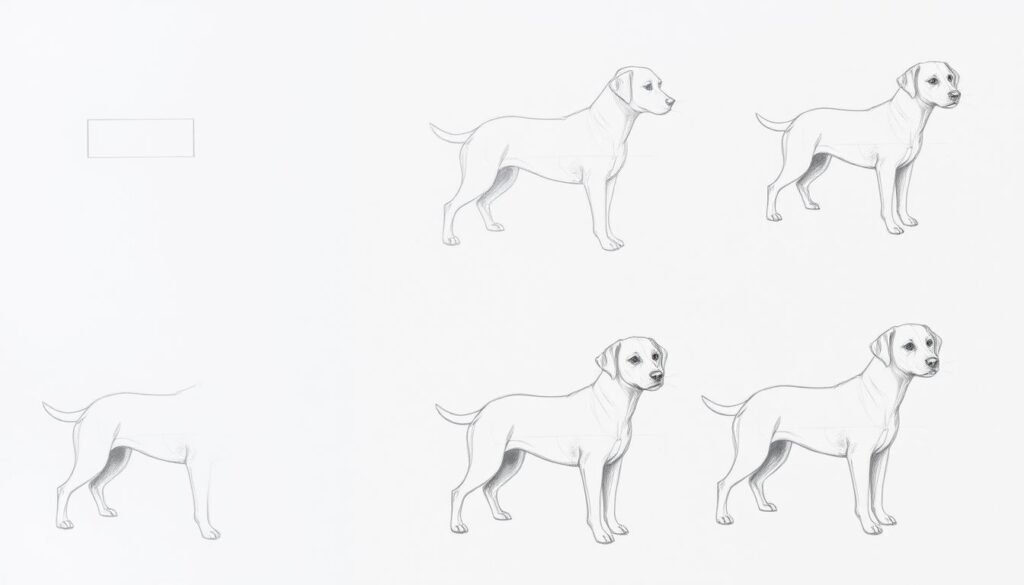
Building upon our foundation of basic shapes, we now move into the core construction of our canine character. This phase connects all the individual parts into a cohesive and recognizable form.
I will guide you through each stage, ensuring you understand the placement and proportion of every element.
Sketching the Dog’s Face, Eyes, Ears, and Nose
Begin with the head’s rounded box shape. Inside this oval, draw a light cross with two intersecting lines. This cross is your guide for the face.
Place the eyes along the horizontal line. The nose sits centrally on the vertical line, just below the center. Ears flow naturally from the top sides of the head oval.
| Feature | Guideline | Proportion Tip |
|---|---|---|
| Eyes | Horizontal Cross Line | Space them one eye-width apart |
| Nose | Vertical Cross Line | Bottom aligns with the center of the head |
| Ears | Top of Head Oval | Base width should match the eye line |
Building the Body, Legs, and Tail with Simple Shapes
Attach a rectangular box to the head to form the main body. For the legs, use cylindrical shapes. I prefer to sketch the front two legs first.
This approach, detailed in resources like this five-step guide, helps establish stability. Add the rear legs next. The tail can be a simple curved shape, like a soft flame.
Refining Details and Adding Fur Texture
Once the structure is solid, refine the details. Soften the hard edges of your shapes. Define the paws with small ovals.
For the fur, use short, quick strokes. Follow the direction of hair growth. This technique adds realism without complexity. For more on finishing touches, see this excellent four-step method.
Layer your strokes to create depth. This final step brings your draw dog creation to life.
From Photograph to Live Sketch: Techniques and Tips
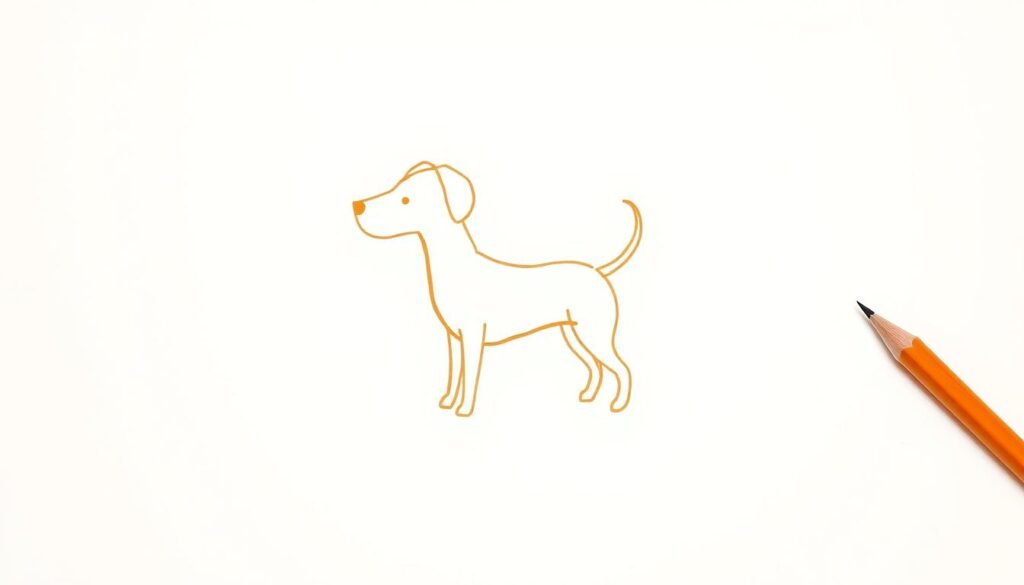
Translating a photograph into a live sketch requires a strategic approach that simplifies complex forms. I advocate for a two-part process that builds a strong foundation. This method allows any beginner to accurately capture a dog‘s proportions.
First, we focus on the underlying structure. Later, we add the dimensional form. This way of working prevents overwhelm.
Using Tracing Paper and the Stick Dog Method
Place tracing paper over your reference photo. The Stick Dog method is ideal for this stage. Imagine the dog has been shaved to see its core form.
Using only lines, create a stick figure skeleton. For the head, draw a cross with two lines to map width and height. Use triangles for the paws and a simple oval for the skull.
This framework establishes correct position and angle. It is the best way to learn draw the true anatomy of dogs.
In the second layer, add muscle shape with ovals and rectangles around the stick lines. This builds the dimensional form before any fur or fine details.
| Stage | Focus | Key Elements |
|---|---|---|
| Framework | Proportion & Pose | Stick lines, cross for head, triangles for paws |
| Form Building | Volume & Mass | Ovals and rectangles for muscle groups |
| Refinement | Contour & Features | Softening edges, defining face and limbs |
Understanding Dog Anatomy and Proportions
This process teaches you canine anatomy. You learn the underlying shape of different dog faces. Each breed has a unique head structure.
Observing the position of the eyes, mouth, and ears is critical. This knowledge helps you draw cute and accurate dog face from any view.
When adding fur, use directional strokes with your pencil. Start with light layers for depth. Darker edges create a three-dimensional look.
Practice is essential for mastering these details. This structured approach, similar to techniques in this easy dog sketching tutorial, builds lasting confidence for your drawing journey.
Conclusion
Every successful animal illustration shares a common foundation: breaking complexity into manageable components. This step-by-step method transforms basic shapes into recognizable canine forms.
I encourage consistent practice with these techniques. The same approach applies to various dog breeds and poses. Your skills will grow with each new creation.
These foundational principles extend beyond drawing dogs. You can apply this structural thinking to draw anything that interests you. Complex subjects become approachable when deconstructed into simple shapes.
Remember that perfecting details comes with time. Each drawing builds confidence. For additional guidance, explore this comprehensive dog drawing resource.
I hope this guide makes artistic creation accessible and enjoyable. Your journey in capturing these beloved animals begins with understanding their core shape.