

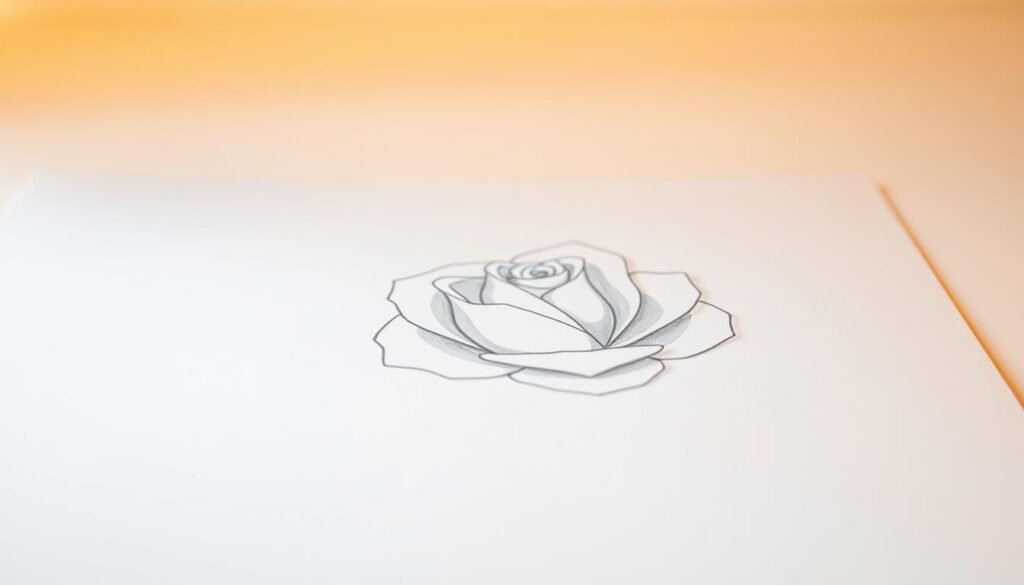
Did you know that over 70% of adults believe they lack artistic talent? This common misconception often prevents people from exploring their creative potential. I am here to prove that creating beautiful art is a skill anyone can develop.
I am thrilled to present this comprehensive guide. My goal is to demystify the process of creating a lovely floral illustration. This method breaks a seemingly complex subject into easy, manageable steps.
You do not need any prior experience or special tools. I will guide you through the foundational shapes and lines that build the classic rose form. Understanding these basics provides the confidence to create your own unique designs later.
This tutorial focuses on a clear, step-by-step approach. We will explore the logic behind each mark on the page. By the end, you will have a finished piece you can be proud of.
Key Takeaways
- Artistic skill is learnable, not an innate talent.
- This guide simplifies the process into easy steps.
- No previous drawing experience is necessary.
- You will understand the basic shapes that form a rose.
- The tutorial builds a foundation for creating original art.
- You will complete a drawing you are proud to share.
Introduction and Art Supplies
https://www.youtube.com/watch?v=mYJQmuzzhJI
The graceful curves of floral subjects make them ideal for artistic exploration. My deep love for drawing roses stems from their natural elegance. This passion allows me to express creativity while celebrating nature’s beauty.
Why I Love Drawing Roses
I began my journey with drawing roses later in life. This experience gives me unique insight into beginner challenges. I understand the initial hesitation many feel.
Creating these floral illustrations becomes more than technical skill. It transforms into a meditative practice. The process helps stress melt away as you focus on delicate details.
Gathering Your Materials
You need only basic supplies for this tutorial. Gather a pencil, eraser, and paper or sketchbook. Optionally include an ink pen for final lines.
I recommend starting with pencil sketches first. This approach allows freedom for adjustments. Simple tools combined with practice create stunning results.
Remember that perfection isn’t the goal. Focus instead on the joy of creating. Your style will naturally develop through regular practice with flowers and other subjects.
Understanding the Basic Structure of a Rose
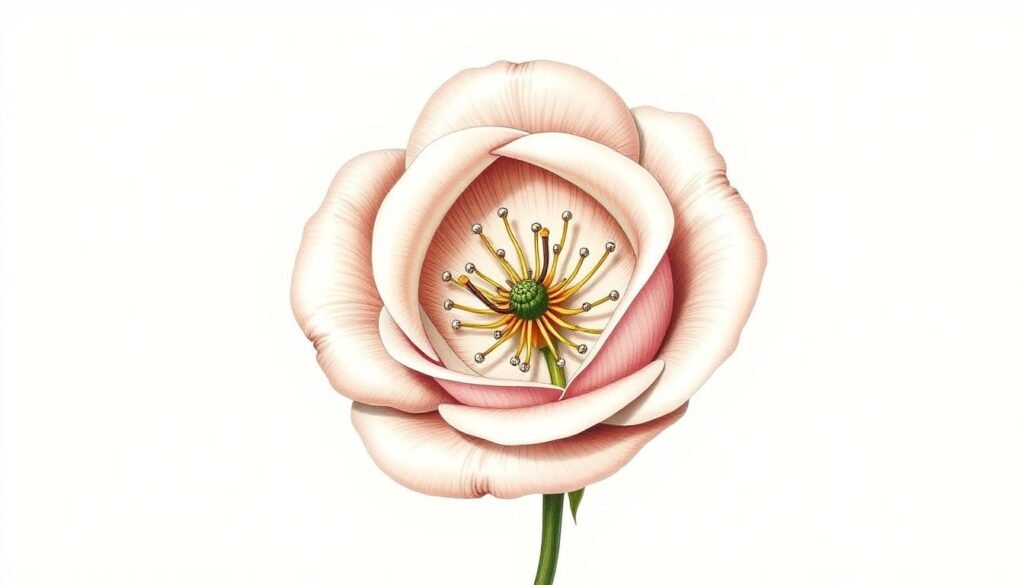
Every successful artistic creation builds upon a solid structural foundation that guides the entire process. When approaching floral subjects, I emphasize starting with basic geometric forms. This method transforms complex subjects into achievable components.
The initial shape establishes the entire composition’s framework. I begin with an elongated circle that resembles a gentle puddle. This form doesn’t require perfection—capturing the general proportions matters most.
Elongated Circle and Cylinder Foundation
This first step creates the top view perspective for your flower. After establishing the circle, I add downward lines from each side. These elements combine to form a cylinder-like structure.
The three-dimensional quality is essential for realistic roses. This foundation provides spatial context for subsequent petal placement. It creates depth before adding detailed elements.
Sketching the Core Sphere
Within the larger circle, I incorporate a semicircular form. This represents the flower’s central sphere where inner petals originate. The rounded shape creates natural curvature for petal development.
This approach breaks the intimidating complexity of floral illustration into manageable stages. Each shape serves a specific purpose in the overall drawing.
| Basic Shape | Function | Visual Result |
|---|---|---|
| Elongated Circle | Establishes top view proportions | Foundation for petal placement |
| Cylinder Form | Creates three-dimensional depth | Adds realistic spatial quality |
| Inner Sphere | Forms the flower’s central core | Guides petal curvature naturally |
Mastering these fundamental components provides confidence for more advanced floral work. This one structural approach applies to various botanical subjects beyond roses.
Step-by-Step Techniques: How to Draw a Simple Rose
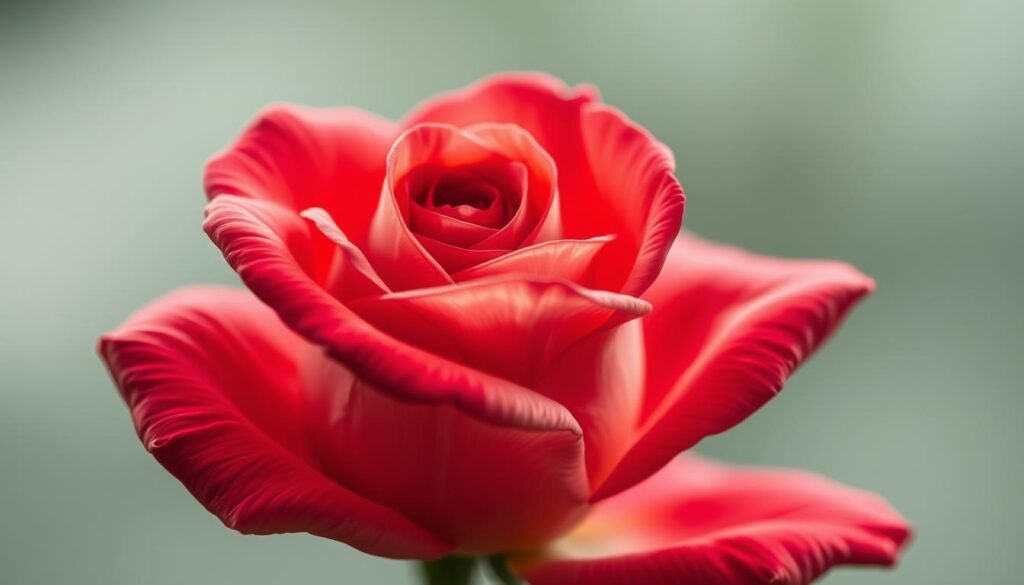
Building upon our structural foundation, we now progress to the most transformative phase. This is where basic shapes evolve into recognizable floral forms through strategic line work.
Establishing Lines and Early Petal Forms
I begin with two intersecting curves over the central sphere. The first line arcs gently across the top, while the second, shorter curve opposes it. These intersecting lines create the framework for our innermost petals.
Each petal follows a three-line anatomy that prevents flatness. Two relatively straight sides connect with a curved top or bottom. This combination creates dimension that overly rounded shapes lack.
The initial step establishes petals growing outward from the core. Their lines should angle upward and away from the center, mimicking natural growth patterns.
Creating Depth with Overlapping Petals
Overlapping is the secret to three-dimensional flowers. When a petal sits behind another, I partially hide its lines. This simple technique instantly creates depth and realism.
I vary curvature based on position. Petals receding into the background have more pronounced curves. Forward-facing petals use flatter, wider curves suggesting movement toward the viewer.
Systematic construction builds the flower from core outward. Each additional petal follows the same principles but with adjusted angles and lengths. Outer petals typically feature shorter back lines and longer front lines.
This methodical approach ensures consistent results. For additional guidance on botanical illustration, explore this resource for step-by-step floral illustrations.
Erasing construction lines that pass behind front petals clarifies the final composition. This one cleanup step makes your drawing instantly more readable and professional.
Enhancing Your Rose with Details and Shading
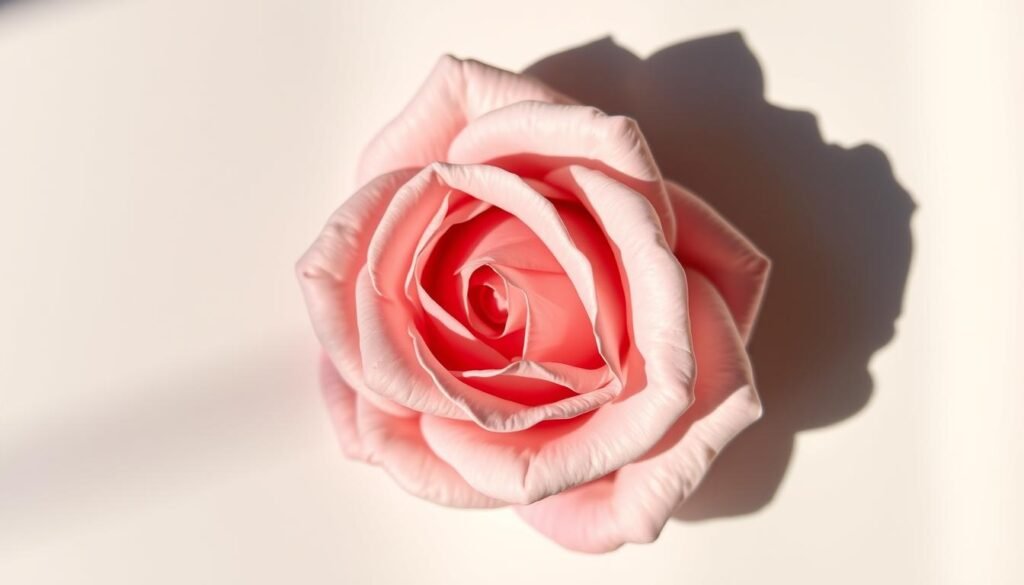
The final stage of our floral illustration brings everything together with strategic detailing. This step transforms your basic sketch into a polished botanical artwork.
Defining the Petal Shapes and Curvatures
I refine the petals by returning to the cylinder core. A longer line follows the cylinder’s curve, then I add shorter lines that tuck underneath.
This creates layered depth within the flower. Each line should radiate outward like sunrays from the center.
Adding the Stem and Subtle Shading
For the stem, I draw two parallel lines extending from the bottom center. A slight curve creates natural movement rather than rigid straightness.
Shading brings your drawing to life. I place minimal line work in corners where shadows form naturally.
Strategic shading at the stem connection establishes spatial relationships. This one technique makes elements appear three-dimensional on the page.
| Detailing Element | Technique | Visual Effect |
|---|---|---|
| Petal Refinement | Layered line work | Creates depth and texture |
| Stem Integration | Curved parallel lines | Adds natural movement |
| Strategic Shading | Minimal corner lines | Enhances dimensionality |
For additional guidance on simple shading techniques, explore this comprehensive resource. Remember that subtle detailing often creates the most impactful results.
Exploring Creative Variations of Rose Drawings
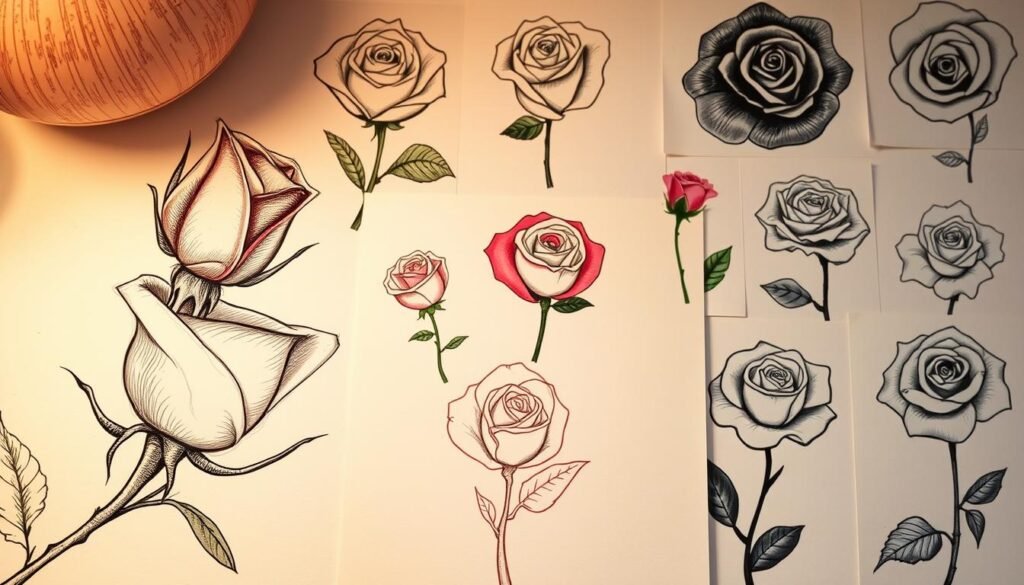
Creative variations allow artists to infuse personal expression into traditional botanical subjects. Moving beyond foundational techniques opens exciting artistic pathways.
Swirly Rose and Heart-Inspired Designs
The swirly rose begins with an organic spiral center. Imperfect lines create charming, natural-looking flowers. This approach welcomes artistic freedom.
Heart-inspired designs merge romantic symbolism with floral beauty. Start with a heart shape, then build petals around a central swirl. This variation combines universal love with botanical artistry.
Experimenting with Bouquets and Side Profiles
Side-profile views deepen understanding of rose anatomy. Different angles reveal unique structural details. This perspective adds dimension to your artistic repertoire.
Bouquet compositions teach valuable arrangement skills. Multiple roses on a single page create dynamic visual relationships. Each one contributes to the overall harmony.
| Variation Type | Starting Technique | Artistic Benefit |
|---|---|---|
| Swirly Rose | Organic spiral center | Encourages loose, expressive line work |
| Heart Design | Heart shape foundation | Combines symbolism with floral structure |
| Side Profile | Angled perspective | Develops spatial understanding |
| Bouquet Arrangement | Multiple flower grouping | Teaches composition principles |
These creative approaches make drawing roses an ongoing discovery process. Each tutorial variation offers unique learning opportunities. I encourage you to get drawing and explore what resonates with your style.
Conclusion
Thank you for joining me on this creative journey. I hope this tutorial has shown you that artistic skill is truly accessible.
My passion for this flower, my love drawing roses, drives me to share these methods. Anyone can develop this rewarding ability with consistent effort.
To further your progress, I offer a detailed 20-page workbook. It provides additional practice for various floral arrangements and stem styles.
I encourage you to get drawing regularly. Fill a page in your sketchbook and experiment. Watch your confidence grow with each new drawing.
Remember, the goal is the joy of creation. Let the process be a relaxing escape. Please share this guide to help others discover their potential.