

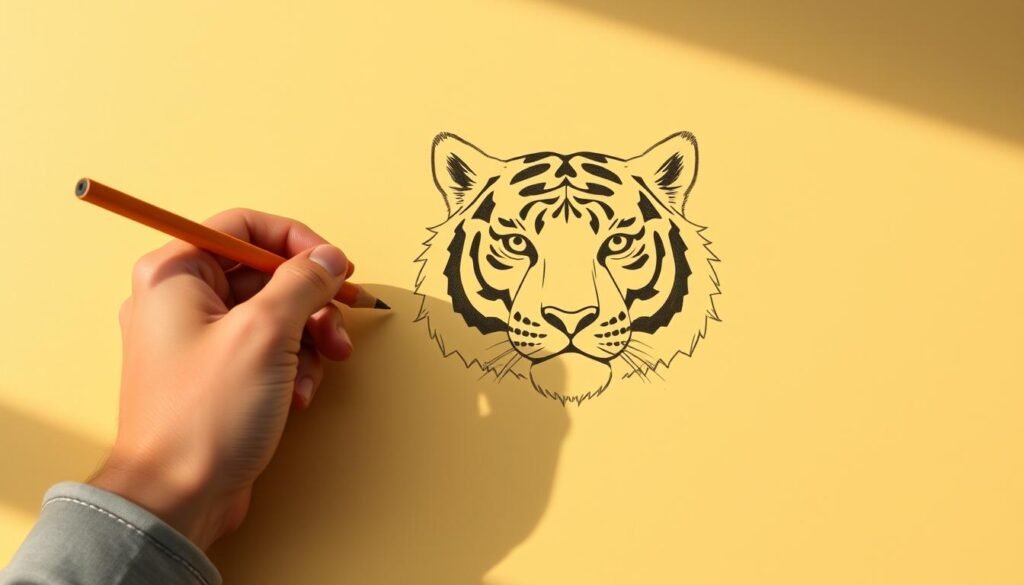
Did you know a tiger’s stripes are as unique as a human fingerprint? This fascinating fact highlights the incredible detail found in nature’s most powerful cats. Capturing that individuality on paper is an artistic challenge many aspire to master.
I’m thrilled to present this comprehensive guide designed to demystify the process. My approach breaks down a seemingly complex subject into manageable, progressive stages. We will use basic shapes and clear lines as our foundation.
This method ensures the project remains accessible, whether you are new to sketching or seeking to refine your technique. The goal is to build confidence with each step, leading you toward creating a stunning piece of art. For a deeper dive into specific tools and techniques, explore this detailed tiger drawing resource.
By the end of this tutorial, you will not only have a completed illustration but also foundational skills applicable to other subjects. I believe anyone can learn to depict this majestic tiger with the right instruction and practice.
Key Takeaways
- Tiger stripes are unique to each individual, much like human fingerprints.
- This guide uses a step-by-step method to simplify the drawing process.
- Basic shapes and lines form the foundation of the artwork.
- The tutorial is designed for artists at all skill levels.
- You will develop skills that can be applied to drawing other animals.
- Patience and practice are key to successfully completing your tiger illustration.
Getting Started with Tiger Drawing
The foundation of a great tiger illustration lies not just in skill, but in thoughtful preparation. Proper setup streamlines the entire creative process. It allows you to focus entirely on the artistic steps ahead.
Essential Materials and Tools
I recommend a simple yet effective toolkit. Start with a quality HB pencil for your initial, light lines. Add a softer 2B or 4B pencil for darker details later.
A good eraser and smooth paper are crucial. If you plan to add color, choose heavier paper. This prevents bleed-through with markers or watercolors.
I always keep multiple sharpened pencils ready. This prevents interruptions. A separate scrap sheet is perfect for testing pressure and practicing lines.
Setting Up My Workspace
An organized space makes a significant difference. I ensure good lighting and a comfortable seat. All my materials sit within easy reach.
Before starting this guide, I gather reference photos. These show the subject from various angles. Understanding the form is a critical first step.
I also prepare the paper itself. I consider the final size, leaving adequate margins. This ensures my initial circle and construction guides fit perfectly.
Understanding Tiger Anatomy and Proportions
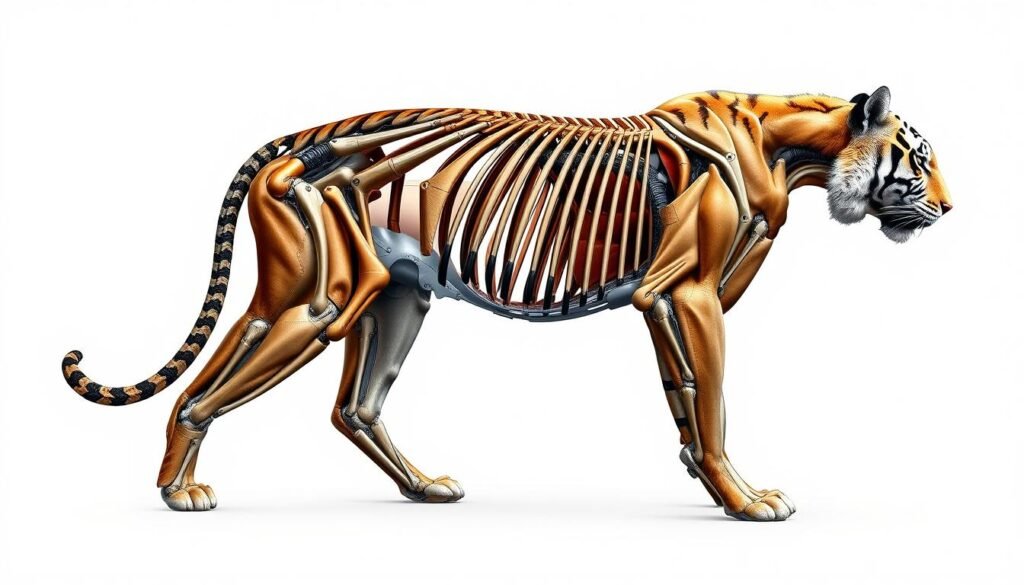
Proportion is the invisible skeleton that gives a drawing its strength and realism. I focus on the underlying muscular and skeletal structure first. This knowledge directly informs the simple shapes we use to build the form.
My process always begins with a large circle to represent the primary mass of the body. This initial circle acts as the anchor for the entire illustration. From here, I establish the posture with key construction lines.
I use a central vertical line for height and a diagonal line at about 20 degrees to set the stance. This simple framework dictates the entire pose.
For the hindquarters, I add a second circle beside the first, aligning their tops. This maintains the powerful proportions of the body. The head is another circle, placed with careful consideration.
Breaking Down Basic Shapes and Construction Lines
Strategic circles and oval shapes map the chest and leg joints. Each shape corresponds to a major muscle group. This method helps visualize how the form connects in three dimensions.
The beauty of this approach is its flexibility. If a guide seems off, I can easily adjust it. These lines and shapes are temporary scaffolding, erased after they serve their purpose.
| Construction Shape | Represents | Key Purpose |
|---|---|---|
| Large Circle | Main Body Mass | Establishes core proportion and center of gravity |
| Head Circle | Skull Structure | Anchors facial features and defines scale |
| Ovals | Chest & Leg Joints | Maps muscular volume and articulation points |
| Vertical Line | Spinal Alignment | Sets overall height and central balance |
Mapping Face and Body Alignment
Inside the head circle, I draw a horizontal guide slightly above the middle. A short vertical line intersects it. These guides are critical for placing the eyes, nose, and mouth symmetrically.
This systematic use of construction ensures anatomical accuracy. You build a believable form from the ground up. Every step in this guide reinforces proper proportion.
How to Draw Animals Tiger: Step-by-Step Techniques
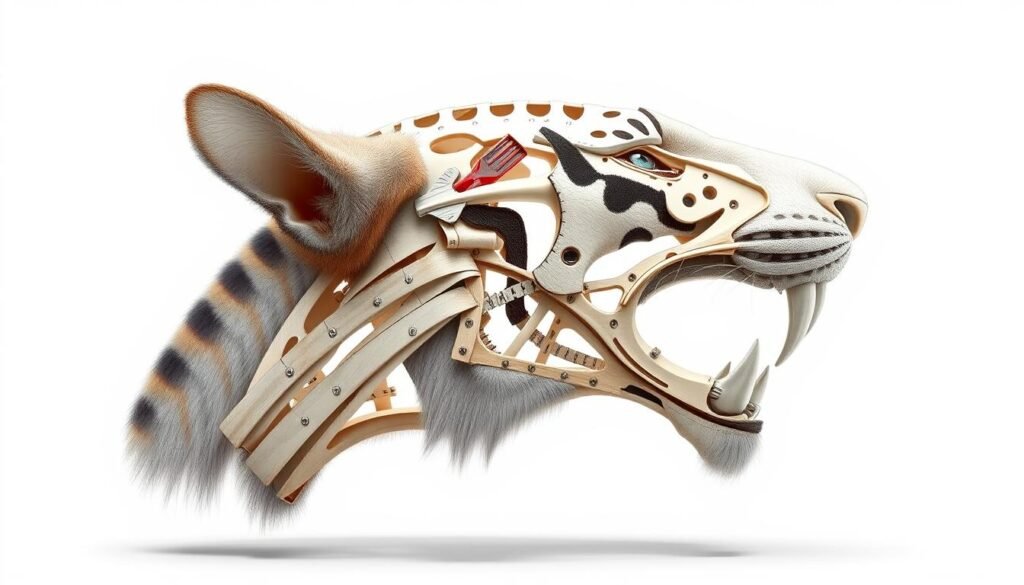
Building upon our foundational shapes, this section focuses on refining the distinctive characteristics of the majestic cat. Each step systematically transforms basic circles and lines into recognizable features.
Drawing the Tiger’s Head and Facial Features
I begin with the head area, using a horizontal line slightly above center. A vertical guide intersects this line for symmetry. Below this, I place a small oval for the muzzle foundation.
For the eyes, I position two small circles between the upper construction guides. The ears take shape as rounded triangles at the top, with smaller inner triangles adding depth. This construction ensures proper facial proportion.
Constructing the Body, Legs, and Tail
The body develops through three connecting ovals. I extend vertical lines downward for legs, adding knee circles at the one-third mark. The hindquarters feature an elongated oval pointing toward the front knees.
For the tail, I place a small circle aligned with the hindquarters. A graceful curved line connects from the body to this point. Construction rings along this curve maintain consistent thickness.
| Construction Element | Primary Function | Key Placement Tip |
|---|---|---|
| Head Circle & Guides | Facial feature alignment | Horizontal line above center for eye placement |
| Muzzle Oval | Snout structure foundation | Space adequately from head circle bottom |
| Body Ovals | Torso mass representation | Three ovals for neck, chest, and main body |
| Leg Construction | Limb proportion and joints | Knee circles at one-third height from bottom |
| Tail Guide | Fluid curvature reference | Alignment with hindquarter circle bottom |
This guide provides a reliable framework for the entire tutorial. Using light pencil strokes allows adjustments throughout the process. Each step builds upon the last toward a complete illustration.
Adding Details: Stripes, Fur, and Expression

Adding stripes and texture requires careful observation of natural patterns and fur direction. I begin this final step by planning my stripe placement with light construction lines that follow the body‘s contours.
For the head area, I create markings that curve around the facial structure. These stripes appear thicker on the sides and thinner across the forehead. This approach ensures anatomical accuracy.
Creating Lifelike Fur and Texture
I use short, curved lines angled outward to suggest fur texture. A controlled scribbling motion works well for both stripes and general coat indication. I keep these marks fairly dark for contrast.
The outline gets special treatment. Instead of solid lines, I use tufts of fur to define the shape. This immediately makes the illustration appear more lifelike. Additional random lines throughout the form enhance the texture.
Highlighting Unique Facial Expressions and Details
Facial features receive meticulous attention. On the muzzle, I add irregular spots following earlier construction guides. Whiskers extend downward from these spots.
For the eyes, I use an HB pencil or fine liner to define the shape. The pupil becomes solid black with a light grey iris. A small white highlight offset to the top-left creates sparkle.
This detailing step completes our detailed tiger tutorial. Once satisfied, I carefully erase all construction lines to reveal the finished artwork.
Conclusion
The transformation from basic construction to finished artwork represents the true power of systematic drawing methods. I’ve guided you through each essential step, from initial circles to detailed stripes.
This tutorial demonstrates how complex subjects become manageable through structured approaches. You’ve learned to build recognizable forms using fundamental shapes and construction lines.
Remember that artistic skills develop with consistent practice. While this guide provides a solid foundation, your personal style will emerge over time. The principles of observation and proportion serve all creative projects.
I encourage you to continue exploring different poses and expressions. Your completed artwork marks just the beginning of an exciting artistic journey.