

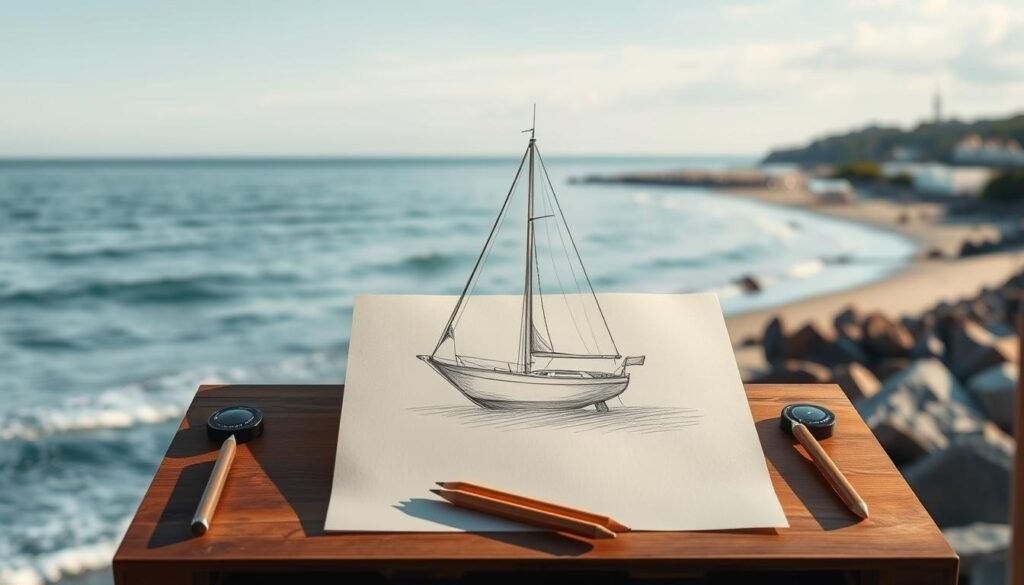
Did you know that nautical illustrations have been used for over 5,000 years, with ancient Egyptians creating detailed boat drawings on tomb walls? This timeless art form continues to captivate artists today.
Creating realistic maritime scenes requires understanding specific techniques. Many artists struggle with making vessels appear to float naturally on water rather than hover above it.
This comprehensive guide addresses common challenges faced when illustrating watercraft. I’ll walk you through fundamental principles that bring your nautical artwork to life.
You’ll learn practical methods for achieving accurate proportions and proper perspective. The techniques covered work for various vessel types, from simple riverboats to complex sailboats.
My approach focuses on building confidence through step-by-step instructions. You’ll gain skills to create professional-looking maritime illustrations that capture the essence of nautical life.
Key Takeaways
- Master fundamental principles for realistic nautical illustrations
- Learn techniques to make boats appear naturally floating on water
- Understand proper proportions and perspective for different vessel types
- Gain step-by-step guidance suitable for beginners and intermediate artists
- Develop skills to create professional-looking maritime scenes
- Avoid common mistakes that make drawings appear unrealistic
- Add personal artistic style to make your illustrations unique
Understanding Boat Designs and Proportions
Mastering boat illustration requires recognizing how different watercraft are engineered for specific environments. Each vessel type possesses unique characteristics that directly influence its appearance and function.how-to-draw-a-cake
Different Boat Types Explained
River and lake boats feature flat bottoms with wide beams. This design provides exceptional stability on calm inland waters. Coastal vessels utilize V-shaped hulls to cut through ocean waves effectively.
| Boat Type | Hull Design | Construction | Water Environment |
|---|---|---|---|
| River/Lake Boats | Flat bottom, wide beam | Various materials | Calm inland waters |
| Coastal Boats | V-shaped hull | GRP or wood | Rougher coastal waters |
| Traditional Clinker | Various shapes | Overlapping planks | All water types |
| Modern GRP | Engineered shapes | Single molded piece | Various conditions |
Traditional clinker-built boats show overlapping wooden planks along the hull. Modern GRP vessels display smooth, seamless exteriors. These construction differences significantly impact your drawing approach.
Proportions and Perspective Considerations
Proper proportions create believable illustrations. Maintain correct relationships between length, width, and height. This prevents top-heavy or unstable appearances.
The center line from bow to stern establishes fundamental symmetry. Pay careful attention to this guiding element. It ensures balanced representation on both sides.
Perspective dramatically alters a sailboat’s appearance. Viewing from above, at eye level, or below creates distinct visual effects. Understanding these variations enhances realistic depiction.
Accurate proportions form the foundation of convincing nautical art. They transform simple sketches into professional illustrations.how-to-draw-a-squirrel
These design principles provide confidence for tackling various boat illustration projects. From simple rowboats to complex sailing vessels, the fundamentals remain consistent.
Gathering Essential Tools and Materials
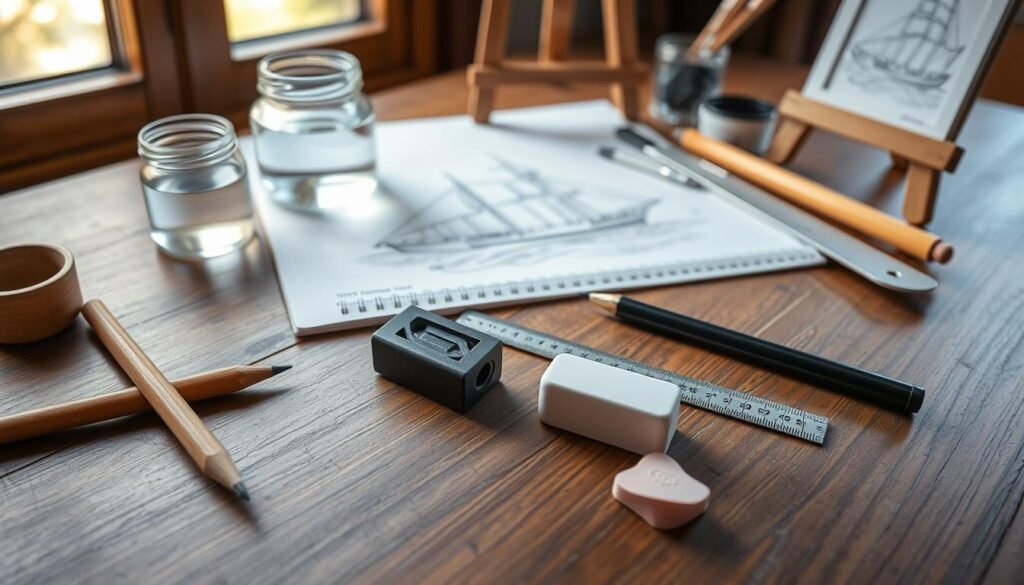
The foundation of any successful nautical illustration lies in the careful selection of your drawing implements. Proper materials provide control and precision, transforming a simple sketch into a detailed artwork.
Organization is key. Having everything within reach before you start maintains focus and a smooth workflow.how-to-draw-a-tulip
Choosing the Right Pencil, Paper, and Eraser
I recommend beginning with a sharp sketching pencil. This tool allows for both fine details and broader shading strokes. Using multiple pencil grades is invaluable for different stages.
I typically start with a harder 2H pencil for light initial sketching. Later, I switch to an HB or 2B for darker, more defined final lines.
Quality paper makes a significant difference. I prefer medium-weight drawing paper with a slight texture. This surface holds graphite well without excessive smudging.
A good eraser gum or kneaded eraser is essential. It cleanly removes guideline marks without damaging the paper. Keeping a reliable sharpener nearby ensures sharp points for fine details.
For adding color, gather colored pencils, markers, or watercolors. These tools bring your nautical scene to life with realistic hues.
How Do I Draw a Boat: Step-by-Step Process
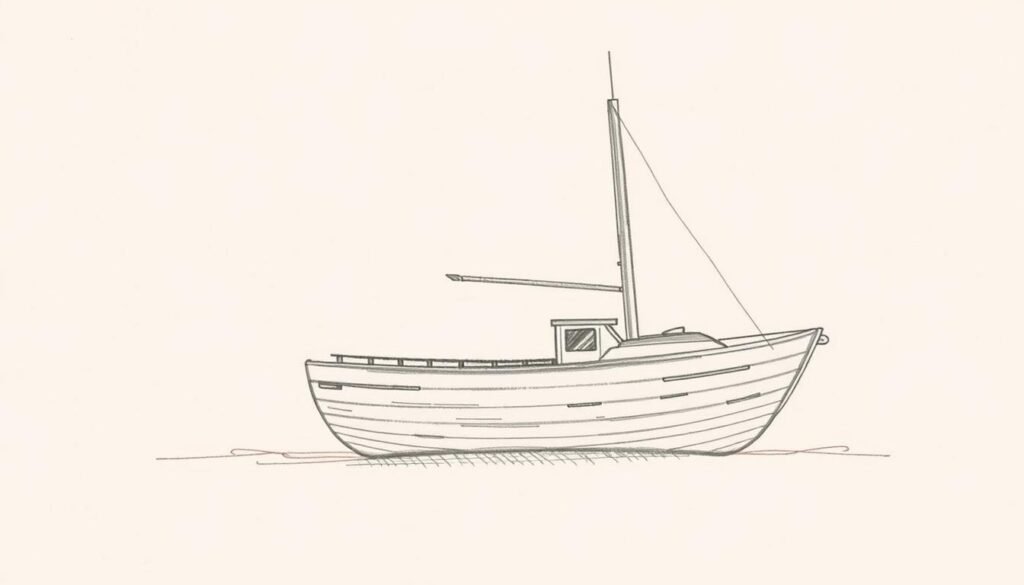
Translating design principles into illustration requires a structured, methodical approach. I follow a proven sequence that builds complexity gradually.how-to-draw-a-strawberry
This step-by-step method ensures accurate proportions from the beginning. Each phase establishes foundations for the next.
Sketching the Basic Shapes and Guiding Lines
I begin every nautical illustration with light guideline sketches. These initial marks establish proportions without commitment.
The first step involves drawing a perspective box with center lines. This creates a spatial framework for your vessel.
For riverboats, I use rectangular shapes as the underlying structure. Coastal vessels benefit from the figure-eight technique.
Constructing the Outline with Simple Geometric Forms
Simple geometry forms the base of all convincing illustrations. I construct hulls using trapezoids for flat-bottomed boats.
The figure-eight method creates natural curves for V-shaped hulls. This approach automatically tapers toward bow and stern.
These foundational shapes determine your illustration’s success. Take time refining them before advancing.
Adding the Correct Curves and Defining the Structure
Within your guideline box, develop the vessel’s distinctive curves. Ensure symmetrical balance on both sides of the center line.how-to-draw-a-crown
Strategic erasing and added lines define the boat’s orientation. Choose whether it faces toward or away from the viewer.
This systematic process works for various vessels. Mastering these techniques enables confident creation of any nautical scene, as demonstrated in this comprehensive boat drawing tutorial.
Detailing the Hull, Sails, and Enhancing Elements
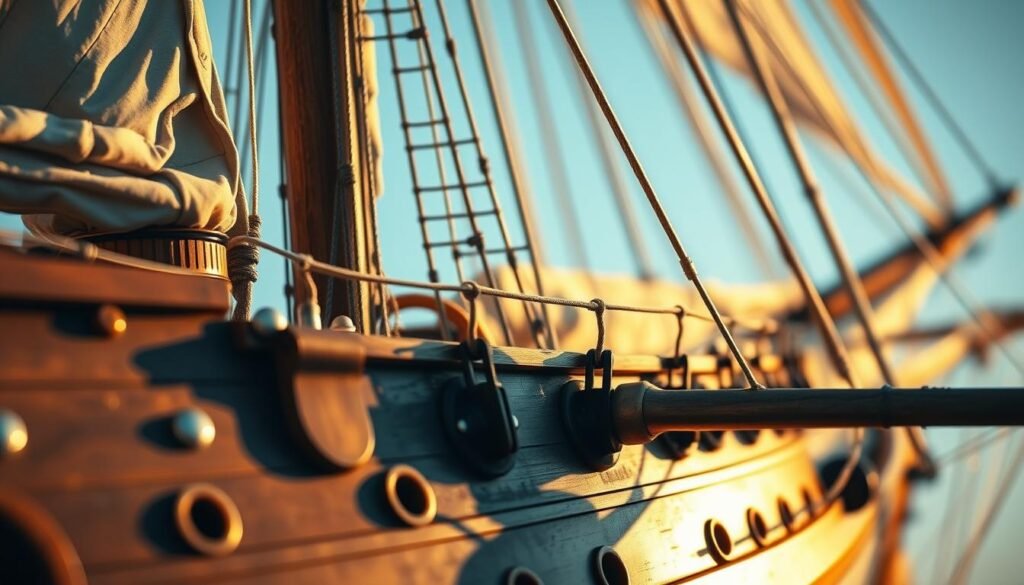
Adding intricate details to your nautical illustration elevates it from a simple sketch to a convincing maritime scene. This phase focuses on the defining elements that give each vessel its unique character.how-to-draw-a-rose-step-by-step
Defining the Boat’s Hull and Side Details
The hull construction type determines your approach to side detailing. Traditional clinker-built boats require overlapping plank lines along the hull for that distinctive layered effect.
Modern GRP vessels need smooth surfaces without visible planking. This reflects their molded, seamless construction. Pay attention to the boat’s side profile for accurate representation.
Enhancing with Sails, Masts, and Additional Features
For sailboats, begin with a perpendicular line for the mast. Add a small trapezoid where it connects to the deck. This creates a stable base for the structure.
Sketch triangular shapes for the sails, ensuring natural curves that suggest wind tension. The mast requires proper thickness and proportion for realism.
Enhance your illustration with authentic nautical details. Add wooden planks, rigging lines, and a lifesaver mounted on the vessel. These elements add character and depth to your artwork.
A horizontal line above the boat’s body defines the deck level. This serves as a reference point for placing vertical elements in proper proportion.
Capturing Realistic Water, Reflections, and Movement

The relationship between vessel and water surface presents one of maritime illustration’s most nuanced challenges. Properly rendered aquatic environments make your artwork appear genuinely immersive rather than flat.how-to-draw-kuromi
Techniques for Creating Reflective Water Surfaces
I approach water rendering by first considering the viewing angle. From high vantage points, the waterline appears flatter. Lower perspectives create more pronounced curves around the hull.
The critical 45-degree principle determines water appearance. Angles under 45 degrees produce darker values, while higher angles appear lighter. This alternation creates natural ripples.
Reflections should mirror the object’s base equidistantly below the waterline. Waves may stretch these reflections, picking them up over broader areas. This technique adds dimensional accuracy.
Conveying Displacement and the Illusion of Motion
Water displacement shows how the boat interacts with its environment. Heavier vessels create deeper curves at the waterline. This weight representation affects the overall shape.
Moving craft disrupt reflections with trailing waves. I convey motion by altering the water’s texture around the hull. Calm conditions allow clearer, mirror-like reflections.
These techniques work wonderfully for various sailboat drawing techniques. Mastering water interaction completes your nautical scene with professional polish.
Troubleshooting Common Pitfalls in Boat Drawing
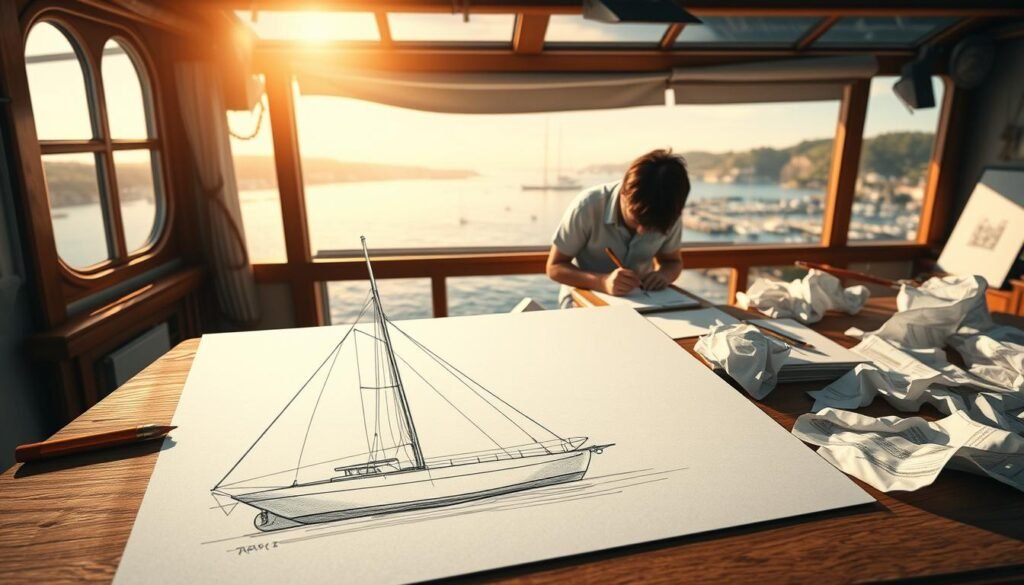
Even experienced artists encounter specific challenges when creating nautical artwork. I address frequent mistakes that undermine carefully planned illustrations. These practical solutions transform technical errors into learning opportunities.how-to-draw-dog-man
One critical improvement involves cleaning up unnecessary lines after establishing your vessel’s final form. Construction marks and guideline remnants create visual clutter. I systematically erase surplus drawn lines from the center outward.
Avoiding Unnecessary Lines and Perspective Errors
Regularly assess whether your vessel appears top-heavy or unstable. This usually indicates proportion errors in the hull-to-superstructure relationship. Perspective issues often distort the bow and stern alignment.
Initial guideline shapes like the figure-eight technique are merely tools. Deviate from these guides when refining your drawing to capture authentic character. This approach prevents rigid, unnatural-looking boats.
Many artists struggle with symmetry, creating boats where one side doesn’t match the other. I share techniques for checking imbalances before committing to final lines. These methods ensure balanced, professional-looking illustrations.
Learning to recognize common errors in your own boat drawings is essential for continuous improvement. Self-critique develops your eye for proportion and perspective. This systematic way of working elevates your nautical artwork.
Adding Your Personal Artistic Touch to Nautical Illustrations
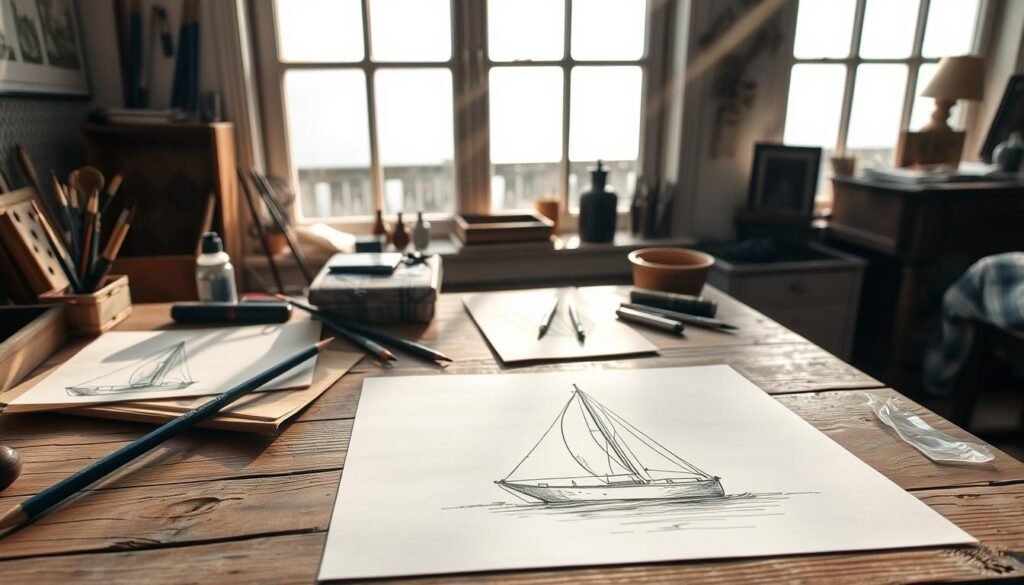
The transition from accurate representation to artistic interpretation marks a significant milestone in nautical illustration. This final phase transforms technical drawings into expressive artworks that reflect your unique vision.how-to-draw-luffy
Incorporating Creative Variations and Styles
I encourage experimenting with different artistic approaches once you master the fundamentals. Each style offers opportunities to showcase your individual voice in nautical artwork.
Practice blind contour drawings to enhance observational skills. Spend time sketching vessels without looking at your paper. This technique trains your eye to work in tandem with your hand.
Study real boats each day and draw them repeatedly. This consistent practice helps capture their essence instinctively. Your drawings will improve dramatically with each session.
Final Adjustments and Enhancing Overall Detail
The final part of your creative process involves stepping back to assess the overall composition. Make thoughtful decisions about which details to emphasize.
Color selection requires careful consideration. Choose hues that harmonize with your background or create striking contrast. This makes your sailboat the focal point.
Enhancing detail is a balancing act. Too many elements create clutter, while too few leave drawings feeling unfinished. Find that perfect middle ground for professional results.
Add personalized touches like unique weathering patterns or distinctive sail markings. These small details reflect your artistic interpretation and complete your boat drawing with character.
Conclusion
Your journey into maritime illustration reaches its natural culmination point. You now possess the comprehensive skills to create vessels that appear genuinely afloat.
Mastering different boat types and their unique shapes forms the foundation of convincing artwork. The principles of proportion and perspective ensure your illustrations maintain proper balance.
Realistic water interactions complete the illusion of nautical authenticity. These techniques transform simple sketches into professional maritime scenes.
Continue practicing regularly to refine your personal artistic style. Each drawing strengthens your ability to capture the timeless character of boats.how-to-draw-an-owl
I look forward to seeing the beautiful nautical illustrations you create. Your dedication to mastering these techniques will yield impressive results.