

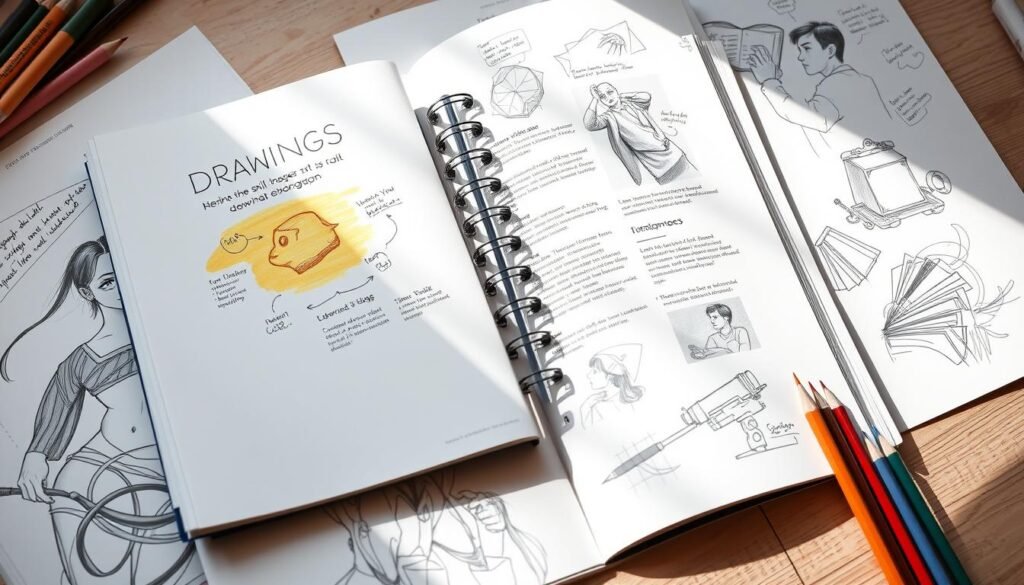
Did you know that over 90% of professional artists credit their ability not to natural talent, but to years of dedicated practice? This fact shatters the common belief that artistic skill is an innate gift.
Many people hold the misconception that drawing is a talent you’re either born with or without. I am here to tell you that this is simply not true. Drawing is a learnable skill, accessible to anyone willing to put in the effort.
The journey to proficiency is a gradual one, measured in months and years of consistent effort. It’s about transforming your ability to see the world and translate it onto the page. This happens through regular practice, whether in a studio or during spare moments in your day.
This comprehensive guide provides a clear path forward. I will walk you through proven methods, essential exercises, and practical strategies. My goal is to help you develop your abilities systematically and with confidence.
Key Takeaways
- Drawing is a skill that can be learned by anyone, not an exclusive talent.
- Consistent practice is the most important factor for improvement.
- Meaningful progress happens over a long-term timeline, not overnight.
- This guide offers actionable methods and exercises for systematic development.
- Practice can be integrated flexibly into various parts of your daily life.
- The focus is on building a sustainable and effective learning habit.
Understanding the Fundamentals of Drawing
The secret to confident drawing lies in recognizing that sophisticated subjects are composed of elementary components. Every complex form you encounter can be broken down into basic geometric shapes. This fundamental understanding transforms intimidating subjects into manageable exercises.
Basic Elements of Form and Line
Circles, rectangles, and triangles form the foundation of all drawing. These basic shapes combine to create any object imaginable. The drawing process begins with light, rough sketches focusing on proportions.how-to-draw-the-airplane
Gesture drawings capture the essence and movement of your subject. They teach you to work spontaneously before refining your work. This loose approach establishes the framework for more detailed work.
Solid outlines develop from careful observation of angles and edges. Using your pencil as a measuring tool improves accuracy significantly. This technique helps translate three-dimensional forms onto paper.
The Role of Gesture and Contours
Contour drawing involves mindfully traveling around your subject’s perimeter. This practice builds strong observational skills and hand-eye coordination. You become conscious of proportions and make corrections as needed.
Shadows and perspective are essential for creating depth and realism. They help represent three-dimensional forms on a flat surface. Understanding these elements is crucial for convincing artwork.
Observation skills are equally important as mark-making abilities. True drawing development comes from learning to see subjects accurately. For a comprehensive exploration of these concepts, I recommend this definitive guide to drawing fundamentals.
Effective Warm-Up Techniques for Artistic Success

Many artists overlook a crucial step that separates frustrating sessions from productive ones: proper warm-up routines. Starting cold often leads to stiff marks and discouraging results. A brief preparatory period wakes up your wrists, shoulders, and eyes.how-can-i-draw-an-elephant
Warm-Up Exercises to Boost Dexterity
Begin with simple mark-making exercises using your pencil. Explore scribbles, dots, stipples, and zigzag lines with varied pressure. This exploration helps you understand your tool’s full range.
Practice straight and curved lines of different lengths. Move to circular shapes and loose figure eights. These exercises build hand control and precision over time.
Drawing from your shoulder creates smoother arcs. Lock your elbow and wrist while making motions from the shoulder joint. This technique produces more confident marks.
Creative Freedom in Early Sketches
Approach warm-ups as meditative practice rather than serious work. These sessions calm your mind while building technical skills. They establish a focused creative mindset.
Fill a sketchbook page with explorations without judging results. The goal is comfort with tools, not perfect pictures. This freedom encourages experimental ideas.
Even a few minutes of warm-up time significantly improves subsequent drawing quality. Think of it as priming your creative muscles before the main work.aeroplane-how-to-draw
Practical Strategies for How to Get Better at Drawing

Building drawing proficiency requires more than just technical knowledge—it demands strategic practice habits. The right approach transforms your learning journey from frustrating to fulfilling.
Learning Through Repetition and Practice
Quantity often beats quality during the early learning phase. Create many quick sketches rather than perfecting single pieces. This approach builds muscle memory efficiently.
Frequent, shorter sessions yield better results than occasional marathon work. Your brain needs regular exposure to internalize the process. Consistency matters more than duration.
| Practice Approach | Frequency | Session Length | Benefits |
|---|---|---|---|
| Daily Short Sessions | 5-7 days/week | 15-30 minutes | Builds consistent muscle memory |
| Weekly Long Sessions | 1-2 days/week | 2-3 hours | Limited skill retention |
| Mixed Approach | 3-4 days/week | 45-60 minutes | Balanced progress |
Accumulating “pencil miles” makes techniques second nature. Trust this gradual process rather than seeking instant mastery.how-to-draw-lips
Embracing Constructive Criticism and Mistakes
Mistakes are essential stepping stones in the learning process. Even masters like Leonardo da Vinci learned through errors. View each mistake as valuable feedback.
Constructive criticism helps identify areas for improvement. Welcome feedback from peers or online communities. This input accelerates your skills development.
Formal classes provide structured guidance, but self-directed learning works equally well. Combine books, tutorials, and practice for comprehensive growth.
Establishing a Consistent Drawing Habit

The most overlooked aspect of artistic development is habit formation. Sustainable progress depends on integrating practice into your daily life rather than relying on sporadic bursts of inspiration.
Daily Sketchbook Routines
I recommend starting with 15-30 minutes each day for your sketchbook. The key is returning every day to maintain creative momentum. Fill a page at your own pace—some drawings take minutes while others require several days.
This approach emphasizes consistency over perfection. The act of regular sketching matters more than any single drawing’s quality. For deeper insights, explore this guide on building a consistent sketchbook habit.
Scheduling and Time Management for Art
Think of practice like athletic training. Frequent short sessions build skills more effectively than monthly marathons. Actively protect a block of time each day rather than watching the clock.
Carry your sketchbook to capture quick ideas and lines during waiting moments. Compare your work after months, not days, to see real progress. Improvement becomes visible over time through dedicated repetition.how-to-draw-a-nose
Overcoming Common Pitfalls in Your Drawing Journey

Many aspiring creators encounter predictable roadblocks that can stall their artistic progress. Recognizing these patterns early helps you navigate around them effectively.
Identifying and Fixing Recurrent Errors
Relying on a single source for learning draw is a significant limitation. Different artists explain concepts in unique ways. No one book contains every technique you might need.
I recommend consulting multiple books and online classes. This approach provides diverse perspectives on the same topics. You’ll discover methods that resonate with your personal learning style.how-to-draw-goku
Beginning with complex subjects like portraits often leads to frustration. These advanced topics require foundational skills first. Start with simple objects and gradually increase difficulty.
| Common Mistake | Better Approach | Key Benefit |
|---|---|---|
| Using one learning source | Multiple books & classes | Comprehensive understanding |
| Starting with advanced topics | Progressive difficulty | Sustained motivation |
| Learning everything at once | Sequential skill building | Deeper mastery |
Attempting to learn too many things simultaneously creates overwhelm. Focus on one topic before moving to the next. This systematic way ensures proper skill development.
The most valuable lessons often come from recognizing what doesn’t work for you.
Trust your instincts when certain methods consistently fail. While experimentation is valuable, forcing approaches that feel wrong wastes time. Find your natural path among the many techniques available.
Working exclusively alone misses the energy of creative community. Join other artists occasionally for fresh perspectives. This interaction provides motivation and new ideas for your journey.
Exploring Diverse Drawing Tools and Techniques
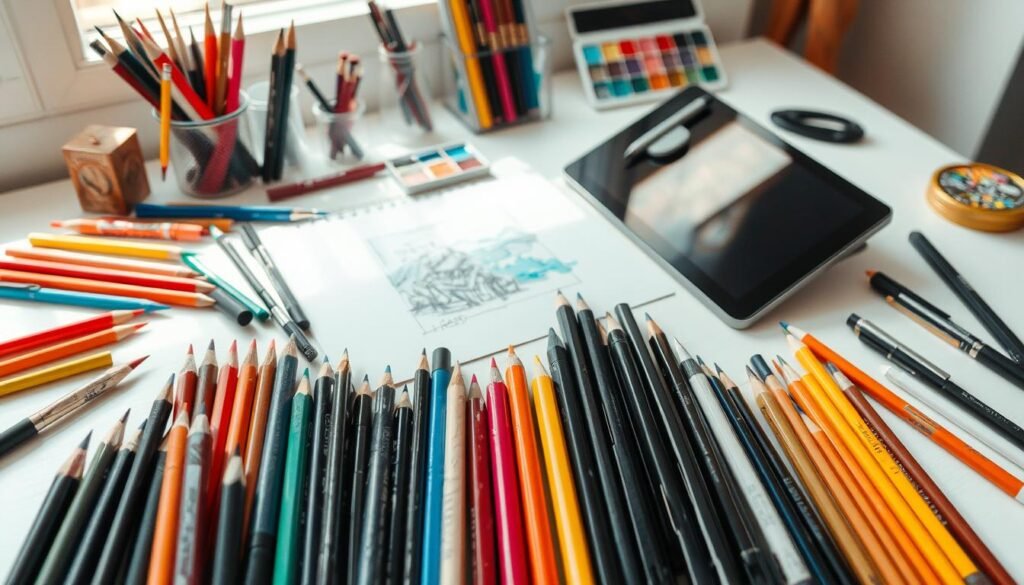
The tools you choose for your artistic practice fundamentally shape your creative expression and learning journey. Experimenting with different materials opens new dimensions of mark-making and creative possibilities.how-to-draw-a-baby
Experimenting with Different Media
I recommend trying charcoal, pastels, and wax crayons alongside your standard pencil. Each medium teaches unique approaches to creating lines and shapes. Quality tools like Faber-Castell PITT markers and Sakura Pigma pens offer distinct experiences.
Benefits of Mixed Media and Varied Materials
Different papers dramatically affect your results. Smooth Moleskine journals work well for precise sketching, while textured watercolor paper adds character. Index cards provide accessible practice surfaces that encourage experimentation.
Moving your entire arm creates fluid gestural marks, developing overall versatility. For adding shadows, squinting helps simplify values into basic light and dark areas. This technique improves your understanding of perspective.
Adapting to Tool Limitations
Each tool has specific capabilities. Learning to work within these constraints builds creative problem-solving skills. Avoid using rulers to push your freehand lines development.
Add details sparingly rather than uniformly across your objects. Strategic emphasis creates more effective drawing than overworking every area. These techniques generate fresh ideas for your art practice. For comprehensive guidance, explore these essential artistic development strategies.
Tracking Progress and Evolving Your Style

Artistic development unfolds across a timeline that demands patience and perspective. Meaningful improvement becomes visible when comparing drawings separated by years rather than weeks.
Reviewing old sketchbook pages provides concrete evidence of growth. This practice reveals subtle advancements in your work over time.how-to-draw-a-elf
Long-Term Improvement and Self-Reflection
Your artistic process naturally evolves through consistent practice. Style emerges organically rather than through forced effort.
Many professional artists developed skills while balancing other responsibilities. Ch’ng Kiah Kiean created masterful drawings while working full-time in architecture.
Dedicate journals to specific themes for focused practice. Collect reference photos for inspiration during practice days.
Diverse subjects—faces, patterns, ordinary objects—all contribute to skill development. Each step builds different aspects of your ability.
Celebrate incremental victories that compound into significant progress. Trust that showing up consistently creates lasting improvement.
Conclusion
The true path to artistic growth is refreshingly straightforward. It is built on the foundation of consistent practice, not mythical talent.
This guide has outlined essential techniques: from warm-ups and fundamentals to habit formation. These tips provide a reliable framework for anyone learning to draw.
Integrating this art into your daily life transforms your perspective. You begin to see the world as a source of endless inspiration.how-to-draw-a-dog-that-is-easy
Remember, progress is a gradual journey shared by all people who pursue this skill. Mistakes are not setbacks but vital steps.
Your personal journey is unique. Start with simple exercises, build a routine, and trust the process. The greatest reward is the meditative act of creation itself.