

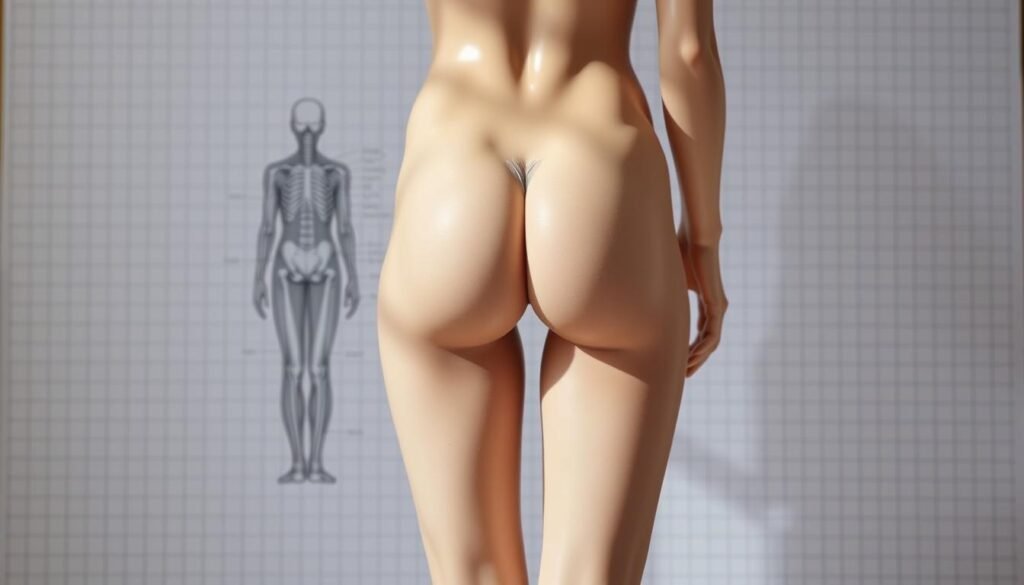
Did you know that the human gluteal region is one of the most frequently misrepresented areas in beginner figure sketches? Many artists struggle with its unique form and perspective.
This comprehensive guide demystifies the process of sketching the human posterior. I break down a complex anatomical subject into manageable, easy-to-follow stages.
My approach combines simplified beginner techniques with essential anatomical knowledge. You will learn not just the steps, but also the underlying reasons for the form’s appearance.
I have spent considerable time refining these methods. My goal is to help you skip years of trial and error with professional techniques that yield realistic results.
Whether your focus is animation, illustration, or fine art, the principles here will elevate your skills. This is the definitive way to master a challenging aspect of human figure art.
Key Takeaways
- Gain a clear, step-by-step process for sketching the human form accurately.
- Understand the basic geometric shapes that build the foundation of this anatomy.
- Learn essential anatomical reasons behind the form’s appearance.
- Access professional techniques that accelerate your learning curve.
- Build confidence in your figure drawing skills for various art forms.
- Apply these principles to improve the realism of your artistic work.
Laying the Foundation for Butt Drawing
Before sketching any anatomical details, establishing a solid structural base is essential for proper proportions. This first step separates professional results from amateur attempts.
Visualizing Basic Geometric Shapes
I mentally construct the gluteal region using simple three-dimensional forms. A prism represents the main volume of the butt area. This approach clarifies perspective and directional flow.
Cylinders form the legs extending downward from this central mass. Additional geometric bodies like another prism for the upper torso complete the framework. This visualization technique serves a dual purpose.
Establishing Perspective with a Solid Base
The center of your composition is the most important thing to establish early. Proper symmetry emerges naturally from this geometric foundation. I create one comprehensive base drawing rather than multiple revisions.
This method saves considerable time compared to my earlier approach of three or four line cleanings. A strong structural base makes the entire process more efficient and accurate.
How to Draw a Butt: Step-by-Step Guide
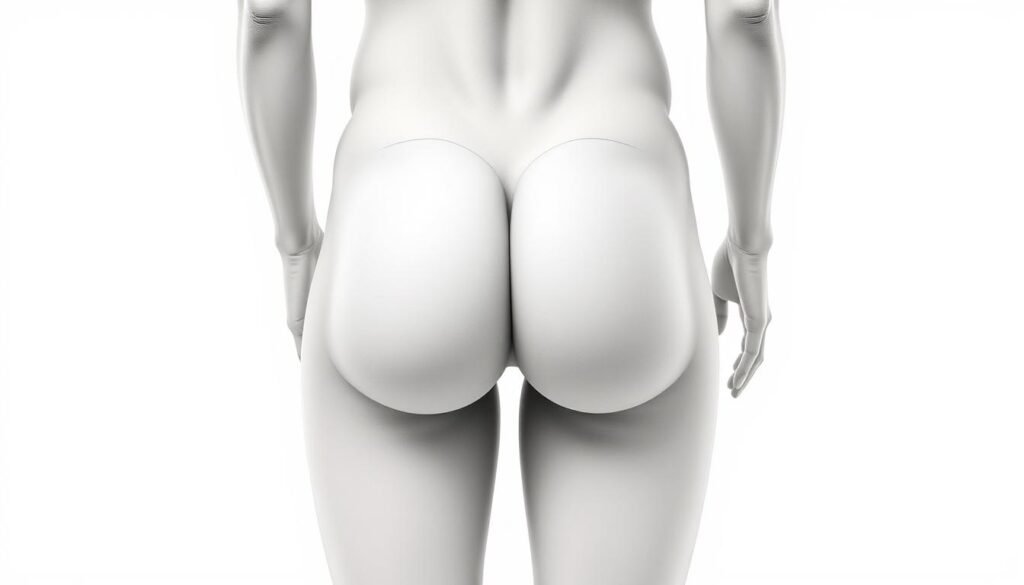
Building upon the structural framework, we now progress to defining the distinctive contours of the gluteal region. This systematic approach transforms basic shapes into realistic anatomy.
Starting with the Cheeks and Basic Form
I begin the cheek formation using two mirrored “C” shapes placed adjacent to each other. Connecting their bottom curves establishes the foundational silhouette.
This initial arrangement immediately suggests the recognizable form. The simple curvature provides an excellent starting point for further development.
Integrating Legs, Muscle, and Anatomy Details
The next step involves adding support structures. I create rounded rectangular forms extending downward from the central mass.
Positioning one leg behind the other creates proper depth perception. At the top, I place ovals representing muscular structure and spinal alignment.
These anatomical markers ensure proportional accuracy. They guide the viewer’s eye through the composition in a logical way.
Adding Final Touches with Shading and Highlights
Volume lines drawn along contour directions enhance three-dimensional perception. Strategic shadow placement defines light sources and surface curvature.
Contrast between dark and light areas creates visual interest. Highlights emphasize the most prominent surfaces, completing the realistic appearance.
This final step brings the entire composition to life. The finished work should look like a cohesive anatomical study.
Advanced Anatomy and Artistic Techniques
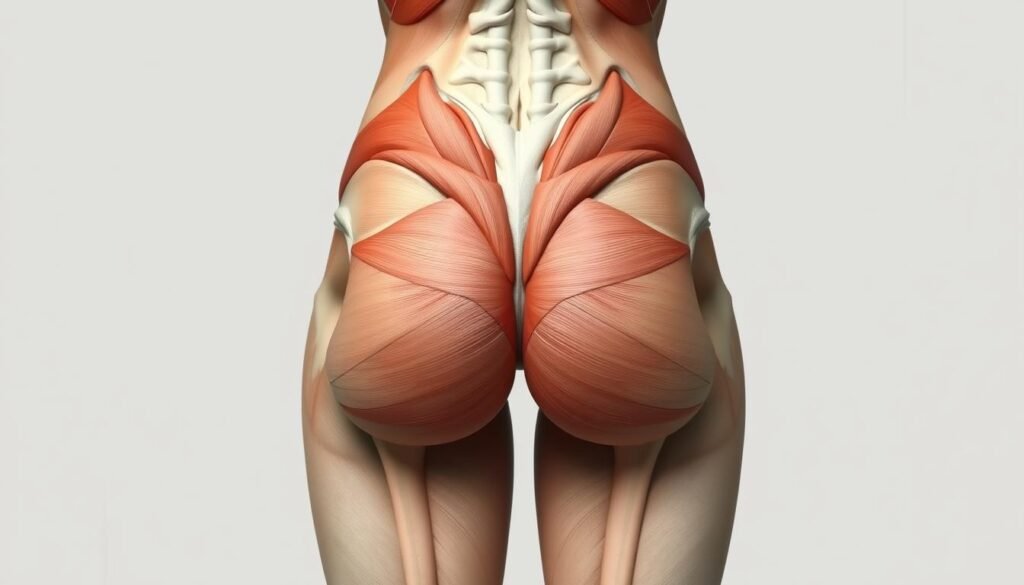
Professional figure artists recognize that realistic rendering depends on knowledge of muscular anatomy and fat distribution. This deeper understanding separates amateur work from professional results.
Understanding Butt Musculature and Fat Distribution
The three major muscles—gluteus medius, gluteus maximus, and tensor fasciae latae—create the foundational form. I visualize these structures as a tire or croissant shape filled with fat.
From the back view, the muscle forms create a butterfly pattern with diagonal ellipses. Fat distribution is crucial, making up about half the width and gathering toward the center.
The gluteal fold serves as a natural contour line that appears with weight-bearing but disappears during flexion. This understanding is essential for dynamic figure work.
Enhancing Volume with Gesture Lines and Shadows
I spend considerable time on gesture lines that follow volume direction. Strategic shadow placement creates convincing three-dimensional forms.
On female figures, a thicker fat layer softens muscle definition. Even lean individuals retain this reserve, which affects surface appearance significantly.
These advanced techniques elevate your figure art from basic sketching to professional anatomical study. The combination of anatomical knowledge and rendering skill creates truly realistic results.
Conclusion
Successful figure rendering emerges from the synthesis of structural knowledge and practical application. This comprehensive step-by-step approach transforms complex anatomy into manageable learning stages.
Regular practice represents the most effective way to internalize these techniques. Investing time in consistent drawing sessions builds the muscle memory needed for professional results.
This post provides a solid foundation for your artistic journey. The principles shared here will serve you well across various art forms. Remember that understanding anatomy gives your work authentic realism.
I encourage you to revisit this post whenever you need guidance. Continue exploring and making this knowledge your one true asset in figure art.