

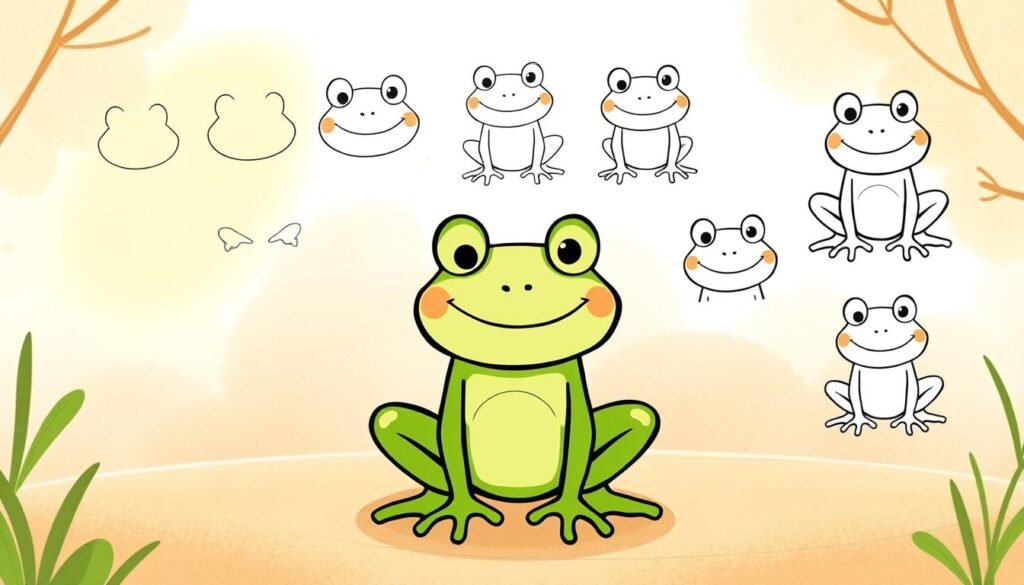
Did you know scientists have identified more than 7,500 species of frogs worldwide? These incredible amphibians have thrived for over 200 million years. Their amazing diversity offers endless inspiration for artists.
I am thrilled to present this comprehensive guide. It is designed for beginners eager to improve their sketching skills. We will use simple, actionable steps to capture the unique charm of these creatures.
My approach breaks down a seemingly complex subject into manageable parts. You will learn everything from basic anatomy to creating both realistic and cartoon illustrations. This method works for any skill level.
You will gain insights from my personal experience with frog drawing. I will share techniques for capturing distinctive features like bulging eyes and webbed feet. Understanding fundamental shapes makes the process fun and rewarding.
The vast world of frogs, with thousands of species in different colors and sizes, will fuel your creativity. By the end, you will have the confidence to create your own illustrations.
Key Takeaways
- Frogs are a diverse and ancient group of animals, perfect for artistic inspiration.
- This guide simplifies the process into easy-to-follow steps for all skill levels.
- You will learn to sketch both realistic and cartoon-style amphibians.
- Understanding basic frog anatomy is key to creating recognizable drawings.
- The tutorial focuses on fundamental shapes and proportions for success.
- Drawing these creatures can be an enjoyable and fulfilling activity.
Introduction to My Frog Drawing Journey
Frogs, with their vivid colors and distinctive patterns, present an endlessly fascinating subject for illustration. My passion for sketching these animals started with an appreciation for their unique place in the natural world.how-to-draw-a-sunset
Why I Love Drawing Frogs
I fell in love with this artistic challenge because frogs blend simplicity and complexity. Their body structure is a study of elegant shapes. Yet, details like skin texture and prominent eyes add depth.
My fascination extends beyond appearance. The incredible diversity of these animals across the globe captivates me. From tiny tree dwellers to large bullfrogs, each has its own character.
This practice has taught me to appreciate small details in life. It creates a meaningful connection to our ecosystems. Sketching fosters a deeper respect for these important creatures.
The Creative Benefits of Sketching Amphibians
The creative benefits are significant. My observation skills have sharpened. I now have a better grasp of animal anatomy.how-to-draw-a-simple-rose
This knowledge is valuable for any illustration style. It helps me capture expression, even in a simple cartoon frog design. These amphibians offer endless inspiration for both realistic and whimsical art.
I believe anyone can learn this skill. The joy and fulfillment I find in capturing these wonderful animals on paper is accessible to all. It is a rewarding creative journey.
Essential Tools and Materials for a Successful Sketch
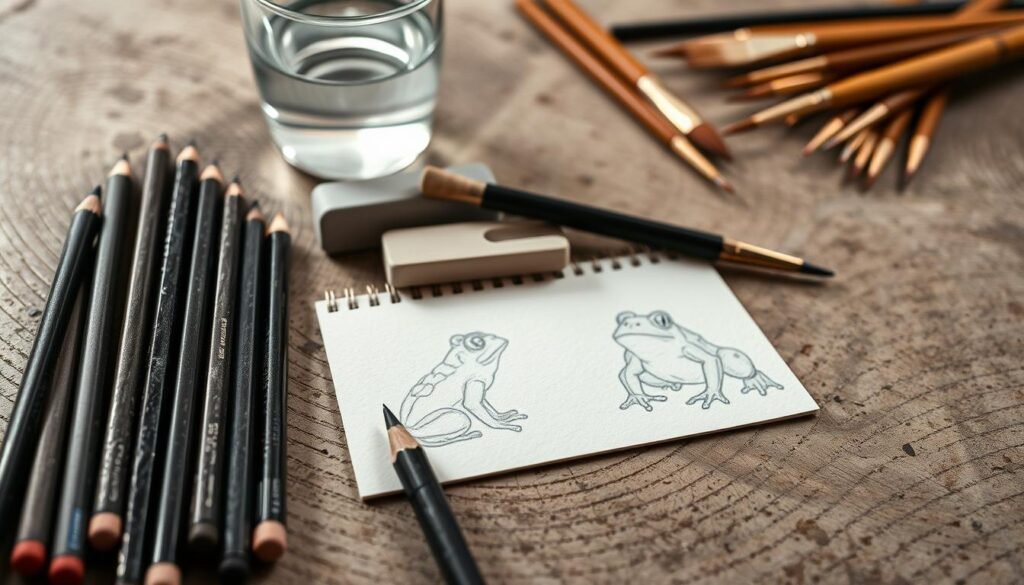
The right tools transform a simple sketch into a polished piece of art. In my guide, I emphasize that quality materials significantly improve your final results. They also make the entire process more enjoyable.how-to-draw-a-spongebob-squarepants
You do not need a vast collection to start. A few key items are enough for a great beginning. Let’s explore the essentials I rely on in my tutorials.
Choosing the Right Pencils and Erasers
Pencil selection is crucial for controlling your line work and shading. I use a progression of three pencils. An H pencil creates light, thin guidelines that erase easily.
For adding details and light shading, an HB pencil offers perfect control. Its medium-hard lead produces a clean, moderately dark trace. When it is time for rich shadows, I switch to a soft 4B pencil.
A kneaded eraser is my secret weapon. It lifts graphite to create highlights and corrects mistakes without damaging the paper. Its malleable nature allows for precise adjustments.
Selecting Quality Paper for Smooth Sketching
The paper’s surface greatly affects your drawing experience. I prefer smooth, lightly textured paper. It allows the pencil to glide effortlessly.
This type of surface also supports clean erasing. It helps you build up details without frustration. Good paper is a foundation for any successful frog drawing.how-to-draw-a-simple-dog
Additional Tools and Tips from My Experience
Remember, the best tool is practice itself. You can begin with any pencils and paper you have available. The goal is to start your creative drawing journey.
As you progress, you might explore advanced shading techniques with different materials. This guide provides a solid foundation. My tutorials will show you how to use these tools effectively.
Step-by-Step Guide on How to Draw a Frog Easy
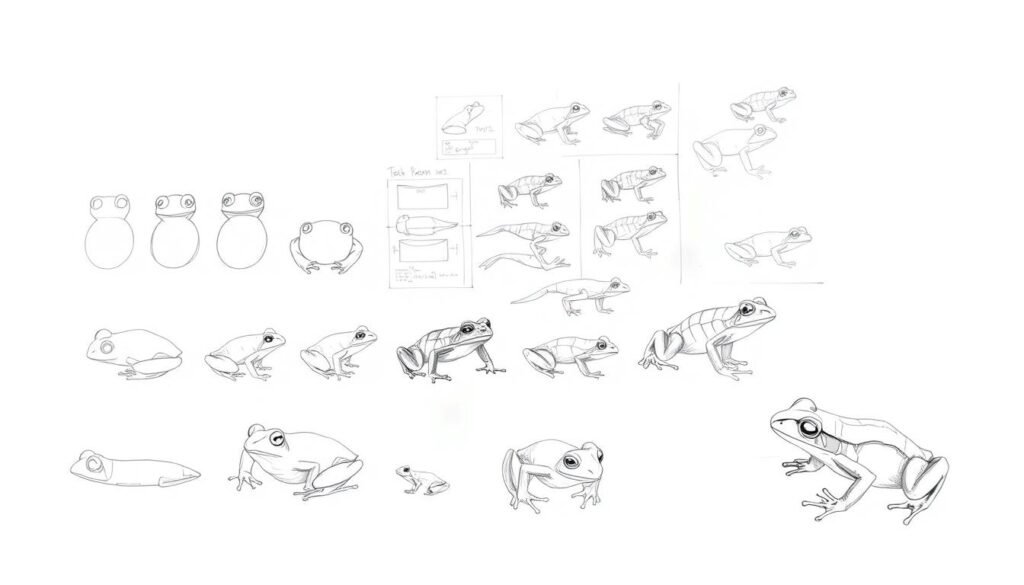
Building your frog’s form begins with simple, foundational shapes that anyone can master. This systematic approach ensures proper proportions from the start. We will construct the entire figure piece by piece.how-to-draw-a-boy
Starting with Basic Shapes and Outlines
I initiate every sketch with elementary geometry. This creates a sturdy framework for the entire frog body.
- Step One: Sketch a medium-sized oval shape for the main torso. Position it centrally on your page.
- Step Two: Add a smaller oval on top for the head. Then, place two large circles for the prominent eyes.
- Step Three: Use gentle C-curves to suggest the legs. Mark joint positions with small circles.
These initial lines are your guide. Keep them light for easy adjustment later.
Adding Key Features: Eyes, Legs, and Mouth
Next, we define the most distinctive parts. The character of your amphibian emerges here.
For the eyes, I draw a curve inside each circle to form an eyelid. I fill the pupil but leave a tiny white speck for life. The mouth is a simple line, often curved into a smile at the bottom of the face.
I refine the legs with opposing C-curves, creating a natural bend. The feet get long fingers with circular tips. Finally, I add the eardrum as an oval shape below each eye.
This step-by-step method makes the process clear and achievable for any artist.
Enhancing Your Frog Drawing with Creative Details
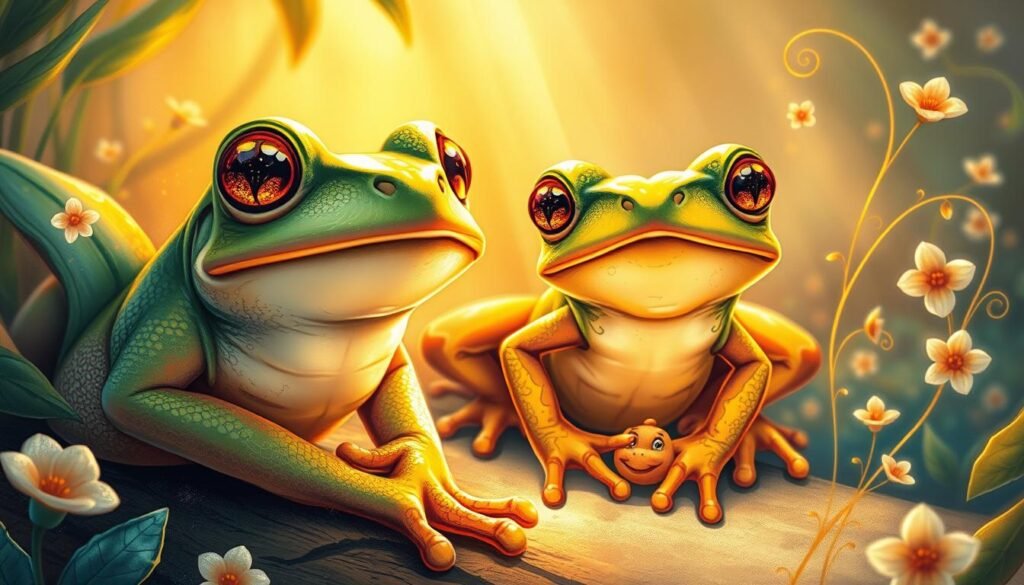
Creative embellishments transform a basic outline into a vibrant, personality-filled artwork. This stage adds depth and character to your illustration.
I focus on bringing my amphibian sketches to life with thoughtful finishing touches. These elements make each piece unique.how-to-draw-a-flamingo
Incorporating Texture and Patterns
Texture adds realism to any illustration. I use curvy lines and small circles to mimic natural frog skin.
Patterns create visual interest. Polka dots, stripes, or abstract designs work well for cartoon frog creations. This approach makes each frog drawing memorable.
Using Color and Shading Techniques
Shading creates dimension in your artwork. I use different pencil pressures to achieve various grey intensities.
Color selection brings vibrancy to the piece. Frogs display amazing hues from orange to blue. Experiment with materials like watercolor for soft effects.
| Shading Technique | Pencil Type | Best Use | Effect |
|---|---|---|---|
| Light Shading | HB Pencil | Subtle shadows | Creates gentle dimension |
| Medium Shading | 2B Pencil | General shadows | Adds depth and form |
| Dark Shading | 4B Pencil | Dramatic shadows | Enhances contrast |
| Highlight Creation | Kneaded Eraser | Light areas | Brings forward elements |
Always shade beneath the body to ground your illustration. This prevents floating appearances. For more inspiration on cartoon styles, explore this creative frog drawing guide.
Conclusion
Every artist’s journey begins with that first pencil stroke and grows through dedicated practice. I hope this comprehensive guide has given you the confidence to create your own unique frog drawing.
The steps I’ve shared work for both realistic and cartoon styles. Feel free to revisit this page whenever inspiration strikes. Your artistic skills will improve with time and consistent effort.
For additional guidance, explore this detailed frog drawing tutorial. It offers clear instructions perfect for beginners. Continue your creative journey by sketching other animals as well.
Remember that each drawing you complete builds your abilities. Embrace the learning process and enjoy every moment of creation. Your unique style will shine through with practice.how-to-draw-a-hat