

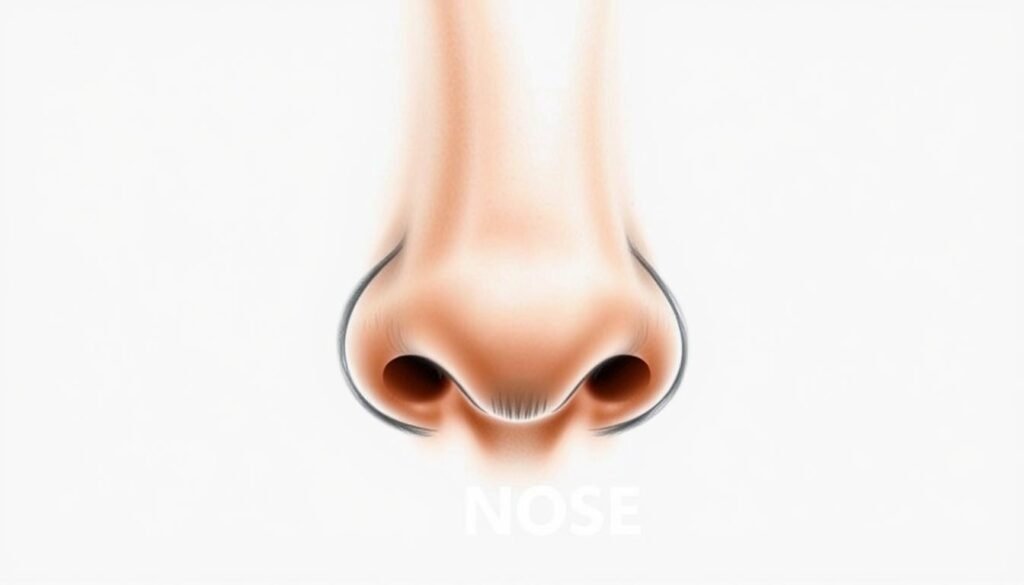
Did you know that over 80% of aspiring artists identify the nose as the most challenging facial feature to capture? This single element can make or break a portrait. Many people struggle because the nose is an irregular form, not a simple shape like a circle or triangle.
I’m here to tell you that creating a realistic nose is actually rather simple. It often begins with just four lines. The rest of the process is about adding value through shading. The true key to successful nose drawing is not complex technique, but observation.
This guide will demystify the process. I will break it down into manageable steps that anyone can follow, regardless of skill level. We will move beyond the common misconception that drawing noses is difficult. Instead, we will focus on how light and shadow create the illusion of a three-dimensional form on your two-dimensional surface.
Your final piece must include the darkest shades, the lightest tints, and the grays in between. Remember, no two noses are the same. With practice and patience, you will develop the skills to confidently tackle this essential aspect of portrait art.
Key Takeaways
- Drawing a realistic nose is simpler than many artists believe, starting with basic lines.
- Careful observation of your subject is the most critical skill for success.
- Understanding light, shadow, and value is more important than perfect outlines.
- This tutorial provides a structured, step-by-step approach suitable for all levels.
- Mastering the nose is a fundamental skill for creating compelling portraits and character designs.
Understanding the Basic Structure and Planes of a Nose
Before attempting complex shading techniques, artists must first comprehend the three-dimensional form of the nose. This foundational knowledge transforms your approach from guessing to understanding. I begin by visualizing the basic shapes that create the underlying framework.
Breaking Down the Basic Shapes
Think of the nose as a collection of geometric forms. The bridge resembles a rectangular prism that narrows toward the tip. For wider nostrils, I enlarge this rectangular structure slightly. These flat planes help me understand volume before adding curvature.
The tip consists of a central sphere flanked by two smaller spheres representing the nostrils. This simple arrangement forms the core shape. As demonstrated in this comprehensive anatomy tutorial, mastering these fundamental components is essential.
Identifying Planes and Value Ranges
I simplify the nose into distinct flat surfaces or planes. Imagine a chiseled form with nine primary planes: three across the top, three in the middle, and three at the bottom. Each plane faces light differently, creating unique value ranges.
This systematic approach provides clarity for placement of shadows and highlights. Understanding planes transforms irregular curves into manageable flat surfaces. The structure becomes predictable rather than mysterious.
Essential Tools and Techniques for Nose Drawing
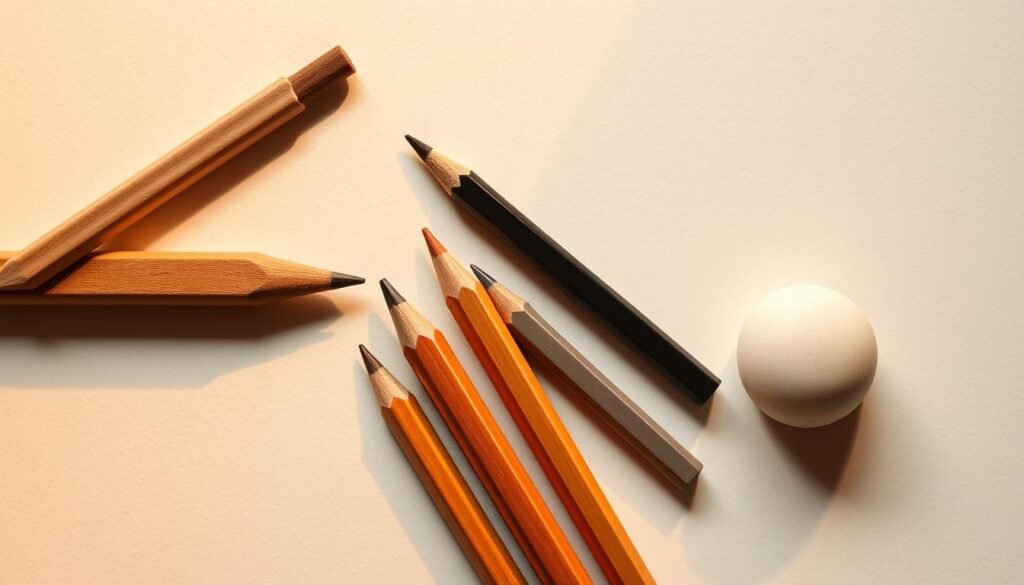
Mastering facial features requires not just skill but also familiarity with the right artistic implements. The proper selection of materials significantly impacts your final results. I recommend investing time to understand how each tool contributes to realistic representation.
Choosing the Right Pencils and Paper
Softer graphite pencils like 2B, 4B, or 6B create visible marks without excessive pressure. Harder pencils can damage paper and are difficult to erase. Always begin with light strokes when plotting your initial shapes.
The paper’s texture, or tooth, affects how graphite adheres to the surface. Heavier weight paper withstands multiple erasures and blending techniques better. Quality materials make the drawing process smoother and more professional.
Using Blending Stumps and Erasers Effectively
A blending stump creates smooth transitions between shadow areas. This tool works graphite into the paper’s surface for seamless value changes. The blending stump is essential for realistic texture development.
Kneadable erasers allow precise adjustments to small areas within your artwork. You can shape them to lift overworked shading and create subtle highlights. This versatile tool helps every artist achieve cleaner results.
With practice, these tools become extensions of your creative vision. Even modest supplies yield excellent outcomes when used correctly. The right equipment empowers your ability to capture the unique character of each nose you render.
How to Draw a Nose Easy: Step-by-Step Process
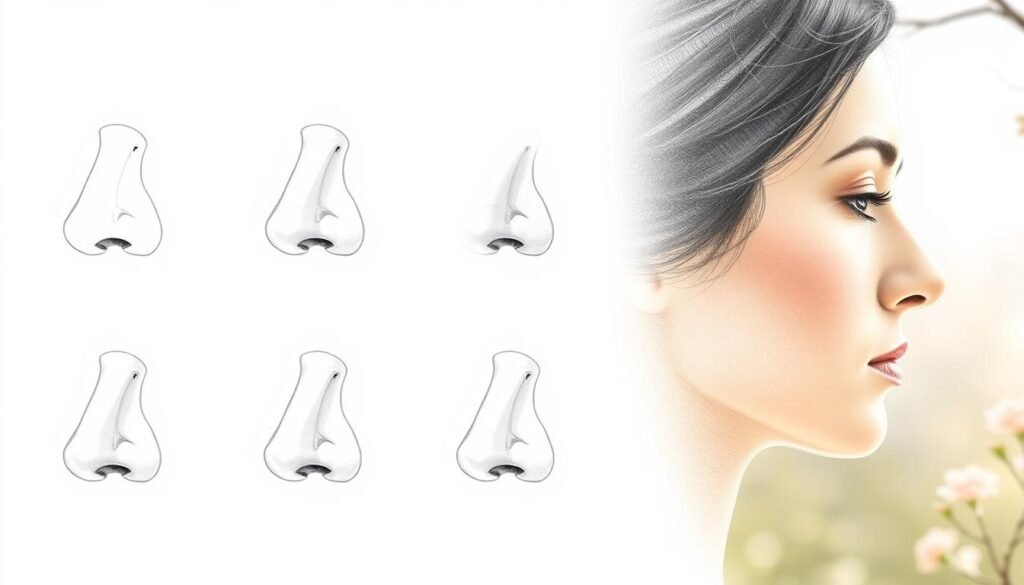
This is where your drawing truly begins, building form from simple, guided marks. I will break the process into clear step-by-step instructions for a methodical approach.
Establishing Guidelines and Drawing Initial Lines
Start by sketching a light ellipse for the tip. This foundational shape anchors the entire structure. Next, start drawing the four key lines.
Create two subtle curves for each nostril opening. Add two more lines to suggest the outer edges. This framework, as detailed in this frontal view tutorial, establishes proportion before detail.
Plotting the Nostrils and Defining Contours
Plot the nostrils using “C” shapes. Draw a small “C” on each side of the ellipse for the openings. Then, sketch a larger, mirroring “C” around each to form the outer nostril contour.
Use a soft, erasable line to hint at the bridge. This guideline helps position shadows and is not part of the final rendering.
Mapping Light and Shadow Areas
Identify the darkest areas first, typically under the tip and within the nostrils. Apply value here gradually. Focus on light and dark areas, not new lines.
Make sure your shading follows a consistent light source. Lighter areas appear forward, while darker ones recede. This value contrast creates a realistic, three-dimensional nose.
Techniques for Realistic Shading and Texture
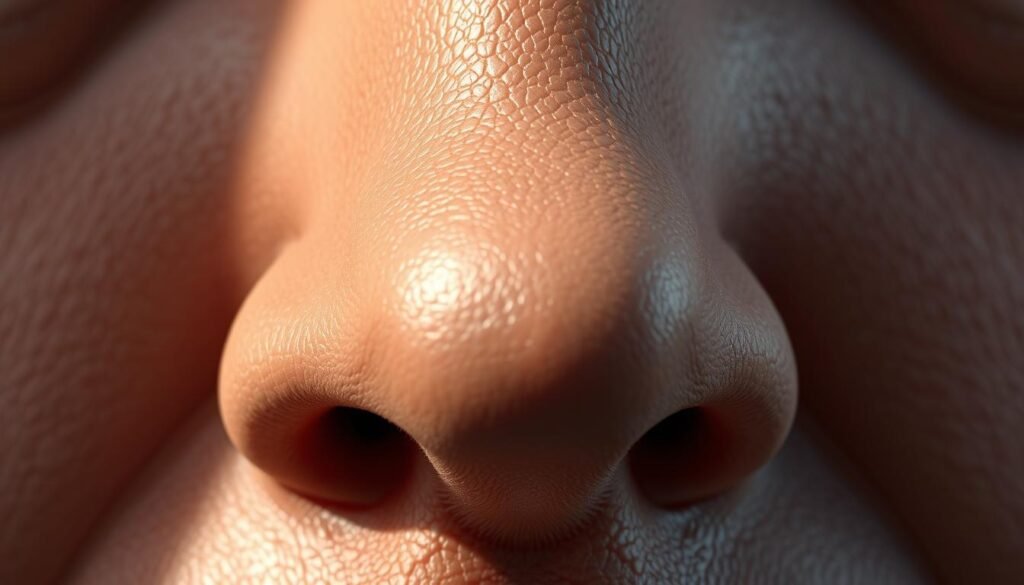
Your understanding of the nose’s planes now becomes your guide for placing highlights and shadows accurately. This step transforms a flat sketch into a form with real depth. I focus on creating a full spectrum of value, from pure white to deep black.
Imagine your light source is above and to the left. The planes facing that light will be brightest. The opposite side and the areas underneath will hold the darkest shadow.
Creating a Full Range of Values
The bridge and top often catch the most light. Render these areas with lighter tones. Simultaneously, they cast a soft shadow on the areas below.
True shading means developing both tints and shades. Look for subtle highlights even within darker areas, like under the tip. This reflected light adds immense realism.
Blending Methods for Smooth Transitions
For covering large areas, angle your pencil. Use the side of the lead for soft, even coverage. This technique prevents harsh marks.
I then use a blending stump for grading. It smoothes pencil strokes into seamless value transitions. This process builds the realistic texture of skin.
Careful blending eliminates hard lines. It creates the subtle depth and texture that make your rendering appear lifelike. Observe these value changes closely for the best results.
Drawing Noses from Different Angles and Styles
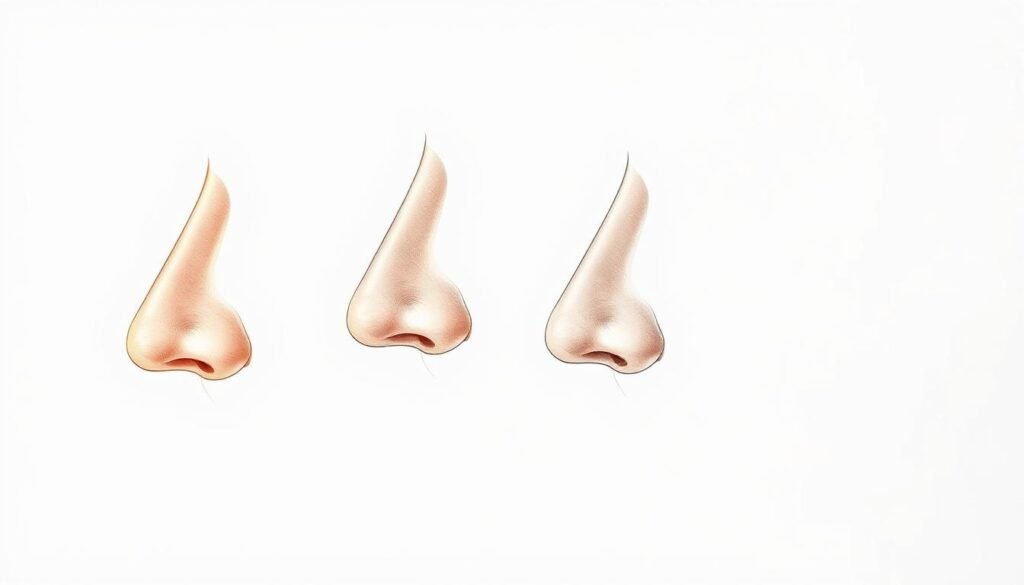
The true test of understanding a form is the ability to render it from multiple perspectives. Mastering the nose in profile view expands your skills beyond the frontal face. This angle presents a distinct look and set of challenges.
When tackling a side nose, I simplify the complex structure into basic shapes. The upper portion often uses two geometric forms. The lower part becomes a single, flowing shape.
Comparing Frontal and Profile Views
Light behaves uniquely on the profile. The bridge nose typically catches the most illumination. The right side or left side will hold shadows based on your light source.
I always watch for reflected light. It can brighten the bottom of a nostril, even in shadow. This detail adds realism to your drawing nose from the side.
Adapting Techniques for Cartoon Versus Realistic Styles
Different artistic styles interpret the nose face uniquely. A simple anime nose might use just two lines. A realistic style requires full shading and texture.
The core principles of shape and value remain constant. They apply whether you draw a nose for comics or portraits. Practice from all angles builds a stronger mental image of the form.
| Style | Complexity | Focus | Best For |
|---|---|---|---|
| Anime | Low | Simplified Lines | Character Design |
| Disney | Medium | Expressive Shapes | Animation |
| Realistic | High | Value & Texture | Portraiture |
Exploring these variations, as shown in this nose structure guide, deepens your overall understanding. It makes drawing nose features from imagination far more intuitive.
Enhancing Your Nose Drawing with Character and Expression>
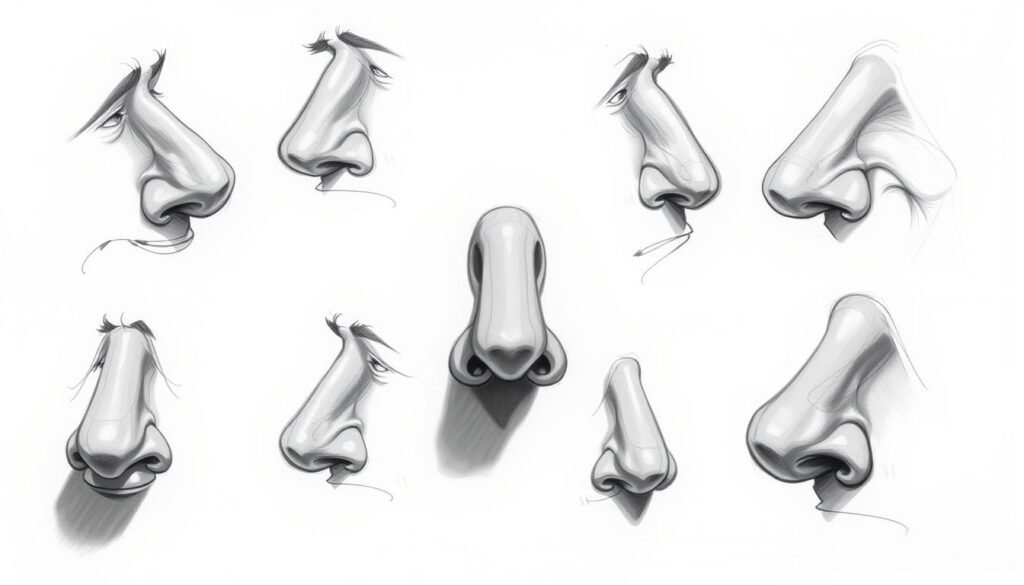
The nose serves as a powerful tool for conveying character and personality in portrait art. Moving beyond basic anatomy allows you to create distinctive faces that tell stories. I focus on proportional relationships and unique features that transform generic renderings into memorable characters.
Adjusting Proportions Based on Age and Gender
Gender differences significantly impact nasal structure. Masculine noses typically feature broader nostril openings and more prominent septums. Feminine versions often display thinner bridges and smaller overall shapes.
Age progression follows predictable patterns. Children’s noses remain small and underdeveloped compared to adult features. Elderly subjects show lengthening and downward drooping due to cartilage changes.
Proper positioning relies on facial guidelines. The nose centers vertically on the face, with nostril placement aligning with tear ducts. Size relationships often correlate with ear dimensions for balanced proportions.
Exploring Unique Nose Types and Features
Distinct type nose variations add immediate character. The Roman nose features a prominent, curved bridge descending to the tip nose. Button noses present small, rounded shapes with upturned ends.
Snub versions appear short with upward-curving tips. Crooked noses introduce appealing asymmetry. Each shape nose variation creates specific facial impressions.
Bridge height and nostril size further diversify characters. Sharpening the tip nose creates angularity, while rounding softens appearance. These subtle adjustments make each drawing noses exercise unique.
Mastering these variations prevents repetitive character designs. Your drawing skills grow as you explore the full spectrum of nasal shapes. The rest of the face builds around this central feature.
Conclusion
You now possess a complete toolkit for tackling one of portraiture’s most nuanced features. The essential steps remain consistent: identify the planes, establish the lines for the nostril and contour, and build a full range of value. This structure provides a reliable foundation.
Remember, this skill requires time and consistent practice. Review the core concepts, from basic circle and ellipse shapes to shading the bridge, top, and bottom for depth. These techniques apply to all noses, whether viewed from the front or in a detailed side-view drawing tutorial.
The rest of your art practice will benefit from this focused study. Make sure to observe unique characteristics in every image you use for reference. With dedication, you will master this complex feature, adding confidence and versatility to your drawing repertoire.