

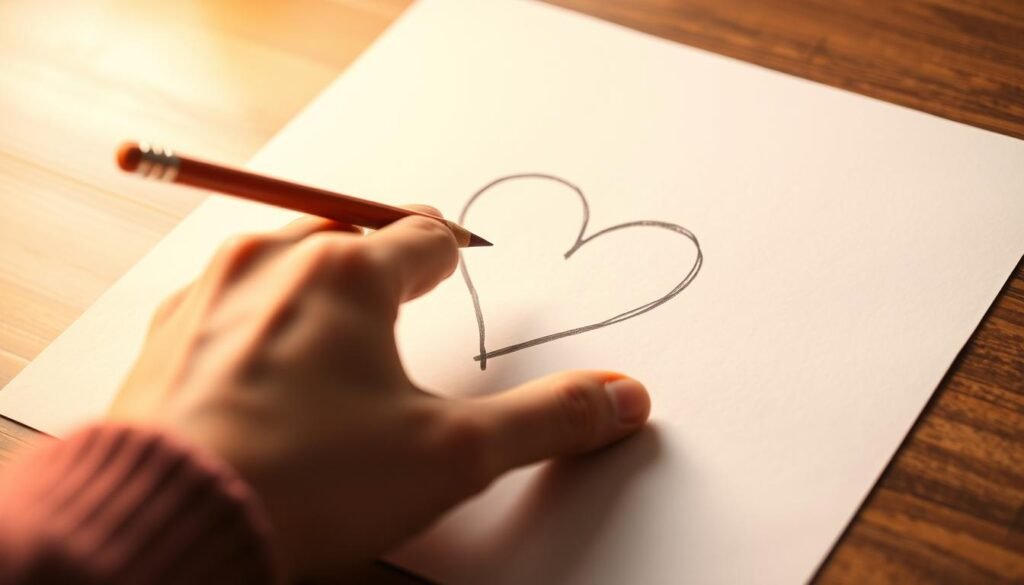
Drawing a heart is a skill loved by many, showing love, affection, and warmth. It’s a gesture that transcends language barriers, making it a universal symbol of connection.
I will guide you through the process, providing a step-by-step tutorial on creating a beautiful heart. Understanding the basic shape and using the right tools are crucial for a perfect drawing.
Key Takeaways
- Understand the basic heart shape
- Choose the right drawing tools
- Follow a step-by-step guide
- Practice to achieve perfection
- Explore different styles and variations
Understanding the Basic Heart Shape
Drawing a heart starts with knowing its basic shape and what it means. The heart shape is a symbol known worldwide. It stands for love, affection, and feelings.
The heart symbol has a long history, dating back to ancient times. It has changed in meaning over the years. Now, it can mean romantic love or spiritual devotion.
The Symbolism of Hearts
The heart is often seen as a symbol of love and passion. But, its meaning can change a lot depending on the culture or context. For example, in some places, the heart means courage and strength. In others, it’s about emotional or spiritual health.
Knowing these meanings can make your drawings more meaningful. You can show specific feelings or ideas through your art. For more tips on drawing, check out https://letsdrawthat.com/how-to-draw-a-heart/.
Different Styles of Heart Shapes
There are many ways to draw hearts, from simple to detailed. The style you pick can change how your drawing looks and feels.
| Style | Description | Example Use |
|---|---|---|
| Simple | Minimalist design, often used in modern art. | Greeting cards, logos. |
| Decorative | Intricate patterns and designs, often used in traditional or cultural art. | Art projects, decorations. |
| Abstract | Non-representational forms, often used in contemporary art. | Art exhibitions, unique gifts. |
Trying out different styles can help you find what works best for you. Whether you’re drawing for fun or a project, knowing the basics of heart shapes is key.
Tools You Will Need for Drawing
The first step in drawing a heart is to gather your supplies. Having the right drawing tools and art supplies can make a big difference in your drawing’s quality.
To start, you’ll need some basic tools. Here are the essentials:
Pencils and Erasers
- A graphite pencil (HB or 2B) is great for sketching the heart’s outline.
- A good quality eraser is key for fixing mistakes and removing guide lines.
Pens and Markers
After you’re happy with your pencil sketch, you can ink it with a pen or marker. Some top choices are:
- Fine-tip pens for detailed work.
- Markers for bold lines and bright colors.
Optional: Color Pencils or Paint
If you want to add color, consider these options:
- Colored pencils for soft, layered colors.
- Watercolor or acrylic paint for a lively look.
Having these art supplies ready will help you make a stunning heart drawing. Remember, the quality of your tools can impact the result, so pick wisely.

Step-by-Step Guide to Drawing a Heart
Learning to draw a heart is easy with a few steps. This step-by-step drawing guide will help you. It’s simple to follow along.
Starting with Basic Shapes
To start, draw the basic shapes of a heart. Use a pencil to draw a circle and a triangle. The circle is the top, and the triangle is the bottom point. For more help, check out wikiHow’s heart drawing tutorial.
Refining the Shape
Once you have the shapes, refine them into a heart. Make sure the curves are smooth and even. This makes your heart look right and pretty.how-to-draw-a-rose-easy-step
Adding Details
After you’ve shaped the heart, add details like shading or patterns. Shading makes it look three-dimensional. Patterns add a fun touch. Try different styles to make your heart unique.
Drawing a Heart Freehand
Learning to draw a heart freehand takes time and practice. You need to know the basic heart shape and practice to get a smooth line.
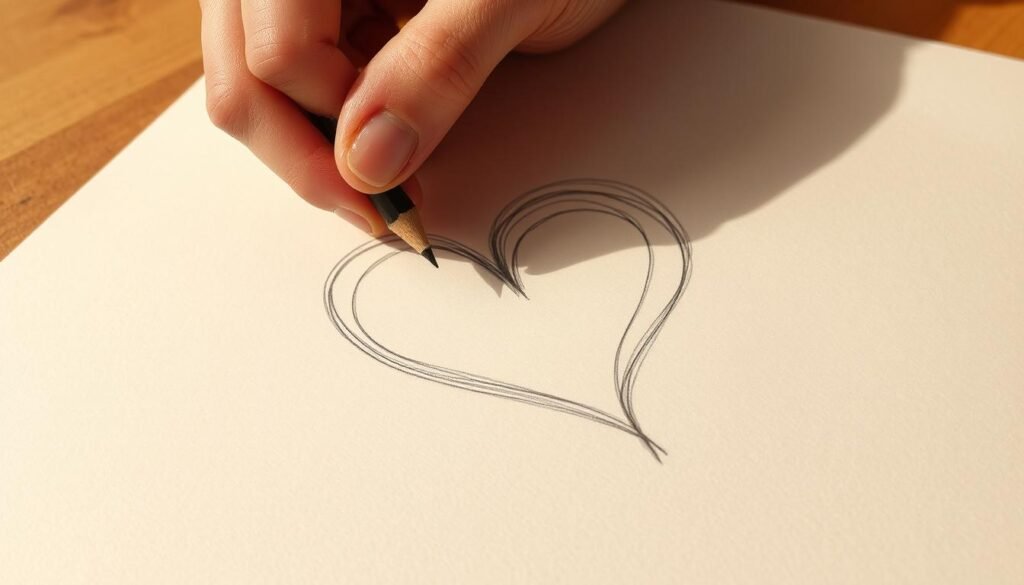
To draw a heart well, you need steady hands. You can get better at this by doing simple exercises to improve your hand’s stability.how-to-draw-a-square-with-3-lines
Techniques for Steady Hands
One way to get steady hands is to practice drawing straight lines and curves without looking. This builds the muscle memory you need for freehand drawing.
Also, use a relaxed grip on your tool. Holding it too tight can make your hand shake, leading to uneven lines.
Practice Makes Perfect
“The more you practice, the better you will become at drawing hearts freehand,” many artists say. Regular practice sharpens your skills and improves your precision.
“Practice is the key to mastering any drawing technique, including freehand drawing.”
For more tips and tutorials on drawing hearts, check out https://dreieck.com/en/drawing/hearts/. There, you can find various techniques to boost your skills.
Using Grids to Draw a Perfect Heart
The grid method is a great way for artists of all levels to draw a heart accurately. By dividing the paper into squares, your heart drawing will be symmetrical and the right size.
Setting Up a Grid
To start, you need to set up a grid on your drawing paper. Lightly draw intersecting lines to create a grid pattern. The size of the squares will depend on how detailed you want your drawing to be.
For a basic heart, bigger squares work well. But for detailed designs, you’ll need smaller squares.
How to Use the Grid Method
After setting up your grid, start drawing your heart one square at a time. Look at a reference image to see the heart’s shape in the grid squares. Then, replicate this shape in your drawing’s squares.
This way, you build your drawing step by step, keeping the proportions right. For more tips on drawing hearts, check out this tutorial.
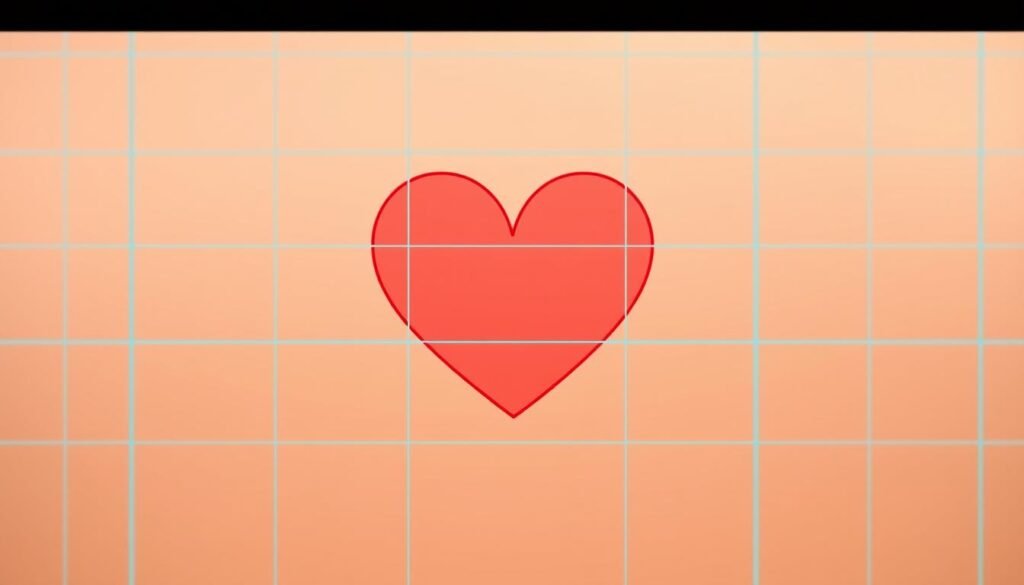
Using a grid makes your heart drawings much more accurate. It’s a helpful technique for both new and seasoned artists.
Heart Variations You Can Try
With a bit of practice, you can master different heart variations. This adds your own personal touch. Heart variations range from simple and classic to elaborate and decorative designs.how-to-draw-a-rabbit-easy
Simple Heart Shapes
Simple heart shapes are the base of many designs. To draw a simple heart, start with a basic shape. Then, refine it for a smooth, symmetrical outline. You can use this shape for more complex designs or keep it simple and elegant.
Decorative Hearts with Patterns
Decorative hearts with patterns make your designs more interesting. You can use patterns like stripes, polka dots, or florals. Try different patterns and colors to find the perfect mix for your project.
3D Heart Illustrations
Creating 3D heart illustrations adds drama to your designs. Use shading and perspective to add depth. With practice, you can make stunning 3D hearts.
Adding Color and Shading
Adding color and shading to your heart drawing can make it more vibrant. You’ll learn to make your drawings more engaging and appealing. This is a great way to turn a simple sketch into a beautiful piece of art.
The right color palette is key to enhancing your heart drawing. You can pick colors that match heart symbolism, like reds and pinks for love. Or, you can choose abstract colors to show different emotions.
Choosing Your Color Palette
Choosing colors for your heart drawing depends on the mood or message you want to share. Soft pastels can give a romantic feel, while bold colors make a statement. You can also find inspiration in nature, art, or your favorite designs.how-to-draw-a-tornado
Here are some color combinations to consider:
- Monochromatic shades of red for a classic, romantic look
- Pastel colors for a soft, whimsical feel
- Bright, bold colors for a modern twist
Techniques for Coloring a Heart
After picking your colors, it’s time to apply them to your heart drawing. Different techniques can create various effects, like:
- Layering colors to create depth and dimension
- Using shading techniques to add volume to your heart drawing
- Experimenting with different textures to add visual interest
For more inspiration on drawing hearts and exploring different artistic techniques, visit https://artbyro.com/draw-a-heart/.
As you practice coloring and shading your heart drawings, you’ll find your unique style. Don’t be afraid to try new things. It’s all part of the creative journey.
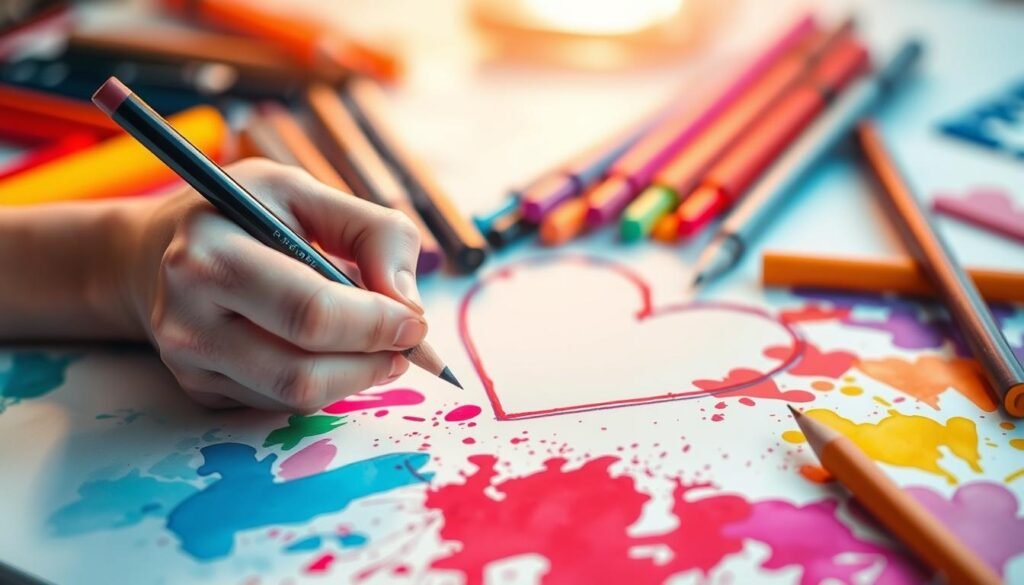
Common Mistakes When Drawing Hearts
Many artists find drawing hearts tricky because of misproportions and too much detail. But, with practice and focus, you can get better at it.

Misproportions and How to Fix Them
One big mistake is getting the heart’s proportions wrong. This happens when the top and bottom don’t match up right. To fix this, make sure your heart is symmetrical.
- Start by drawing a vertical line to guide the symmetry of your heart.
- Use basic shapes, such as triangles and curves, to help you achieve a balanced heart shape.
- Practice drawing hearts of different sizes to get a feel for the proportions.
Avoiding Overly Complicated Designs
Decorative hearts can be stunning, but too much detail can ruin the heart’s simplicity. To avoid this, stick to clean lines and simple decorations.
- Keep your design simple by using a limited color palette.
- Avoid excessive patterns or details that can clutter the heart shape.
- Use shading techniques to add depth without complicating the design.
By knowing these common mistakes and following these tips, you can make your heart drawings better. You’ll create beautiful, balanced designs.
Creative Uses for Drawn Hearts
Drawing hearts can lead to many creative ideas for crafters and artists. A simple heart drawing can turn into something truly special and meaningful.
Exploring heart drawings reminds me of Martha Stewart‘s words,
“Crafting is a way to express yourself and to create something that brings joy to others.”
Greeting Cards and Invitations
Heart drawings are great for making personalized greeting cards and invitations. They add love and care to any message, whether it’s for Valentine’s Day, a wedding, or a birthday.
To make a beautiful card, use your heart drawing as the main feature. Add flowers, ribbons, or patterns around it. Don’t forget to include a personal message inside for extra specialness.
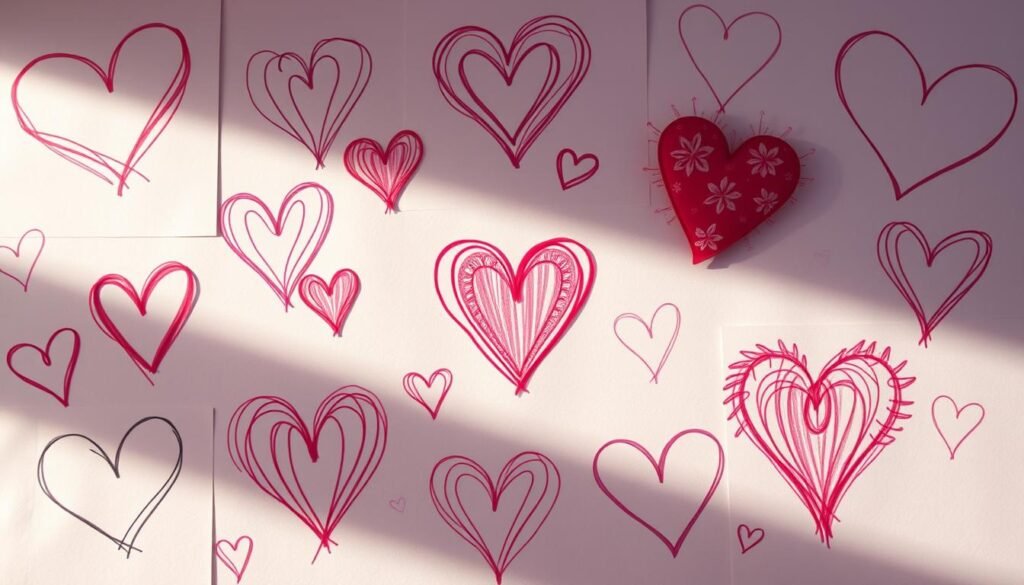
Art Projects and Decorations
Heart drawings are also perfect for art projects and decorations. You can make a heart-themed garland by linking heart drawings together. Or, use your drawing as a stencil for designs on fabric or paper.
For home decor, frame your heart drawings or use them in a bigger art piece. Crafting expert advises to have fun and try different materials and techniques.
Other ideas include making heart-shaped ornaments, decorating picture frames, or using heart drawings for cake toppers or edible decorations.
Tips for Practicing Your Heart Drawings
Learning to draw hearts takes time and effort. To get better, make drawing a regular part of your life. Set aside time each day or week to practice.
Establishing a Routine
Having a routine helps you get better at drawing hearts. Regular practice makes you more comfortable with heart shapes and lines. This lets you create more detailed and beautiful designs.
Finding Inspiration
Getting inspiration from others can really help. Follow artists and illustrators on social media. Visit art shows and try out different styles and techniques.
Look at how others draw hearts and use their work to inspire you. Add practice tips to your daily routine to boost your creativity.