

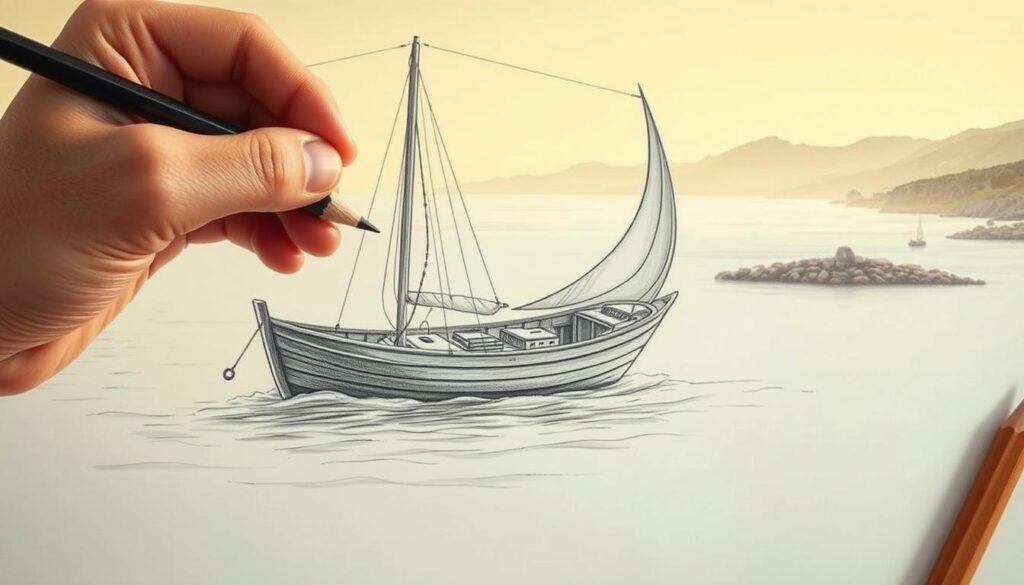
Did you know that over 70% of aspiring artists feel their first attempt at drawing a boat results in a shape that looks more like a floating shoe than a seaworthy vessel? This common hurdle highlights the unique challenge of capturing a boat’s form.
Many beginners find the curves and proportions intimidating. The goal is to create a craft that appears to genuinely float on the water, not hover awkwardly above it. Achieving that convincing, three-dimensional look is a skill we can master together.
In this guide, I will demystify the process of creating authentic maritime art. We will explore the fundamental anatomy of various boats, from peaceful riverboats to dynamic sailboats. I break down advanced techniques, like rendering water reflections, into simple, manageable steps.
My aim is to equip you with professional insights and practical exercises. This builds your confidence progressively, transforming a complex task into an enjoyable artistic journey. You will develop the ability to bring your nautical scenes to life with impressive depth and realism.
Key Takeaways
- Understanding basic boat anatomy is the first step toward realism.
- Proper proportions are crucial for a believable, seaworthy appearance.
- Mastering reflections and water interaction adds significant depth.
- Breaking the process into simple steps makes the task less daunting.
- Practice with different boat types builds versatile drawing skills.
- Focusing on three-dimensional form prevents a flat, unconvincing look.
Introduction and Getting Started
The journey toward creating convincing maritime illustrations starts long before pencil touches paper. I begin by gathering quality reference materials that form the foundation of my practice.
My first steps in exploring boat drawing
I dedicate significant time to studying real vessels before attempting any illustration. Taking my own pictures provides the most valuable reference material, capturing specific angles and lighting conditions.
One crucial tip I follow involves making small studies from multiple viewpoints. This approach helps me understand how a vessel’s form changes with perspective.
The importance of observation and practice
Expert artist Kelly Medford emphasizes the core principle:
“Learning to draw is really about learning to see.”
I practice blind contour exercises, observing vessels without looking at my paper. This technique strengthens the eye-hand connection while improving observational skills.
Each session builds my understanding, even when results aren’t perfect. Consistent practice matters more than natural talent according to every expert I’ve studied.
Essential Materials and Tools
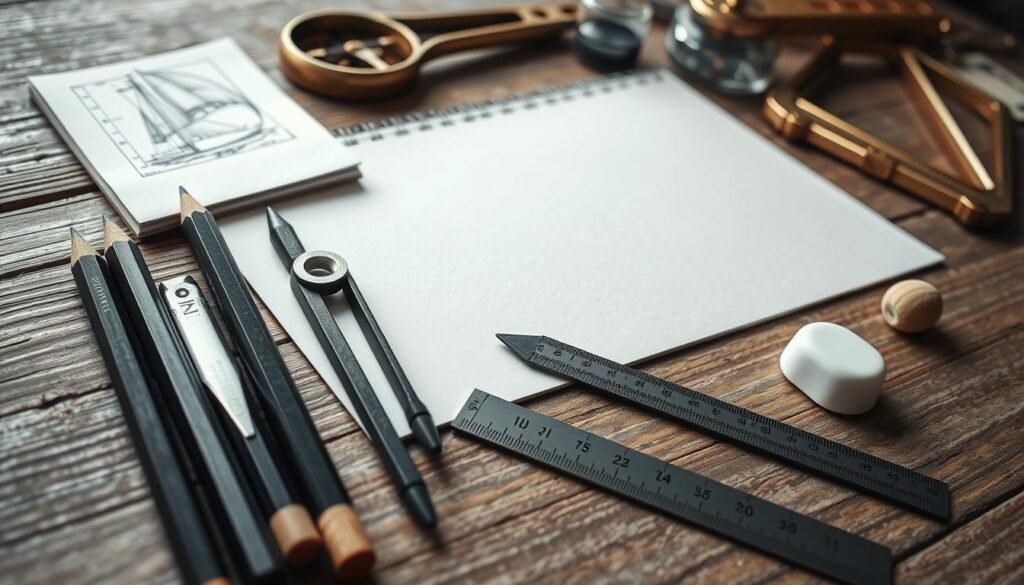
Gathering the right tools transforms the process from a struggle into a smooth, enjoyable experience. Proper preparation with quality materials lays the groundwork for a successful illustration.
Having everything organized before I start is a non-negotiable step in my workflow.
Pencils, Erasers, and Sketching Paper
My primary pencil is always a sharp sketching tool. I use a range of grades, from hard H for light guidelines to soft B for rich, dark lines and shading.
Quality paper is vital for a good sketch. I prefer paper with a slight texture, as it holds graphite beautifully and allows for gradual tone building.
I keep two erasers nearby. A kneaded eraser lifts light marks gently. A precision eraser cleans specific areas without smudging surrounding work.
A sharp pencil point is crucial for fine details. A reliable sharpener is therefore an essential part of my kit.
I always place a small, clean piece of page under my drawing hand. This simple trick prevents smearing, which is critical for shaded work.
Additional Tools and Reference Images
For finishing touches, I have colored pencils or markers ready. The choice depends on the final look I want to achieve.
I organize my reference objects on a separate screen or page. This keeps my workspace clear and allows me to view my inspiration easily.
Having all these objects prepared and within reach lets me maintain complete focus. This uninterrupted flow is key to creating my best work.
Understanding Boat Anatomy and Proportions
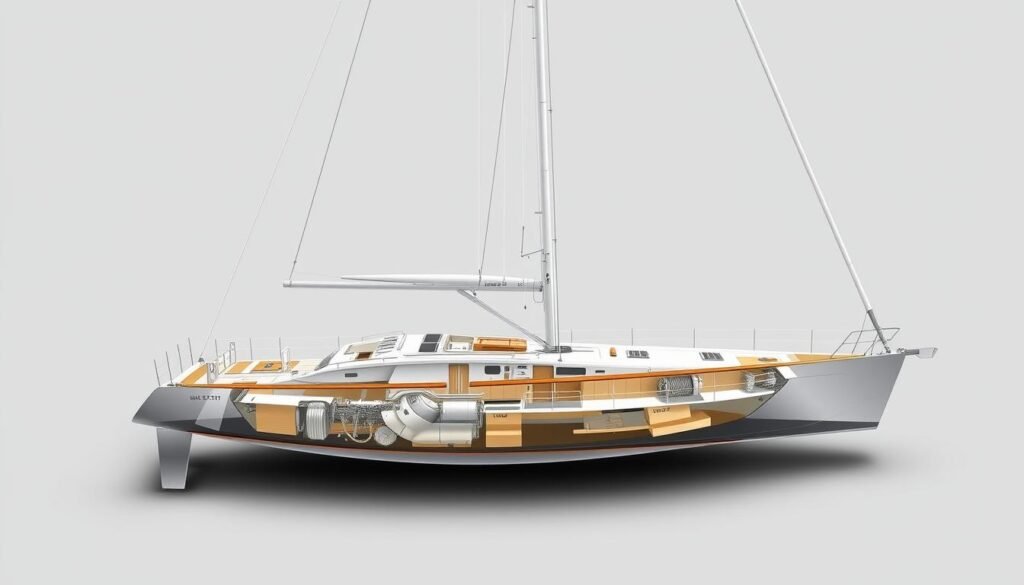
Every vessel tells a story through its distinctive shape and construction method. I analyze these characteristics before starting any illustration.
Breaking down the boat’s structure
The hull forms the foundation of every watercraft. Its curves determine whether my drawing appears functional or unrealistic.
I examine the boat’s body from bow to stern. The widest point typically sits in the middle section. This understanding guides my proportional decisions.
| Boat Type | Hull Shape | Construction | Key Feature |
|---|---|---|---|
| River/Lake Boat | Flat bottom | Various | Wide body for stability |
| Coastal Boat | V-shaped hull | GRP or wood | Wave-cutting design |
| Clinker-built | Varied | Overlapping planks | Layered texture |
| Modern GRP | Varied | Single mold | Smooth exterior |
Exploring different boat types and shapes
Flat-bottomed boats excel on calm waters. Their wide beams provide exceptional stability. Coastal boats feature V-shaped hulls that handle rough conditions.
Traditional clinker-built vessels show overlapping planks along the hull. Modern GRP boats present seamless surfaces. Understanding these differences is crucial for accurate representation. I often study reading boat plans to grasp these structural nuances.
Each boat type serves specific purposes. Their shapes directly reflect their intended environments and functions.
Mastering “how to draw a boat” with a Step-by-Step Outline
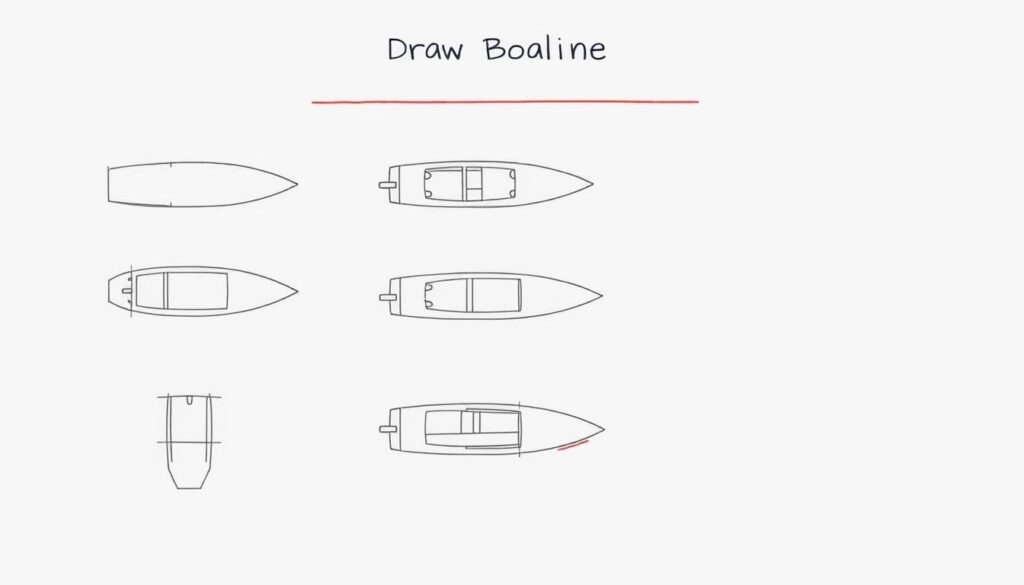
A strong foundation is the secret to any successful illustration, and for vessels, it begins with a precise initial sketch. My process focuses on constructing a believable form from simple, guiding shapes. This step-by-step method ensures proper proportions before any detail work begins.
Creating the basic outline and guidelines
I start a calm riverboat by sketching a rectangular box in perspective. This box acts as a spatial guide. A center line marked at the front and back helps me maintain symmetry.
Within this guide, I create the vessel’s curves. The bow remains centered, with balanced curves on each side. This establishes a realistic basic outline that sits correctly in space. These initial lines are light and flexible.
Building the boat’s structure using simple shapes
For a dynamic coastal boat, I use the figure-eight technique. A flattened figure-eight shape laid on its side captures the hull’s natural flow. The curves taper elegantly toward the bow and stern.
This shape is just a guide. I decide the boat’s orientation—facing toward or away—by strategically adding and removing lines. The goal is to capture the difficult opposing curves along the top edges.
Once satisfied with the outline boat structure, I erase the surplus construction lines. This clean basic outline prepares the artwork for adding structural details.
Detailed Techniques for Adding Realism

Realism emerges when I carefully apply perspective principles and thoughtful shading to transform flat shapes into volumetric forms. This stage separates amateur sketches from professional-looking illustrations.
Incorporating perspective and ripples for water
I pay meticulous attention to spatial relationships when placing longer lines. Each stroke must align with the vanishing point to maintain three-dimensional believability. This spatial consistency creates convincing depth.
Water depiction requires understanding viewing angles. From directly above, I see bottom details or sky reflections. As my viewpoint shifts to around 45 degrees, the reflective surface dominates. Slight waves alter the water’s appearance dramatically.
I create realistic ripples by alternating light and dark areas that match water movement. Angles under 45 degrees appear darker, while those over 45 degrees appear lighter. This alternating pattern captures the dynamic nature of water surfaces.
Shading techniques to emphasize volume and depth
Shading consumes most of my drawing time, as this is where volume truly emerges. I build up tones gradually in layers, starting with light values and progressively adding darker ones. This layered approach emphasizes the vessel’s three-dimensional form.
I employ hatching, cross-hatching, and blending techniques to create smooth gradations. These methods suggest curved surfaces effectively. Special attention goes to where the hull meets the waterline, as this interaction defines the boat’s relationship with its environment.
By observing how perspective and light interact, my illustrations gain convincing depth. These advanced techniques form the core of creating professional maritime art, as demonstrated in this comprehensive boat illustration guide.
Refining Your Drawing by Eliminating Unnecessary Lines
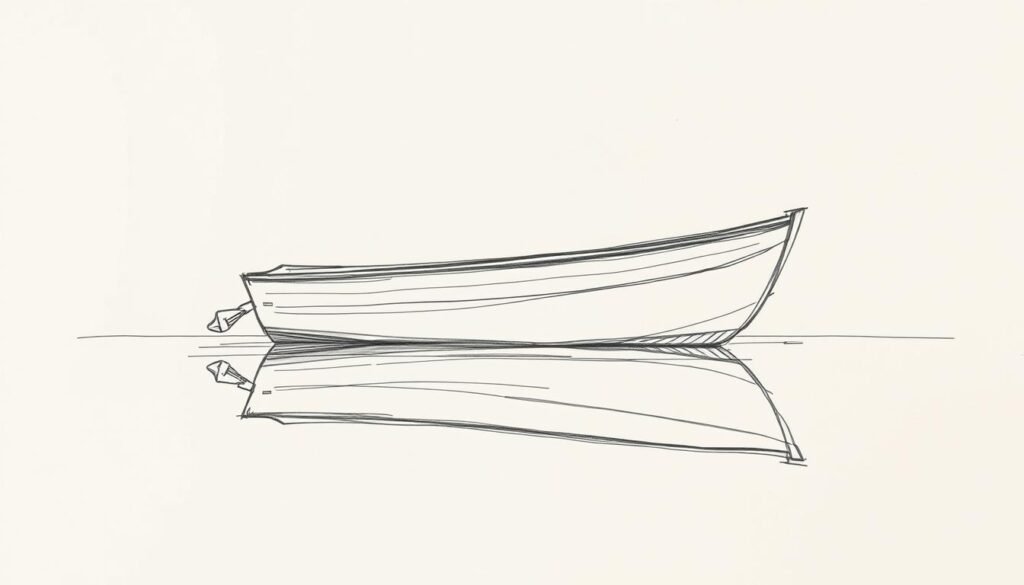
The final stage of refinement transforms a working sketch into a polished illustration. This cleaning process requires careful attention to which marks serve the final image and which distract from it.
Cleaning up your sketch and reinforcing contours
I begin by identifying construction guidelines that have served their purpose. These temporary marks helped establish proportions but now clutter the composition. My first action is reinforcing the essential outline and contour line work.
Using slightly more pressure, I darken the permanent features. This ensures they remain visible during erasure. I systematically work through the drawing, section by section.
The removal of unnecessary lines reveals the true form of the vessel. This step requires patience and a quality eraser. Gentle strokes prevent smudging important details.
I add final elements like ropes, windows, and small signs during this phase. Each new feature integrates seamlessly into the cleaned composition. The drawing emerges with professional clarity.
This meticulous process prepares the artwork for shading or presentation. A clean foundation allows subsequent techniques to shine without distraction.
Exploring Alternative Methods and Styles
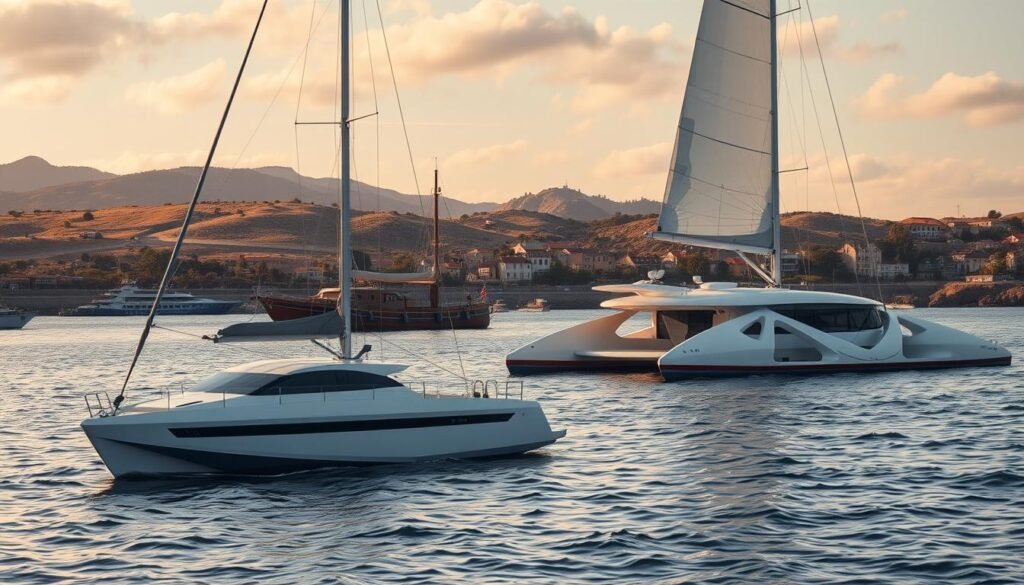
My approach to diverse watercraft requires flexible methods for sailboats, kayaks, and traditional designs. Each vessel presents unique structural challenges that demand adapted techniques.
Drawing sailboats, kayaks, and traditional boats
I begin a sailboat with a trapezoid shape for the main body. Perpendicular lines establish the mast position before adding triangular sail forms.
For kayaks, I sketch a long oblong shape first. Marking two-thirds along its length helps position curved lines that define the hull’s contour. A half-circle indicates the seating area.
Different boat types require modified techniques. A sailboat’s tall rigging contrasts with a kayak’s low profile. Each shape demands specific attention to proportion and balance.
Adapting techniques for different viewpoints and angles
I practice multiple views before selecting a final composition. Side perspectives emphasize length, while three-quarter angles reveal dimensional form.
When the vessel faces toward me, I emphasize bow width using foreshortening. Boats facing away require careful stern detailing. These angles create dynamic compositions.
Experimenting with line quality and shading approaches expands my artistic versatility. Clean lines suit some vessels, while expressive marks enhance others.
Expert Tips and Final Adjustments
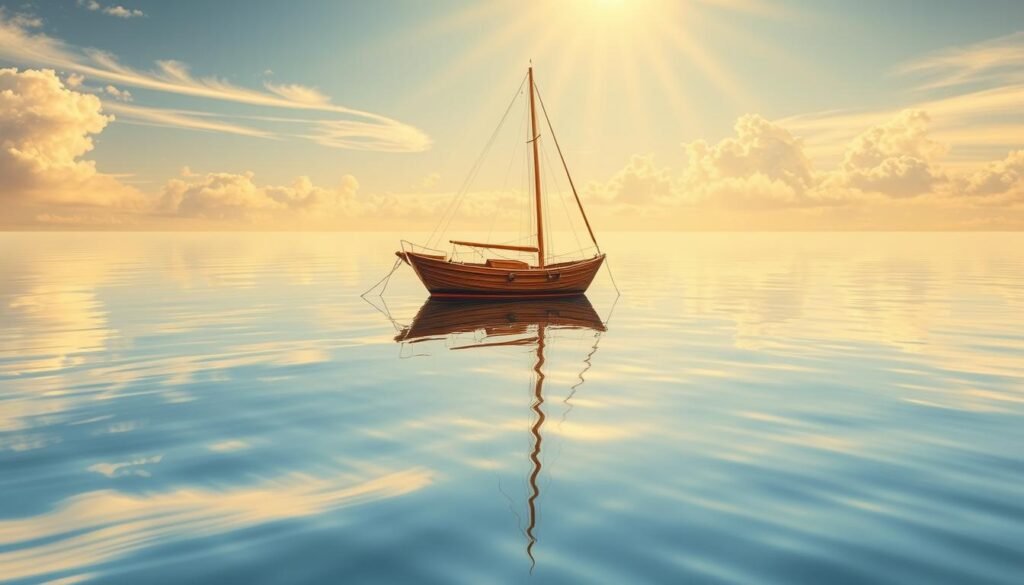
Final touches elevate a good illustration into a compelling, professional piece. This stage focuses on the vessel’s interaction with its environment.
I make sure my boat appears to float convincingly. I achieve this by showing water displacement. The weight creates a slight curve at the waterline.
The way a vessel sits changes with its load. A heavier boat shows a more pronounced curve. I adjust this based on the viewer’s angle.
A high vantage point results in a flatter curve. A low viewpoint creates a rounded, deeper curve.
Adding water reflections and displacement effects
Reflections are challenging but crucial for realism. I use anchor points for accuracy. I measure from the boat‘s base, ignoring the broken water edge.
I position the reflected image equidistant from the base. This equal distance rule is key. Waves can stretch the reflection, making it appear elongated.
These tips help integrate the vessel seamlessly into the water. The final image gains immense depth.
Choosing colors and finalizing details
Color selection brings the image to life. I choose hues that match the background for realism. Alternatively, I select colors for a unique design.
I carefully add details like rust, weathering, and highlights. These subtle elements suggest texture and age. They tell a story about the vessel.
This thoughtful way to add details completes the artistic process. I make sure every element supports the overall scene. These expert tips ensure a polished final result.
Conclusion
You now possess a complete toolkit for creating authentic maritime illustrations. I have guided you through fundamental anatomy, structural outlines, and advanced water effects.
Your success hinges on consistent practice. I encourage you to start drawing today with simple shapes. Gradually incorporate reflections as your confidence grows.
Each time you complete a new sketch, you will see improvement. Notice how your boat looks more integrated with its environment. The shape of your boat becomes more believable.
My final tip is this: patient observation combined with regular drawing develops skill more than any single session. Revisit these techniques whenever you need guidance.
Your artistic journey is just beginning. Embrace each drawing as a step toward mastery. I wish you great success as you bring your nautical visions to life.