

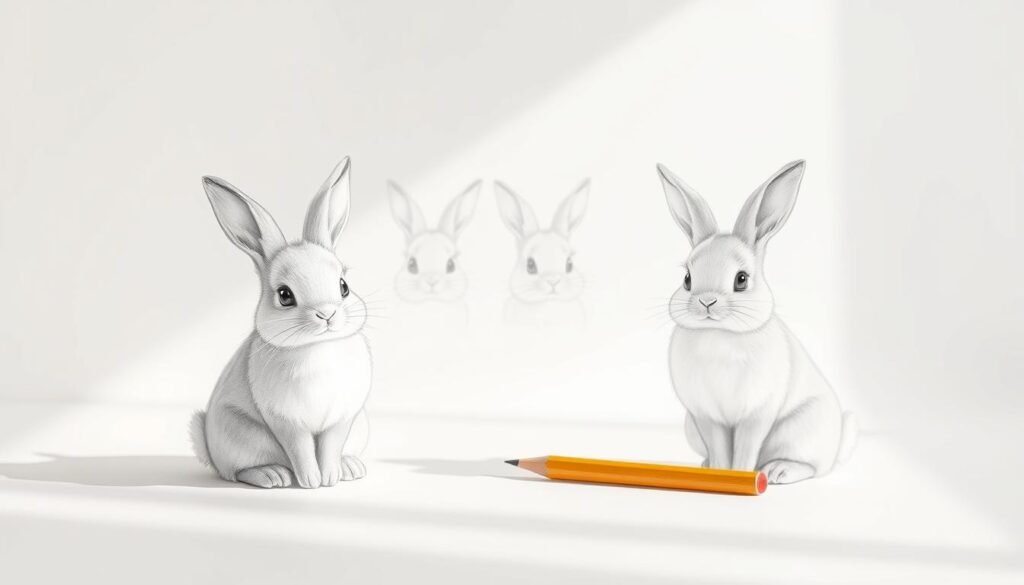
Did you know that creating animal illustrations is one of the most popular forms of artistic expression worldwide? Capturing the charm of a fluffy bunny is a delightful entry point into this vast creative world.
I believe that creating charming bunny art is an accessible skill for everyone. You do not need years of training to start. With just a simple pencil and a piece of paper, you can begin a relaxing and rewarding creative journey.
This process helps develop fundamental skills like observation and understanding proportion. My approach breaks down the complex form of a bunny into simple, manageable shapes. This method makes the entire process less intimidating and far more enjoyable.
In this guide, I will walk you through each stage. We will start with basic forms and build up to a complete illustration. You will learn techniques that you can apply to other projects, much like the methods shown in this excellent guide on drawing a cute bunny. By the end, you will have the confidence to create your own adorable artwork.
Key Takeaways
- Drawing a bunny is an accessible activity for artists at any skill level.
- The process is designed to be relaxing and help develop core art skills.
- You only need basic materials like paper and a pencil to get started.
- Complex forms are broken down into simple, easy-to-master shapes.
- This guide provides a straightforward method for impressive results.
- You will gain the confidence to create your own cute bunny illustrations.
Understanding the Basic Shapes and Materials
The journey to creating charming bunny artwork starts with a solid foundation of simple shapes and essential drawing supplies. This approach makes the process accessible for artists at any skill level.
Essential Drawing Tools and Supplies
Quality materials enhance your creative experience. You need basic items like paper, pencils, and an eraser. Professional supplies can improve results, but beginner materials work perfectly.
Consider these essential tools for your project:
| Tool | Purpose | Recommendation |
|---|---|---|
| Drawing Paper | Foundation for your artwork | Medium weight, smooth surface |
| Pencils | Creating lines and shading | HB for outlines, 2B-4B for shading |
| Eraser | Correcting mistakes | Kneaded or vinyl eraser |
| Sharpener | Maintaining fine points | Handheld or electric sharpener |
Breaking Down Bunny Anatomy into Simple Shapes
Seeing a bunny as basic geometric forms simplifies the drawing process. The animal’s complex structure becomes manageable when broken into circles and ovals.
The head connects to the body through careful proportion. Ears attach naturally when you understand the underlying shapes. This method creates a solid foundation for adding details later.
Mastering this shape-based approach benefits all your animal illustrations. It helps maintain proper proportions throughout your artwork. For additional guidance, explore this comprehensive bunny drawing tutorial.
Step-by-Step Guide: how to draw a bunny easy
Creating an accurate rabbit depiction starts with laying down the structural foundation using simple overlapping circles. This method ensures proper proportions from the beginning.
Establishing the Basic Outline with Intersecting Circles
Begin by drawing two circles that overlap slightly. The top circle represents the head area, while the larger bottom one forms the main body mass.how-can-i-draw-an-elephant
Next, add big oblong shape on one side to define the torso. This creates the basic framework for your illustration.
| Shape Type | Anatomical Purpose | Proportion Guideline |
|---|---|---|
| Top Circle | Head Foundation | Approximately 1/3 of total size |
| Bottom Circle | Body Mass | About 2/3 of overall form |
| Oblong Shape | Torso Definition | Extends slightly beyond circles |
Mapping Out the Bunny’s Facial Features and Body Structure
Draw curved line on the side top circle to represent bunny nose. Add curved lines across the face to help determine position of eyes and mouth.
Place almond shapes for ears extending from the head. These shapes head ears should be proportionate to the circle size.
For the body, sketch forelegs using vertical curves and create hind legs with thicker forms. Complete with half circle at the rear for the short tail. This foundational approach works well for various animal illustrations, similar to techniques shown in this Easter journal project.
Expert Insights and Additional Techniques
Professional artists know that the final details transform a simple sketch into a convincing animal portrait. These advanced methods bring your creation to life with realistic textures and proper proportions.how-to-draw-the-airplane
Adding Furry Textures and Defining Features
Transform your basic outline bunny into a realistic illustration using short, slanted strokes. Apply this technique along the entire outline bunny body, focusing on the face and ears. Follow the natural direction of fur growth for authentic results.
For the eyes, create a round shape with a brown outer ring and black center. Leave a small white highlight untouched to simulate light reflection. This gives your bunny an alert, friendly expression.
Perfect the ears by making the tops round rather than pointed. Position the back bulge slightly lower than the front edge. Add subtle shading where ears connect to the head for depth.
Tips for Shading, Coloring, and Achieving Depth
Use soft pencils for gradual value transitions that suggest three-dimensional form. Create smooth curved lines for natural shading effects. Alternatively, try water-soluble pencils with a wet brush for painterly results.how-to-draw-roses
Refine your initial outline by rounding off angular areas. Pay attention to anatomical details like the slight rise above the eyes and rounded nose tip. These subtle adjustments enhance realism.
Incorporating Curved Lines and Proportional Details
Work with your original circles oblongs guide when refining proportions. Make legs wider at the top, tapering toward the bottom. Create a natural back line with subtle humps for shoulder and hip bones.
Render cheeks with gentle curved lines and appropriate shading. This adds dimension to the face. Small details like the tail and mouth complete the overall impression when executed with care.
These techniques will elevate your artwork significantly. For additional guidance on animal illustrations, explore this comprehensive rabbit drawing resource.
Conclusion
The joy of creating expressive animal artwork stems from learning foundational methods that grow with you. I’ve shown how breaking complex forms into simple shapes makes the process accessible. Using guidelines for feature placement ensures proper proportions every time.
Regular practice will build your confidence significantly. Experiment with different poses and facial expressions once you master the basics. These skills transfer beautifully to other animal subjects and artistic projects.
Remember that artistic development happens at your own pace. Share your creations and consider joining communities for continued growth. For further exploration of animal illustration techniques, this comprehensive rabbit drawing resource offers excellent guidance.
Anyone can create charming bunny artwork with this systematic approach. Embrace the creative journey and enjoy each step of your artistic development.