

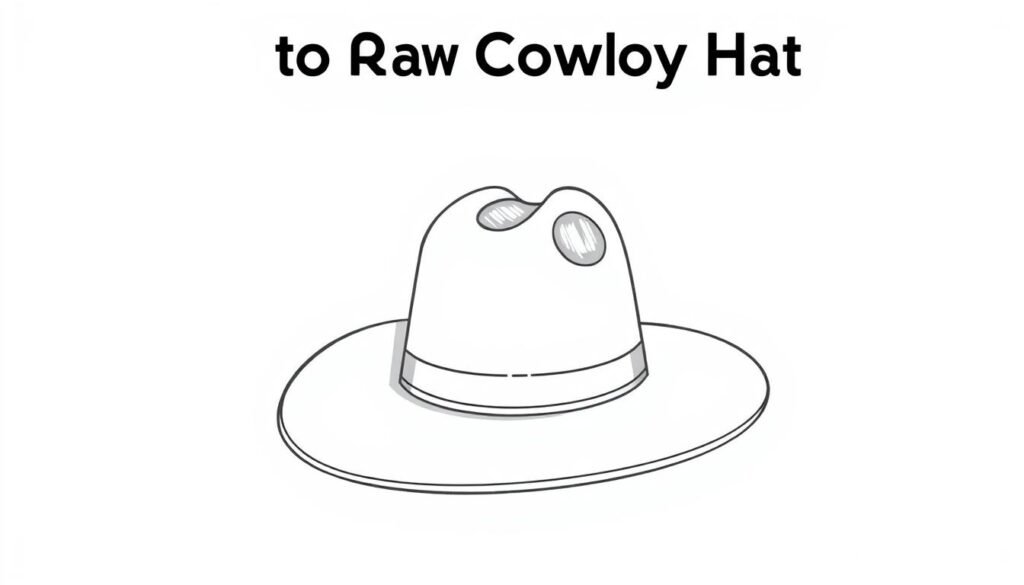
Did you know the classic cowboy hat is one of the most recognized silhouettes in the world? This iconic piece of Western wear symbolizes adventure and independence. Capturing its unique shape on paper is a rewarding challenge for any artist.
I have designed this tutorial to simplify the process. We will break down the complex form into five easy stages. This approach makes the drawing accessible for beginners and enjoyable for seasoned sketchers.
Mastering this subject teaches you valuable skills. You will learn to see and render three-dimensional forms. Understanding the distinct crown and brim of this hat improves your ability to capture shape and texture.
This guide explores three popular styles. We will cover the classic side view, a playful cartoon version, and a detailed, shaded rendering. Each method offers a different perspective on the cowboy aesthetic.
By the end, you will have a completed cowboy hat illustration. You can color it, add personal touches, and share your creation. With a little practice, you will confidently sketch this Western symbol.
Key Takeaways
- The cowboy hat is a globally recognized shape, making it an excellent subject for artistic practice.
- This tutorial breaks the complex form into five manageable steps suitable for all skill levels.
- Learning this drawing enhances your understanding of 3D forms and texture rendering.
- You will explore three distinct styles: classic, cartoon, and detailed shaded techniques.
- The goal is a finished hat illustration you can personalize and proudly display.
- This skill helps you capture the essence of cowboy culture and iconic Western apparel.
- Patience and practice are the only tools you need to master this timeless art subject.
Tools and Materials for Your Cowboy Hat Drawing
Proper materials make all the difference when capturing the distinctive shape of Western headwear. Quality supplies help you create clean lines and professional results. I recommend gathering everything before starting your artistic journey.
Art Supplies and Recommended Tools
Begin with a standard HB or 2B pencil for your initial sketch. This allows light guidelines that erase easily. Have both a precision click eraser and soft Pink Pearl eraser ready.
For your final drawing, choose smooth cardstock or bristol board. These paper types work well with markers. Alcohol-based markers like Copics blend colors smoothly.
Good preparation makes good work. Having the right tools from the start saves time and frustration.
| Essential Tools | Purpose | Optional Enhancements |
|---|---|---|
| HB/2B Pencil | Initial sketching | White gel pen |
| Quality Erasers | Correction and cleanup | Ruler for straight lines |
| Smooth Paper | Drawing surface | Reference images |
| Fine-line Marker | Crisp outlines | Blending markers |
Setting Up Your Drawing Space
Create a comfortable workspace with good lighting. Position your paper at a natural angle. Keep all art supplies within easy reach.
Have reference images of the classic hat nearby. This helps you understand the proper proportions. A well-organized space supports better creative drawing.
Understanding Cowboy Hat Anatomy and Design
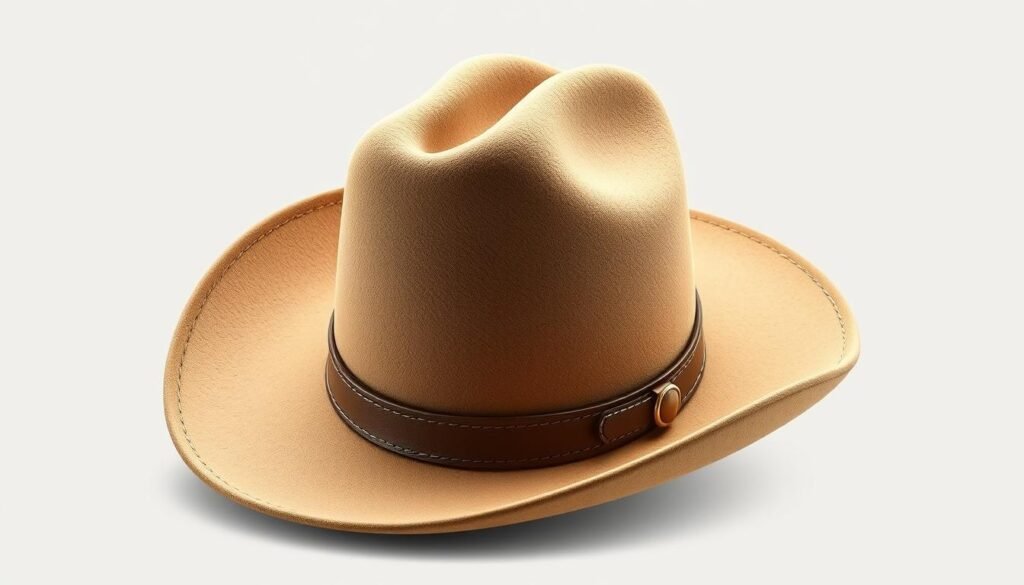
The distinct silhouette of a cowboy hat comes from three primary components working in harmony. Knowing these parts is essential for creating a believable illustration. I will guide you through each element’s role and appearance.
The Crown, Brim, and Hat Band
The crown is the top section that sits on the wearer’s head. Its shape is defined by creases or dents pressed into the material. This indented top creates the signature profile.
Extending outward from the base is the wide brim. This edge provides shade and often curves upwards. The roll at the sides gives the hat its three-dimensional character.
Wrapping around the base of the crown is the hat band. This decorative band serves both functional and aesthetic purposes. It can feature stitching, buckles, or other ornamental details.
Key Proportions and Details
Correct proportions are vital for a recognizable sketch. The relationship between the crown and brim defines the overall shape. Standard measurements provide a reliable foundation.
| Component | Typical Height/Width | Defining Feature |
|---|---|---|
| Crown | ~2.5 inches tall | Creased or dented top |
| Brim | ~4-5 inches wide | Curved edge |
| Hat Band | ~0.5 inches wide | Decorative strip |
Observe key details like the seam along the brim’s edge and the lines of the crown’s crease. Understanding this anatomy allows you to sketch the hat from any perspective with confidence.
How to Draw a Cowboy Hat: Step-by-Step Process
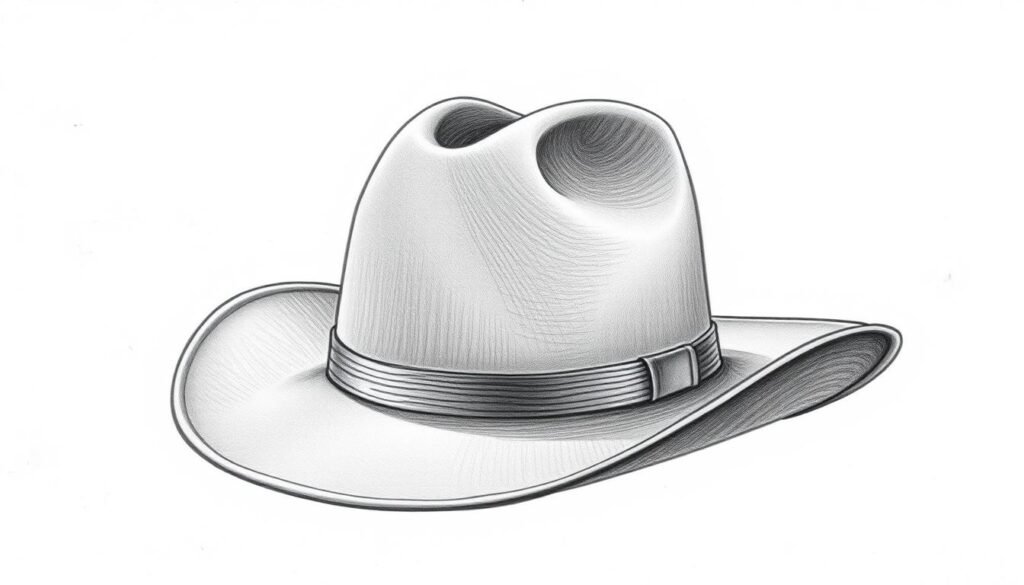
This section guides you through three distinct approaches to rendering the classic headwear. Each technique offers unique advantages for different skill levels and artistic goals.
Method 1: Classic Side-View Drawing
Begin with a long, sideways “S”-shaped curved line for the front brim. Add a closed loop under the right side to show depth. This first step establishes the foundation.
Position an upside-down “U” shape above for the crown. Connect it with short lines. Add the hat band using parallel horizontal lines around the base.
Method 2: Cartoon and Stylized Approach
Start with a large smile curve across your paper. Build the simplified crown using upward-hooked lines. This method creates a playful shape perfect for beginners.
Add thickness to the brim with another line. Decorate the band with circles for gemstones. The cartoon style emphasizes fun over realism.
Method 3: 3D Shaded and Detailed Rendering
Create a rounded trapezoid for the crown foundation. Sketch a crease at the top using hook-shaped lines. This approach builds dimension from the start.
Construct the brim using rhombus shapes angled toward the right. Make sure to curve the left side properly. Add seams and shading for realistic texture.
| Method | Best For | Key Feature |
|---|---|---|
| Classic Side-View | Authentic profile capture | Sideways “S” curve |
| Cartoon Style | Beginners & fun art | Simplified outline |
| 3D Detailed | Realistic rendering | Rhombus brim construction |
Each technique provides a different way to approach the subject. Choose the method that matches your current skill level and desired outcome.
Tips for Shading, Texturing, and Coloring
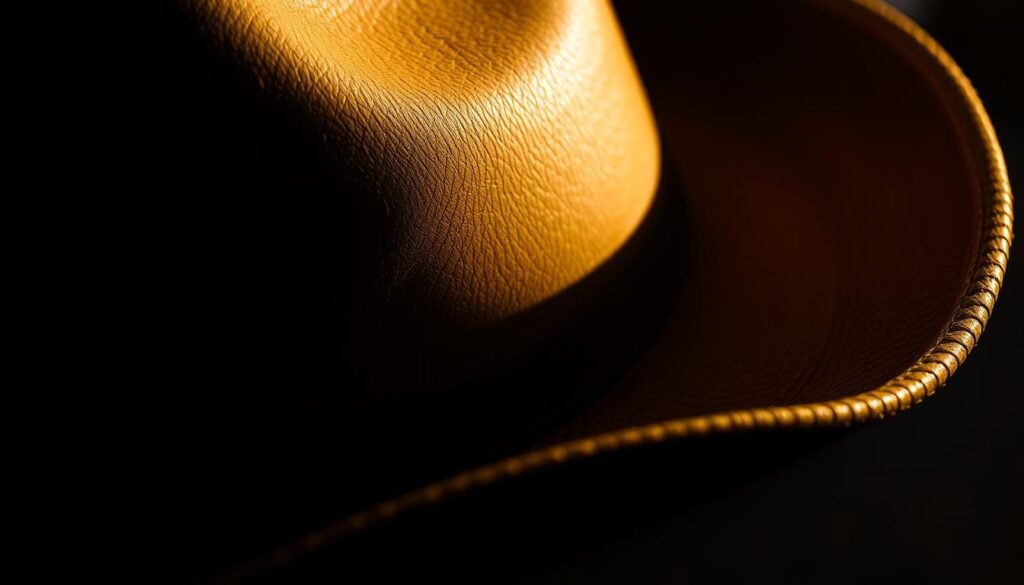
Bringing your Western headwear sketch to life requires mastering color application and texture details. Proper techniques transform a simple outline into a dimensional piece with realistic character. I will guide you through professional methods for achieving polished results.
Alcohol-based markers provide the smoothest blending when applied while still wet. Select two or three similar brown colors for natural transitions. The darkest shade defines shadow areas under the brim and within the crown crease.
Coloring Techniques for Realistic Effects
Apply your lightest color to highlighted surfaces where light naturally hits. Use medium tones for the majority of the hat surface. This three-tone approach creates cohesive shading that suggests form.
Traditional cowboy hat colors include tan, dark brown, and black. Feel free to experiment with unconventional color combinations for personal expression. The hat band offers additional creative opportunities.
Create texture by drawing short vertical lines along the band to represent stitching. Add curved lines following the brim’s contour for material realism. These small details significantly enhance authenticity.
Beyond markers, consider colored pencils for subtle gradients or watercolors for soft effects. Each medium offers unique advantages for finishing your drawing. Practice these techniques to develop your personal style.
Troubleshooting Common Drawing Challenges
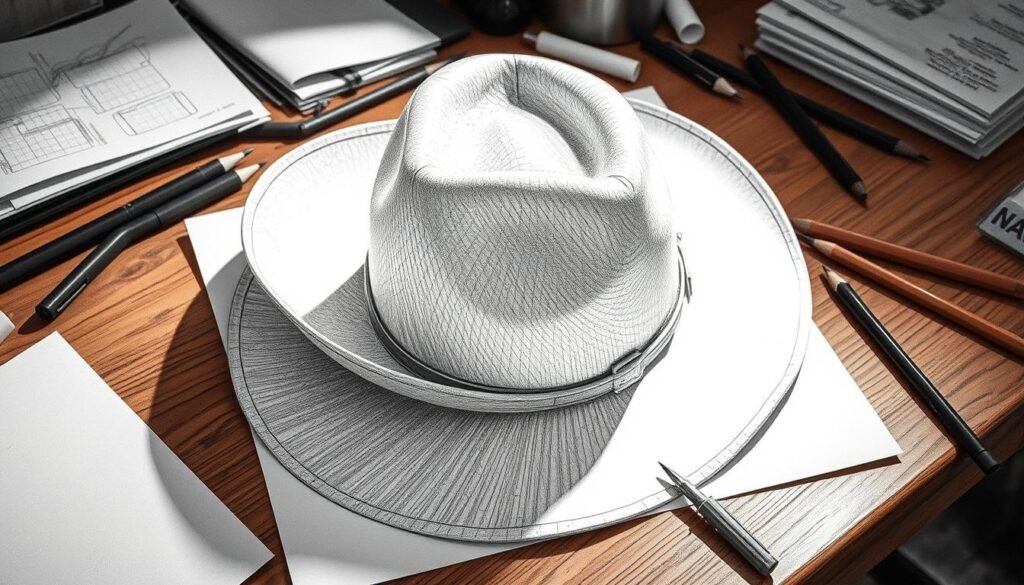
Even experienced artists encounter hurdles when sketching complex forms like Western headwear. I will guide you through practical solutions for the most frequent issues that arise during this process.
Proportion problems often surface first. The brim should typically appear twice as wide as the crown is tall. Compare your work to reference photos regularly to maintain this balance.
Overcoming Proportion and Perspective Issues
If your crown looks distorted, sketch lightly with your pencil and adjust before finalizing. This approach allows easy corrections to the overall shape.
Curved lines along the brim’s edge require smooth execution. Practice these arcs separately until they flow naturally. Light initial strokes help achieve the proper side curvature.
Perspective challenges emerge in three-dimensional views. Use construction lines extending through forms to ensure proper alignment. Drawing “through” hidden sections maintains consistent proportions.
Every artist revises their work. Initial attempts build foundation for eventual mastery.
Keep multiple reference images available from different angles. Study how light affects the hat’s surfaces and shadows. These visual guides significantly improve accuracy.
Practice individual components—brim, crown, band—before combining them. This method builds confidence with each element’s unique shape and placement.
Remember that artistic growth comes through persistence. Each attempt brings you closer to capturing the authentic cowboy aesthetic in your drawing.
Enhancing Your Cowboy Hat Drawing with Advanced Techniques
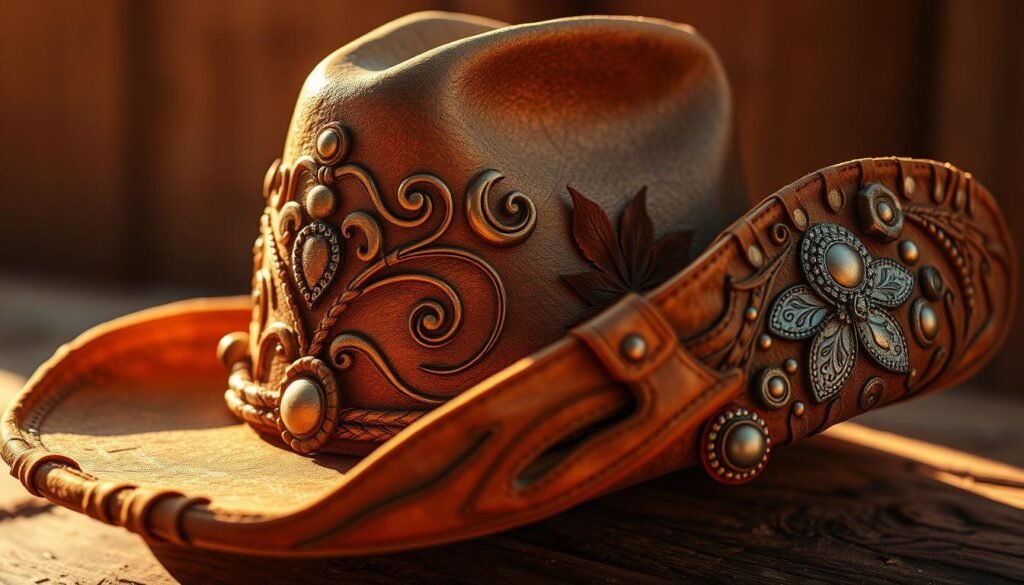
Personalization transforms a basic sketch into a signature piece that reflects individual artistic expression. Advanced decorative elements elevate your artwork beyond fundamental shapes.
Adding Decorative Elements and Patterns
The hat band serves as the perfect canvas for creative additions. Consider incorporating circular gemstones or rectangular buckles along this central band. Natural elements like feathers add authentic Western character.
Texture patterns create visual interest across the entire surface. Zig-zag lines, swirls, or geometric designs transform plain material into something uniquely stylish. Small stitching details around the brim’s edge enhance realism.
Incorporating Personal Style and Flair
Choose colors and patterns that reflect your personal aesthetic. Bold, vibrant tones make a statement, while earthy shades convey traditional Western appeal. Your creative choices define the final character.
Draw inspiration from classic film characters or real-life reference points. Each addition should feel intentional and cohesive with the overall design. This tutorial encourages exploring different combinations.
| Decorative Element | Placement | Visual Effect |
|---|---|---|
| Gemstones/Buckles | Hat band center | Focal point emphasis |
| Feathers/Quills | Band side angle | Authentic Western style |
| Stitching Details | Brim edge & band | Textural realism |
| Pattern Designs | Crown & brim surfaces | Personal expression |
Explore various combinations to discover what resonates with your artistic vision. For additional inspiration, check out this creative Western style guide showcasing different approaches.
Conclusion
Your journey through this tutorial has equipped you with versatile techniques for capturing Western style. You’ve mastered the anatomy, explored three distinct methods, and learned professional shading approaches.
Remember that consistent practice transforms these skills into instinct. Each attempt at a cowboy hat drawing strengthens your understanding of form and dimension. The more time you invest, the more confident your art becomes.
Share your creations with others for valuable feedback. The techniques you’ve learned extend beyond Western hats to any object with complex curves. For additional guidance, explore this comprehensive cowboy hat drawing resource.
Continue your artistic exploration by making drawing a regular habit. Revisit these methods and combine elements to develop your unique style. I hope this foundation inspires further cowboy-themed creations and beyond.