

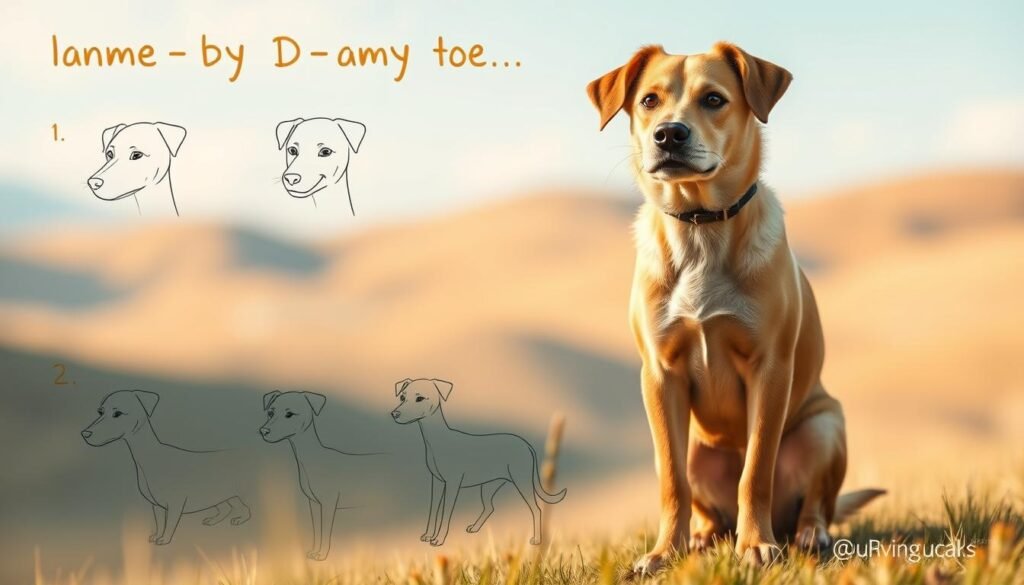
Did you know that over 65 million American households include a beloved canine companion? Capturing the unique spirit of a dog on paper is a rewarding goal for many art enthusiasts. I’m excited to share my comprehensive approach to creating beautiful canine artwork.
This guide will walk you through the entire creative process. I break down what might seem like a complex subject into manageable, easy-to-follow stages. My method focuses on understanding the fundamental structure of dogs before adding details.
This foundational knowledge is the key to creating realistic and expressive portraits. You’ll discover that with the right steps and a little time dedicated to practice, anyone can learn draw with confidence. I use professional techniques refined over years of experience, making them accessible for all skill levels.
Whether you want to sketch your own pet or explore different breeds, this guide on drawing a dog provides the essential knowledge. By the end, you’ll understand the process from initial shapes to finished details.
Key Takeaways
- Anyone can learn to create realistic dog artwork with a structured approach.
- Understanding basic canine anatomy is more important than intricate details at the start.
- Professional art techniques are simplified for artists of any level.
- Dedicated practice time is the most significant factor for improvement.
- The process begins with simple shapes that form the foundation of the drawing.
- This method is effective for sketching pets or exploring various dog breeds.
- The goal is to build confidence and accuracy in your artistic skills.
Understanding Basic Shapes and Structure
Professional artists know that mastering simple shapes is the secret to creating believable animal illustrations. I begin every canine portrait by reducing the complex form into fundamental geometric components. This approach establishes proper proportions before adding details.
Using Circles to Outline the Form
I rely heavily on circles and ovals to map out the canine body. For a golden retriever example, I use three main circles: one for the head and two for the body structure. The ribcage circle is larger than the pelvis circle to capture muscular build.
Connecting lines between these shapes define the torso’s form and the natural belly curve. The position of these circles directly influences the animal’s posture, whether standing or sitting.
Establishing the Stick Dog Skeleton
For beginners, I recommend the stick figure approach using straight lines for spine, legs, and neck. This skeletal framework ensures proportional accuracy throughout the drawing process.
The beauty of this foundational method is its universal application across breeds and art styles. Starting with basic shapes creates a reliable guide for developing realistic canine artwork.
Exploring Dog Anatomy and Proportions

Accurate canine illustrations begin with a deep understanding of how skeletal structure influences visible form. I focus on the major body parts and how they connect to create a cohesive structure.
Mapping the Torso, Legs, and Paws
For the legs, I draw four small ovals to represent the paws. When the dog is standing, these align with the ground plane to ground your drawing in reality.
The leg structure shares similarities with human limbs. Joints at shoulders, elbows, and wrists connect back to the torso. Upper joints position close to the body.
Fur and skin create unified shapes that can obscure bone structure. This is especially true for long-haired breeds where joints hide beneath thick coats.
Defining the Head and Facial Features
I start the head with an oblong oval for the skull. Then I add a smaller oval for the muzzle, adjusting length based on breed and age.
Facial features require careful placement. I position eyes using a V-shaped guideline. Ears attach as triangles to the back of the head.
The nose gets defined with a square or circular shape at the muzzle’s end. Understanding these proportions helps create confident artwork for any breed using professional drawing techniques.
how to draw a dog step by step
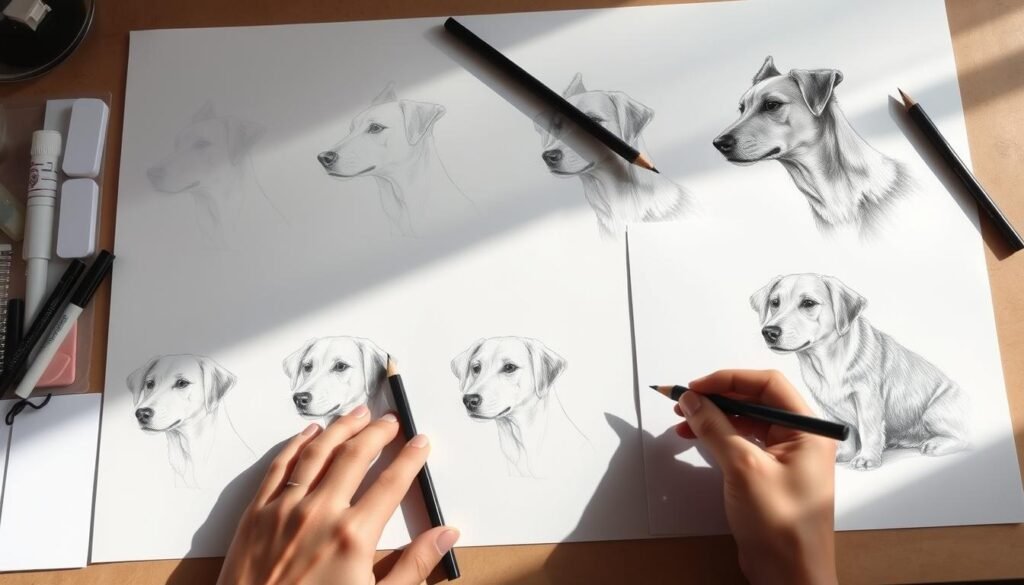
The stick dog skeleton method provides an excellent foundation for beginners looking to create accurate canine artwork. This systematic approach breaks down the complex form into manageable stages.
Step-by-Step Instruction for Beginners
I begin by selecting a clear reference image and placing tracing paper over it. Using only straight lines, I create a basic stick figure representing the canine skeleton.
For the head area, I draw a cross with two intersecting lines. This establishes width and height proportions. Small triangles mark the paw positions at the end of each leg line.
An oval shape indicates the general head position. These simple geometric forms serve as your building blocks. Light pencil marks on clean paper preserve this foundation.
Guiding Lines to Connect the Features
Returning to the tracing paper, I add rounded muscle shapes around the stick framework. Ovals, triangles, and slim rectangles represent the body mass.
When transferring these shapes to your final paper, I keep strokes minimal and gestural. This approach captures movement and body flow effectively.
This layered method eliminates intimidation and tackles foreshortening challenges. It works for any of the 450+ recognized breeds, giving you confidence with any reference image.
Refining Details: Fur, Shadows, and Textures

Realistic fur rendering separates amateur sketches from professional-looking animal artwork. This phase focuses on creating depth and texture that makes your canine portrait appear three-dimensional.
I approach fur by working in clumps rather than individual hairs. This technique creates natural-looking coats efficiently. Begin with light shading across the entire fur area, following the hair’s natural growth direction.
Techniques for Rendering Lifelike Fur
I build fur texture using short, sharp pencil strokes in V-shaped patterns. Varying pressure creates light and dark areas that mimic natural coat variation. For longer fur, keep strokes uniform and flowing downward with gravity.
Contrast is essential for making fur stand off the paper. Darker shades along the edges create immediate depth. The strongest lines should contrast with your baseline shading.
Using Light and Shadow for Depth
Observe how light interacts with the coat. Add highlights where light hits directly on top surfaces. Deepen shadows between fur clumps for dimensional effect.
Different coat types require specific techniques. Short, prickly fur needs closer strokes with more shadow between them. Long fur requires flowing lines with subtle variation.
Final touches include adding stray hairs around the main fur areas. This prevents the coat from looking too rigid. Proper fur detail truly brings your artwork to life.
Tips for Drawing Dogs in Different Poses
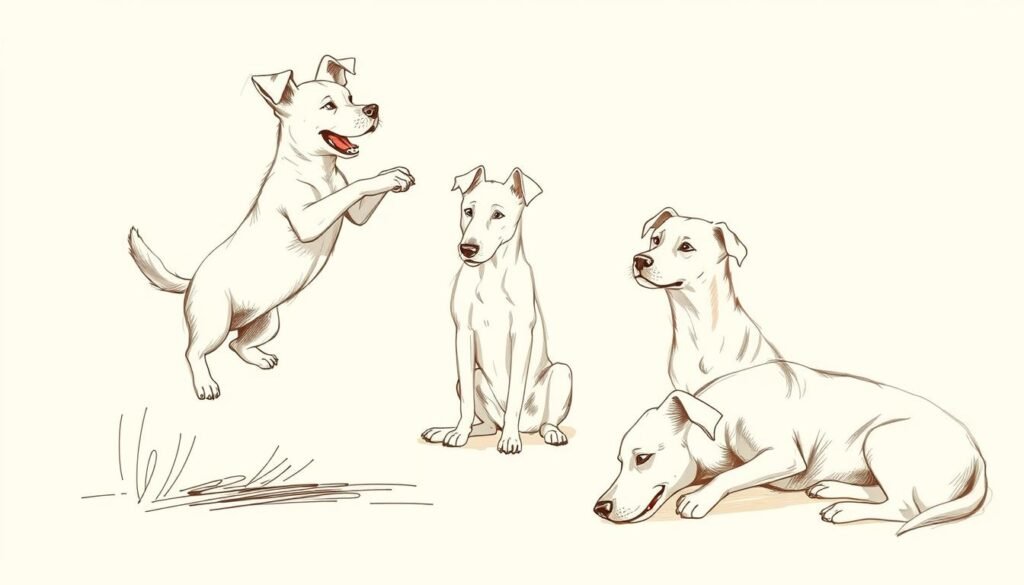
The true test of your artistic skills comes when depicting dogs in various dynamic stances. Moving beyond basic profiles allows you to capture the full personality of these animals. I focus on adapting foundational shapes to represent different postures effectively.
Adapting the Approach for Various Breeds
Different dog breeds require specific adjustments to your basic shapes. For smaller breeds, I reduce circle sizes while maintaining proportional relationships. Larger working dogs need more muscular forms with stronger connections between shapes.
The head position varies significantly across breeds and poses. I use a central axis line to position facial features correctly, especially for side views. This technique ensures accurate placement of eyes and muzzle regardless of angle.
Ears and tail play crucial roles in breed identification and emotional expression. Alert poses feature erect ears, while relaxed stances show hanging ears. The tail should flow naturally from the rump, matching the dog’s movement and personality.
Capturing Movement and Dynamic Poses
Dynamic poses require careful attention to weight distribution and balance. I adjust paw placement to show where the animal’s weight falls. This creates believable action scenes that convey realistic movement.
For sitting positions, I simplify back legs into circular shapes since they fold beneath the body. Walking and running poses need elongated forms with proper leg sequencing. With practice over time, you’ll develop an intuitive sense for positioning foundational shapes.
This approach works for any canine subject, whether creating a quick sketch or detailed portrait. You can explore more breed-specific techniques in my comprehensive guide on drawing different dog breeds.
Advanced Techniques to Enhance Realism
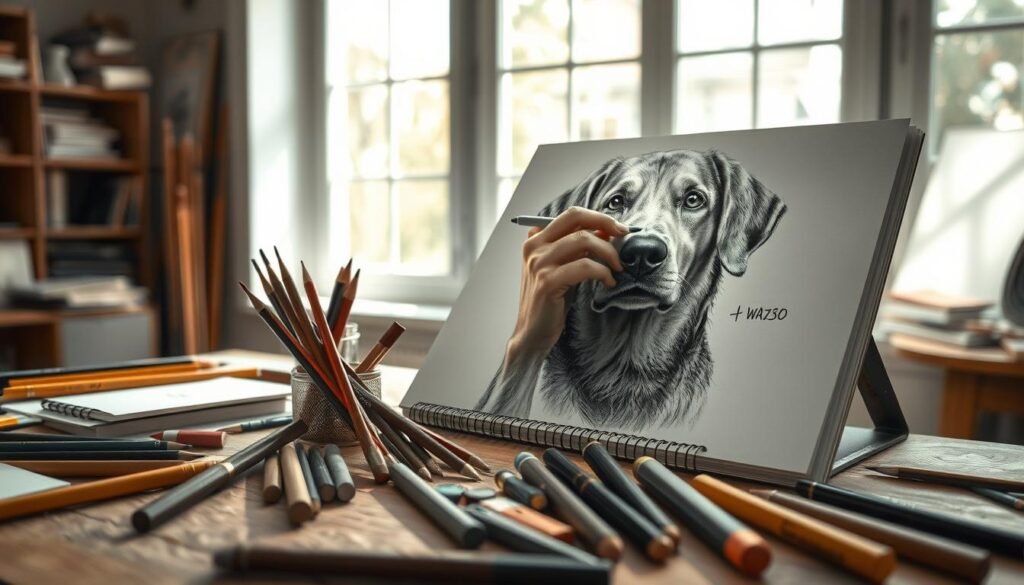
The transition from basic sketches to professional-grade portraits involves sophisticated methods that work across both digital and traditional media. These advanced approaches focus on subtle details that bring your artwork to life.
Incorporating Digital Tools and Traditional Methods
Digital platforms offer extensive color palettes for realistic canine artwork. I typically use six distinct shades: various browns for the coat, pink for the tongue, and dark tones for features. Separate fill layers allow color adjustments at the project’s end without affecting other areas.
Traditional pencil work on paper requires different techniques. I use blending tools like estompes to create soft fur textures. Skillful hatching builds up hair patterns gradually. Both methods achieve excellent results when applied correctly.
Custom fur brushes in digital software save significant time. These tools create random hair patterns that mimic natural growth. The alternative involves drawing individual hairs with careful line work.
Fine details make the biggest difference in realism. I add glossy highlights to damp areas like eyes and noses. These touches create the lifelike sparkle seen in real animals. For comprehensive guidance on these methods, explore this detailed canine drawing resource.
Advanced shading defines the three-dimensional shape of any breed. Observe how light interacts with the dog’s form. Build gradual tonal transitions in shadow areas. These techniques transform basic sketches into stunning art pieces.
Conclusion
Your artistic journey in capturing the spirit of canines on paper begins with a solid foundation. I trust this guide has equipped you with a clear, systematic method for creating professional-looking artwork.
Remember, the core principle is building from simple shapes. Understanding the underlying structure—the body, legs, head, and features—is the most important part. This approach works for any breed or pose.
With dedicated time and practice, your skills in sketching details like fur direction and facial expressions will grow. Don’t be discouraged by early attempts; each sketch is a valuable learning opportunity.
Continue to practice and explore. For further inspiration and techniques, consider this comprehensive guide on drawing a dog. Your ability to create beautiful portraits of these beloved animals will only improve.