


Capturing the essence of fire on a page is a challenge that has captivated artists for centuries. The flickering light and dynamic movement of flames create a powerful visual effect.
In this comprehensive guide, I will walk you through the entire process of creating lifelike fire artwork. My method blends a scientific grasp of combustion with proven artistic techniques. This ensures you understand both the theory and the practical application for stunning outcomes.
I will share my personal inspiration for creating these elemental illustrations. Understanding the behavior of fire is crucial for artwork that feels alive and energetic on the canvas or screen.
The principles I teach apply universally. Whether you prefer traditional tools like pencils or modern digital tablets and software, you can achieve remarkable results. This tutorial is structured to take you from a complete beginner to a confident artist.
We will break down complex ideas into simple, logical steps. By the end, you will master the skills needed to illustrate candles, campfires, explosions, and any fiery scene your imagination conjures.
I will demonstrate multiple approaches. This allows you to discover which techniques best suit your personal style and chosen medium.
Key Takeaways
- Learn a process that combines art and science for authentic results.
- Gain skills applicable to both traditional and digital art forms.
- Understand fire behavior to make your artwork dynamic.
- Progress from basic concepts to advanced illustration techniques.
- Discover multiple methods to find your preferred artistic style.
- Create various types of fire, from gentle candles to raging infernos.
- Build confidence through a structured, step-by-step learning path.
Introduction to Drawing Realistic Flames
My journey into flame illustration began with a deep appreciation for how fire transforms visual storytelling. Observing its power to create dramatic, emotionally charged scenes sparked my passion for mastering this challenging subject.how-to-draw-a-cloud
My Inspiration and Approach
I treat flame creation as both artistic expression and scientific study. Understanding combustion principles—the fire triangle of fuel, oxygen, and heat—elevates the realism of my artwork. This dual perspective ensures each piece captures fire’s authentic behavior.
Years of practice taught me to break down complex fire forms into basic shapes first. Then I layer color, motion, and light effects for stunning results. Studying various fire types provides invaluable reference material.
Overview of Techniques and Tools
This tutorial shares methods refined through extensive experience. I emphasize that anyone can learn convincing flame representation with proper guidance. The techniques work across traditional and digital mediums.how-to-draw-a-castle
My approach covers everything from pencil sketches to digital airbrushing. Each tool offers unique advantages for capturing fire’s organic nature. The table below shows different flame characteristics I study.
| Flame Type | Size Range | Primary Characteristics | Best Suited Tools |
|---|---|---|---|
| Candle Flame | Small | Controlled, steady, teardrop shape | Fine pencils, detail brushes |
| Campfire | Medium | Wild, flickering, multiple tongues | Markers, airbrushes, broad brushes |
| Fire Explosion | Large | Intense, rapid movement, high energy | Digital software, layered techniques |
Understanding the Science and Anatomy of Fire

Creating a believable illustration of fire demands more than artistic skill; it requires a foundational grasp of its scientific principles. This knowledge directly informs the color, shape, and movement I depict. It transforms a simple shape into a dynamic, energetic element.how-to-draw-a-cowboy-hat
The Fire Triangle and Chemical Combustion
At its core, fire is a chemical reaction. The Fire Triangle concept is essential. It shows that fuel, oxygen, and heat must interact. Adding the chemical chain reaction creates a fire tetrahedron.
Combustion releases energy as heat and light. The visible colors of a flame are a temperature gauge. Red-orange hues indicate cooler temperatures from incomplete burning. Yellow and white areas signal hotter, more complete combustion.
How Gravity and Motion Influence Flame Behavior
Gravity plays a fundamental part in a flame’s iconic shape. Hot gases are less dense, so they rise. This creates the upward-tearing form we recognize.
I incorporate motion by considering airflow. Wind causes flames to lean and flicker. Understanding these forces allows me to sketch fire that feels alive and responsive to its environment.
How to Draw a Flame with Essential Techniques
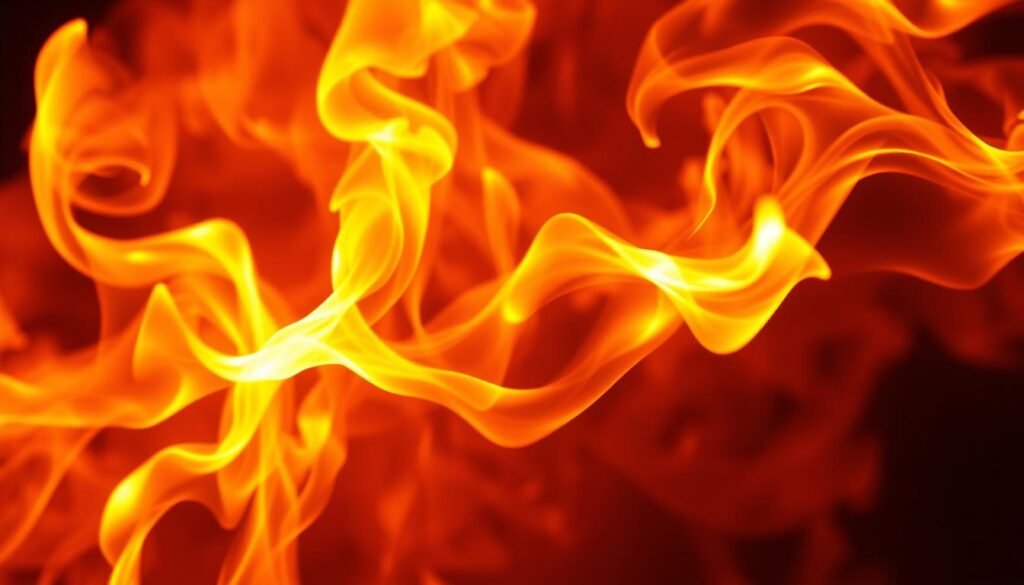
Every realistic depiction of fire begins with a solid understanding of its core geometric forms. I simplify the process by starting with basic structures. This foundation makes the entire task much more manageable.how-to-draw-a-hat
Breaking Down the Basic Shapes
My primary method uses nested teardrop shapes. I sketch a large, rounded base with a wavy point. A second, smaller teardrop fits inside the first.
Adding a third inner shape creates immediate depth. This layered approach builds a strong outline for the flames. It provides a clear guide for the next steps.
Converting Guidelines into Organic, Wavy Forms
The real artistry starts here. I transform the rigid construction lines into flowing, organic forms. Fire is never perfectly symmetrical.
I make the edges dance with irregular waves and curves. The lines should bend randomly, starting about halfway up. This mimics the flickering movement of real combustion.
For complex clusters, I use a vertical line technique. Alternating upward and downward strokes create natural-looking tails. This method is especially effective in digital art software.
| Method | Best For | Key Characteristic | Complexity Level |
|---|---|---|---|
| Nested Teardrops | Single, defined flames | Builds depth and volume | Beginner |
| Vertical Wavy Lines | Large, flickering fire masses | Creates dynamic, irregular shapes | Intermediate |
The Colors of Fire and Layering Methods

Color application separates amateur attempts from professional flame artwork through strategic layering techniques. The right palette choices create immediate visual impact and thermal realism.
Temperature-Based Color Transitions
I follow the natural temperature gradient when selecting my color palette. The hottest areas in the center core demand bright yellows and whites. Middle zones transition through vibrant orange tones.
Cooler outer areas feature deep red hues. This thermal hierarchy creates authentic visual depth. The progression from red to yellow mirrors actual combustion physics.
Using Multiple Layers for Depth and Dimension
My method involves building at least three distinct color layers. I start with the broad red foundation representing cooler temperatures. Then I add the middle orange section for medium heat.how-to-draw-a-flamingo
The final layer places intense yellows and whites in the core center. This sequential approach ensures logical temperature progression. Each layer contributes to the overall dimensional effect.
“The secret to convincing fire lies in soft transitions between color zones. Hard edges destroy the organic feel of real combustion.”
I blend the boundaries between different colors meticulously. Subtle variations within each zone prevent flat appearance. This technique creates vibrant, living fire effects that many artists discuss in community forums.
| Color Zone | Temperature Range | Visual Characteristics | Layer Position |
|---|---|---|---|
| Red Outer Layer | 600-800°C | Deep, translucent edges | Foundation/base |
| Orange Middle Zone | 800-1000°C | Bright, vibrant transition | Intermediate layer |
| Yellow-White Core | 1000-1200°C | Intense light source | Innermost center |
The strategic use of light values completes the realistic effect. I concentrate the brightest light in the lower center where combustion is most intense.
Choosing the Right Tools and Software

Having experimented with countless art supplies, I’ve discovered that proper tool selection is fundamental to achieving realistic fire effects. The right equipment can dramatically enhance both quality and efficiency in your artwork.
Traditional Tools: Pencil, Eraser, and Markers
For traditional work, I start with a standard pencil for initial sketches. A quality eraser becomes essential for refining shapes. The hard eraser creates sharp edges on flame tips, while the soft version handles gradual transitions beautifully.
Colored pencils and markers provide the final color application. Acrylic markers, particularly 28-color sets, work exceptionally well for vibrant fire effects. Each tool serves a specific purpose in building convincing flames.
Digital Tools: Brushes, Airbrushes, and Filters
In digital environments, brush selection becomes crucial. I use G-Pen tools for blocking shapes and airbrushes for soft transitions. The tip settings on each brush matter enormously for controlling opacity and hardness.
My favorite time-saving technique involves the Finger Tip blend tool. It simultaneously blurs, blends colors, and reshapes elements. This creates organic-looking fire much faster than manual methods.
I maintain a comprehensive list of essential digital tools for efficient workflow. Filters like Gaussian Blur for glows and Motion Blur for movement enhance realism. These techniques work beautifully in programs like Clip Studio Paint.
Step-by-Step Flame Painting Process
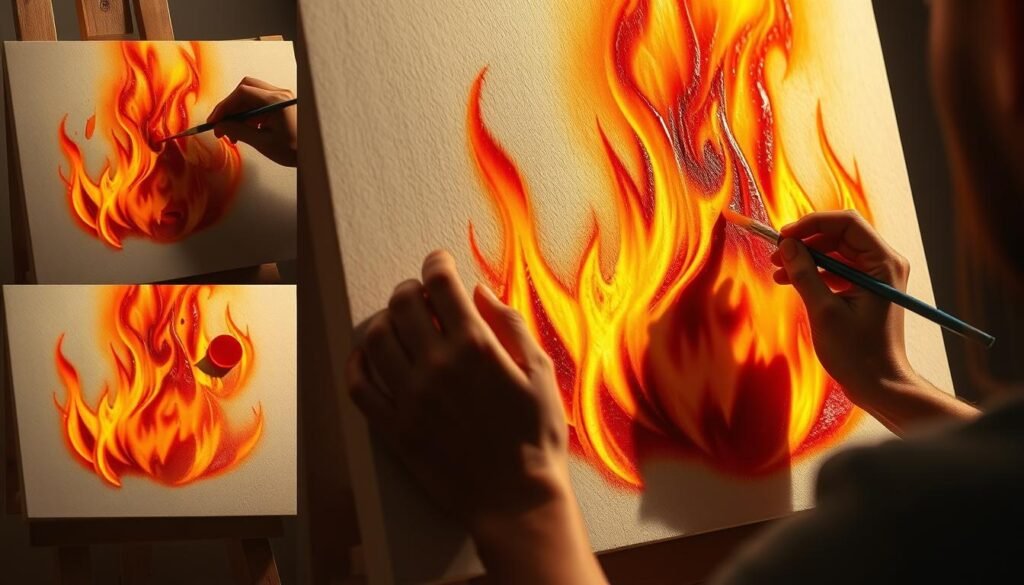
My systematic approach to flame creation transforms complex fire elements into manageable sequential stages. This painting process builds confidence through logical progression.
Initial Sketch and Construction Lines
I begin each project with solid foundation work. The first step involves blocking out basic shapes using G-Pen tools or lasso fill techniques.
This establishes the flame’s outer boundaries. I then soften the red base color and create natural waves using the Finger Tip Blend Tool.
Adding Color, Shading, and Final Touches
The second step introduces temperature guidelines for color placement. I paint orange prominently within red areas, then add yellow inside orange zones.
White highlights complete the thermal progression. The refinement process requires careful attention to detail throughout.
Final steps include adding dissipating wisps, glow effects, and burning particles. Each element contributes to realistic combustion appearance.
Conclusion
Bringing the raw energy of combustion to life through illustration requires both technical skill and creative vision. Throughout this post, I’ve shared methods that blend scientific understanding with artistic execution for authentic results.
You should now feel confident creating various types of flames, from gentle candlelight to explosive fire bursts. These techniques work across all mediums and skill levels, making them valuable for any artist’s toolkit.
Regular practice over time will transform these methods into intuitive skills. I encourage you to explore how flames can enhance your artwork with drama and emotion. Thank you for investing your time in this comprehensive post.