

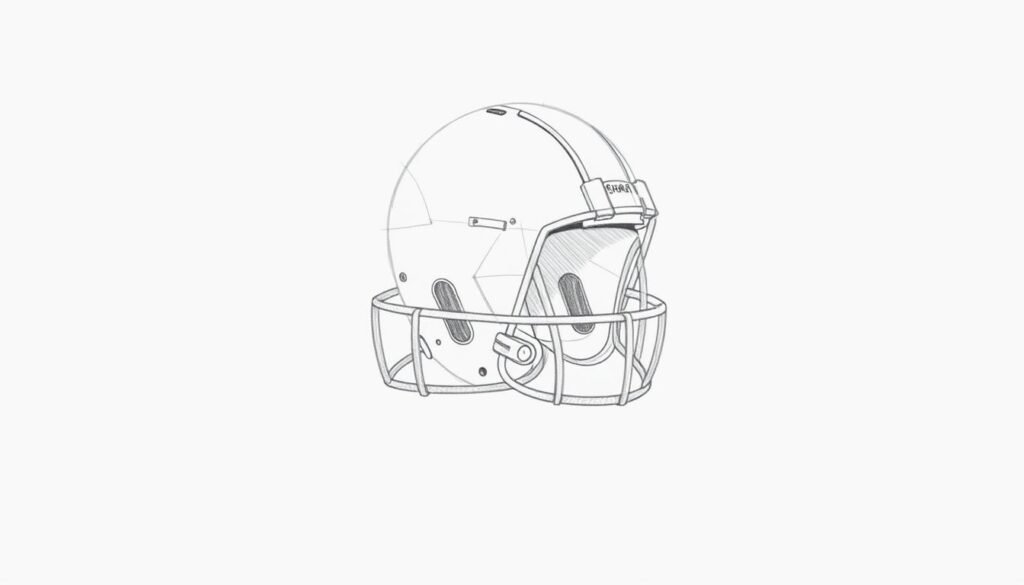
The first protective headgear for this sport appeared in 1896. It was a simple leather cap. Today, these essential pieces of equipment are high-tech marvels, a far cry from their humble beginnings.
This iconic gear is more than just protection. It’s a symbol of strength and team spirit. Capturing its shape on paper is a fantastic way to celebrate the game.
My guide breaks down the process into simple steps. You will focus on four main parts: the hard shell, interior padding, metal facemask, and chinstrap. This structured approach makes the project easy for anyone.
You can start with the basic form. Then, you have the freedom to add your favorite team’s colors and logos. This personal touch makes your artwork unique. For a complete visual walkthrough, check out this detailed football helmet drawing resource.
By the end of this tutorial, you will have created your own impressive sports art. Let’s get started on this rewarding artistic project.
Key Takeaways
- Football helmets evolved from simple leather caps in the 1890s to modern high-tech gear.
- The helmet is a powerful symbol of the sport, making it a great subject for art.
- This tutorial simplifies the helmet into four key components for easy drawing.
- The guide is designed to be accessible for artists of all skill levels, including beginners.
- Customization with team colors and logos is encouraged to create unique artwork.
- Following the steps will result in a personalized and impressive piece of sports art.
Understanding the Structure and Essentials of a Football Helmet
Contemporary athletic head protection combines advanced materials with ergonomic design principles. Before attempting any artistic representation, I find it essential to comprehend the fundamental anatomy of this protective gear.how-to-draw-a-foot
Analyzing the Helmet Shell and Outline
The shell serves as the primary protective element. This hard outer layer forms the main body of the equipment. Its irregular circular shape provides the foundation for accurate representation.
When examining the outline, notice how it curves to accommodate a player’s head. The contours ensure maximum protection while maintaining comfort. This helmet shell design has evolved through extensive safety research.how-to-draw-a-lily-flower
Identifying Key Components: Face Mask, Cheek Pads, and Holder
The face mask consists of a metal framework with curved and diagonal bars. This critical component protects the player’s face while allowing clear visibility. Mounting clips secure the mask to the main structure.
Cheek pads appear on both the left and right side of the equipment. They provide additional impact absorption. The relationship between these elements creates an integrated safety system, as detailed in this analysis of protective sports equipment.
Understanding these components ensures your artistic representation captures both form and function accurately.
Step-by-Step Guide: How to Draw a Football Helmet

Building a realistic depiction of protective sports equipment follows a logical progression of steps. I will guide you through each phase of this artistic process.
The method begins with simple geometric forms. These basic shapes establish proper proportions for the entire piece.how-to-draw-a-lily
Starting with the Basic Shape and Shell Outline
Begin with a circular guide shape. This foundation determines the overall size and placement. Use a long, winding curve to define the shell’s distinctive profile.
This initial outline captures the equipment’s protective curvature. The irregular circular form provides the structural basis.
Crafting the Detailed Face Mask and Holder
Next, focus on the protective framework. Employ curved, horizontal, and diagonal lines to construct the metal grid. Add mounting clips and connection points using precise angles.
Ensure symmetry between left and right sides. The holder components should appear balanced and functional.
Addition of Key Details and Customization Elements
Final stages involve interior padding and personal touches. Draw cheek pads on both sides using matching curved lines. Add interior lining details for realism.
Customization options include team logos or decorative elements. This personalization makes your artwork unique.
| Drawing Stage | Key Elements | Technique Focus |
|---|---|---|
| Foundation | Basic circle, shell outline | Proportion and shape |
| Framework | Face mask, holder clips | Symmetry and structure |
| Finishing | Padding, customization | Detail and personalization |
Techniques and Tips for Enhanced Detail and Color
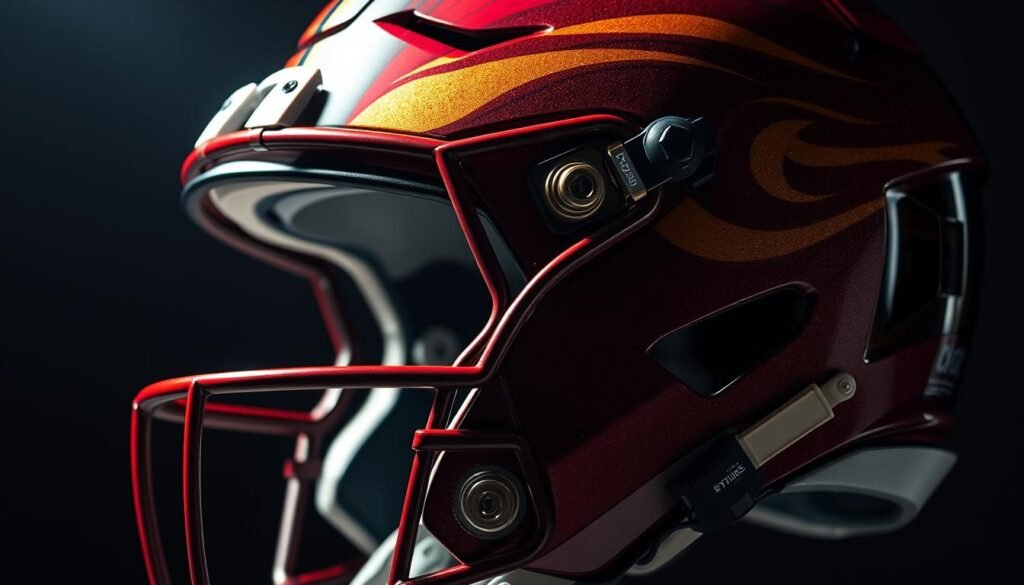
Mastering line work transforms a basic sketch into a dynamic piece of sports art. This section explores advanced methods for adding realism and personal flair.how-to-draw-a-lightning-bolt
I focus on techniques that bring your illustration to life through strategic detailing.
Utilizing Curved and Diagonal Lines Effectively
Curved lines create the illusion of three-dimensional form. Varying line weight adds depth to the shell’s curvature.
Diagonal bars on the face mask require precise angles. These elements should appear structurally sound.
Subtle variations in your strokes make the difference between flat and realistic artwork.
Incorporating Logos, Team Colors, and Personal Touches
Team identification began in the 1950s with the Los Angeles Rams. Research your favorite team’s logo for accurate placement.
Popular color combinations include white, red, and gray shades. Alternatively, create custom schemes for unique artwork.
Consider adding a player’s head inside the equipment or creating a locker room background. These elements tell a richer story.
Transforming your illustration into a cartoon mascot offers creative freedom. Personalization makes each piece distinct.
Conclusion
Congratulations on completing your sports equipment illustration – this artistic achievement demonstrates your growing skills. You’ve mastered the process from basic shapes to detailed customization, creating a personalized piece of sports art.
This tutorial has equipped you with foundational techniques for various athletic gear illustrations. You can now experiment with different team colors, logos, and styles to create unlimited variations.
Continue developing your abilities by exploring related drawing tutorials for football players and other sports equipment. Share your finished artwork on social platforms to inspire fellow artists.
All resources I provide remain completely free and are regularly updated with new content. Return often to discover fresh easy drawing projects that will further enhance your artistic journey.