


Drawing a fox is a fascinating and rewarding experience. It lets artists capture the intricate details and majestic beauty of these creatures. With the right guidance, anyone can learn to draw a fox with precision and skill.
To get started, it’s essential to understand the importance of anatomy and having the right materials. For instance, using a range of pencils, such as an HB pencil for detailing and a 4B pencil for shading, can significantly enhance your drawing. You can find more tips on materials and techniques on our related article about fox drawing.
Key Takeaways
- Understand the anatomy of a fox to draw it accurately.
- Gather the right materials, including various pencils and sketch paper.
- Practice your skills with step-by-step guidance.
- Enhance your drawing with shading and detailing techniques.
- Use reference images to improve your drawing.
Understanding the Fox Anatomy
To draw a fox well, knowing its anatomy is key. Start by breaking its body into simple shapes. Then, focus on its main features and how they fit together.
Basic Shapes of a Fox
Begin by drawing a fox with basic shapes. Use circles, ovals, and rectangles for a quick outline. The head is a circle, the body an oval, and the legs rectangles. This makes it easier to get the proportions right.
Key Features to Note
When drawing a fox, pay close attention to certain features. The eyes, ears, and tail are unique and need detail. The eyes are almond-shaped, the ears triangular, and the tail long and bushy. Getting these right will make your drawing look more real.
Proportions and Anatomy
Knowing a fox’s proportions is crucial for a realistic drawing. The body is twice as long as the head, with the tail adding more length. The front legs are a bit shorter than the back legs. Focus on these details for a balanced drawing.
By learning the basic shapes, key features, and proportions of a fox, you’ll draw a realistic and engaging picture.
Materials You’ll Need
Before you start drawing a fox, gather the right supplies. The right materials are key to a great fox drawing.
Drawing Tools and Supplies
You’ll need basic tools to begin. These include pencils (HB, 2B, 4B, 6B), a sharpener, and an eraser. A quality pencil is crucial for different shades and textures. You can find these pencils at art stores or online.
| Tool | Description | Recommended Brand |
|---|---|---|
| Pencils | Range of pencils for shading and drawing | Faber-Castell |
| Sharpener | For keeping pencils sharp | Derwent |
| Eraser | For erasing guidelines and mistakes | Tombow |
Recommended Sketchpad Types
Choosing the right sketchpad is important for a good drawing experience. Look for a sketchpad with high-quality paper. A sketchpad with a mix of smooth and textured paper is best for detailed fox drawings.
- Choose sketchpads with 80-100 gsm paper for a balance of smoothness and texture.
- Opt for a sketchpad with a sewn binding for easier flat opening.
Optional Coloring Materials
To add color to your fox drawing, consider colored pencils, markers, or watercolors. Each has its own unique qualities. Pick the one that fits your style best.
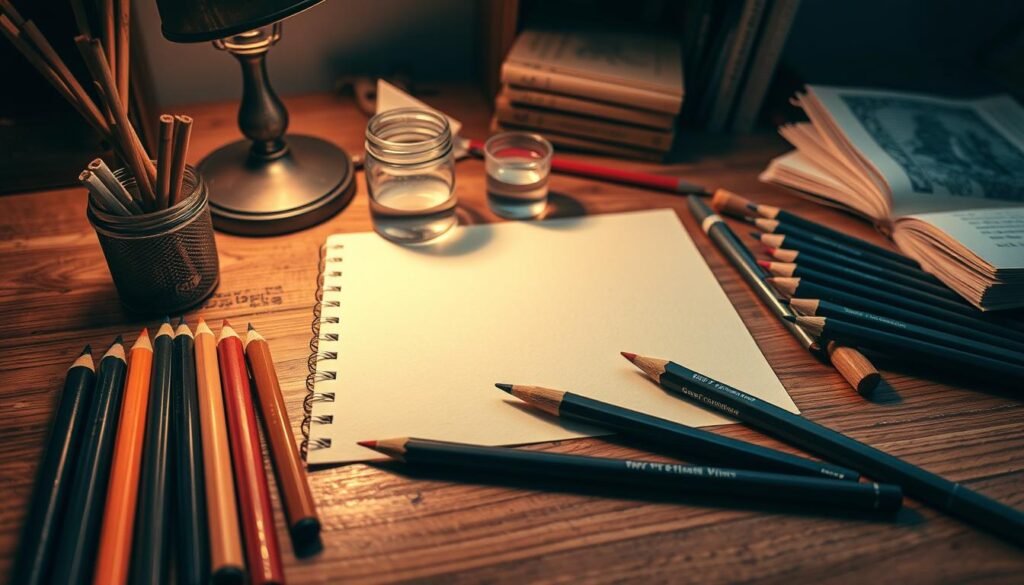
Setting Up Your Workspace
Before you start drawing a fox, make sure your workspace is ready for creativity. A good workspace helps you focus on the details of your drawing. It makes the whole experience better.
Finding the Right Lighting
Good lighting is key for drawing. Natural light is best because it shows your subject clearly. If you can’t use natural light, get a lamp with soft, white light.
Stay away from harsh or colored lights. They can make colors and details look wrong.
Organizing Your Supplies
Keep your drawing stuff organized and easy to get to. Use a desk organizer or supply box for pencils, erasers, and sketchpads. This saves time and helps you stay focused.
| Supply | Description | Use |
|---|---|---|
| Pencils | Range of graphite pencils (HB, 2B, 4B, 6B) | Sketching and shading |
| Eraser | Good quality eraser (kneaded or white) | Correcting mistakes and creating highlights |
| Sketchpad | High-quality paper (smooth or textured) | Drawing and sketching |
Creating a Comfortable Environment
A comfy drawing spot is important for getting work done. Make sure your chair and drawing surface are just right. Take breaks to stretch and rest your eyes.
With the right workspace, you can dive into your fox drawing. Remember, practice is key. A good workspace is the first step to getting better.You can learn how-to-draw-a-flower
Sketching the Outline of a Fox
First, draw a rough outline of the fox using basic shapes and lines. This step is key for a balanced and right-sized drawing.
Basic Shapes and Framework
Start by drawing the fox’s body with basic shapes. Use a large oval for the body and a smaller circle for the head. These shapes are the foundation of your drawing. Keep your lines light and soft, as these are just guides.
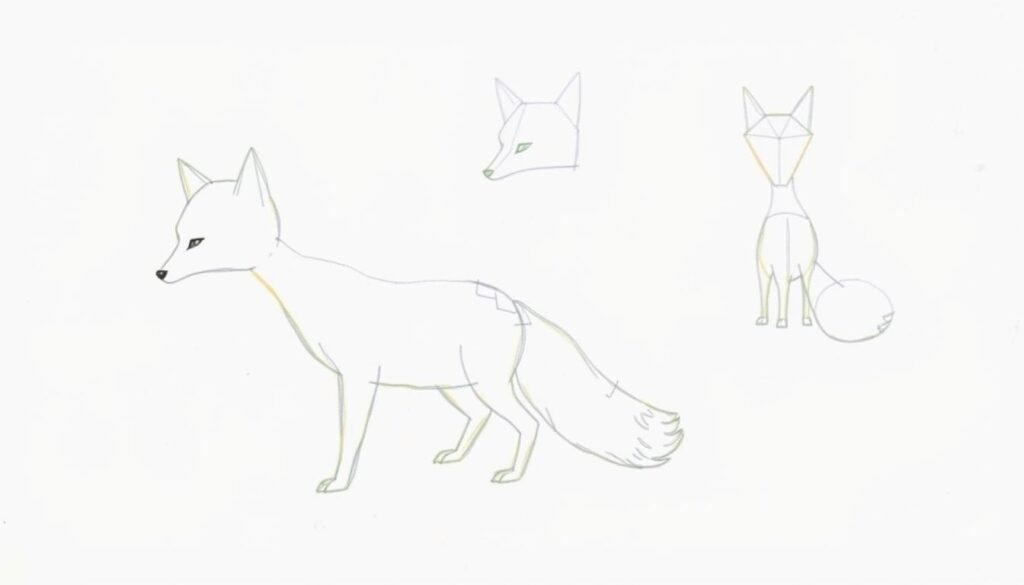
For more tips on using basic shapes, check out Clip Studio Tips. They have great advice on sketching and improving your drawings.
Positioning the Head and Body
After drawing the basic shapes, focus on the head and body’s position. The head should be slightly tilted for a natural look. Make sure the head is about one-third the size of the body. The body should be big enough to support the fox’s structure.
- Align the head with the body, ensuring they are proportionate.
- Adjust the tilt of the head to capture the desired expression.
- Verify that the body is large enough to accommodate the fox’s anatomy.
Adding the Legs and Tail
Now, add the legs and tail to your drawing. The legs should be sturdy and well-proportioned to the body. Start with simple lines, then refine them. The tail should be long and flowing, adding movement to your drawing.
- Sketch the front and back legs, ensuring they are in proportion.
- Add detail to the legs, including paws and claws.
- Draw the tail, making sure it flows naturally from the body.
By following these steps, you’ll have a well-balanced fox outline. This will help you add more details and refine your drawing in the next steps.
Refining Your Sketch
Now that you have the basic outline, it’s time to refine your sketch. Focus on the facial features, body shape, and other details. This step is crucial for a realistic and engaging fox drawing.
Enhancing Facial Features
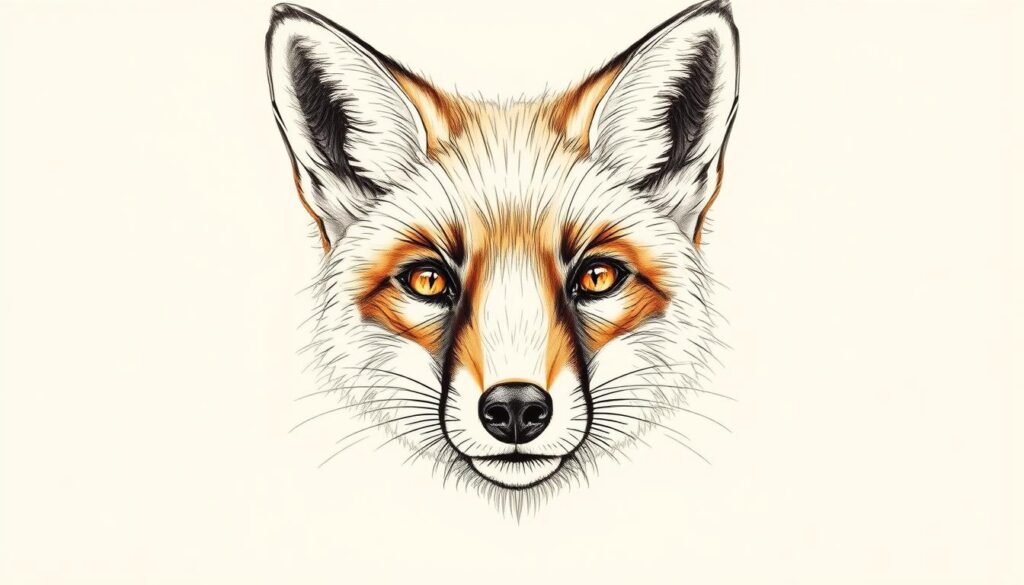
The facial features make your fox come to life. Start by defining the eyes, which are almond-shaped and expressive. The nose should be small and slightly upturned, giving a curious look. Make sure the mouth is proportionate to the face.
Tips for drawing the eyes: Eyes should be fairly large and expressive. They convey a lot of emotion. Adding subtle shading around the eyes gives them depth.
Defining the Body Shape
The fox’s body is slender and athletic. To define the body shape, smooth out the earlier outline. Ensure the neck is proportional to the head and body. The torso should be muscular but sleek.
- Pay attention to the shoulders and how they blend into the body.
- The legs should be in proportion to the body, with the front legs being slightly shorter than the back legs.
Adding Small Details
Small details can make a big difference. Add texture to the fur with short, gentle strokes. You can also add details like whiskers, which are long and thin.
Consider the texture of the paws and the bushiness of the tail. These elements add depth and character to your fox drawing.
By following these steps, you’ll refine your sketch and create a detailed and realistic fox drawing. Remember, practice is key to improving your drawing skills. Don’t be discouraged if it takes a few attempts to get it right.
Inking Your Fox Drawing
Inking can make your fox drawing look amazing. It needs precision and the right tools for clean lines. These lines make your drawing pop.
Choosing the Right Pen
Choosing the right pen is key. Different pens give different line widths and styles. This affects how your drawing looks.
A fine-tip pen is best for details. A thicker pen works well for bold lines. Always pick a pen with waterproof ink to avoid smudges.
Some great options include:
- Fine liners for detailed work
- Brush pens for varying line widths
- Technical pens for precision
Techniques for Inking
Technique is crucial when inking. Start with the big areas of your fox. Then, move to the small details. Make sure your lines are smooth and even.
For a better look, use a light box or tracing paper. This helps refine your lines before inking on your final drawing.
Tips for Clean Lines
Getting clean lines takes patience and practice. Here are some tips to help:
| Tip | Description |
|---|---|
| Use a steady hand | Rest your hand on a stable surface to minimize shaking. |
| Choose the right paper | Select paper that is smooth and suitable for inking. |
| Practice, practice, practice | The more you practice inking, the more confident you’ll become. |
For more drawing and inking tips, check out https://www.emilydrawing.com/how-to-draw/how-to-draw-a-fox/. They have lots of resources and tutorials.
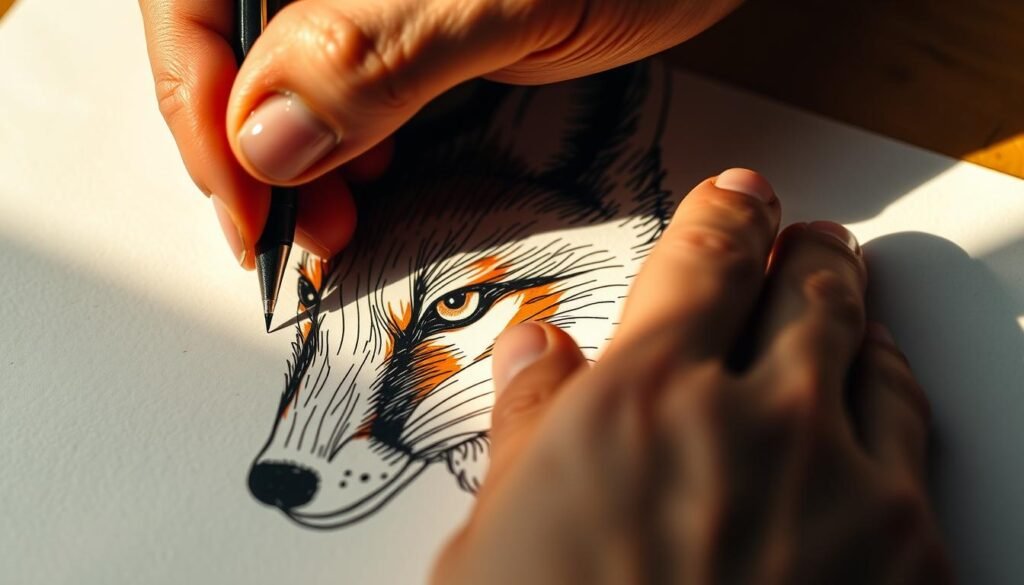
Experts say, “The key to great inking is not just about the tools you use, but also about the technique and patience you apply.” By following these tips and practicing, you’ll make beautiful drawings.
“Inking is where the magic happens, turning a simple sketch into a work of art.” –
Adding Color to Your Fox
To bring your fox drawing to life, you need the right colors. First, pick a color palette that fits. Then, use techniques to color the fur and add shadows for depth. With these steps, your fox drawing will pop with color and look real.
Color Palette Selection
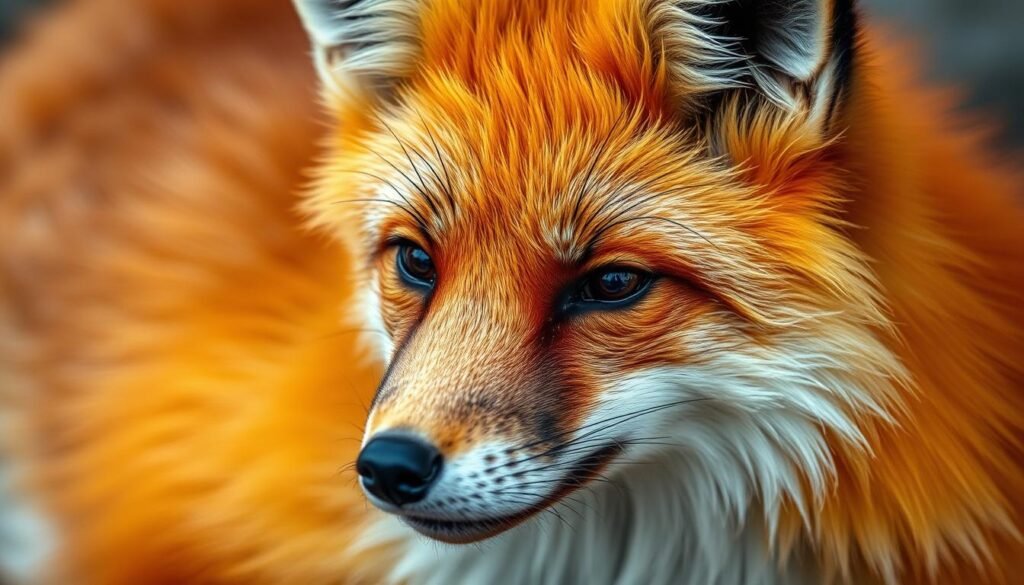
Choosing the right colors is key for a realistic fox drawing. Foxes have shades of orange, red, and white. The back is darker, and the belly is lighter. You can also try different colors to make your art unique.
Here are some tips for selecting a color palette:
- Look at real foxes or reference images to see their natural colors.
- Think about the environment and background of your drawing when picking colors.
- Try different shades and combinations to find the best for your drawing.
Techniques for Coloring Fur
To color the fur of your fox, you need some technique. Layering different shades creates depth and texture. Start with the base color and add layers of shading to make the fur look real.
Some techniques to consider:
- Layering: Use multiple layers of color for a rich, textured look.
- Blending: Blend colors with gentle strokes for a smooth transition.
- Highlighting: Add highlights with lighter shades to areas that catch the light.
Adding Depth with Shadows
Shadows are key for depth and dimension in your fox drawing. By applying shadows carefully, you can make your drawing more realistic and engaging. Identify the light source and apply shadows based on that.
| Shading Technique | Description | Effect |
|---|---|---|
| Hatching | Creating parallel lines that follow the fox’s body. | Adds texture and shading. |
| Cross-Hatching | Layering hatching lines at different angles. | Creates deeper shadows and more detailed texture. |
| Stippling | Creating shading using small dots. | Produces a highly detailed, high-contrast image. |
By mastering fur coloring and shadow techniques, you can make your fox drawing more vibrant and realistic.
Final Touches
As we near the end of our fox drawing, it’s time to add the final touches. These steps are key to refining your drawing and giving it a professional look.
Erasing Guidelines
The first step is to erase any guidelines or sketch marks. This makes your drawing clean and lets the fox shine. Be gentle when erasing to avoid smudging your work.

Adding Background Elements
Adding background elements can make your fox drawing pop. Think about adding trees, snow, or a forest floor. Keep it simple to focus on the fox.
When adding background, use a light touch. This way, the fox stays the main focus. You can use soft pencil shading or watercolor washes for a nice background.
Finalizing with Highlights
Highlights add depth to your fox drawing. Use a white pencil or gel pen on the eyes, fur, and nose. Be careful not to overdo it, as too much can look unnatural.
After adding highlights, step back and look at your drawing. Make any last-minute adjustments to balance and appeal. With these final steps, your fox drawing is complete and ready to be shown off.
Common Mistakes to Avoid
Learning to draw a fox can be tricky. Knowing common mistakes helps a lot. Avoiding these errors can make your drawing much better.
Overcomplicating Features
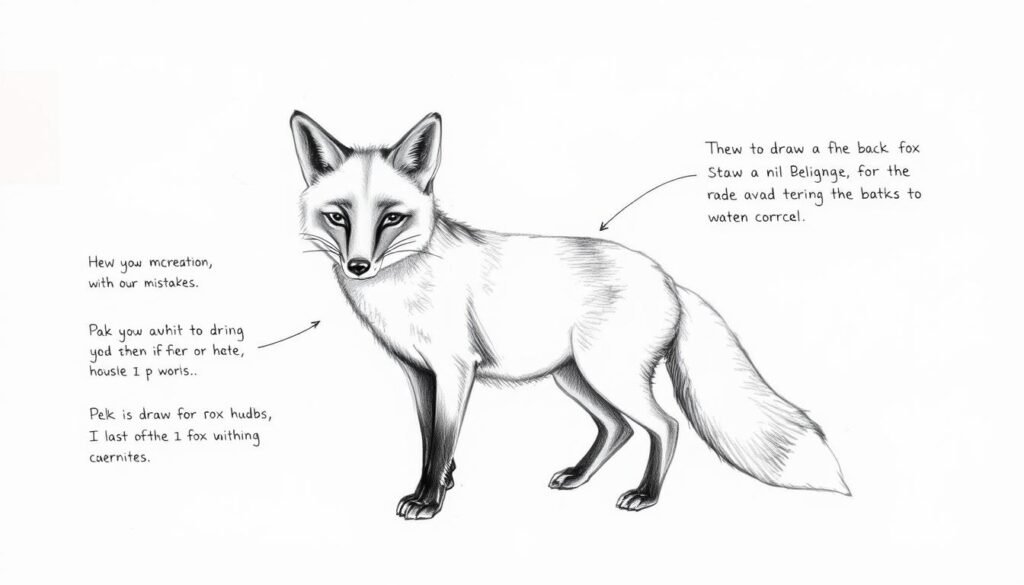
One big mistake is making the fox’s features too complicated. Simplify the details but keep the fox’s essence. For example, don’t draw every fur strand. Use smooth lines to suggest texture instead.
Incorrect Proportions
Getting the proportions wrong can make your fox look odd. Make sure the head, body, and limbs are the right size. Check out step-by-step guides for the right proportions.
| Body Part | Proportion | Description |
|---|---|---|
| Head | 1/4 of body | The head should be in proportion to the body, roughly one-fourth the size. |
| Body | Main mass | The body is the main mass of the fox and should be the focal point. |
| Tail | Almost as long as the body | The tail is a significant feature and should be almost as long as the body. |
Skipping the Sketching Step
Not sketching first can mess up your drawing. Sketch lightly with a pencil. This lets you make changes before you finish.
“The simplest pencil sketch can be the foundation of a masterpiece. It’s not about the tools, but how you use them.”
By avoiding these mistakes, you can get better at drawing foxes. Practice and patience are key. Knowing these common errors will help you improve your art.
Inspiration and Practice Tips
As you get better at drawing foxes, it’s key to stay inspired and keep practicing. Watching real foxes, either in person or through great images, is helpful. This lets you learn about their movements, facial expressions, and body language.
Observing Real Foxes
Watching videos or documentaries about foxes can also give you insights. You can learn about their habitat, hunting habits, and social interactions. This can spark new ideas for your artwork.
Learning from Other Artists
Looking at the work of other wildlife artists, like those who draw foxes, is inspiring. You can check out littlecoffeefox.com to find new techniques and styles. This can help you see different ways to draw foxes.
Practicing with Different Styles
Trying out different drawing styles and techniques is good for you. Regular practice and staying inspired will help you get better. You’ll create amazing artwork that shows off your creativity.