

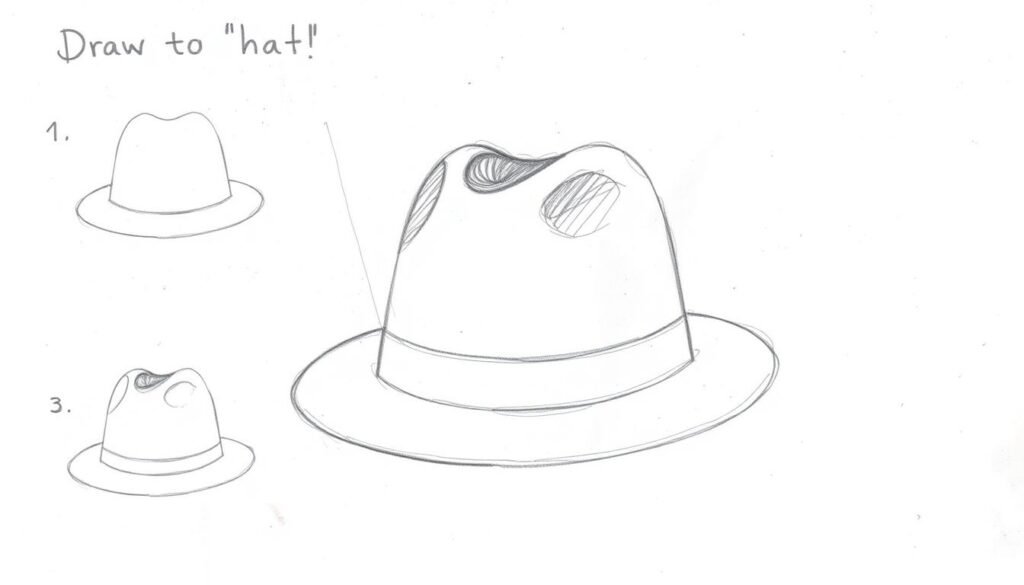
Did you know that over 80% of beginner artists feel hesitant to tackle accessories like hats in their artwork? Many believe it’s a complex skill reserved for experienced illustrators. This common misconception often holds people back from creating complete and professional-looking characters and fashion sketches.
I’m excited to share my straightforward approach to this essential art form. My technique makes this process accessible for absolute beginners. This guide breaks down the seemingly complex task into manageable steps that anyone can follow.
Starting with a solid foundation is key. I’ve found that a baseball cap provides the perfect structure for understanding proportions. This method, developed over years of teaching, focuses on clear, actionable instructions. You will build confidence with each step you complete.
My goal is to help you understand not just the process but also the reasoning behind each artistic decision. This knowledge allows you to eventually adapt these techniques to various types of headwear. By the end, you’ll have a solid foundation to apply to your creative projects.
Key Takeaways
- Overcoming the initial hesitation is the first step to successfully drawing hats.
- A structured, step-by-step method makes the process accessible for all skill levels.
- Starting with a baseball cap provides an excellent foundation for understanding basic hat structure.
- Clear instructions help build confidence throughout the artistic process.
- Learning the “why” behind each step allows for adaptation to different hat styles.
- This skill significantly enhances fashion illustrations and character designs.
Getting Started with Tools and Guidelines
Establishing clear spatial relationships through guidelines is the foundation for creating realistic headwear in your artwork. This preparatory phase ensures your final illustration maintains proper proportions and natural placement.
Gathering Your Materials and Sketching Essentials
I recommend starting with basic drawing tools: a quality pencil, eraser, and smooth paper. These simple materials provide the flexibility needed for guideline work.
The initial sketch should feature a 3/4 view angle face. Leave ample space above the head and in front of the model. This spatial planning prevents cramped compositions.
Setting Up Guidelines for Proportions and Placement
Vertical guidelines create the framework for accurate cap positioning. I establish three key reference lines to frame the head properly.
Two vertical lines outline the head’s sides. A third line positions just before the ear location. These markers prevent the cap from floating unnaturally.
For the base where the cap contacts the face, I draw a gentle curved line. This contour starts above the ear and ends at the hairline-forehead junction.
| Guideline Type | Purpose | Placement Tip |
|---|---|---|
| Vertical Framing Lines | Define head width boundaries | Position on each side of the head |
| Ear Reference Line | Anchor cap side placement | Place before ear location |
| Base Contour Line | Mark cap-face contact point | Follow natural head curvature |
Light guideline strokes allow easy erasure later. The top part of your cap will extend above these references, but the framework ensures proportional accuracy.
Step-by-Step Process: How to Draw a Hat
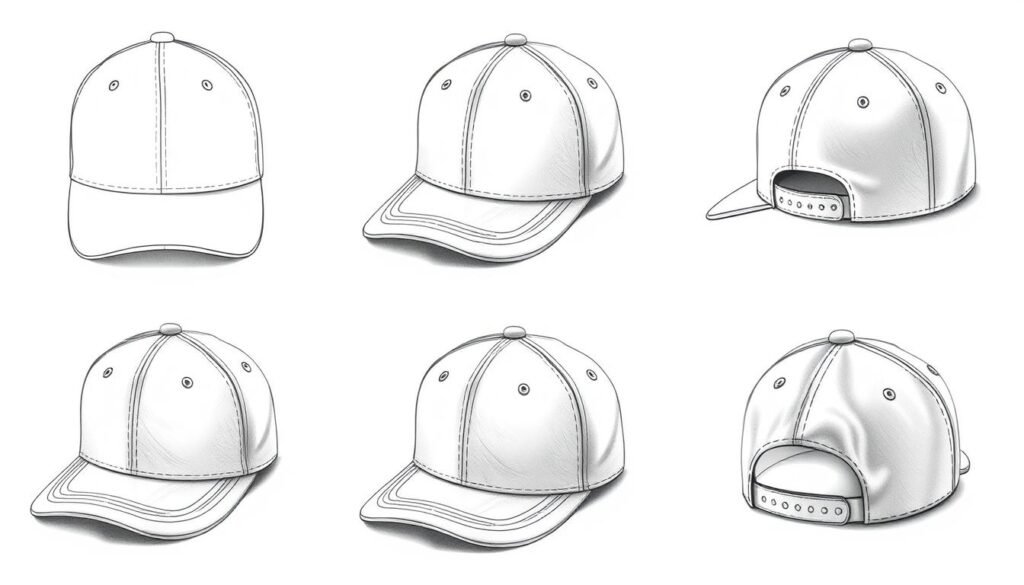
Moving from framework to form, we begin shaping the recognizable silhouette of our baseball cap. This phase transforms our guidelines into the actual headwear structure.
Marking the Cap Base and Defining the Visor
I start by creating a semicircle above the head outline. This curved shape forms the crown foundation. It sits slightly above the hairline, allowing space for realistic fabric drape.
The visor requires careful attention to perspective. I follow the “8” shape guideline to outline the brim. The left side appears longer due to our 3/4 view angle.
Drawing the Hat Crown and Outlining Key Details
At the very top, I place the characteristic button where all panels converge. This element anchors the cap’s structure. The ear guideline helps position it correctly.
Next, I define the individual fabric panels that give the cap its distinctive look. Each section meets at the central button. Parallel stitching lines add authenticity to the design.
For additional realism, I include top stitching around the brim. A small ventilation eyelet can be added to one panel. These essential details complete the basic construction before moving to decorative elements in our baseball cap tutorial.
Enhancing Your Hat Drawing with Style and Precision

The final stage of hat illustration focuses on stylistic elements that elevate your drawing from a simple shape to a compelling fashion statement. This phase transforms technical construction into artistic expression.
Adding a Logo and Refining the Brim
I place logos strategically on the front panel of the baseball cap. This detail adds authenticity to the sporty aesthetic. The brim receives special attention for clean, crisp edges.
Refining the curve creates dimension. The right side angle shows the brim’s natural sweep. This perspective enhances the three-dimensional quality.
Techniques for Shading, Inking, and Color
Shading adds depth to the cap’s fabric folds. I use light cross-hatching for texture. Inking defines the final contours with confidence.
Color choices reflect the intended fashion context. Neutral tones work for versatile styling. Bold colors make a statement in athletic wear designs.
Incorporating Fashion Elements and Personal Touches
This accessory integrates seamlessly with other fashion items. Denim jackets and sneakers complement the casual vibe. The cap becomes part of a cohesive look.
Personal touches distinguish your work. Stitch detailing, unique panel shapes, or custom colors add character. This method allows for creative variation.
| Finishing Technique | Primary Purpose | Visual Impact |
|---|---|---|
| Logo Placement | Brand authenticity | Focal point creation |
| Brim Refinement | Structural clarity | Perspective enhancement |
| Strategic Shading | Depth illusion | Textural realism |
| Color Application | Style definition | Mood establishment |
Mastering these finishing techniques through consistent practice builds confidence. Each completed hat tutorial strengthens your fashion illustration skills. The baseball cap serves as an excellent foundation for exploring diverse headwear styles.
Conclusion
Mastering the basic structure of a baseball cap unlocks the ability to illustrate many styles of headwear. The principles of proportion, shape, and perspective you practiced here apply directly to other designs. This includes everything from a classic top hat to a casual beanie.
I encourage you to practice this method from different angles. Try a front or side view to build your skills. The foundational techniques of using a simple line and curve remain constant. They work for both pencil sketches and digital art.
As you gain confidence, feel free to personalize your creations. Adjust the brim’s curve or experiment with logos. For more detailed guidance, explore this comprehensive baseball cap tutorial.
This is just the beginning of your journey into fashion illustration. Every artist starts with these essential steps. I hope this guide has shown you that creating stylish headwear is an achievable and rewarding part of your art.