

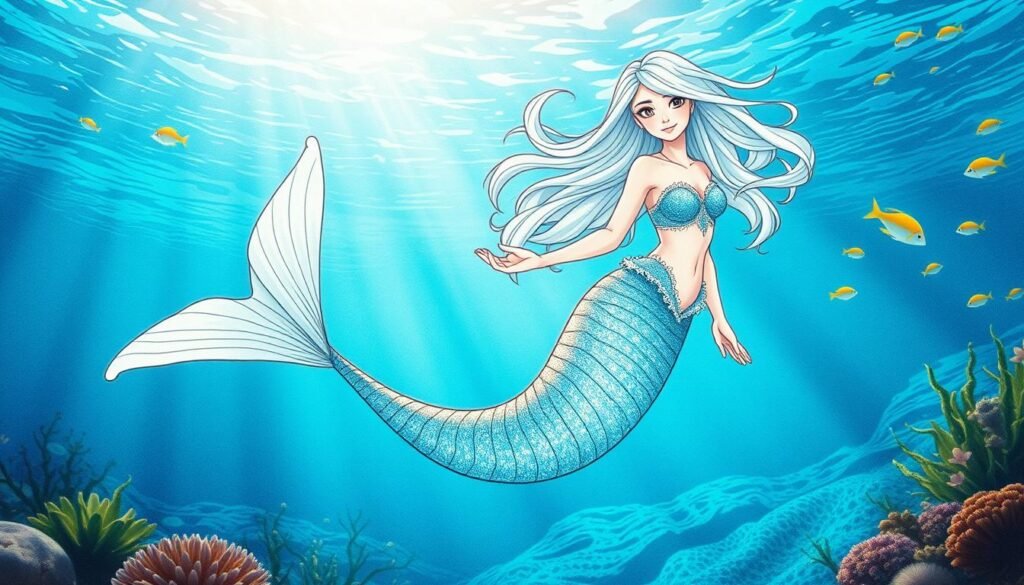
Did you know that searches for fantasy art tutorials have increased by over 300% in the last five years? This surge reflects a growing desire to bring imaginative worlds to life. My comprehensive guide taps into this creative wave.
I welcome you to a resource designed to transform your artistic vision. You will learn to create stunning illustrations that capture the magical essence of these mythical sea creatures. This process is accessible for everyone.
I provide professional techniques and proven methods. Whether you are a beginner picking up a pencil for the first time or an experienced artist refining your skills, this tutorial is for you. I break down the seemingly complex process into manageable, easy-to-follow steps.
My approach builds your confidence as you progress. We will explore mermaid anatomy, material selection, color theory, and various artistic styles. The goal is to elevate your artwork from basic sketches to magical creations.
Key Takeaways
- This guide is designed for artists of all skill levels.
- Learn professional techniques for illustrating mythical creatures.
- The process is broken down into easy-to-follow, confidence-building steps.
- Gain insights into anatomy, materials, and color theory.
- Explore different artistic styles to develop your unique mermaid characters.
- The tutorial includes practical tips and step-by-step instructions.
- Unlock the joy of bringing underwater fantasy to life on paper.
Getting Started with Mermaid Drawing
The quality of your final illustration often depends on the groundwork you establish before pencil touches paper. Proper preparation transforms the creative process from frustrating to fluid.
I approach each project with careful planning. This foundation ensures smooth progress through every step of the artistic journey.
Gathering Materials and Tools
Basic supplies form the core of any successful fantasy artwork. You need only a few essential items to begin.
My standard toolkit includes a reliable pencil, quality paper, a good eraser, and optional colored pencils. These simple tools provide everything necessary for initial sketches.
| Essential Tool | Primary Purpose | Recommended Type |
|---|---|---|
| Pencil | Initial sketching | HB or 2B graphite |
| Paper | Drawing surface | Medium-weight sketch paper |
| Eraser | Correcting mistakes | Kneaded or vinyl |
| Colored Pencils | Adding color later | Artist-grade set |
The right tools in the right hands can create magic. Preparation is the artist’s silent partner in every great work.
Setting Up My Workspace
Environment significantly impacts artistic focus and output quality. I prioritize comfort and functionality in my studio setup.
Proper lighting prevents eye strain and minimizes shadows. Position your light source opposite your drawing hand for optimal visibility.
Organization keeps the creative flow uninterrupted. I arrange all materials within easy reach before starting. This simple drawing tutorial approach saves time and maintains momentum.
A distraction-free space allows complete immersion in the creative process. Dedicated time and focused attention yield the best results.
Understanding Mermaid Anatomy Through Basic Shapes

The most effective way to approach any figure is by deconstructing its anatomy into fundamental geometric forms. This method transforms a complex subject into a logical, buildable structure. I simplify the entire process by focusing on core volumes first.
Thinking in three dimensions is crucial. A flat oval is not enough for a realistic head. I visualize it as an egg shape.
This allows me to place facial features correctly on its curved surface. Flowing hair then wraps naturally around this volumetric form.
Breaking Down the Head, Hair, and Face
I start with the egg shape for the skull. Eyes and mouth sit on the front curve, not a flat plane.
The hair originates from the top and flows around the head, adding volume and movement. This foundational step ensures proper proportion.
Constructing the Body and Flowing Tail
For the torso, I use an hourglass shape to define a feminine silhouette. Arms are simple cylinders that bend at joints.
The lower body transitions into the tail. I construct it as a wide base that tapers gracefully downward.
The fin uses soft, semi-circular shapes for a classic, elegant look. This streamlined body suggests effortless swimming.
This systematic approach makes the construction process repeatable. You can find a more detailed breakdown in my complete step-by-step guide.
| Body Part | Primary Shape | Key Function |
|---|---|---|
| Head | 3D Egg | Anchor for facial features |
| Torso | Hourglass | Establishes feminine form |
| Arms | Cylinders | Allows for natural posing |
| Tail | Tapering Cone | Creates fluid, dynamic lines |
| Fin | Semi-Circles | Defines the classic mermaid look |
How to Draw a Mermaid: A Step-by-Step Guide
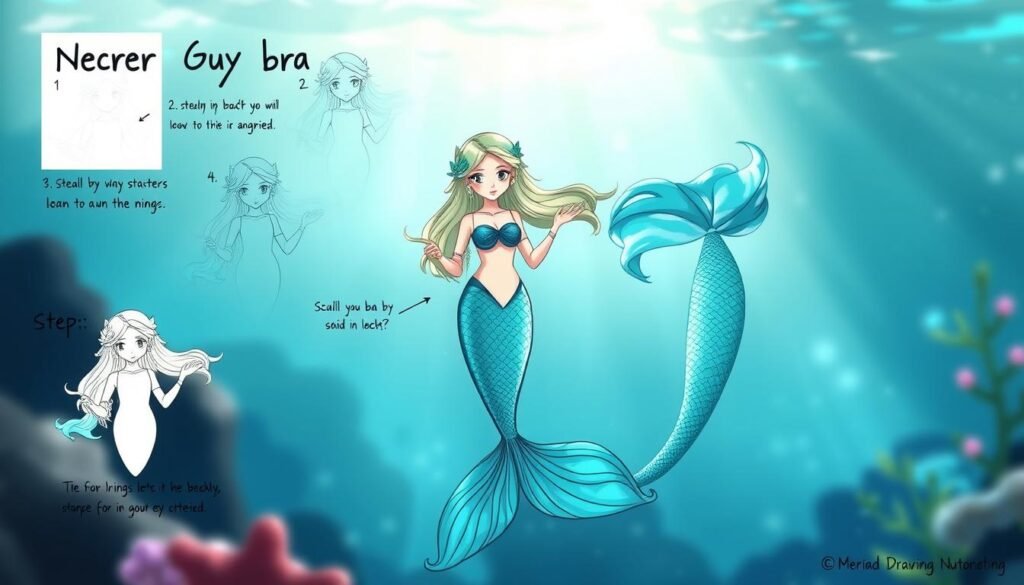
Creating a believable mermaid illustration relies on starting with clean, well-proportioned geometric forms. This systematic approach ensures your character maintains proper balance throughout the development process.
Sketching the Outline Using Geometric Shapes
I begin by placing an oval at the top of my paper to represent the head. This initial shape establishes the foundation for all subsequent features.
A long curved line descends from the oval, creating symmetry for the entire figure. This center guide helps maintain balance as I build the neck, shoulders, and torso.
The arms emerge as simple cylinders from the shoulder area. Hands start as basic triangular forms that will later transform into detailed fingers.
For the lower body, I construct an hourglass shape that transitions into the tail. The fin takes shape using gentle semi-circles for that classic aquatic appearance.
Refining Details and Proportions
Once the basic framework is complete, I erase unnecessary construction lines. This reveals the clean outline ready for detailed development.
Facial features receive careful placement on the curved head surface. The hair flows naturally around the form, hiding underlying sketch lines for depth.
Hands transform from triangles into natural-looking fingers. The tail gains texture through scale patterns arranged in overlapping rows.
Constant proportion checks ensure the head size relates correctly to the body length. This step tutorial method creates harmonious results every time.
For additional guidance on this process, explore my detailed step tutorial that expands on these techniques. The refinement phase brings your mermaid to life with personality and movement.
Techniques for Creating a Magical and Lifelike Mermaid

The strategic use of color can elevate a simple sketch into a truly magical and dimensional piece of fantasy art. This final step in your drawing process adds emotion and realism.
Using Color to Enhance Depth and Dimension
I build color gradually in layers. Starting with light pressure establishes a base tone. I then add darker shades where shadows naturally fall, like under the tail’s curves.
The best way to add dimension to the tail is by varying hues. I use lighter turquoise on raised scales and deeper blues in the recessed areas. This technique makes the tail appear three-dimensional.
For the hair, I use multiple shades to create highlights and shadows. This gives it volume and a sense of flowing movement. Skin tones benefit from subtle shading along the arms and torso to suggest roundness.
I encourage experimentation with color combinations. This is a fantastic way to make your mermaid unique and express your personal artistic style.
Inspiration and Variations in Mermaid Artwork
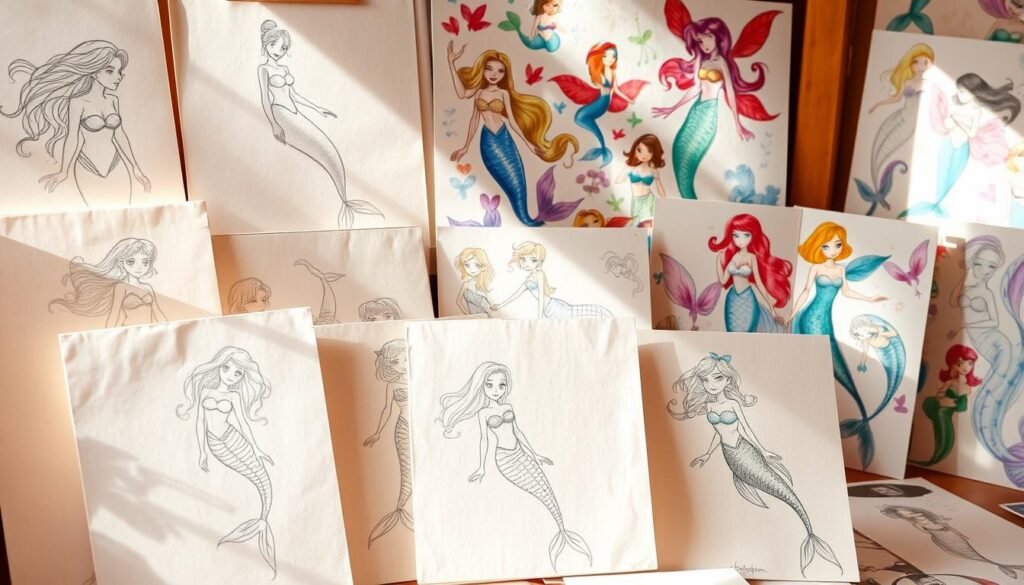
Mermaid illustrations offer remarkable flexibility, enabling artists to experiment with diverse aesthetics from cartoon to realistic. This adaptability makes the creative process endlessly engaging.
Drawing the Little Mermaid and Other Versions
The foundational skills you’ve learned adapt beautifully to iconic characters like the Little Mermaid. For Princess Ariel, I recommend vibrant orange hair and a turquoise tail.
This approach creates a cute easy version perfect for beginners. Position your character gazing at ocean rocks or swimming gracefully.
Exploring Different Art Styles and Tutorials
My tutorials demonstrate how the same basic structure works across multiple styles. From realistic to cartoon interpretations, each brings unique charm.
Cartoon styles emphasize larger eyes and simplified features for that cute easy appeal. Realistic approaches focus on anatomical accuracy and detailed textures.
I encourage exploring various tutorials to discover your preferred aesthetic. Video demonstrations provide additional clarity for complex techniques.
| Art Style | Key Characteristics | Recommended Approach |
|---|---|---|
| Cartoon | Exaggerated features, bright colors | Perfect for beginners |
| Realistic | Anatomical accuracy, subtle shading | Advanced technique focus |
| Anime | Expressive eyes, dynamic poses | Great for character expression |
| Watercolor | Soft blends, translucent effects | Ideal for atmospheric scenes |
Mastering one comprehensive tutorial provides the foundation to confidently approach any Little Mermaid interpretation. The core principles remain consistent across all variations.
Conclusion
This tutorial provides a solid foundation for your artistic journey. You now possess the skills to build a mermaid from basic shapes into a complete character.
Remember the core principle: visualize the head as an oval and the arms as cylinders. This way of thinking applies to any pose. The hair flowing around the head and the arms positioned on either side of the body create natural balance.
Each step you practice builds muscle memory. Your next drawing will feel more intuitive. For further inspiration on character design, explore my advanced mermaid drawing techniques.
I encourage you to experiment freely. Apply these structural techniques to create unique mermaid artwork. Embrace the process and let your creativity flow.