

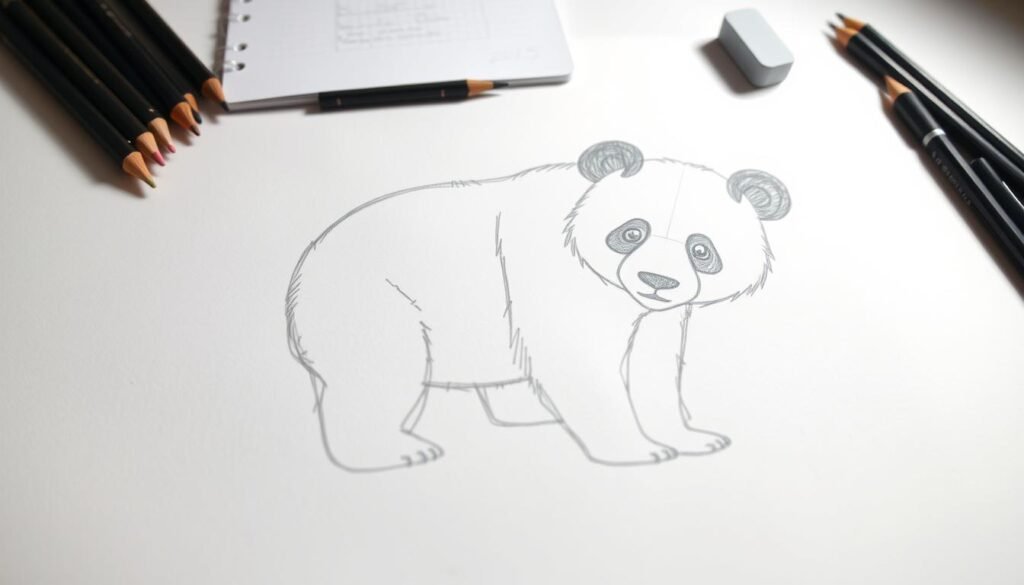
Did you know that fewer than 1,900 giant pandas remain in their natural habitat? This startling fact highlights the importance of these beloved creatures. Their unique black-and-white appearance makes them a favorite subject for art enthusiasts.
These fascinating animals spend up to 16 hours daily eating bamboo. They are also skilled climbers and swimmers. Understanding these traits helps create a more authentic panda drawing.
This comprehensive guide breaks down the process into simple steps. I designed it for artists of all skill levels. You can complete your masterpiece in about 12 minutes, as shown in this excellent panda drawing tutorial.
We will start with basic shapes and construction techniques. This approach makes the entire process manageable and enjoyable. Let’s explore the wonderful world of creating pandas on paper.
Key Takeaways
- Giant pandas are endangered, with fewer than 1,900 left in the wild.
- Their diet consists mainly of bamboo, which they eat for up to 16 hours a day.
- Pandas possess unique physical traits, like vertical slit pupils, that make them distinctive drawing subjects.
- This guide simplifies the drawing process using basic shapes and construction techniques.
- The tutorial is designed to be completed in approximately 12 minutes.
- The step-by-step approach is suitable for beginners and experienced artists alike.
- Understanding panda behavior and anatomy leads to more realistic artwork.
Getting Started with Your Panda Drawing
Before beginning your artistic journey with pandas, gathering the right tools makes all the difference. Proper preparation ensures a smooth creative process. I recommend having everything ready before you start.
Gathering Your Art Supplies
Selecting the correct pencils is crucial for your project. Different pencil grades serve specific purposes in the creation process. Each type contributes to various stages of your work.
Here’s a comparison of essential pencil types for your panda illustration:
| Pencil Type | Lead Hardness | Primary Use | Best For |
|---|---|---|---|
| H Pencil | Hard | Initial sketching | Light guidelines that erase easily |
| HB Pencil | Medium | Detailing work | Soft shading and fine details |
| B Pencil | Soft | Final shading | Dark shadows and bold lines |
A kneaded eraser and textured sketch paper complete your basic kit. These materials support the entire creative process. For coloring, markers or pencils add the final touches.
Setting Up Your Workspace
Create an organized area with good lighting for your project. Natural light or a desk lamp helps you see details clearly. Comfortable seating prevents distractions during your session.
Position your paper with extra space at the top for the panda’s head. Keep all materials within easy reach to maintain focus. This panda drawing guide provides additional helpful tips.
Dedicate approximately 12 minutes of uninterrupted time for best results. Protect your work surface from smudges with scrap paper. These simple steps enhance your overall experience.
How to Draw a Panda: Techniques and Tips

The charming silhouette of a panda is built from a collection of simple, interlocking forms. I find this approach makes the process accessible and helps ensure proper proportions from the start.
Using Basic Shapes for Accuracy
Begin with light construction lines. Sketch a large circle for the head. Add a smaller circle below for the body.
Use gentle, curved lines to connect these forms. This creates the panda’s core shape. For limbs, think of kidney beans and ovals.
This foundational guide keeps your initial sketch flexible. You can easily adjust the shape before adding finer details.
Incorporating Unique Panda Details
Capture the iconic face by drawing oval patches around the eyes. Position a rounded muzzle in the center of the head.
Add a bean-like nose and a wide “W” for the mouth. This creates a friendly expression. Remember the distinctive “V” shape on the chest where fur colors meet.
For a more advanced look, explore this comprehensive panda drawing resource. It delves deeper into anatomy and shading techniques.
Use short, outward lines to suggest fluffy fur texture. Shade the black areas darkly for strong contrast, bringing your panda to life.
Detailed Step-by-Step Drawing Process
The transformation from simple shapes to a lifelike panda begins with careful refinement of your initial sketch. This phase focuses on defining forms and adding character.
Sketching the Panda’s Head and Ears
Start by going over the outer lines of the panda head with a darker pencil. This makes the head and ears more pronounced. Add short strokes around the edges to suggest fluffy fur.
For the face, darken the eyes, nose, and mouth. Ensure the eyes are symmetrical ovals in the middle of the head.
Drawing the Body, Limbs, and Facial Features
Define the body outline with confident strokes. Draw the distinctive V-shaped patch on the chest. Add small claws to the legs and use the same fur technique.
This step solidifies the panda‘s form. Pay close attention to the connection between the head and body.
Adding Final Touches and Shading
Shading adds depth and dimension. Use different pencil grades to create contrast. Focus on the black areas like the ears and eye patches.
This table clarifies the shading process for each area:
| Panda Feature | Pencil Grade | Shading Technique |
|---|---|---|
| Ears & Eye Patches | B Pencil | Apply dark, even pressure |
| Nose & Claws | HB Pencil | Use firm, precise strokes |
| Fur Texture | H Pencil | Light, short outward lines |
Finally, erase any leftover guide lines. Assess your work and make minor adjustments. Your panda drawing is now complete.
Conclusion
You’ve successfully brought this beloved animal to life through your artistic efforts. Following these clear steps from basic shapes to detailed features creates an authentic panda drawing.
Remember that these remarkable pandas spend 16 hours daily eating bamboo. Only about 1,800 remain in the wild. Your art helps raise awareness about their conservation needs.
Feel free to practice this guide multiple times. Experiment with different poses or add bamboo backgrounds. Explore drawing other animals like bears, bunnies, or tigers to expand your skills.
Share your completed panda artwork with others. Each drawing session builds confidence and connection with these special creatures. Continue your artistic journey with passion and persistence.