

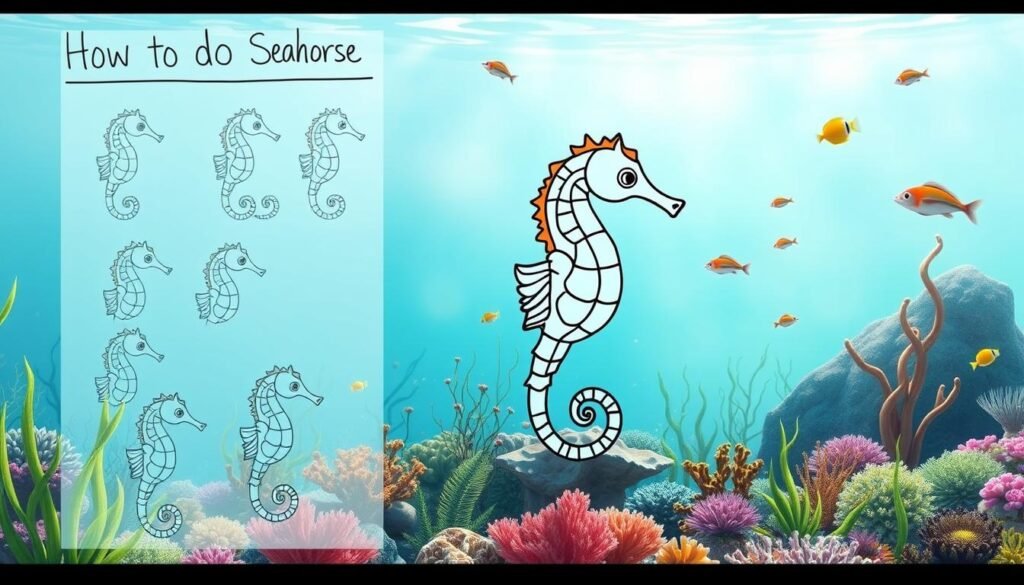
Did you know that seahorses are considered the least fish-like fish in our oceans? These remarkable creatures defy expectations with their horse-shaped heads and poor swimming abilities.
More than 45 distinct species of these unique marine animals inhabit waters worldwide. Their prehensile tails allow them to anchor themselves to seafloor vegetation, creating fascinating poses perfect for artistic interpretation.
I’m excited to guide you through creating beautiful ocean-themed artwork featuring these captivating sea creatures. This activity offers an engaging way to explore marine biology while developing your artistic skills.
The process requires minimal materials and can be completed in a reasonable timeframe. You’ll discover endless creative possibilities through the various species and color combinations available in nature.
This comprehensive tutorial focuses on the distinctive features that make seahorses unlike any other fish. Their unique anatomy provides wonderful opportunities for artistic expression and learning.
Key Takeaways
- Seahorses possess unique characteristics that make them ideal subjects for artistic exploration
- Over 45 species offer diverse inspiration for creative interpretations
- This activity requires minimal materials and fits easily into an afternoon
- The tutorial focuses on distinctive anatomical features for accurate representation
- Ocean-themed artwork provides both creative fulfillment and educational value
- Beginners can achieve satisfying results with proper guidance
Materials and Preparation for Your Seahorse Drawing
Proper preparation is the foundation of any enjoyable and productive drawing project. Gathering your supplies beforehand saves valuable time and lets you focus entirely on creativity.
You likely have most items already at home. This makes the activity accessible and budget-friendly.
Essential Art Supplies and Tools
I recommend having these basic materials on hand:
- Paper for your artwork
- A pencil for initial sketches
- An eraser for adjustments
- A black marker or pen for final outlines
- Colored pencils or markers for adding life
These simple tools are all you need to begin.
Setting Up Your Drawing Space
Create a comfortable workspace with good lighting. Keep all materials within easy reach.
Organizing your area minimizes distractions. This is especially helpful when following detailed painting tutorials. A calm environment supports the creative process.how-to-draw-bunny
Tips for Getting Inspired by Ocean Creatures
Look at photos of real seahorses and other ocean animals. Notice their unique shapes and colors.
Remember, lots of practice leads to improvement. Embrace each step of your artistic journey. Set aside dedicated time to fully immerse yourself in creating.
Step-by-Step: How to Draw a Seahorse
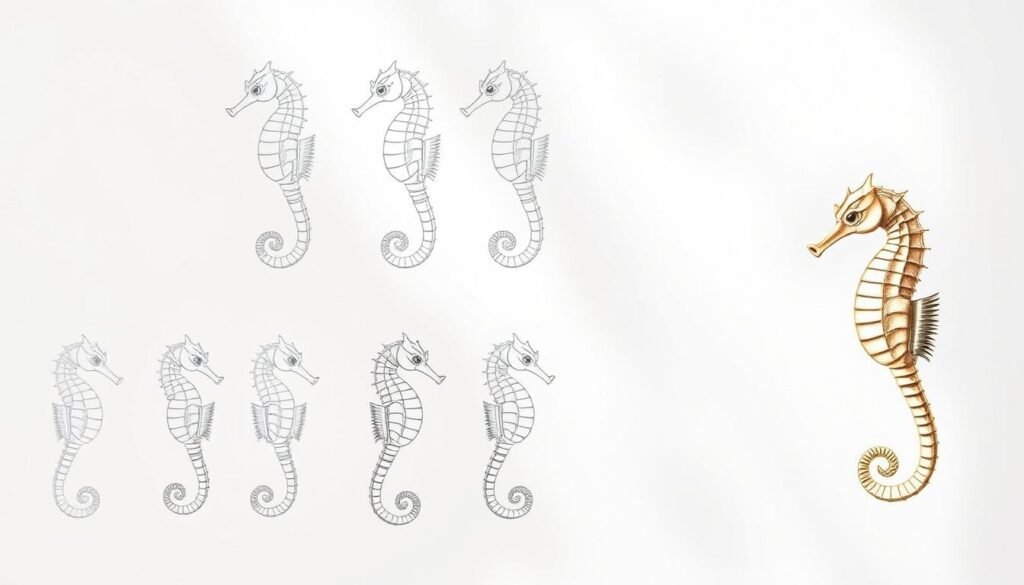
Capturing the essence of this ocean dweller starts with careful observation and basic forms. I’ll guide you through a systematic approach that builds confidence with each progression.
Starting with the Outline: Belly and Curved Lines
Begin with the fundamental belly shape using smooth, flowing curved lines. Create a pear-like form that remains open at the top for head attachment. This rounded belly is characteristic of many species.
The initial outline establishes proportion and flow. Focus on organic curves that mimic the creature’s natural form.
Creating the Unique Tail and Fins
Add the distinctive curling tail at the bottom of the body. This prehensile feature spirals naturally and provides balance.how-to-draw-a-whale
Position the dorsal fin on the back above the tail area. Include a smaller anal fin beneath the belly. These structures are essential for movement and stability in water.
Drawing the Distinctive Horse-Shaped Head
Construct the head with its characteristic long snout and pronounced profile. The downward-facing angle captures the creature’s curious nature.
Place the eye as a small dot, remembering that these animals possess remarkable vision. The head’s unique shape gives the species its common name.
Adding Details: Eyes, Snout, and Plate Patterns
Refine the snout with precise lines and subtle curves. Add horizontal markings along the tail and body to represent protective plates.
These final touches bring anatomical accuracy to your artwork. For additional guidance, explore this comprehensive seahorse drawing tutorial that complements our approach.
Enhancing Your Seahorse Drawing with Extra Details
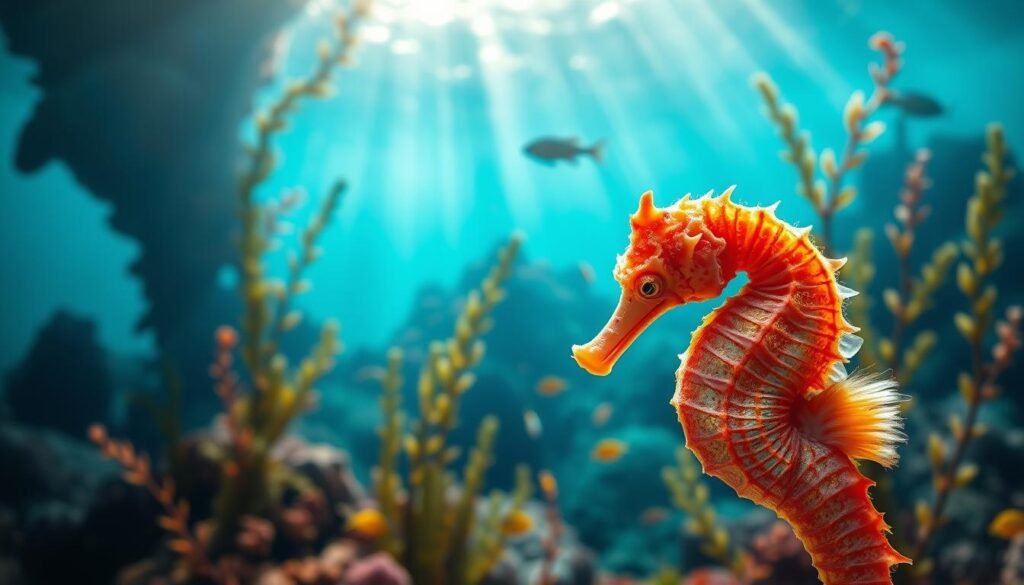
The finishing touches on your seahorse illustration can transform it from a simple sketch to a vibrant underwater scene. I’ll guide you through techniques that add depth and realism to your artwork.
Coloring Techniques for Realistic Ocean Effects
Seahorses display remarkable color variations from yellow and tan to brown and black. Their camouflage abilities allow them to blend with seagrass and coral environments.how-to-draw-animals-tiger
Add darker spots along the trunk rings to represent protective bony plates. This detail enhances anatomical accuracy in your artwork.
Understanding Seahorse Anatomy and Unique Features
These fascinating fish possess distinctive characteristics. Males bear the young—a unique trait among animals. They lack stomachs and teeth, requiring constant feeding.
Their dorsal fin beats rapidly for movement while prehensile tails anchor them to vegetation. Understanding these facts improves your drawing authenticity.
| Seahorse Species | Size Range | Habitat Features | Conservation Status |
|---|---|---|---|
| Big-bellied Seahorse | Up to 35cm | Coral reefs, estuaries | Data Deficient |
| Short-snouted Seahorse | 15-17cm | North Atlantic waters | Near Threatened |
| Dwarf Seahorse | Smaller than pinky | Seagrass beds | Least Concern |
Incorporating Additional Elements Like Seagrass and Coral
Create authentic underwater settings by adding environmental elements. Flowing seagrass strands provide natural anchors for these creatures.
Textured coral formations complement your seahorse’s habitat. Over 45 species worldwide offer endless inspiration for diverse marine scenes.
Conclusion
Your completed seahorse drawing represents more than just artistic skill—it’s a connection to ocean life. I hope this comprehensive seahorse drawing tutorial has given you confidence in your creative abilities.
Remember that practice develops mastery. Each attempt at capturing these fascinating animals improves your technique. The time invested builds both artistic skill and appreciation for marine biodiversity.how-to-draw-a-whale
I encourage exploring other ocean-themed tutorials featuring different sea creatures. Share your artwork to inspire others about these remarkable seahorses and their conservation needs.
Your journey with these unique marine drawing subjects has just begun. Continue applying these steps to create beautiful interpretations of underwater life.