


Did you know that creating a simple snowman drawing is one of the most searched winter art activities? Millions of people each year look for a friendly guide to bring this classic character to life. I’m thrilled to present my comprehensive tutorial, designed specifically for absolute beginners.
This project requires no prior experience. We will break the process into simple, manageable shapes. Anyone can follow these steps to create a charming piece of easy snowman drawing art. It’s a perfect activity for embracing the festive season or just practicing your skills.
By the end of this guide, you will have the confidence to draw snowman characters with personality. You can be proud to display your artwork or share it as a holiday card. For additional inspiration and techniques, explore this detailed resource on snowman illustrations.
Key Takeaways
- This tutorial is designed for complete beginners with no drawing experience required.
- The process breaks down a complex snowman into simple, easy-to-follow shapes.
- You will learn professional tips to add charm and personality to your artwork.
- The activity is a fun and relaxing project suitable for both adults and children.
- Mastering this guide builds a foundation for creating your own festive winter art.
Gathering Your Art Supplies and Winter Inspiration
Before putting pencil to paper, gathering your essential art supplies ensures a smooth and enjoyable creative experience. I recommend starting with basic materials that most households already contain. This preparation phase sets the stage for successful artwork.
The right foundation makes all the difference in your artistic journey. Quality materials can elevate a simple project into something special.
Choosing the Right Paper and Pencils
Selecting appropriate paper is crucial for any drawing project. I prefer white cardstock or heavy-weight paper for its durability. Thicker paper withstands erasing and coloring without damage.
For pencils, I recommend mechanical options like the Pentel brand for precise control. Graphite pencils create clean, erasable construction lines. An eraser remains essential for corrections.how-to-draw-a-castle
“The right tools don’t just make art easier—they make it better.”
Final outlines benefit from fine-tip markers or a 0.5mm pen. These create crisp, professional lines. For coloring, colored pencils offer excellent blending control.
| Paper Type | Weight (GSM) | Best For | Durability |
|---|---|---|---|
| Standard Copy Paper | 80-100 | Quick Sketches | Low |
| Drawing Paper | 120-150 | General Artwork | Medium |
| Cardstock | 200+ | Final Pieces | High |
Markers provide vibrant colors for bold artwork. Crayons work well for casual, playful finishes. Having various supplies available accommodates different preferences.
Planning and Sketching Your Snowman
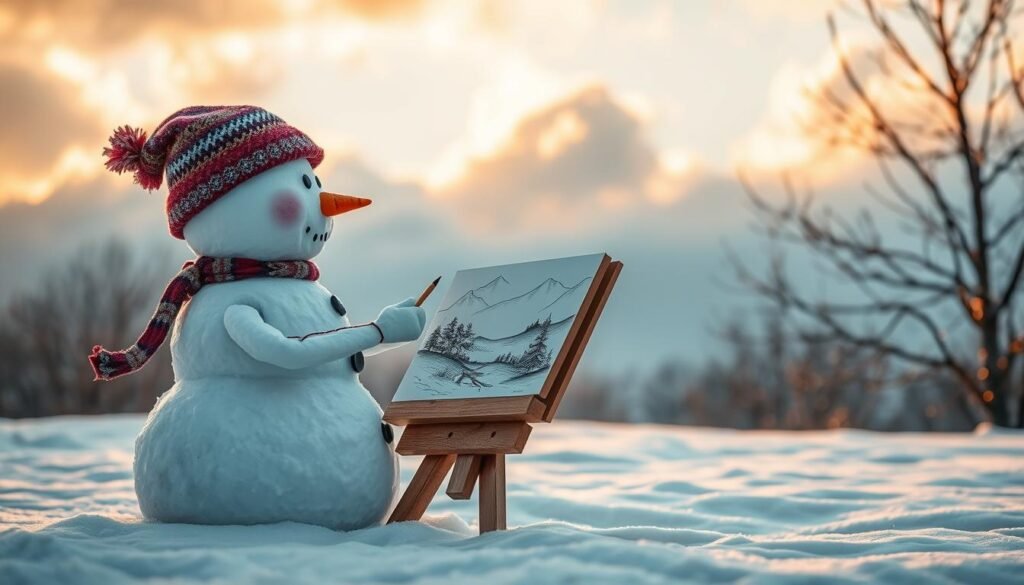
Strategic positioning on your page sets the stage for a charming winter character. I approach this phase with careful consideration of composition and balance.
Establishing the Basic Shapes and Proportions
I begin every snowman project with three overlapping circles. The largest forms the base, followed by a medium circle, then the smallest for the head.how-to-draw-a-cloud
Light pencil strokes create construction lines that guide the entire process. These initial shapes establish proper proportions and natural stacking.
Setting Up the Composition for a Festive Look
Thoughtful placement on the page ensures room for accessories and background elements. Centering the figure creates visual balance and breathing space.
Planning ahead for hat angles and scarf positions adds personality. This foresight transforms a simple snowman into a festive masterpiece. For additional composition ideas, explore this snowman art resource.
Slight imperfections in the circles actually enhance authenticity. Real snowballs are never perfectly round, adding charm to your final drawing.
How to Draw a Snowman: Easy Step-by-Step Guide
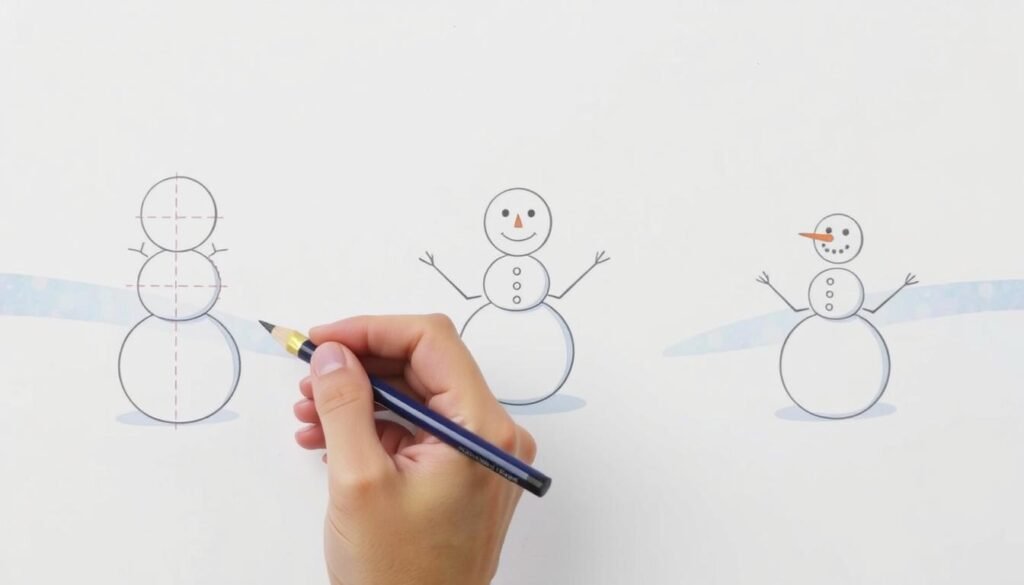
Building upon our foundation circles, we now add the distinctive elements that define this seasonal icon. This transformation from basic shapes to recognizable features marks the most exciting phase of our project.how-to-draw-waves
Outlining the Snowman’s Structure and Features
I begin with the top hat, creating a dome shape with a brim positioned at a slight angle. This immediately establishes character and festive appeal. The hat sits at about 90 degrees from a diagonal guideline across the head.
Next, I wrap a cozy scarf around the neck area. A curved rectangle follows the contour where head meets body. I extend both ends with gentle waves to suggest fabric movement.
Adding the Hat, Scarf, and Facial Details
Facial features bring our winter friend to life. I position two irregular circles for eyes, representing pieces of coal. The carrot nose points upward at a diagonal angle, parallel with the hat’s brow.
A cheerful smile forms with a curved line and several coal pieces. Buttons descend the front body along a slightly curved line. Each feature receives careful placement for balanced composition.
| Facial Feature | Recommended Style | Positioning Tip | Personality Effect |
|---|---|---|---|
| Eyes | Irregular circles | Symmetrical placement | Friendly expression |
| Nose | Triangle shape | Diagonal upward angle | Playful character |
| Mouth | Curved line with dots | Follows head curve | Happy demeanor |
| Buttons | Imperfect circles | Vertical alignment | Classic appearance |
Arms extend from the scarf area with natural, slightly bent sticks. Smaller branch growths add authenticity. For additional creative approaches, explore this comprehensive snowman illustration guide.
Adding Details, Color, and Personality
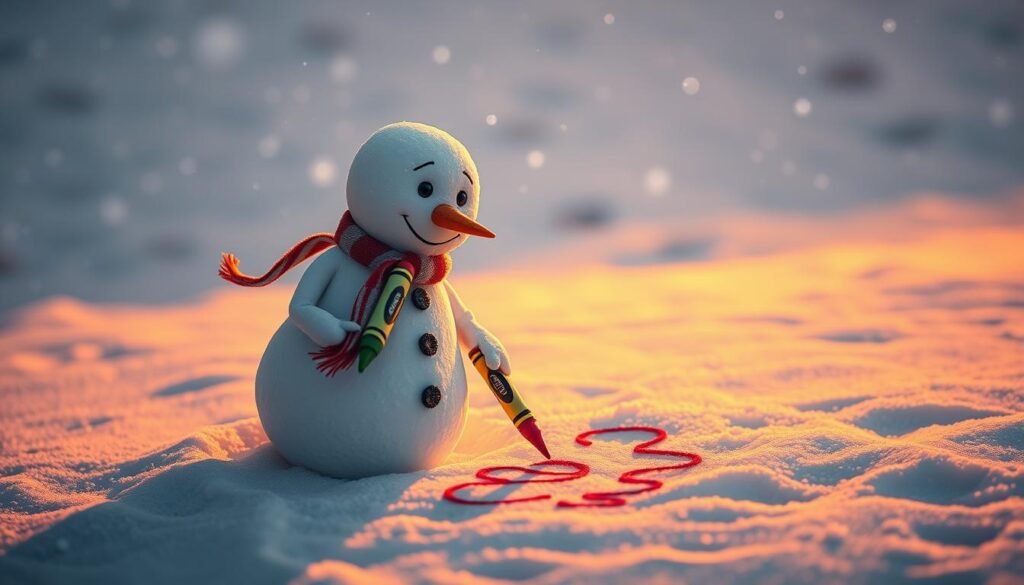
Now comes the most rewarding phase of our creative journey. We will infuse your snowman with vibrant personality through color and texture. This transformation elevates basic shapes into a festive masterpiece.
I approach coloring with strategic techniques that create depth. Pale blue shading on the snow body suggests coldness. This subtle effect beats plain white for realistic dimension.
Refining Textures and Enhancing with Creative Tips
Coal elements need dappled shading with small highlights. This technique gives eyes and buttons reflective quality. The carrot nose benefits from short, curved striations.
Always consider your light source direction. I add shading to areas facing away from light. This simple trick creates three-dimensional appearance.
The hat offers bold color opportunities. Classic black works well, but red or green adds festivity. Coordinate scarf colors for visual balance across your artwork.how-to-draw-a-boat
Natural brown tones with variation create authentic stick arms. Darker undersides and lighter tops mimic bark texture. These details make your creation come alive.
Creative possibilities are endless with these drawing ideas. Add rosy cheeks, different expressions, or accessory variations. Each choice personalizes your seasonal character.
Completed artwork has many fun applications. Transform it into homemade holiday cards or winter decorations. Teachers can create drawing stations for educational activities.
These techniques work beyond paper surfaces. Apply them to rocks, wood slices, or fabric projects. For advanced snowman illustration methods, explore additional resources.
Conclusion
With your snowman artwork complete, you possess a charming seasonal creation. This tutorial has equipped you with fundamental skills for winter-themed drawing. Your journey from basic shapes to finished character demonstrates artistic growth.
These drawings serve many wonderful purposes. They enhance holiday cards, gift tags, and winter decorations beautifully. Share your snowman drawing proudly rather than keeping it hidden.
Continue practicing these techniques with fresh ideas each time. Experiment with different expressions and accessories to develop your unique style. The easy snowman foundation supports endless creative variations.
I hope this comprehensive guide has sparked lasting enthusiasm for seasonal art. Your continued practice will yield even more impressive results over time.