

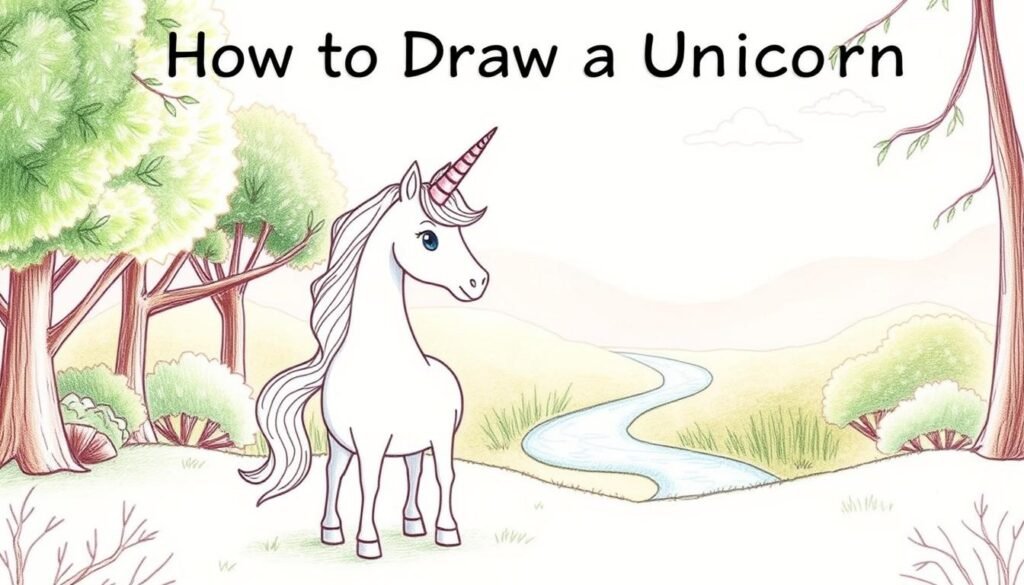
Did you know unicorns have been in our dreams for centuries? They symbolize magic and wonder. Drawing a unicorn is a fun way to explore this magic. In this guide, I’ll show you how to make your own unicorn art.
This tutorial will teach you how to draw a unicorn step by step. We’ll cover everything from the basics of unicorn anatomy to adding colors and details.
Key Takeaways
- Understand the basics of drawing a unicorn
- Learn a step-by-step approach to creating unicorn artwork
- Discover tips for finalizing your drawing
- Explore the mythical world of unicorns through art
- Create your own unique unicorn artwork
Understanding Unicorns: Their History and Appeal
To truly appreciate the art of drawing unicorns, you must first grasp their rich history and mystique. These mythical creatures have captivated human imagination for centuries. They appear in the mythology and folklore of various cultures worldwide.
The concept of unicorns has evolved over time. It has been influenced by different civilizations and their mythological beliefs. Initially, unicorns were seen as fierce and powerful creatures. They were often associated with strength and purity.
The Mythical Origins of Unicorns
The origins of unicorns can be traced back to ancient civilizations. They were depicted in various forms of art and literature. The earliest recorded myths about unicorns date back to around 400 BCE.
The Greek historian Ctesias described a creature that resembled a horse with a single horn. This was the first recorded myth about unicorns.
| Culture | Description of Unicorn | Symbolism |
|---|---|---|
| Greek | A wild ass with a single horn | Purity, Strength |
| Chinese | A deer-like creature with a single horn | Good fortune, Prosperity |
| European | A horse-like creature with a single horn | Magic, Innocence |
Why Unicorns Inspire Artists
Unicorns inspire artists with their majestic appearance and rich symbolism. The idea of a creature that embodies both purity and power is captivating. It offers a wealth of creative possibilities.
When learning how to draw a unicorn, understanding their symbolic meanings adds depth and meaning to your artwork. Whether drawing from mythology or creating your own interpretation, unicorns’ timeless appeal captivates audiences.
By understanding unicorns’ history and appeal, you’ll create artwork that showcases your technical skills. It will also capture the essence of these mythical creatures.
Gather Your Drawing Supplies
Before you start drawing your unicorn, make sure you have the right tools. The right materials can greatly improve your artwork’s quality.
Essential Tools for Drawing
You’ll need some basic supplies to begin. These include:
- A set of graphite pencils (HB, 2B, 4B, 6B)
- A sketchbook or drawing paper
- An eraser (kneaded or white vinegar eraser)
- A sharpener for your pencils
| Tool | Purpose |
|---|---|
| Graphite Pencils | For sketching and shading your unicorn |
| Sketchbook/Paper | For creating your artwork |
| Eraser | For correcting mistakes and creating highlights |
| Sharpener | For keeping your pencils sharp |
Optional Tools to Enhance Your Artwork
While the basic tools are enough to start, extra supplies can make your drawing better. These include:
- Colored pencils or markers for adding color
- Blending stumps for smooth shading
- A tracing pad or light box for precise drawing
For more inspiration on drawing unicorns, check out Eckersley’s guide on how to draw a unicorn for kids.

Sketching the Basic Unicorn Shape
To draw a unicorn, start with a simple outline. This is the base of your artwork. It’s important for setting the proportions and structure.You can learn more about how-to-draw-stitch
Drawing the Body Outline
Begin with a large oval for the body. The oval should tilt slightly towards the unicorn’s direction. The size of the oval will depend on your desired unicorn size. Make sure the oval is not too perfect; a bit of irregularity adds character.
Adding the Legs and Hooves
After the body outline, add the legs. Unicorns have slender legs, so draw four lines from the oval body. The front legs should be slightly bent, and the back legs straight. At each leg’s end, draw a small, oval-shaped hoof. Focus on proportions; the legs should match the body size.
| Body Part | Description | Proportion |
|---|---|---|
| Body | Large oval, slightly tilted | Main structure |
| Front Legs | Slightly bent, slender | 2/3 of body height |
| Back Legs | More straight, slender | 2/3 of body height |
| Hooves | Small, oval-shaped | 1/5 of leg length |
By following these steps, you’ll have a solid unicorn drawing foundation. Keep your initial sketch light and simple. This makes it easier to add details later.
Creating the Unicorn’s Head
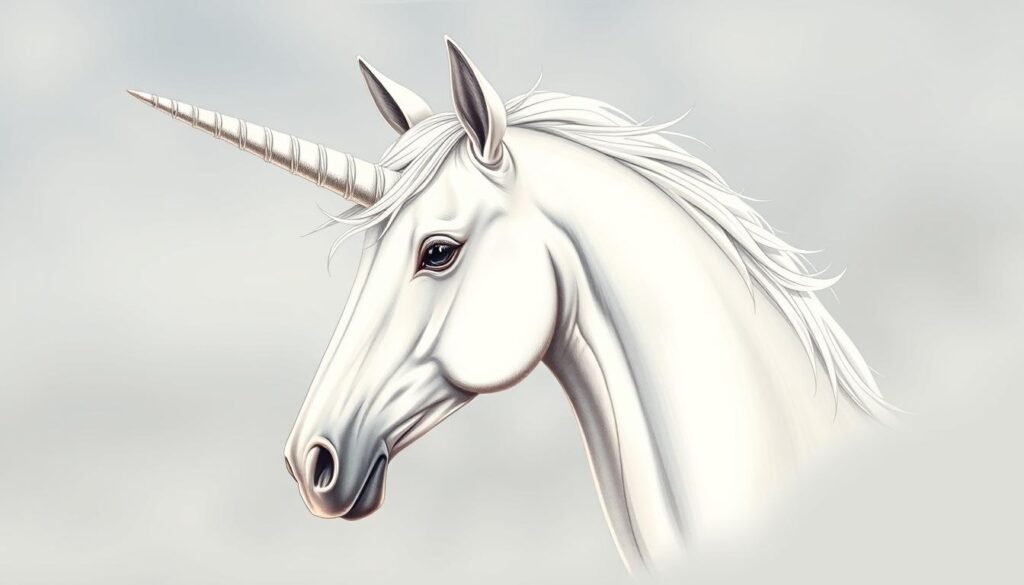
We’re getting to the heart of our guide on how to draw a unicorn: the head. The head shows the unicorn’s personality, making it key to your drawing.
Positioning the Unicorn’s Face
First, place the unicorn’s face to show its mythical charm. The face should be slightly tilted for a gentle or mystical look. Make sure the proportions are right; the face should match the body size you drew earlier.
Shaping the Ears and Eyes
The ears and eyes make your unicorn come alive. The ears should be pointed and a bit long, adding to the unicorn’s magical look. For the eyes, think about the expression you want. Large, expressive eyes can make your unicorn seem friendly and welcoming.
| Feature | Description | Tips |
|---|---|---|
| Eyes | Large and expressive | Use shading to add depth |
| Ears | Pointed and elongated | Pay attention to proportions |
| Face | Gentle and mystical | Tilt slightly for charm |
By paying attention to these details, you’ll create a unicorn head that’s both captivating and full of character. Remember, the most important thing is to have fun and let your creativity flow.
Adding the Magical Horn
A unicorn isn’t complete without its horn. It’s a symbol of magic and wonder. We’ll learn how to draw the horn right, making sure it looks good and detailed.You can learn more about how-to-draw-eyes
Horn Placement and Shape
The horn’s placement is key. It usually sits on the forehead, between the ears. The horn’s shape can vary, like spiral, straight, or slightly curved. Start by placing the horn’s base on the forehead, making sure it’s centered and matches the unicorn’s face.

For more detailed instructions on drawing unicorns, you can visit this guide on how to draw a unicorn.
Adding Details to the Horn
To make the horn realistic and captivating, add details. For a spiral horn, draw spiraling lines. For a natural look, add texture. To show its magic, add a glow or shine.
Some key details to consider include:
- The direction and flow of the spirals or texture
- The shine or glow effect to indicate its magical nature
- The proportion of the horn in relation to the unicorn’s head
By focusing on these aspects, you can create a horn that not only looks magical but also enhances the overall appearance of your unicorn drawing.
Designing the Unicorn’s Mane
The unicorn’s mane is a key feature that can be styled in many ways. It shows the unicorn’s personality, magic, and mystique. We’ll look at different mane styles and how to pick the right colors for your artwork.
Styles of Unicorn Manes
Unicorn manes can be very different, from flowing to neat. You can find inspiration in nature, myths, or your own ideas. Some common styles include:
- Flowing, wavy manes that feel free and wild.
- Tightly braided manes that show a disciplined or mystical unicorn.
- Manes with flowers or decorations for extra magic.
For more ideas on drawing unicorns, check out this guide on how to draw. It’s full of creative ideas.
Choosing Colors for the Mane
Picking the right colors for your unicorn’s mane is important. It can change how your artwork looks. You can choose classic colors like white, silver, or gold. Or, you can pick colors that show your unicorn’s personality or where it lives.
| Mane Color | Associated Meaning |
|---|---|
| White | Purity, innocence, and magic |
| Rainbow | Diversity, creativity, and joy |
| Gold | Wealth, nobility, and ancient wisdom |
Think about your drawing’s color scheme and how the mane will look with it. Try different shading techniques to make your unicorn’s mane look deep and dimensional.

Drawing the Unicorn’s Tail
Finishing our unicorn drawing means adding a tail that matches its elegance. The tail is key, adding grace and movement to your art.
Tail Shapes and Styles
Unicorn tails come in many shapes and styles. They can be long and flowing or short and fluffy. Pick a style that fits your drawing’s theme.
A flowing tail is great for a majestic unicorn. A fluffy tail is perfect for a whimsical one.
Blending Colors for a Natural Look
To make your unicorn’s tail look natural and bright, blend colors well. Start with a base color and add shades for depth. Use soft pastels or vibrant colors, based on your vision.You can learn more about how-to-draw-a-cat

Focus on the tail’s shape and color to boost your unicorn’s beauty. Try different styles and techniques to see what works best for you.
Enhancing Your Drawing with Details
To make your unicorn drawing pop, add textures and expressions. This brings it to life. Focus on making your unicorn unique and captivating.
Texturing the Unicorn’s Body
Texturing the unicorn’s body makes it look real. Add subtle shading and texture to the fur. Use gentle strokes to show the softness of the coat.
Tips for Texturing:
- Use different shading techniques for depth.
- Pay attention to fur direction for a natural look.
- Try varying pencil pressures for texture.
| Texture Type | Description | Technique |
|---|---|---|
| Smooth | Gives a sleek appearance | Use soft shading |
| Rough | Adds a rugged look | Apply heavier shading with more pressure |
| Fluffy | Suggests softness and gentleness | Use light, gentle strokes |
Adding Facial Expressions
Facial expressions show your unicorn’s personality and emotions. Choose a friendly, majestic, or playful look. The facial expression is crucial.
Consider the following when adding facial expressions:
- The shape and size of the eyes can convey different emotions.
- The curve of the mouth can suggest happiness or serenity.
- The position and shape of the eyebrows can add character.
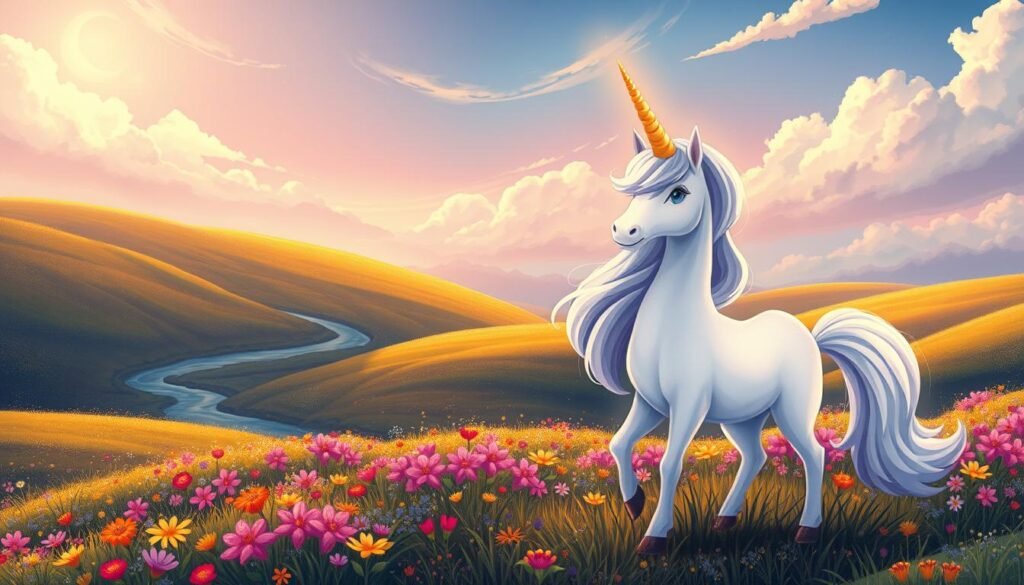
By adding textures to the body and facial expressions, your unicorn drawing becomes beautiful and tells a story.
Choosing the Background for Your Unicorn
The background of your unicorn drawing is more than just a setting. It’s a chance to add depth and context. A well-crafted background can take your unicorn to a magical realm, making your artwork more engaging.You can learn more about how-to-draw-a-rose
Ideas for Fantasy Backgrounds
Fantasy backgrounds offer a wide range of creative possibilities. You can place your unicorn in an enchanted forest, surrounded by towering trees and twinkling fairy lights. Or, a mystical mountain range or a serene meadow filled with wildflowers can provide a beautiful backdrop.
Think about what fits your unicorn’s character. For example, if your unicorn is gentle and kind, a peaceful lake or a sunny meadow might be fitting. If your unicorn is majestic or powerful, a dramatic sky with clouds or a backdrop of ancient ruins could enhance its presence.
Creating Depth and Perspective
To create a sense of depth in your drawing, use techniques like layering and atmospheric perspective. Layering involves placing elements in the foreground, middle ground, and background to create a sense of distance. Atmospheric perspective involves fading colors and details into the background to simulate the way objects appear less distinct as they recede into the distance.
For instance, you can make the mountains or trees in the background less detailed and cooler in color compared to the vibrant unicorn in the foreground. This contrast will help create a sense of depth, making your unicorn stand out.
By thoughtfully choosing and designing the background for your unicorn, you can significantly enhance the overall impact of your artwork. Experiment with different ideas and techniques to find the perfect setting that brings your unicorn to life.
Finalizing Your Unicorn Drawing
The final steps for your unicorn drawing include inking your sketch and adding bright colors. These steps are key to making your artwork look its best.
Inking Your Sketch
Inking is vital for defining your unicorn’s lines and shapes. Choose a fine-tip pen or marker that fits your style. Start with the outline, tracing over pencil lines for a bold edge. Use different line weights to add depth and character.
“Inking is not just about tracing; it’s an opportunity to refine your drawing and add personality to your unicorn.” Take your time and focus on your strokes for a professional finish.

Adding Color Accents
Color accents bring your unicorn to life. Pick colors that match its magical and whimsical nature. Think about the color palette that will highlight your unicorn’s features, whether soft pastels or bright colors.
Begin with the mane, tail, and horn. Use markers, colored pencils, or watercolors for the desired effect. Blend colors smoothly for a natural look. Feel free to try different shades to find the perfect match for your unicorn.
Remember, details are crucial in your unicorn drawing. Take your time to ensure inking and coloring are perfect. With these steps, your unicorn drawing will be complete and ready to show off.
Tips for Drawing Unicorns Creatively
Once you’ve learned the basics of drawing a unicorn, it’s time to get creative. Try out different styles and techniques to find your unique way. Look for inspiration in fantasy art and real animals.
Exploring Artistic Variations
Play with textures, colors, and patterns in your unicorn drawing. Use pencils like H, HB, or 4B for different shades. Check out unicorn drawing guides for tips on shading and details.
Finding Inspiration
Follow artists who love fantasy and mythology. Study their methods and see how you can make them your own. By being creative and exploring new ideas, you can make a unique unicorn drawing that shows off your style.