

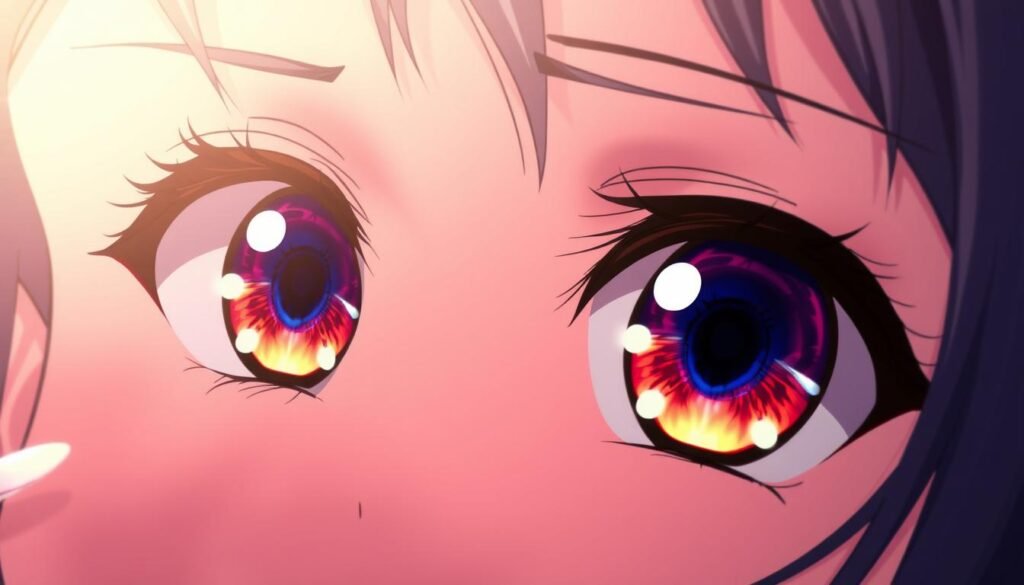
Did you know the eyes are key in anime characters? A good eye can show many emotions, from a small smile to a strong glare. Learning to draw anime eyes is essential for any artist wanting to improve.
As an artist, making your characters’ eyes come alive is vital. In this article, I’ll show you how to create amazing anime eyes. These will make your characters jump off the page.
Key Takeaways
- Understand the basics of anime eye anatomy
- Learn techniques for creating expressive eyes
- Discover tips for adding depth and dimension to your anime eyes
- Explore different styles and variations in anime eye design
- Practice drawing anime eyes with confidence
Introduction to Anime Eyes: Why They Matter
In anime, eyes are more than just facial features. They are a window to the soul, showing emotions, personality, and backstory. Learning to draw anime eyes well can make your art stand out and engage your audience.
The Importance of Eye Design in Anime
Eye design in anime is not just about looks. It’s about creating a visual language that shows a character’s inner world. Well-designed eyes can make a character more relatable and engaging. The shape, size, and color of the eyes greatly affect a character’s look, making it key to understand eye design principles.
Different Styles of Anime Eyes
Anime eyes vary in style, each with its own traits. From the large, expressive eyes of shonen anime to the subtle, realistic eyes of some josei titles, the style of eyes can change a character’s look and the anime’s mood. Knowing these styles can help you learn how to draw anime eyes that match your character and the story.
Understanding Character Emotions Through Eyes
The eyes are key in showing a character’s emotions. By changing the shape, color, and highlights of the eyes, you can show many emotions, from joy and excitement to sadness and anger. Mastering the subtleties of eye expressions can add depth to your characters and make them more believable. It’s important to practice drawing different eye expressions to capture the nuances of human emotion effectively.
Essential Tools for Drawing Anime Eyes
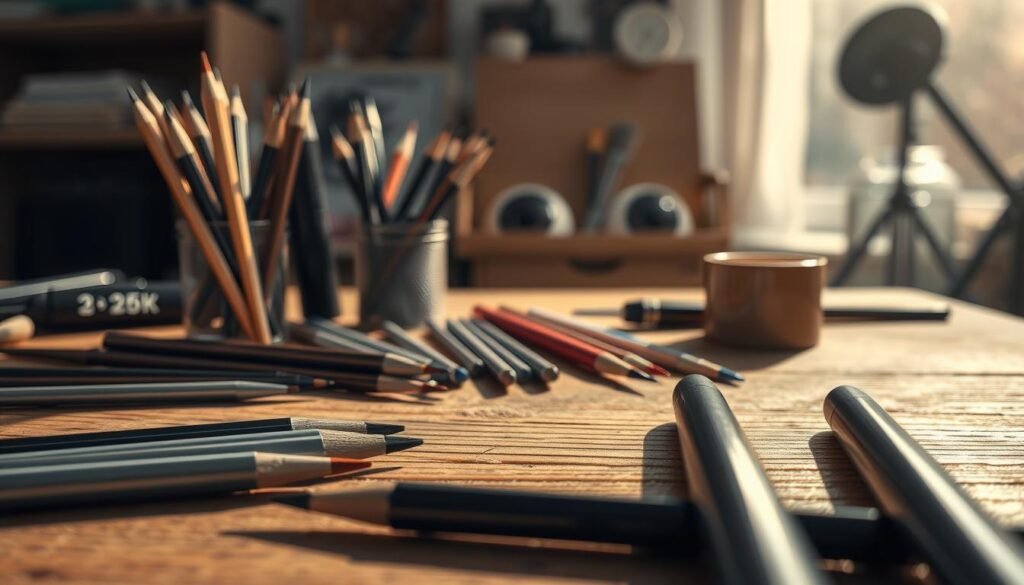
Learning to draw anime eyes starts with the right tools. Whether you’re new or experienced, the right materials matter a lot. They can change how your artwork looks.
Recommended Pencils and Inks for Beginners
Beginners should get good pencils and inks. A set of pencils (HB, 2B, 4B, 6B) lets you create different shades. Choose waterproof, lightfast inks to keep your art bright.
Look for brands that are both quality and affordable. This will help you save money without sacrificing your art’s look.
Digital Tools for Anime Art
Many artists now use digital tools for anime art. Programs like Clip Studio Paint have lots of brushes and effects. You can learn more about digital tools for anime eyes here.
Digital drawing tablets are also key for computer work. Wacom tablets are great for all skill levels and budgets.
Paper Types and Other Materials
The paper you choose affects your drawings a lot. For traditional drawing, use smooth, durable paper like Bristol board or hot press watercolor paper. These papers handle layers well without tearing.
Don’t forget erasers, sharpeners, and blending stumps. A kneaded eraser is great for highlights. A sharpener keeps your pencils sharp for details.
Basic Shapes: The Foundation of Anime Eyes
To draw anime eyes that stand out, start with the basic shapes. These shapes are key to creating eyes that are appealing, expressive, and character-driven.
Understanding Eye Anatomy
The human eye is complex, but anime eyes don’t need every detail. Knowing the basic anatomy helps make eyes more realistic and engaging. The eye has parts like the iris, pupil, and shape. Mastering these elements is crucial for drawing anime eyes that grab the viewer’s attention.
Simple Shapes to Start Your Eye Drawing
Start drawing anime eyes with simple shapes. The eye can be made of circles, ovals, and lines. The iris is a circle, and the eye shape is often an oval or almond. Breaking the eye into these shapes makes it easier to get the right proportions and expression.
How to Choose the Right Eye Shape for Your Character
The eye shape greatly affects a character’s look and personality. Larger eyes can show innocence or youth, while narrower eyes suggest maturity or mystery. Choosing the right eye shape depends on the character’s traits and your anime art style. Try different shapes to find the perfect fit for your character.
By understanding and using these basic shapes, you can enhance your anime eye drawing skills. This makes your characters more expressive and true to their personality.
Step-by-Step Guide: Drawing Anime Eyes
To draw anime eyes that pop, follow this detailed guide. It breaks down the process into manageable steps. Mastering the art of drawing anime eyes is crucial for bringing your characters to life.
Sketching the Basic Outline
The first step in drawing anime eyes is sketching the basic outline. Start by determining the shape of the eye based on the character’s expression and style. Anime eyes are exaggerated and can be simplified into basic shapes.
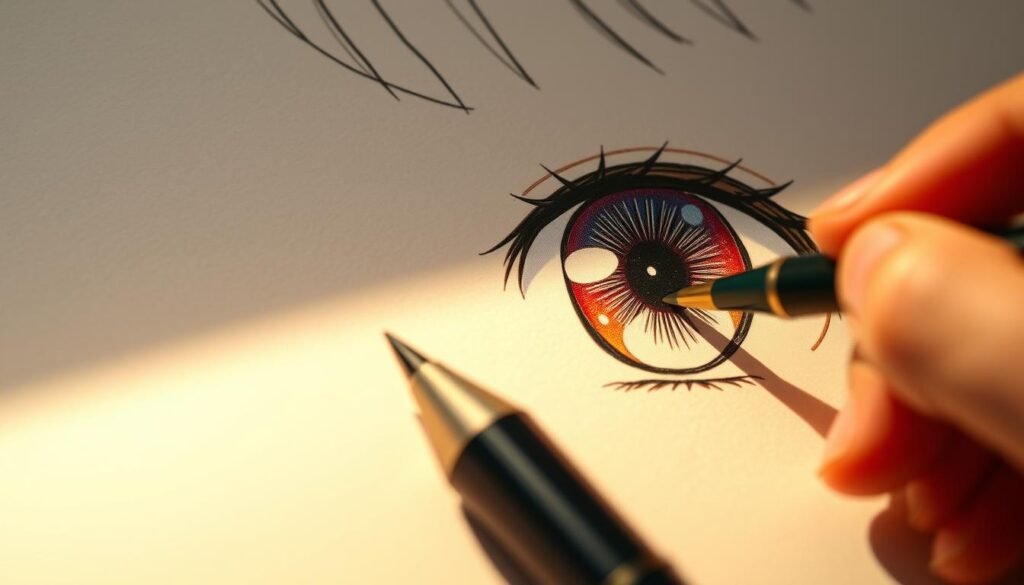
Begin with a simple oval or almond shape for the eye. Pay attention to the proportions and the angle of the eye. These will affect the overall expression of your character.
Adding Details to the Eyes
Once you have the basic outline, it’s time to add details. This includes the iris, pupil, and any additional features such as eyelashes or highlights.
- The iris is typically colored and can be divided into sections for a more detailed look.
- The pupil is usually black and centered within the iris.
- Highlights can be added to give the eyes a more lifelike appearance.
Shading Techniques for Realistic Effects
Shading is crucial for adding depth and realism to your anime eyes. Start by determining the light source in your drawing. Then, apply shading using softer pencils for lighter shades and harder pencils for darker shades.
| Shading Technique | Description | Effect |
|---|---|---|
| Hatching | Parallel lines that follow the contour of the eye | Creates texture and depth |
| Cross-Hatching | Layered hatching in different directions | Adds complexity and shading |
| Stippling | Small dots that create shading | Highly detailed and realistic |
By mastering these techniques, you can create anime eyes that are not only visually appealing but also expressive and engaging.You can learn how-to-draw-sonic
Expressive Features: Conveying Emotions in Eyes
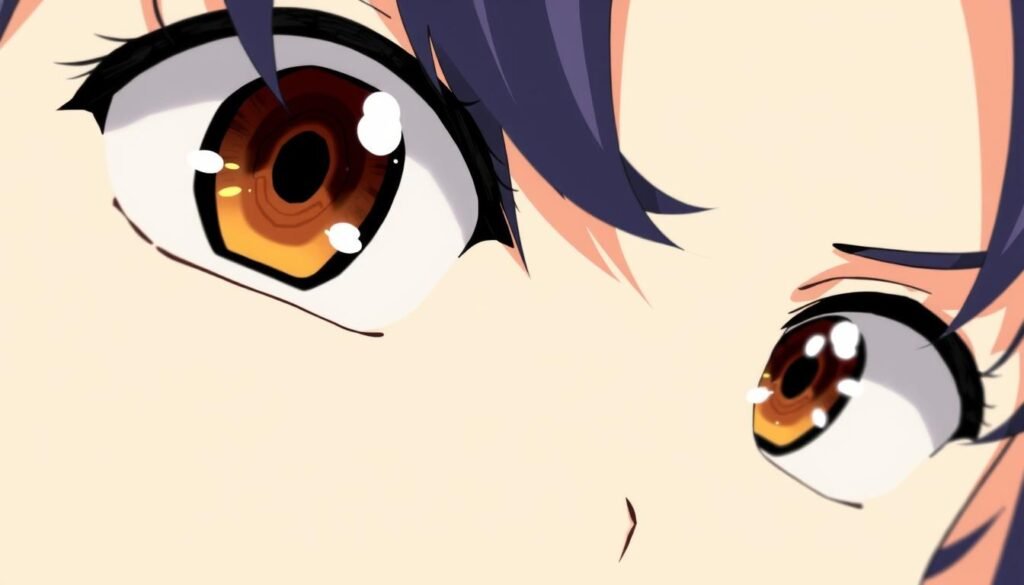
To make your anime characters come alive, learning to draw expressive eyes is key. The eyes are vital in anime design. They show emotions and personality, making your characters real and interesting.
Making Eyes Reflect Personality
The eyes’ shape, size, and color greatly affect how we see a character. Big, bright eyes show innocence and youth. Narrower eyes might hint at maturity or mystery. To capture your character’s personality in their eyes, think about these:
- Know your character’s personality: Are they cheerful, serious, or lively?
- Match eye shapes and sizes with their traits.
- Try different eye colors to deepen their emotional impact.
For more tips on character design, check out Clip Studio Tips. They share great advice on making characters stand out.
Techniques for Expressiveness
To make your anime eyes more expressive, try these techniques:
- Varying the Pupil Size: Big pupils show excitement or surprise. Small pupils suggest fear or focus.
- Using Different Eye Shapes: Almond-shaped eyes add mystery. Round eyes show innocence.
- Adding Highlights and Reflections: Highlights make eyes pop, adding life and emotion.
Avoiding Common Mistakes When Drawing Eyes
When drawing anime eyes, avoid common mistakes. These can make your characters less engaging. Mistakes include:
- Too simple eye shapes, lacking character.
- Ignoring eye proportions and symmetry, causing imbalance.
- Hurrying the details, making eyes look flat.
By watching out for these mistakes and practicing, you can get better at drawing anime eyes. These eyes will be not just expressive but also captivating.
Color Theory in Anime Eyes
Drawing anime eyes is more than just their shape. It’s about color theory to add depth and emotion. The color you choose can really change how a character feels and the mood of the art.
Choosing the Right Colors for Your Character
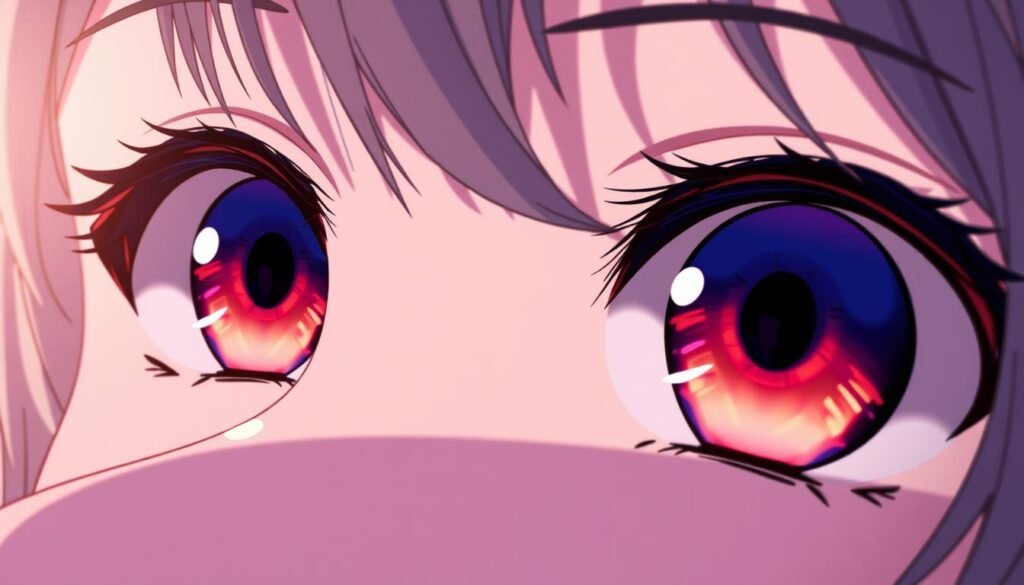
Choosing colors for your anime character’s eyes is key. Think about their personality, background, and the story’s setting. Warm colors like orange and red show passion or anger. Cool colors like blue and green suggest calmness or mystery.
Tips for Color Selection:
- Consider the character’s personality and background.
- Think about the emotional impact you want to achieve.
- Experiment with different color combinations to find the perfect match.
Techniques for Blending and Shading Colors
Blending and shading are key for realistic anime eyes. Smooth color transitions create a natural look and add depth.
Layering and Blending: Start with a base color and add layers of shading and highlighting. Use soft brushes or digital tools for seamless blending.You can learn how-to-draw-pokemon
Inspiration from Popular Anime Characters
Looking at popular anime characters can inspire your art. Analyze their eye colors and why they were chosen.
Characters with bright eye colors might be meant to stand out or show a trait. Studying these can help you understand color theory in anime art.
Mastering color theory and these techniques can improve your anime eye drawing. You’ll create characters that are not just pretty but also emotionally engaging.
Advanced Techniques: Adding Depth and Detail
Take your anime art to the next level by learning advanced eye-drawing techniques. These skills will boost your artwork’s quality and realism.
Highlights and Reflections in Anime Eyes
Highlights and reflections can make anime eyes pop. First, figure out where the light is coming from in your drawing. Then, use a white or light pencil to add a highlight on the iris, opposite the light source.
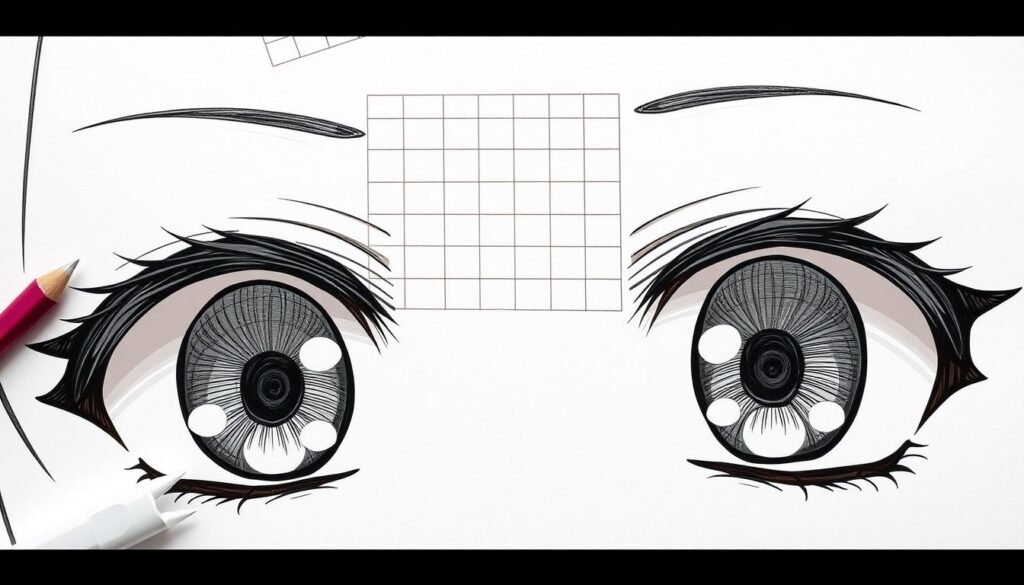
To get a more realistic look, add subtle reflections around the highlight. Use a soft pencil or digital brush to blend the edges softly. This creates a smooth, gradient-like effect.You can learn how-to-draw-naruto
Creating Lifelike Textures
Adding textures to anime eyes can make them look more real. Look at the patterns and details in real eyes, like the iris’s intricate designs.
- Use a range of pencils (H to 6B) to get different shades and textures.
- Focus on the subtle color and shading changes in the iris.
- Try different digital brushes to match the eye’s texture.
| Technique | Description | Effect |
|---|---|---|
| Hatching | Creating shading with closely spaced lines. | Adds depth and dimension. |
| Cross-hatching | Layering hatching lines at different angles. | Enhances texture and shading. |
| Stippling | Creating images with small dots. | Produces detailed, high-contrast images. |
Enhancing Your Eyes with Background Elements
The background of your artwork greatly affects how your anime eyes look. Think about how the background elements interact with your character’s eyes. This can make your artwork more engaging and harmonious.
A warm background can enhance the eye colors, while a cool background can create a striking contrast. This contrast can make your artwork stand out.
By mastering these advanced techniques, you can greatly improve your anime eye-drawing skills. Your artwork will become more captivating and professional.
Common Mistakes to Avoid When Drawing Anime Eyes
To make stunning anime eyes, steer clear of common errors. Drawing anime eyes is complex, needing detail and a deep grasp of what makes them stand out.
Oversimplifying Eye Shapes
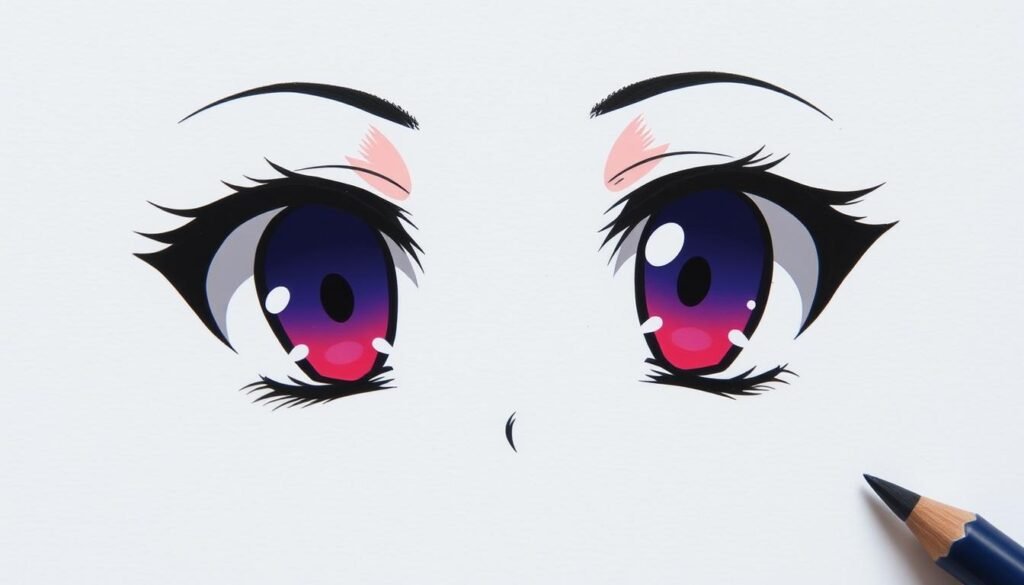
One big mistake is making eye shapes too simple. Anime eyes are complex and full of expression. To fix this, add small details that make your eyes pop. For example, intricate iris patterns or highlights can add depth.
Ignoring Proportions and Symmetry
Not paying attention to proportions and symmetry is a big no-no. Anime eyes are symmetrical, and any imbalance looks unnatural. Study eye anatomy and practice drawing different shapes. Use guides and tutorials on how to draw anime eyes to get better.
Rushing the Detailing Process
Rushing the detailing can hurt your anime eyes’ quality. Details like eyelashes, highlights, and shading need patience. Spend time on these to make your eyes look great and expressive.
In summary, to avoid mistakes in drawing anime eyes, watch out for oversimplification, ignore proportions, and take your time with details. Knowing these common errors helps you improve and create amazing anime art.
How to Practice and Improve Your Eye-Drawing Skills
Mastering the art of drawing anime eyes requires consistent practice and a deep understanding of techniques. To improve, adopt a multi-faceted approach. This includes daily exercises, learning from master artists, and joining community challenges.
Daily Exercises for Drawing Anime Eyes
Regular practice is essential for mastering anime eye drawing. Here are some exercises to help:
- Draw different eye shapes and styles to understand the variations.
- Practice shading techniques to achieve depth and dimension.
- Experiment with various expressions to capture different emotions.
For more detailed guidance, check out this step-by-step guide on how to draw anime.
Learning from Master Artists
Studying the work of experienced artists offers valuable insights. Look for tutorials, videos, and articles by renowned anime artists. This will help you learn new methods and stay updated on trends.
Some key takeaways from master artists include:
- Understanding the anatomy of the eye.
- Using reference images to improve accuracy.
- Experimenting with different materials and tools.
Joining Community Challenges and Art Groups
Engaging with other artists through community challenges and art groups is beneficial. It offers opportunities to:
- Share your work and receive constructive feedback.
- Participate in themed challenges to practice specific skills.
- Stay motivated and inspired by seeing the work of others.
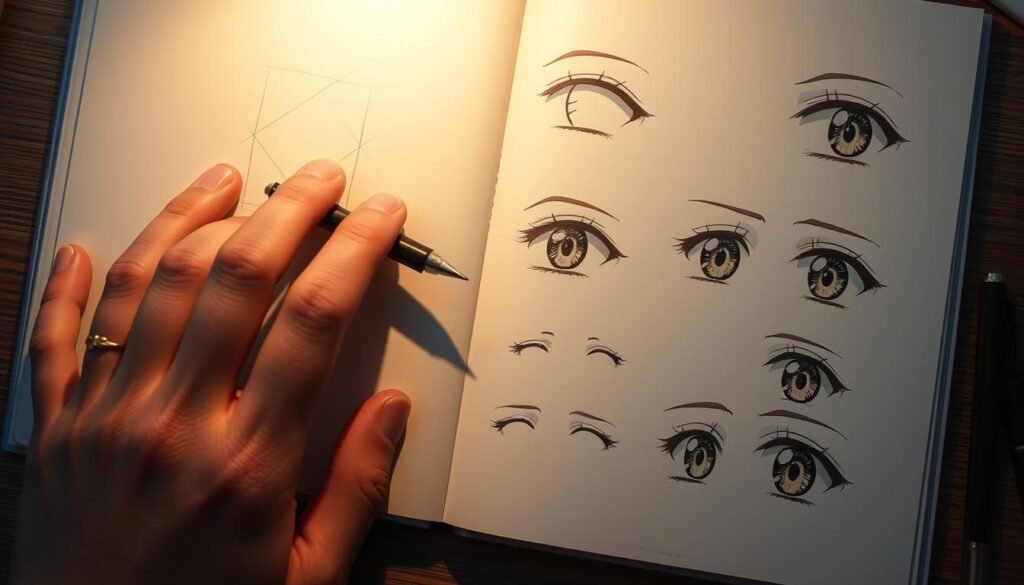
By incorporating these practices into your routine, you’ll see significant improvement in your ability to draw anime eyes. Remember, mastering anime art is a continuous journey. Staying committed to your craft is key.
Final Thoughts: Your Journey in Anime Art
Learning to draw anime eyes takes time, effort, and patience. You need to know the basics of eye anatomy. Then, practice different styles and techniques to make your anime characters come alive.
Setting Artistic Goals
To get better at drawing anime eyes, set clear goals for your art. Decide what you want to improve, like eye shapes or shading. Keep practicing and pushing yourself to grow as an artist.You can learn how-to-draw-a-bear
Resources for Further Learning
Keep learning by checking out online tutorials, art books, and forums about anime art. Look at the work of professional artists and join art challenges. This will give you new ideas and inspiration for drawing anime eyes.
Tracking Your Progress
Always celebrate your progress, no matter how small. Keep a sketchbook or digital portfolio of your work. Seeing how far you’ve come will motivate you to keep improving your anime eye drawing skills.