

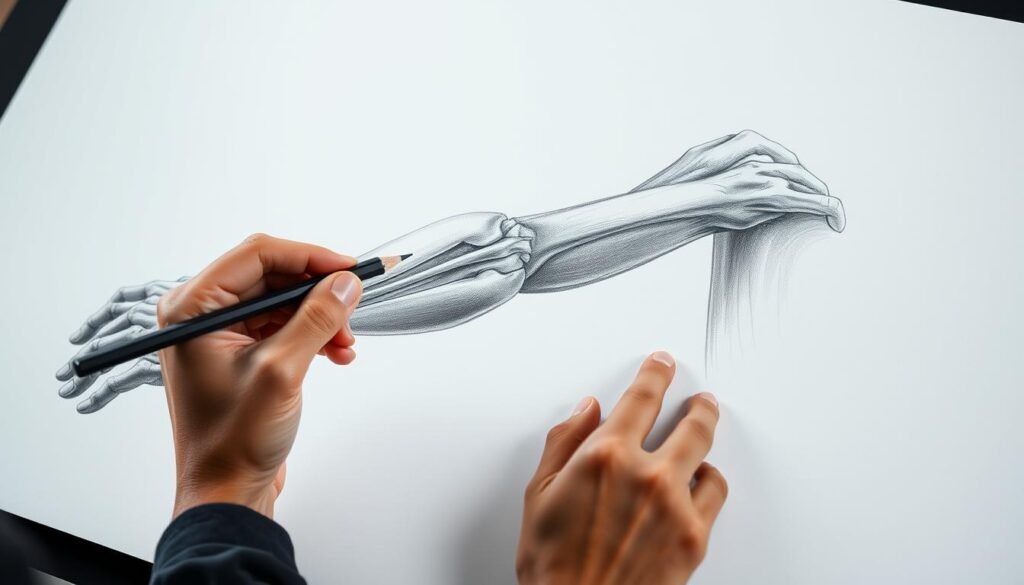
Did you know that the human arm contains over two dozen individual muscles, all working in concert to create its powerful and graceful form? This complexity is precisely why so many illustrators find limb anatomy challenging.
I welcome you to this comprehensive guide where I share my professional techniques. Mastering arm illustration transformed my artistic journey, and it can significantly elevate your work.
This tutorial breaks down complex arm anatomy into manageable, practical steps. Artists of all levels can follow and implement these methods immediately.
Understanding this structure is crucial for creating believable characters. Whether you work on comic art, concept illustration, or figure drawing, this knowledge is foundational.
My systematic approach moves from basic proportions through complex muscle groups. We will explore dynamic movement and perspective to give your characters life.
I created this guide because many artists struggle with arms. They often lack a clear, structured learning path that connects anatomical knowledge with practical application.
These techniques draw from insights by professional concept artists and comic illustrators who have mastered the craft. By following this guide, you will develop the confidence to illustrate arms in any position, from any angle, with both anatomical accuracy and artistic flair.
Key Takeaways
- Arm anatomy involves over two dozen muscles, making it a complex but masterable subject.
- This guide provides a structured path from basic proportions to advanced muscle groups.
- A solid understanding of arm structure is essential for creating believable characters in any genre.
- The techniques are derived from professional concept artists and comic illustrators.
- You will learn to illustrate arms confidently from any angle and in any position.
- The focus is on connecting anatomical knowledge with immediate, practical application.
- This approach is designed for artists at all skill levels seeking to improve their work.
Introduction to Drawing Arms
For years, my character illustrations lacked the dynamism I envisioned because I struggled with arm anatomy. Mastering this specific skill opened doors to more expressive and powerful character work. It became a turning point in my artistic development.
My Personal Journey and Motivation
I recall the frustration of seeing a nearly finished piece undermined by stiff, unnatural-looking limbs. This challenge is not unique. Professional artist Joe Catapano ranks arms as the third most important area of study after heads and hands, noting their constant presence in comic panels.
Gestures and positioning convey immense emotion, action, and personality. As Dani Puente emphasizes, incorrect proportions in extremities can ruin final work. Understanding this anatomy is non-negotiable for credible visual storytelling.
Overview of the Tutorial and What You Will Learn
Artists commonly face hurdles like proportional errors, understanding rotation, and capturing natural movement. This guide offers a systematic way to overcome them.
We will progress from foundational proportions through essential muscle groups. You will learn construction methods using simple shapes and perspective techniques.
This tutorial combines insights from multiple professionals for a well-rounded understanding. I encourage patience and consistent practice. The effort yields tremendous improvements in your overall figure drawing ability.
Understanding Arm Proportions
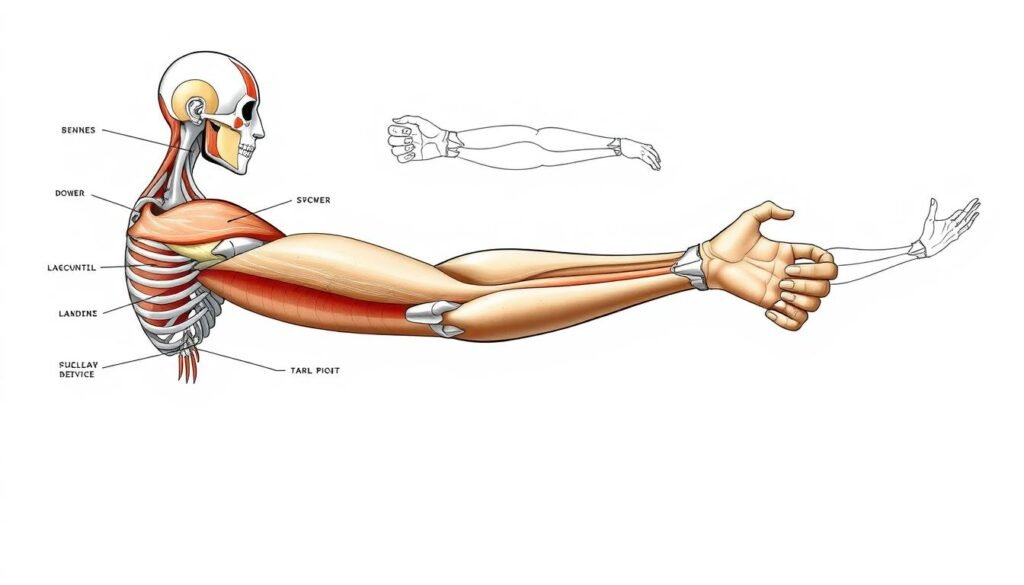
The key to believable arm illustration lies in understanding fundamental proportional systems. I rely on a reliable 12-unit division method that ensures consistent results.
Dividing the Arm: Upper Arm, Forearm, and Hand
I divide the arm into three distinct parts for accurate construction. The upper arm spans from shoulder to elbow, using five units in my system. The forearm continues from elbow to wrist, occupying four units.
The hand completes the structure with three units from wrist to fingertips. This 5:4:3 ratio creates natural-looking limbs. The total length remains balanced and anatomically correct.
Ensuring Accuracy with Body References
I use body landmarks as reliable reference points. The upper arm extends from collarbone level to the last rib. The forearm reaches the height of the femur’s head.
The hand typically ends near the center of the thigh. Outstretched arms equal the individual’s height from shoulders down. This relationship maintains proportional consistency across different poses.
Dividing the arm at the elbow provides another accuracy check. This length matches the rib cage height. Understanding these relationships allows for flexible application across various body types.
Essential Anatomy for Artists
The arm’s visible form is directly shaped by its hidden skeletal framework and muscular system. Understanding this internal anatomy provides the foundation for creating believable illustrations.
I begin with the skeletal structure that supports the entire limb. The humerus forms the upper arm’s core, connecting shoulder to elbow.
Bones and Key Landmarks
The forearm contains two crucial bones: the radius and ulna. These work together at a joint enabling wrist rotation. Key landmarks visible through skin include the collarbone, elbow, and head of the ulna at the wrist.
These subcutaneous points serve as reliable guides for accurate proportioning. They remain consistent across different body types and poses.
Muscle Groups and Their Roles in Arm Movement
Major muscle groups define the arm’s characteristic shape. The deltoid caps the shoulder, while the biceps and triceps create front-and-back definition.
Forearm muscles like the brachioradialis and various extensors control hand movements. Understanding how the radius rotates around the ulna is essential for dynamic poses.
Memorizing every muscle name matters less than understanding their placement and function. Focus on how these groups layer together to create natural contours.
How to Draw Arms: Step-by-Step Guide
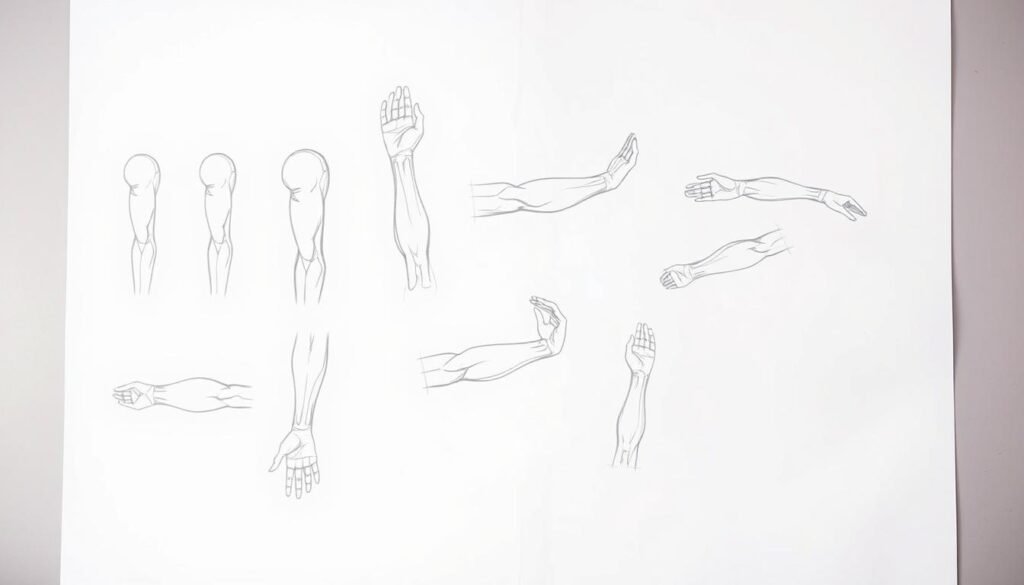
Every great arm illustration begins not with complex details, but with a simple, flowing gesture. This section breaks down my fundamental process into clear, actionable stages. We will build a convincing limb from the ground up.
Gesture Sketching the Basic Form
I always start with a quick gesture line. This captures the arm’s energy and flow. I use two connected ‘C’ curves that bend in the same direction.
This technique establishes a natural, rhythmic foundation. It reflects the harmonious curvature present in the entire limb.
Building the Arm with Simple Shapes
Next, I add volume using basic forms. The upper arm and forearm become simple cylinders of similar length. I always draw through these forms to maintain 3D accuracy.
For joints, I place spheres at the shoulder, elbow, and wrist. This sphere-and-cylinder method creates a clear structural blueprint.
I recommend practicing from a reference photo. Copy the pose but simplify it into these core shapes. This trains your eye to see the underlying structure.
Adding light shadow at this stage makes the volumes pop. This simple rendering step brings your construction to life.
Construction Techniques for Realistic Arms
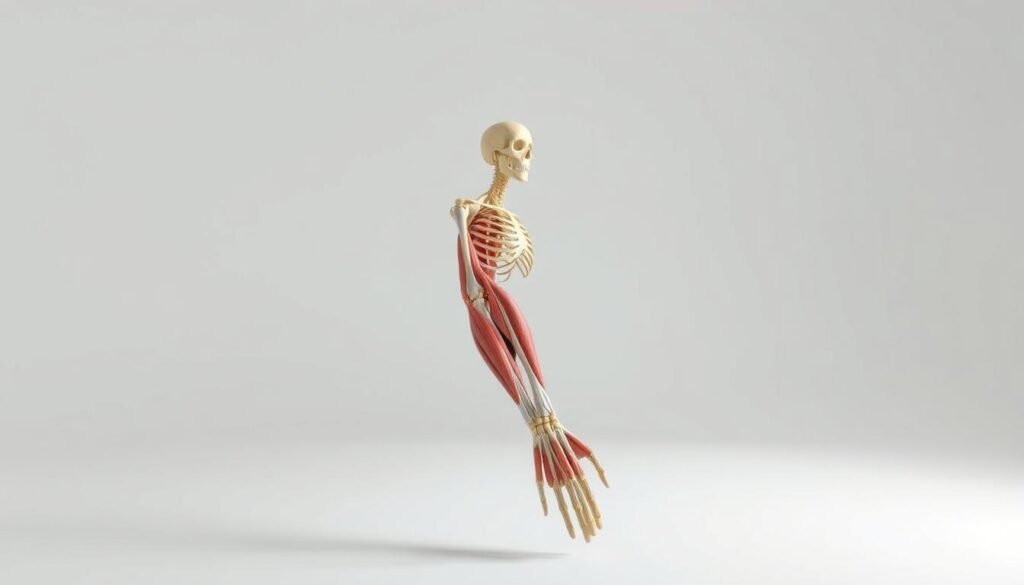
Moving beyond simple cylinders requires understanding how to adapt these foundational shapes to reflect real anatomy. This progression transforms basic forms into convincing limb structures.
Using Cylinders and Spheres Effectively
I modify the basic cylinder into a rectangular cube with rounded corners. This angular form better represents the actual structure of the arm. The modification immediately improves perspective accuracy in your illustrations.
For the forearm, I apply a tapering principle. The cylinder becomes thicker near the elbow joint. It gradually narrows as it approaches the wrist area.
This technique reflects natural muscle mass distribution. Adding selective mass to the lower arm creates realistic surface variation. It distinguishes rounded muscular areas from angular bony landmarks.
The systematic approach works for any character type. Subtle modifications suit average builds. You can exaggerate tapering for muscular characters.
Maintaining proportional relationships ensures construction accuracy. This reliable framework functions regardless of arm position or angle. It provides a solid foundation for more detailed work.
Exploring Complex Forms in Arm Drawing
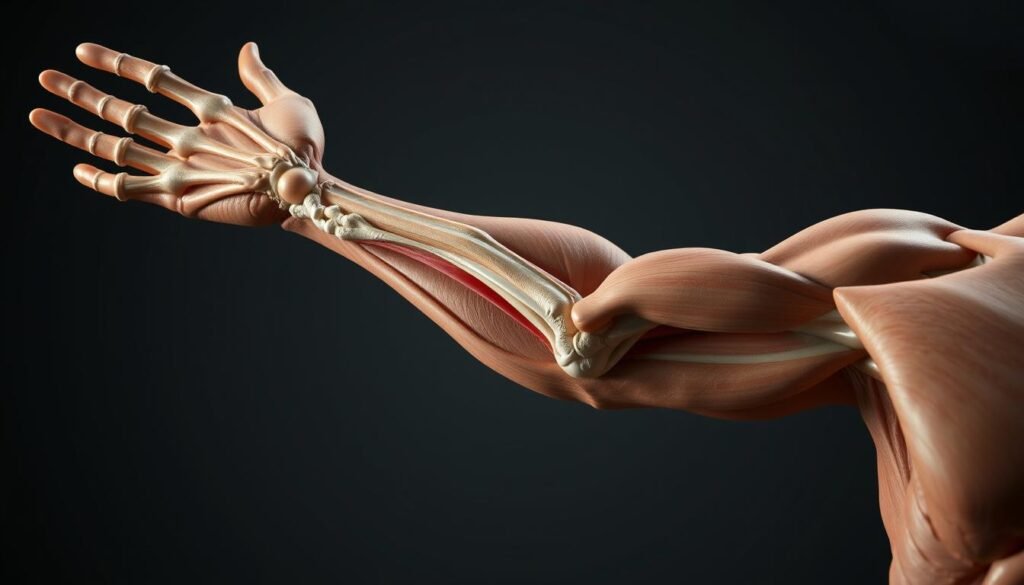
Professional artists recognize that muscle layering follows specific rotational patterns that define natural contours. This understanding separates basic constructions from truly convincing anatomical renderings.
Molding the Cylinder into Anatomical Details
I visualize major muscle groups as links in a chain. The deltoid and forearm muscles face one direction, while biceps and triceps face another. This alternating orientation creates the arm’s characteristic flowing contours.
Each muscle has distinct origin and insertion points in three-dimensional space. Understanding these spatial relationships allows for convincing wrapping around the cylindrical form. I recommend using 3D anatomy models to study these relationships from every angle.
| Muscle Group | Orientation | Primary Function | Visual Characteristics |
|---|---|---|---|
| Deltoid | Outward rotation | Shoulder movement | Rounded cap shape |
| Biceps | Forward facing | Elbow flexion | Double-bellied contour |
| Triceps | Rear facing | Elbow extension | Three-part horseshoe shape |
| Forearm Group | Mixed rotation | Wrist/hand control | Tapered cylindrical form |
This active layering creates visual dynamism even in neutral positions. I build up details progressively, starting with the largest muscle shapes. Secondary details refine the form while maintaining the underlying structure.
Drawing Dynamic Movements and Rotations
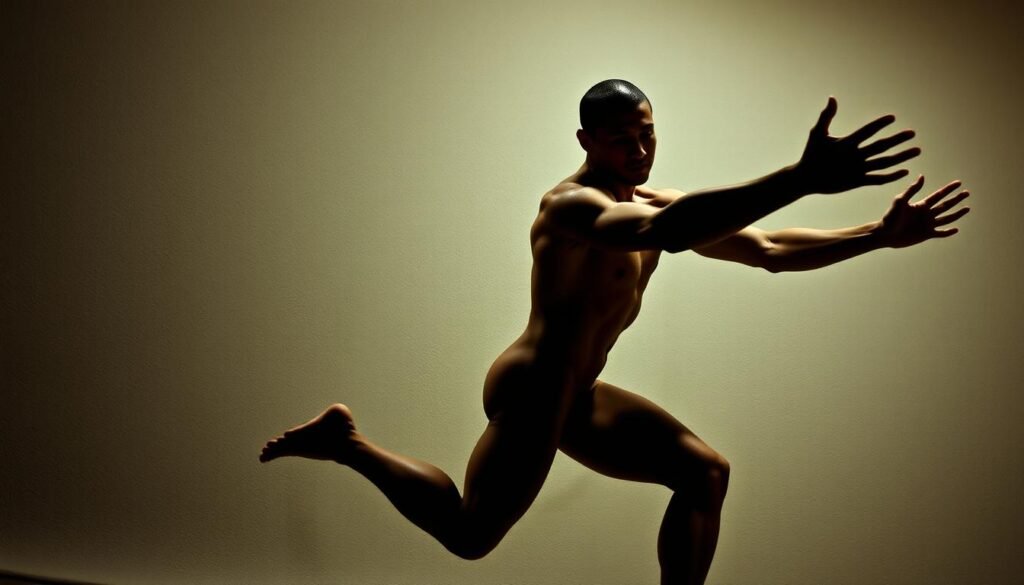
Forearm rotation involves a sophisticated mechanism where one bone pivots around another. This understanding transforms static illustrations into dynamic, believable poses. Mastering these movements separates amateur work from professional quality.
The shoulder joint offers remarkable mobility thanks to the rounded head of the humerus. This allows nearly 360-degree rotation, creating exciting artistic possibilities. However, this freedom also presents significant technical challenges for accurate representation.
Capturing the Range of Motion
I track the radius as it spins around the stationary ulna during rotation. This movement is essential for correct hand positions. The forearm rotates approximately 180 degrees from palm-up to palm-down positions.
Understanding this range prevents anatomically impossible illustrations. I use the head of the ulna as a reliable reference point. This landmark always remains on the little finger side of the wrist.
Using Bone and Muscle Cues for Realism
When raising the arm, multiple muscle groups engage simultaneously. The pectoral muscles and latissimus dorsi elevate along with the collarbones. The serratus becomes visible along the rib cage during this movement.
From the back view, the scapula’s movement contributes significantly to arm motions. Observing how bones shift and muscles respond creates authentic dynamic positions. These interconnected movements bring life to your character illustrations.
Integrating Perspective and Volume
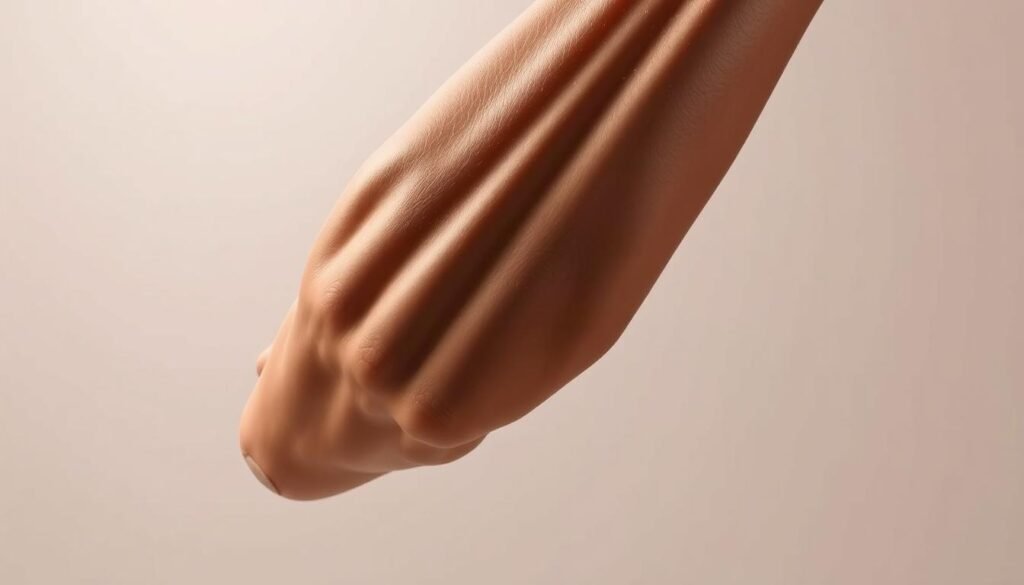
Foreshortening is the secret weapon professional artists use to make limbs appear to extend dramatically into space. This technique creates convincing depth that transforms flat illustrations into dynamic compositions.
I begin with clean contour lines that vary in weight. Thicker lines define areas closer to the viewer, while thinner ones recede into space. This simple adjustment immediately enhances depth perception.
Applying Foreshortening Techniques
The wedging technique creates visual compression where forms overlap. Contour lines appear squeezed together in extreme perspective views. This effect makes the forearm look believable when pointing directly at the viewer.
Shadow blocking reinforces volumetric form. I always reference the basic cylinder example when determining light placement. Simplifying complex lighting scenarios helps me visualize how shadows wrap around the arm‘s curved surfaces.
For costume elements like armor or sleeves, I integrate one-point perspective grids. The vanishing point ensures additions follow the same spatial logic as the anatomy. This consistency maintains believability throughout the illustration process.
Mastering these techniques elevates your work from flat representations to engaging three-dimensional illustrations. The arm becomes a dynamic element that contributes significantly to visual storytelling.
Tips from Professional Artists
The transition from competent anatomy to compelling artwork lies in applying industry-proven methods from established professionals. I’ve gathered invaluable insights that bridge technical knowledge with artistic execution.
Learning from Dani Puente’s Techniques
Dani Puente’s approach emphasizes three core elements for successful illustration. Accurate proportions form the foundation, while understanding main muscle groups provides structural integrity. Reliable anatomical reference points ensure consistency across different poses.
This systematic method prevents common pitfalls that many artists encounter. It creates a solid framework for building believable characters.
Best Practices from Comic Art Experts
Comic illustration requires strategic simplification for maximum impact. I suggest muscles by drawing shadows of the most prominent groups rather than outlining every detail. This creates cleaner, more professional-looking artwork.
The ridge muscles deserve special attention as they create distinctive silhouettes. For the forearm, flexors define the characteristic bend, while extensors create dramatic ridges under strong lighting.
When rendering triceps biceps during movement, remember they maintain positional integrity even when compressed. This understanding is crucial for believable action sequences. For deeper anatomical study, I recommend this comprehensive Russian drawing course on arm anatomy.
These professional techniques separate adequate work from exceptional illustration. They provide the top strategies used by industry leaders.
Troubleshooting Common Challenges
Even experienced illustrators encounter persistent challenges when rendering arms, particularly with proportional accuracy and anatomical complexity. I developed systematic approaches to identify and correct these issues efficiently.
Overcoming Proportional Errors
Incorrect ratios between upper arm and forearm frequently undermine illustrations. I diagnose issues by checking if the elbow aligns with the rib cage level. The hand should reach mid-thigh when resting naturally.
Establishing clear reference points early prevents proportional mistakes. This way ensures anatomical consistency before detailed rendering begins.
| Error Type | Diagnostic Check | Correction Method |
|---|---|---|
| Upper Arm Length | Compare to rib cage height | Adjust shoulder to elbow distance |
| Forearm Placement | Verify elbow to wrist ratio | Use 5:4:3 proportional system |
| Hand Alignment | Check wrist to fingertip length | Match to thigh landmarks |
Managing Complex Muscle Structures
The cylindrical nature of arms and forearm rotation make complete anatomical mapping challenging. I focus on major muscles first—deltoid, biceps, triceps—before detailing smaller groups.
Mastering this anatomy requires consistent practice and learning from mistakes. Comparing drawings against reference photos helps identify specific problem areas. For additional guidance, explore this comprehensive arm anatomy resource.
Targeted studies of problematic muscles or positions build confidence progressively. This approach prevents overwhelm while developing essential skills.
Conclusion
The comprehensive exploration we’ve undertaken together demonstrates that systematic learning transforms complex anatomy into manageable skills. This tutorial has guided you from fundamental proportions through advanced muscle groups and dynamic movements.
Remember the three essential pillars: accurate proportions using the 12-unit system, understanding major muscle layering, and identifying reliable bone landmarks like the elbow and wrist. The upper arm with its humerus bone coordinates seamlessly with the forearm‘s radius and ulna system.
Consistent practice from quality reference materials builds your visual library. Join artistic communities to share work and receive constructive feedback. This iterative process elevates your overall figure drawing to professional levels.