

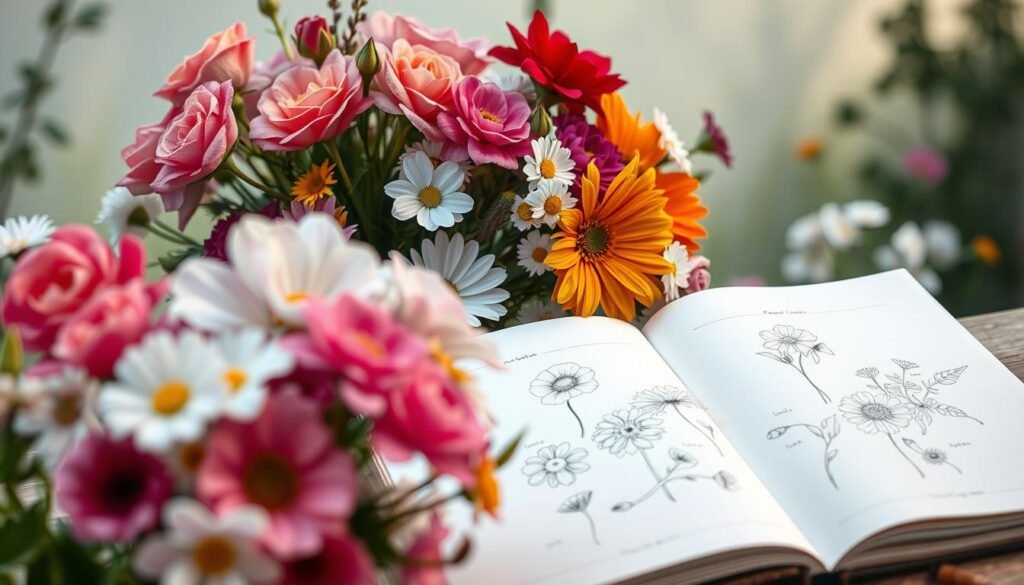
Drawing flowers can be a fun and creative activity. It’s a timeless art form loved for its beauty and simplicity. I’m excited to share easy tips to help you get started in flower art.
Learning to draw flowers is easy. You just need to understand the basic shapes and add details with lines and dots. For more ideas, check out simple flower doodles to spark your creativity.
Key Takeaways
- Understand the basic shapes of flowers to simplify the drawing process.
- Use curvy lines for stems and petals to add a natural touch.
- Experiment with different techniques, such as layering petals and adding dimension.
- Start with simple flowers like roses, tulips, and daisies.
- Practice drawing floral wreaths and whimsical flowers to enhance your skills.
Understanding Different Flower Types
To get better at drawing flowers, it’s key to know about different types and their special traits. Each flower has its own look that can be fun or challenging to draw. Knowing these differences helps you pick flowers that match your skill and interest.
Common Flower Varieties to Draw
Artists often draw roses, sunflowers, daisies, and lilies. These are favorites because of their beauty and meanings. For example, looking at various flower doodles can spark your creativity.
Roses are a timeless choice, with their detailed petals and thorns. Sunflowers, with their big yellow petals and dark centers, are great for practicing shading and texture.
Unique Features of Each Flower
Every flower has something special to draw. Tulips have cup-shaped blooms and slender stems. Daisies have white petals and yellow centers. Knowing these details helps make your flower drawings look real and detailed.
Selecting Flowers Based on Skill Level
Choosing flowers to draw depends on your skill level. Beginners might start with simple flowers like daisies or sunflowers. These have fewer details. More skilled artists can try drawing complex flowers like roses or peonies, which need more precision.
| Flower Type | Skill Level | Unique Features |
|---|---|---|
| Roses | Advanced | Intricate petals, thorny stems |
| Sunflowers | Intermediate | Large petals, dark centers |
| Daisies | Beginner | Simple white petals, yellow centers |
By learning about different flowers and their traits, you can enhance your drawing skills. Whether you’re new or experienced, there’s a flower just waiting to be drawn.
Essential Drawing Materials for Flower Art
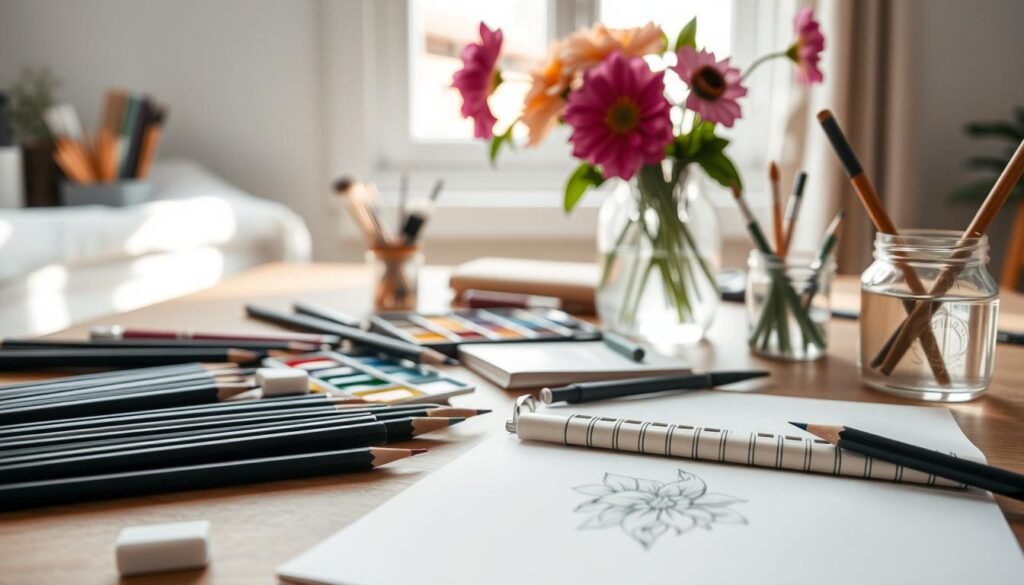
To draw flowers well, you need the right tools. The right materials improve your skills and make learning fun.
Recommended Pencils and Papers
The quality of your pencils and paper is key. For flower drawing, use pencils from HB to 6B for shading. Choose a smooth, heavy paper (80-100 gsm) for detailed work.
Derwent Graphic Pencils are great for their consistency. Canson Mi-Teintes paper is popular for its texture and durability.
Tools for Adding Color
There are many ways to add color to your drawings. You can use colored pencils, watercolor paints, or markers. Each has its own special qualities, depending on what you like and what you want to achieve.
Faber-Castell Polychromos colored pencils are known for their light-fastness. Winsor & Newton Cotman Watercolors are a good choice for watercolor, offering quality at a fair price.
Tips for Organizing Your Supplies
Keeping your supplies organized is important. Use a storage box or case for your pencils, papers, and coloring tools. Labeling them helps you find what you need quickly.
Think about getting a portable drawing kit for drawing on the move. It keeps everything organized, whether you’re drawing at home or outside.
Basic Shapes: The Foundation of Flower Drawing
Basic shapes are the building blocks of flower drawing. They provide a foundation for more detailed designs. By understanding and mastering these shapes, artists can draw flowers more accurately.
Using Geometric Shapes as Guides
To draw flowers well, break them down into simple shapes like circles, ovals, and triangles. The center of a flower is often a circle or oval. Petals can be drawn as teardrop or oval shapes. Mastering flower drawing means recognizing these shapes and using them as guides.
Practicing Line Work
Line work is key in flower drawing. It defines the edges and contours of petals and leaves. Practicing straight, curved, and wavy lines improves skill. Consistent practice leads to more confident drawings.
Creating Petals and Leaves
After setting up basic shapes, add details to petals and leaves. This includes softening edges, adding texture, and varying line weights. The table below outlines the steps for drawing petals and leaves.
| Step | Description | Tips |
|---|---|---|
| 1 | Sketch basic shape | Use simple geometric shapes |
| 2 | Refine edges | Soften or sharpen as needed |
| 3 | Add texture and details | Vary line weights for depth |
By following these steps and practicing regularly, artists can improve their flower drawing. Remember, mastering flower drawing takes patience and consistent practice.
Step-by-Step Guide to Drawing a Rose
Learning to draw a rose involves understanding its parts and using the right techniques. It’s helpful to break the process into simple steps.
Sketching the Outline
To start drawing a rose, sketch its outline first. Draw a small circle in the center of your paper for the rose’s core. Next, draw a larger circle around it to help place the petals.
Begin drawing the petals from the center, moving outwards. Each petal should be teardrop-shaped, with the rounded end facing outwards. For detailed steps, check out this guide on how to draw a.
Adding Depth with Shading
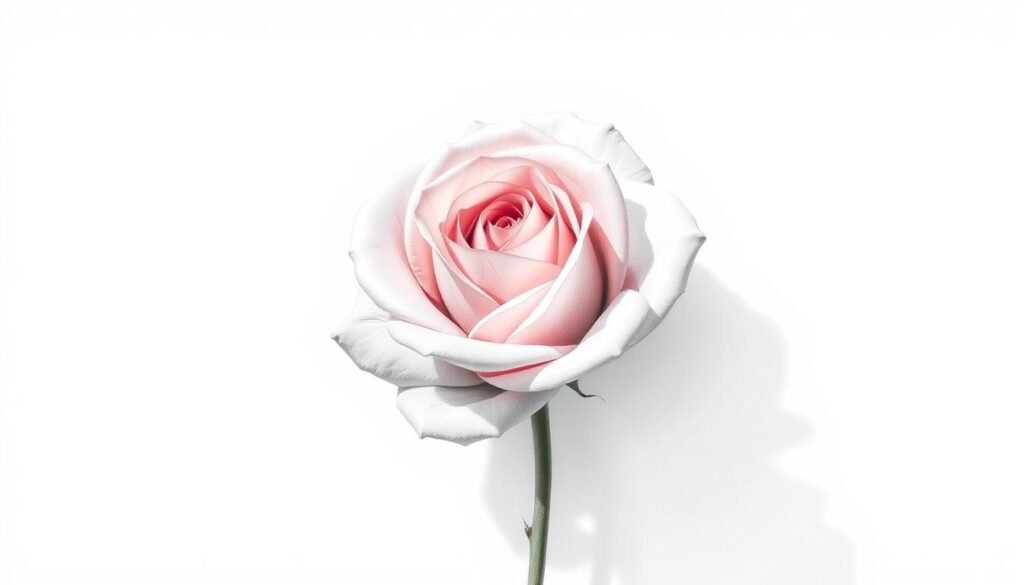
After the outline, add depth with shading. Look at where shadows fall on a real rose, like between petals and in the center. Use different pencils (HB, 2B, 4B, 6B) for light to dark shades.
Start with light shading and build up to darker shades. Blend the edges for a smooth look.
Shading makes your rose look more real. Pay attention to how your shading strokes follow the petals’ curves.
Coloring Techniques for Realism
To make your rose drawing come alive, use coloring techniques that look real. Pick colors like pink, red, and green for leaves and stems. Use colored pencils or watercolors, starting with light shades and layering for intensity.
For realism, notice the color changes in the rose. Petal edges might be lighter, while the center is richer.
Drawing a Sunflower: A Simple Approach
To draw a sunflower, focus on its round shape and details. Start by understanding its structure. This includes the big petals and the center with the seeds.
Capturing the Roundness of the Flower
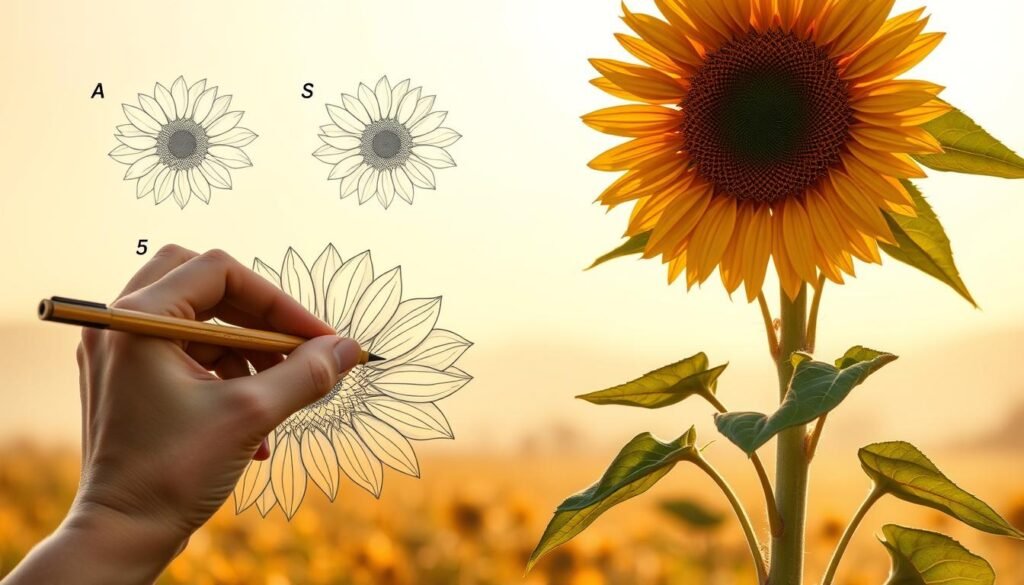
Begin by drawing a large circle for the sunflower’s shape. Sunflowers are not perfectly round, so don’t worry if your circle isn’t perfect. The goal is to show roundness and depth.
Detailing the Seeds and Petals
After the shape, add details like seeds and petals. The center has tiny seeds in a spiral pattern. Draw these seeds as small, tight spirals.
For the petals, start with the big outer ones and move inward. Make sure they’re the right size and shape for the flower. Varying their size adds realism.
Incorporating Background Elements
Add background elements to make your sunflower drawing pop. This could be a simple sky gradient or more detailed leaves or flowers. The background should support the sunflower, not take over. Keep it simple to focus on the sunflower.
Following these steps makes drawing a sunflower easy and fun. With practice, you’ll create stunning sunflower drawings that show off their beauty.
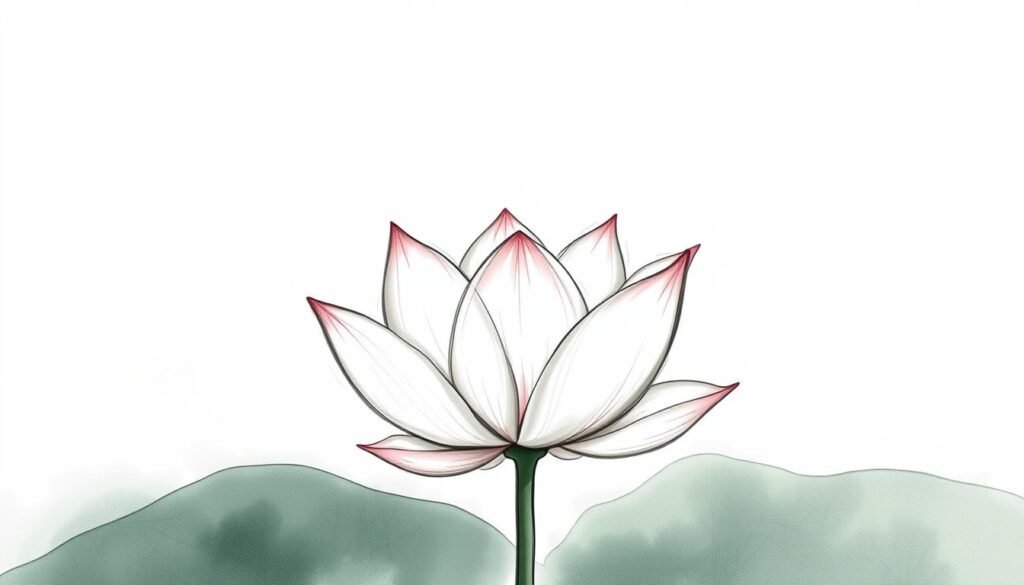
Mastering the Lotus Flower
The lotus flower is a fascinating subject for artists. It symbolizes spiritual growth and enlightenment. It holds deep cultural and historical value.
Symbolism and Structure
The lotus flower is admired for its beauty and symbolism. Its delicate petals and central part make it a challenging but rewarding subject. Understanding the symbolism behind the lotus flower and its structure is key.
Some key aspects of the lotus flower’s structure include:
- Delicate, curved petals that unfold from the center
- A prominent, often slightly raised center
- Leaves that are typically large and flat, sometimes with a wavy edge
Step-by-Step Instructions
To draw the lotus flower effectively, follow these steps:
- Start by sketching the basic shape of the flower, focusing on the center and the overall proportions.
- Gradually add the petals, beginning from the center and working your way outward. Pay attention to the curvature and overlap of the petals.
- Detail the leaves and the stem, ensuring they are proportionate to the flower.
- Refine your drawing by adding shading and texture to the petals and leaves, enhancing the overall depth and realism.
Art experts say, “capturing the subtle nuances in the lotus flower’s petals and leaves is crucial for a realistic representation.”
Common Mistakes to Avoid
When drawing the lotus flower, artists often encounter challenges such as:
- Inaccurate proportions, particular in the center and petals
- Insufficient detail in the leaves and stem
- Overly uniform shading, which can result in a flat appearance
By being aware of these common pitfalls, artists can take steps to avoid them. This results in a more nuanced and compelling drawing.
For those looking to improve their skills in drawing flowers, including the lotus, it’s essential to practice regularly and study the works of other artists. As the saying goes,
“Practice is the best of all instructors.” – Publilius Syrus
Incorporating Flowers into Other Art Forms
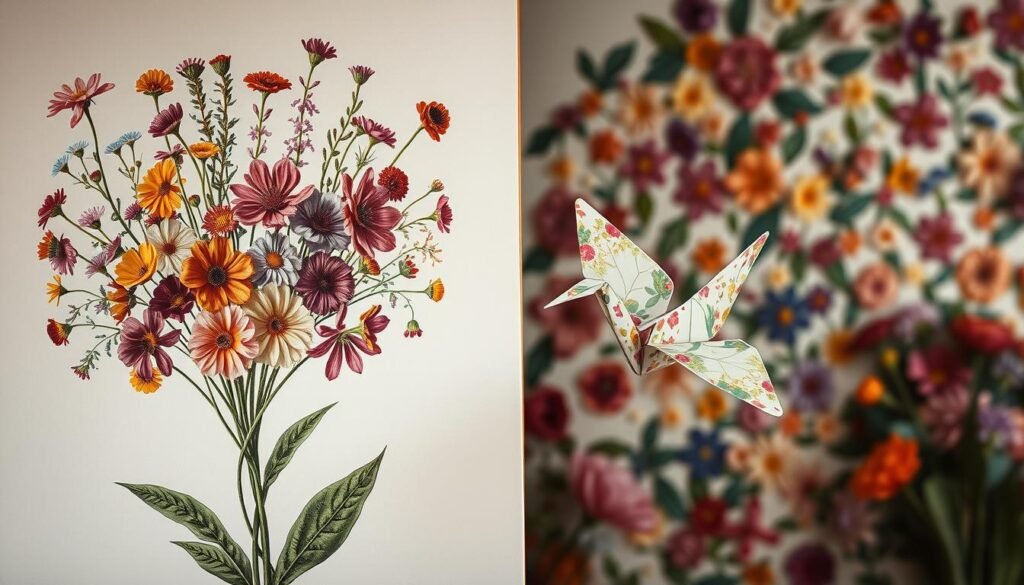
Flowers aren’t just for still-life drawings. They can also enhance portraits, landscapes, and abstract art. They add elegance, express emotions, and draw attention in various art forms.
Adding Flowers to Portraits
Flowers in portraits can show the subject’s personality or the mood of the art. For example, roses around a subject might mean love or appreciation. Wildflowers could suggest a free spirit.
To add flowers to a portrait well, remember a few things:
- Balance: Make sure the flowers don’t take over the subject.
- Color Harmony: Pick flowers that match the subject’s clothes and background.
- Symbolism: Choose flowers that fit the subject’s character or the message you want to share.
For more tips on improving your art, check out Clip Studio Tips. They offer advice on using tools and techniques.
Using Flowers in Landscape Scenes
Flowers can make a landscape scene lively and welcoming. They can guide the viewer’s eye or contrast with other parts of the scene.
| Flower Type | Effect in Landscape |
|---|---|
| Sunflowers | Add height and create a focal point. |
| Wildflowers | Create a sense of natural abundance and color. |
| Lilies | Introduce elegance and serenity. |
Floral Patterns in Abstract Art
In abstract art, flowers can be simplified to make patterns or bold statements. It’s all about trying different shapes, colors, and arrangements to get the look you want.
When adding floral patterns to abstract art, think about the colors’ emotional impact and the design’s flow. Bold colors can energize, while soft pastels can soothe.
Overcoming Challenges in Flower Drawing
Flower drawing has its own set of challenges. Whether you’re new or experienced, facing obstacles is part of the journey.
Dealing with Frustration and Errors
Learning how to draw flowers can be frustrating and error-prone. Breaking down the process into smaller tasks helps. Start with the outline or shading the petals.
For tips on handling mistakes, check out Clip Studio Tips. They offer great advice on improving your skills.
Tips for Staying Motivated
Staying motivated is key to improving in flower drawing. Set achievable goals and celebrate small wins. Try drawing a new flower each week or learn a new technique.
Surrounding yourself with inspiration helps too. Visit botanical gardens, follow floral artists, or join an art group. These can keep you motivated.
Resources for Additional Help
Struggling with flower drawing? There are many resources to help. Online tutorials, drawing classes, and books offer valuable guidance. Look for platforms with step-by-step how to draw flowers instructions.
| Resource Type | Description | Benefit |
|---|---|---|
| Online Tutorials | Step-by-step video guides on drawing flowers | Visual learning and real-time feedback |
| Drawing Classes | Structured classes with experienced instructors | Personalized feedback and structured learning |
| Instructional Books | Comprehensive guides with detailed illustrations | Self-paced learning and reference material |
Use these resources and stay committed to your practice. You’ll overcome flower drawing challenges and keep improving.
Tips for Creating Your Own Flower Designs
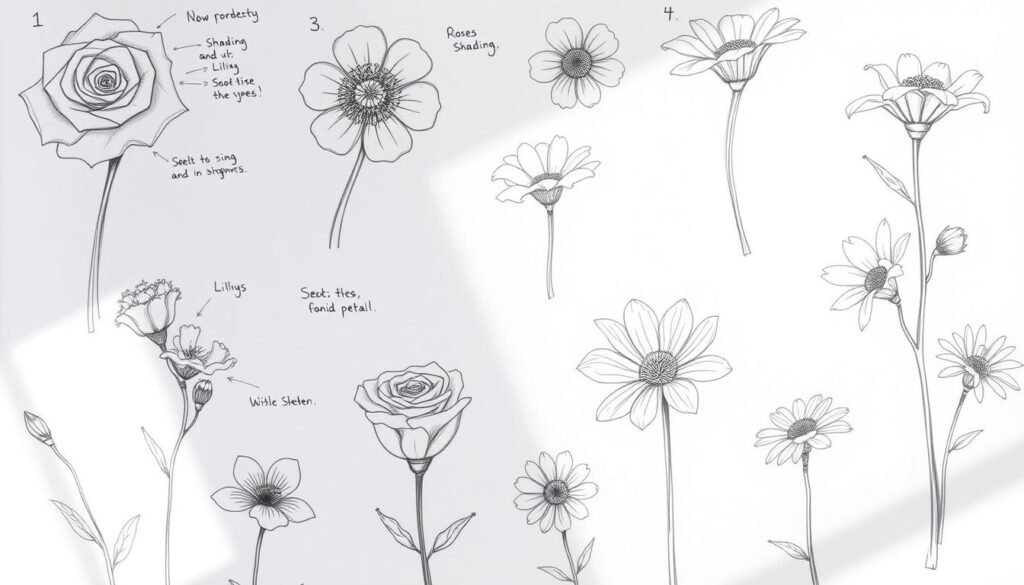
To develop your own flower drawing style, it’s key to try different artistic ways. Drawing flowers is more than just copying what you see. It’s about adding your own twist to the art.
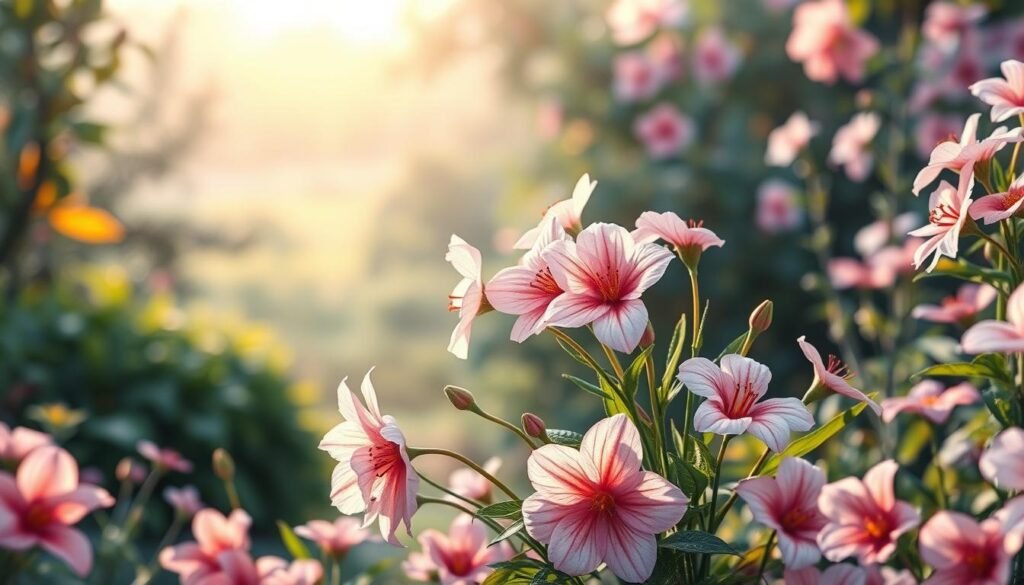
Creating unique flower designs means mixing old and new styles. By blending classic methods with modern touches, you can make art that’s both classic and new.
Merging Styles: Traditional and Modern
Mixing old and new styles can make flower designs really stand out. You can use old-school drawing for realistic petals and then add modern digital colors or backgrounds. This mix is seen in digital painting, where old brushwork meets new software.
Experimenting with Different Mediums
Trying out different mediums is key to finding your flower drawing style. Whether it’s watercolor, acrylic, or digital tools, each one lets you express yourself in unique ways. For example, watercolor can make flowers look soft and dreamy, while digital tools offer precision and flexibility.
Finding Inspiration in Nature
Nature is full of ideas for flower drawing. Looking at flowers in their natural setting can spark new ideas and shape your designs. Visiting gardens, parks, or even your backyard can help you find inspiration and improve your flower drawing skills.
By using these techniques and staying open to new things, you can keep growing as an artist. The main thing is to keep practicing, trying new things, and enjoying the journey of creating.
Showcasing Your Flower Drawings
Once you get good at drawing flowers, it’s time to show off your work. Sharing your flower drawings lets you get feedback, gain exposure, and meet others who love flower art.
Effective Presentation Techniques
To show your flower drawings well, pick a simple yet elegant frame. Try different backgrounds and lighting to make your drawings pop.
Leveraging Social Media
Post your flower drawings on social media, like Instagram. Use hashtags like #howtodrawflowers to get more views. This way, you can connect with other artists and fans.
Engaging with Art Communities
Join local art groups and online forums. They offer chances to get feedback, learn, and grow. You can share your flower drawing tips and learn from others too.