

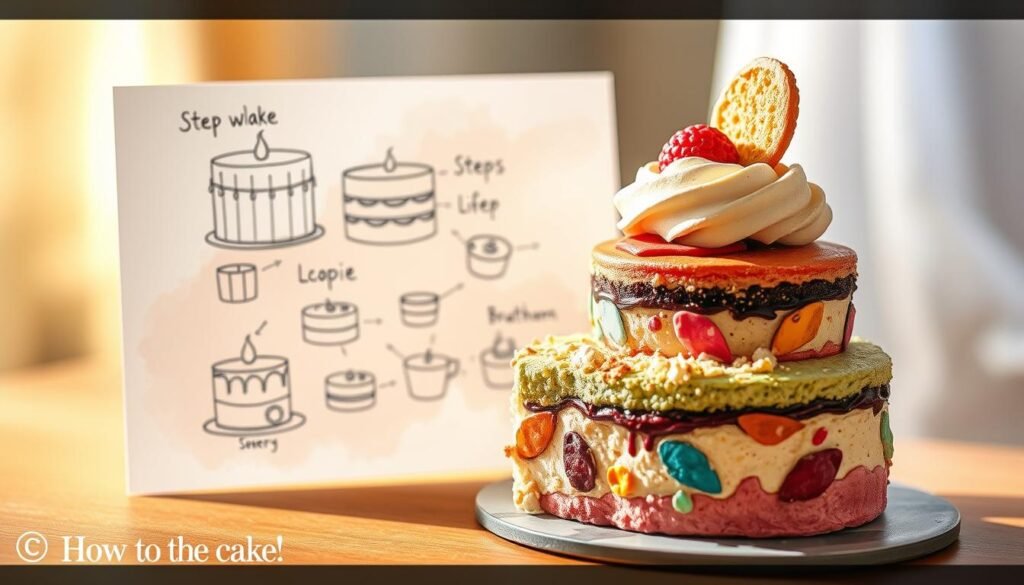
Did you know that food illustration has seen a 400% increase in social media engagement over the past two years? Visual art depicting desserts captures attention in ways that photography sometimes cannot. This growing trend shows people’s fascination with artistic representations of culinary delights.
I’ve developed a comprehensive approach that combines watercolor and colored pencils to create mouthwatering dessert artwork. This method allows for the quick coverage of watercolor underpainting while using pencils to build intricate textures. The result is a realistic, appetizing creation that requires no baking skills whatsoever.
In this guide, I focus on rendering a chocolate biscuit dessert with decorative elements like tangerine slices and berries. The process begins with concept development and material selection, progressing through to final detailed rendering. I break down each stage into manageable steps suitable for artists at various experience levels.
You’ll learn not only technical skills but also color theory principles that make your artwork visually compelling. I share my entire decision-making process for designing food illustrations, including how to choose harmonious color schemes and compositional elements that work together effectively.
Key Takeaways
- Mixed media techniques combine watercolor and colored pencils for realistic results
- The tutorial focuses on a chocolate biscuit dessert with fruit decorations
- Process covers everything from initial concept to final rendering
- Suitable for artists at various skill levels with step-by-step guidance
- Teaches color theory principles for creating visual interest
- Reveals professional decision-making for food illustration design
- Creates appetizing artwork without requiring culinary expertise
My Setup and Materials for Drawing the Cake
Before beginning any food illustration project, I carefully organize my workspace and tools. This systematic approach ensures consistent results and minimizes interruptions during the creative process.how-to-draw-a-bunny-easy
Choosing the Right Art Supplies
I select an A4 sheet of watercolor paper with rough texture. This surface creates natural-looking textures perfect for dessert artwork. For initial sketching, I prefer HB or H graphite pencils. They produce light lines that erase cleanly.
My watercolor palette includes just four colors from White Nights by Nevskaya Palitra. This limited selection keeps the process focused. I use round squirrel brushes in sizes 2 and 5 for smooth washes. A synthetic bristle brush adds expressive splashes.
Colored pencils form the final layer. Faber-Castell Polychromos offer excellent pigment quality. I make one exception: Derwent Chinese White provides dense coverage for highlights.
Preparing My Workspace and Tools
I always keep both kneaded and vinyl erasers within reach. Each serves different purposes during the drawing stages. The kneaded eraser gently lightens graphite marks. The vinyl eraser completely removes unwanted lines.
I maintain a sharp pencil point throughout the project. The soft Chinese White pencil requires frequent sharpening for precise details. Having a sharpener readily accessible ensures consistent mark-making quality.
This organized setup creates an efficient environment for mixed media artwork. Every tool has its designated place in my workflow.
Sketching the Cake: Concept to Outline
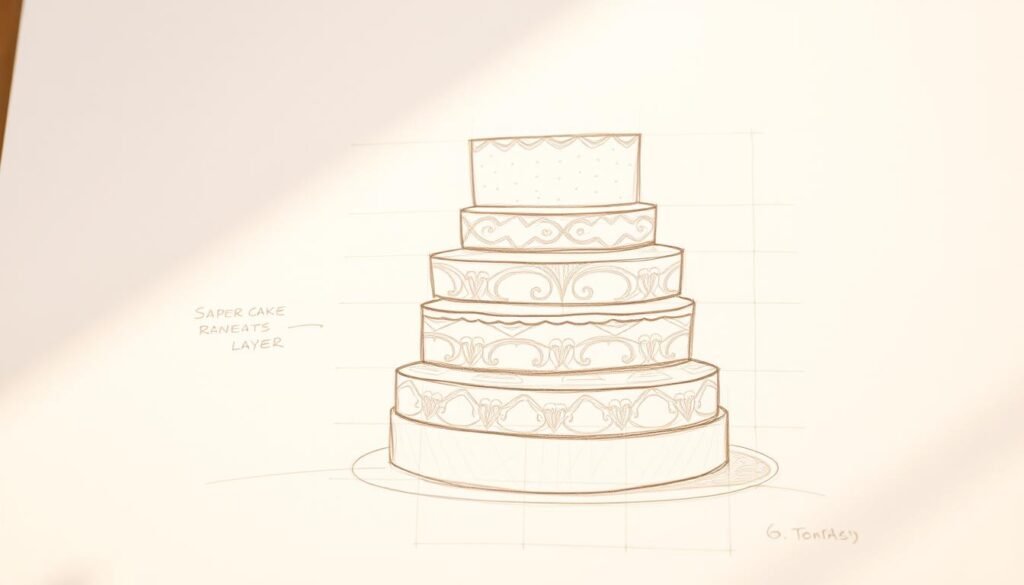
Strategic planning separates amateur sketches from professional food illustrations. I invest significant time developing a complete mental image before placing the first graphite mark.ow-to-draw-a-flower-easy
My dessert resembles an elongated rectangular cuboid with three distinct layers. Brown biscuit sections alternate with light cream fillings, creating visual depth.
Drafting the Cake’s Framework with Graphite
I begin with light graphite marks, establishing a slightly elongated cube form. Vertical lines diverge subtly to suggest perspective from above.
Careful attention to perspective ensures each layer recedes properly in space. The borders align correctly with the overall geometric structure.
Adding Creative Details and Decorative Elements
Decorative elements include blueberries, nuts, and a tangerine slice on the chocolate frosting. These components create visual interest and color contrast.
I apply color theory principles, using orange tones for the dessert itself. Blue berries provide complementary contrast since they sit opposite orange on the color wheel.
Natural-looking edges require softening with an eraser. Straight lines appear artificial, so I introduce gentle twists and turns. Porous texture details suggest the airy quality of baked goods.
This foundational work prepares the artwork for the next stages of mixed media rendering. The sketch serves as a reliable guide for color application.
How to Draw the Cake with Watercolor and Colored Pencils
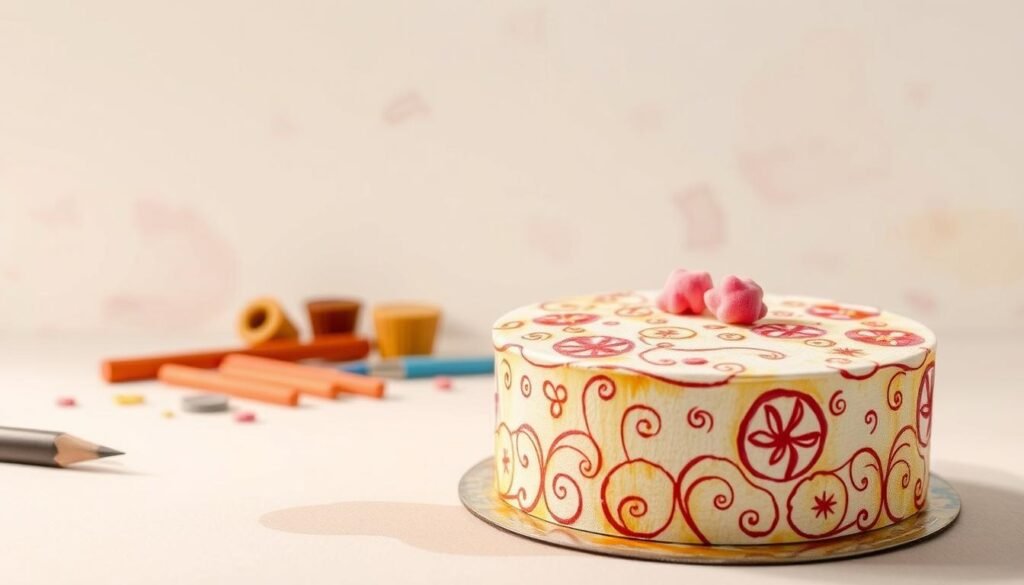
Mixed media artwork achieves its full potential when watercolor and colored pencils work in harmony. This stage transforms the graphite sketch into a vibrant, textured dessert illustration.
I begin by gently lifting excess graphite with a kneaded eraser. This critical step prevents muddy colors later.how-to-draw-a-snowman
Establishing a Dynamic Watercolor Underlayer
I moisten darker areas with clean water before applying Burnt Umber. This color defines the biscuit layers and chocolate shavings.
Heavily diluted Yellow Ochre creates light cream layers. I deliberately blur borders between colors for soft transitions.
For the tangerine slice, I use Golden watercolor. Blue berries receive Indanthrene Blue after surrounding areas dry completely.
Vertical planes become slightly darker than the top to suggest dimension. I add texture dots while the wash remains wet.
A protective stencil lets me create artistic splashes around the dessert. This technique adds spontaneous energy to the composition.
Enhancing Texture with Colored Pencil Techniques
Colored pencils build upon the dry watercolor foundation. I start with Cream applied in small circles to lighter elements.
Burnt Siena covers brown areas while maintaining lighter tops. This approach creates realistic lighting on the layered dessert.how-to-draw-a-panda
I intensify the tangerine with Dark Cadmium Yellow and Orange Glaze. Mauve adds blue-violet hints to berry shadows.
Burnt Umber dots strengthen porous texture throughout the biscuit. Raw Umber desaturates brown areas and cream layers.
Final Chinese White applications unify light areas and add highlight dots. This contrast between rough and smooth surfaces makes the artwork visually compelling.
These layered techniques create dimensional mixed media dessert artwork that appears both textured and appetizing.
Conclusion
This creative process culminates in a visually striking dessert representation that appears almost edible. You’ve successfully combined watercolor’s fluid coverage with colored pencils’ precise detailing in a cohesive mixed media approach.
Throughout this tutorial, I’ve guided you from initial concept development through final rendering. The journey included material selection, graphite sketching, watercolor application, and detailed pencil work. Each stage built upon the previous one systematically.
Creating realistic food illustrations demands attention to color theory, perspective, and texture. These elements work together to make your artwork compelling. The techniques demonstrated provide a solid foundation for various dessert subjects.
I encourage you to experiment with different designs and flavor combinations. Your new skills in texture creation and color contrast are transferable to other food subjects. This mixed media method opens exciting possibilities for still life compositions.how-to-draw-a-cheetah
The fundamental techniques you’ve mastered—porous textures, complementary colors, and layered rendering—serve you well beyond this specific project. Your artistic toolkit now includes professional approaches for making any culinary subject look delicious on paper.