

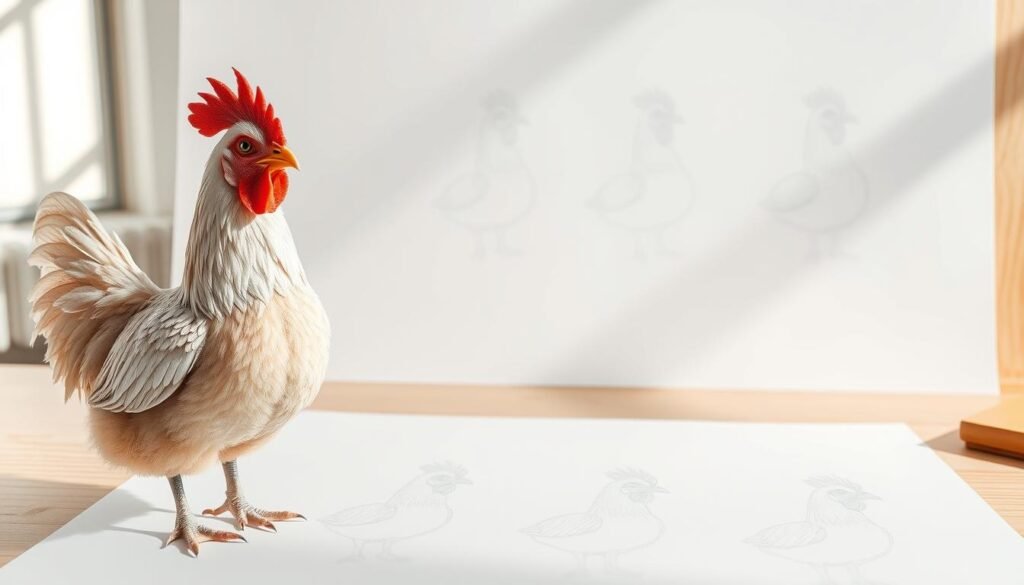
Did you know that chickens are one of the most commonly depicted animals in art history, appearing in ancient Egyptian hieroglyphs and modern masterpieces alike? Capturing their unique form presents a fascinating challenge for artists of all levels.
I welcome you to this comprehensive article designed to help you master the art of depicting poultry with confidence. Whether you are just starting or refining your technique, this guide is for you.
My approach blends traditional fundamentals with practical methods tailored for these distinctive birds. We will build your skills progressively, starting with essential materials and anatomy.
You will learn multiple approaches, from cartoon styles to realistic representations. I also integrate historical artistic techniques with modern tips for a well-rounded foundation.
For those seeking even more variety, you can explore numerous step-by-step poultry drawing tutorials that complement this guide. By the end, you will possess the knowledge to succeed, whether for hobby, documentation, or artistic expression.
Key Takeaways
- Poultry is a historically significant and rewarding subject for artists.
- This guide is structured to build skills from the ground up.
- Learn techniques for both cartoon and realistic styles.
- Gain a foundation in poultry anatomy and traditional drawing methods.
- The approach combines classic fundamentals with modern tips.
- Supplementary tutorials are available to expand your learning.
Getting Started with Poultry Drawing
Mastering the depiction of chickens starts with understanding both tools and anatomy. This foundation ensures your artwork captures the unique characteristics of these birds effectively.
Materials and Preparation
I begin every project by gathering essential supplies. Quality pencils, a reliable eraser, and durable paper form the core toolkit for poultry art.how-to-draw-naruto
Colored pencils remain optional for initial sketches. These basic materials support multiple revisions as skills develop.
Understanding Poultry Anatomy
Recognizing key body parts defines successful chicken representation. I focus on the head, beak, comb, and neck connection to the main body.
Simple geometric guides establish proper proportions. Circles for the head and body create a solid foundation before adding details.
Studying reference photos reveals how feathers lay naturally. Observing leg positioning and weight distribution completes the anatomical understanding.
Different breeds showcase unique proportions. Familiarity with specific characteristics enhances accuracy in your artistic guides.
Mastering How to Draw Poultry
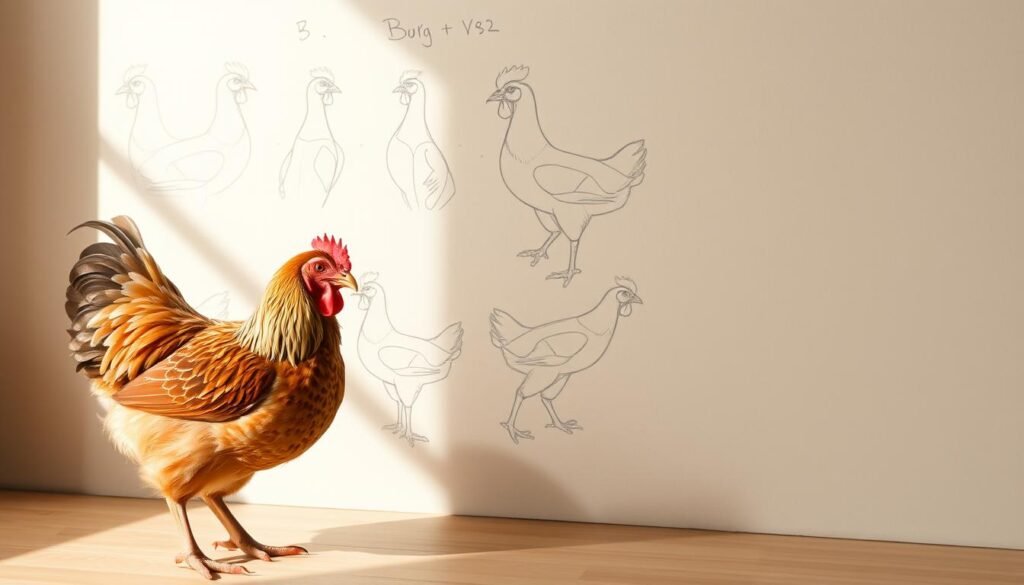
A successful poultry illustration hinges on the careful assembly of its core components: the head, body, and feathers. I break this process into clear, logical stages.how-to-draw-a-bear
This approach ensures a solid foundation before adding intricate details. Each step builds upon the last for a cohesive final chicken.
Step-by-Step Methods Explained
I guide you through multiple techniques. The cartoon way is one excellent step for beginners.
Start with a circle for the skull. Add an oval for the eye area and joined triangles for the beak guide. This simple drawing method builds confidence quickly.
Drawing Facial Features and Expressions
The head gives a chicken its personality. I focus on proper eye placement on the skull.
Positioning the eye correctly conveys an alert, lively expression. The comb and beak shape further define the character.
Constructing the Body and Feathers
For the body, I use overlapping ovals to establish volume. This creates a believable form for your chicken.
Feathers require understanding their directional flow. I show how wing and tail feathers layer in natural patterns.how-to-draw-hair
Integrating Historical Techniques and Modern Art Tips
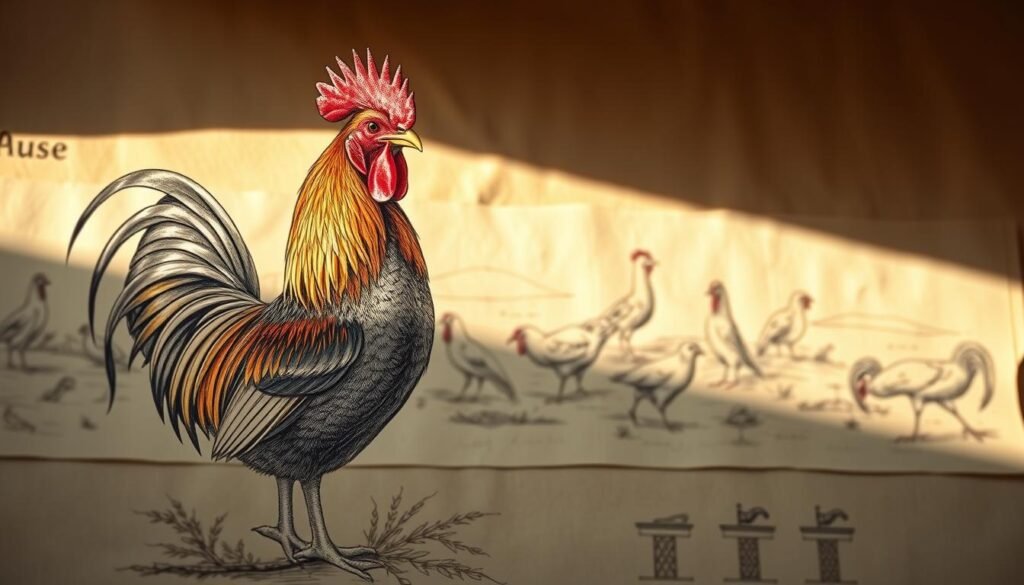
Century-old artistic approaches to bird illustration provide foundational knowledge for today’s poultry artists. These time-tested methods blend seamlessly with contemporary practices for exceptional results.
A Look into Century-Old Methods
Historical instruction emphasized direct observation of live subjects. Artists studied each kind of bird to understand distinctive features.
Traditional techniques reveal how masters captured different life stages. Young birds required softer textures compared to mature specimens.how-to-draw-a-car
Practical Color and Shading Guidelines
I recommend brown, black, and white as primary colors for realistic chicken representations. These foundation tones capture natural plumage variations effectively.
Study the orange-yellow shades typical of feet and legs. Some breeds feature grey legs requiring different color approaches.
Layer colors gradually to achieve subtle feather variations. Identify light sources for proper shadow placement under wings and body areas.
The modern art community shares valuable reference photographs. These resources help artists accurately capture patterns and breed characteristics.
Conclusion
As we conclude this exploration of avian illustration, the techniques you’ve acquired will serve as a solid foundation for all your future poultry artwork. This article has provided comprehensive guides covering everything from basic shapes to advanced rendering.
The methods shared give you multiple entry points depending on your skill level and the kind of artistic style you wish to develop. Mastering chickens and other birds requires consistent practice to improve your understanding of body proportions and head structure.
I encourage engagement with the art community for valuable feedback. Techniques for rendering the eye and proper body positioning will serve you well with all types of poultry. To date, these fundamental principles remain the best way to approach your artwork.
One valuable resource for continued learning includes detailed digital art techniques that complement traditional methods. Keep practicing different chickens and poultry to develop your unique artistic voice.