

Across art classrooms worldwide, monkeys consistently rank among the top five most popular animal subjects for beginner artists. Their expressive faces and dynamic poses make them irresistible to capture on paper.
Throughout my career teaching artistic techniques, I’ve witnessed countless students discover their creative potential through primate illustrations. These playful creatures offer exceptional opportunities for developing fundamental skills.
This comprehensive guide presents multiple approaches to creating compelling monkey artwork. We’ll explore everything from simple cartoon styles to more detailed realistic representations.
My methodology breaks complex processes into manageable steps that build confidence progressively. Starting with basic shapes, we’ll gradually incorporate details that bring your creation to life.
The techniques you’ll master here extend beyond primate portraiture. They provide a solid foundation for illustrating various animals with accuracy and personality.
Key Takeaways
- Monkeys are ideal subjects for developing fundamental drawing skills
- Multiple artistic approaches will be covered, from cartoon to realistic styles
- The process builds progressively from basic shapes to detailed features
- Techniques learned apply to drawing many other animals
- Focus on making the artistic process accessible and enjoyable
- Each attempt improves your skills and builds confidence
- Structured guidance ensures manageable learning progression
Introduction to Monkey Drawing
The expressive nature of monkeys makes them particularly engaging subjects for artistic exploration. Their versatile features allow for creative interpretation while maintaining recognizable characteristics.aeroplane-how-to-draw
Overview of the Drawing Process
My approach begins with basic geometric shapes that form the foundation. Each step builds logically upon the previous one, creating a manageable progression.
This structured method ensures the entire process feels accessible rather than overwhelming. Students quickly gain confidence as familiar shapes transform into recognizable primate features.
Why Drawing Monkeys is Fun and Accessible
I appreciate how monkeys offer tremendous versatility in artistic expression. You can create charming cartoon characters or pursue detailed realistic depictions based on your interest level.
The facial features provide exceptional opportunities for conveying emotion. Subtle changes in eyes, eyebrows, and mouth create distinct expressions and personalities.
The time investment remains reasonable for beginners. A simple version can be completed quickly, while more detailed approaches offer engaging challenges. This monkey drawing tutorial demonstrates how these techniques develop observation skills applicable to various artistic endeavors.how-to-draw-lips
Materials and Basic Sketching Techniques
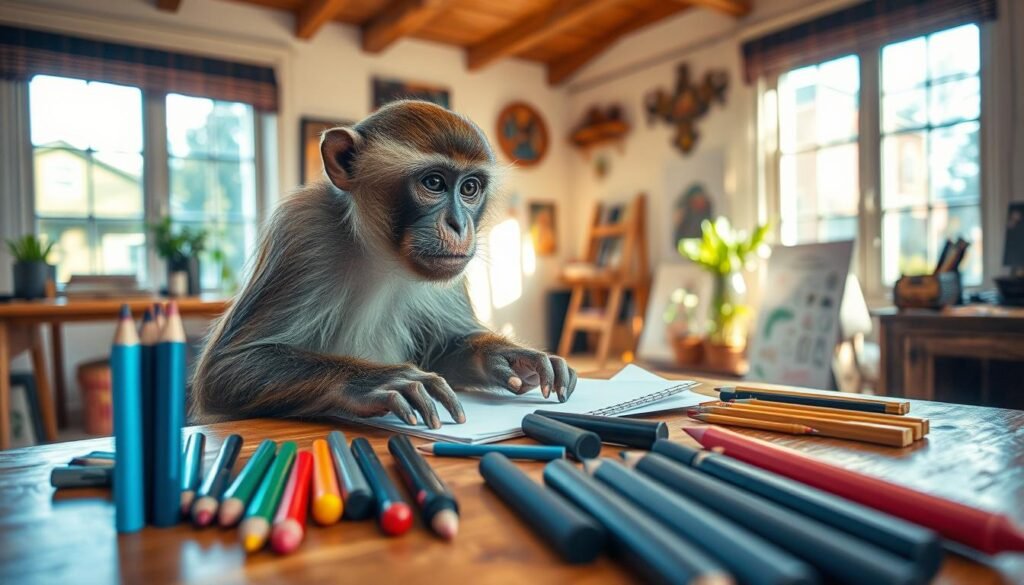
Every great artistic creation begins with a solid foundation of quality materials and a comfortable workspace. I recommend starting with basic, affordable tools that won’t intimidate beginners. A standard pencil, good eraser, and plain paper form the essential toolkit.
Using a pencil for initial sketches proves essential for flexibility. Light, sketchy strokes allow easy corrections before committing to permanent lines. This approach lets you map out the basic shape without pressing hard.
Essential Tools for Beginners
I suggest having coloring supplies like crayons or markers available for later stages. For wet media like markers, thicker paper prevents bleeding. A black pen becomes valuable for tracing final pencil lines, creating clean outlines.
The eraser quality matters more than many realize. I prefer soft, kneaded erasers that remove marks cleanly without damaging paper. This attention to details in tool selection makes the process smoother.how-to-draw-a-nose
Setting Up Your Workspace and Paper
Organize materials before starting to maintain creative focus. Good lighting reduces eye strain and reveals subtle details. A comfortable setup makes following a step-by-step monkey tutorial more enjoyable.
Keep your pencil strokes light during early stages. This technique allows clean erasure of guidelines once the basic form is established. The right pencil pressure creates a foundation for successful artwork.
Step-by-Step Guide: How Can I Draw a Monkey
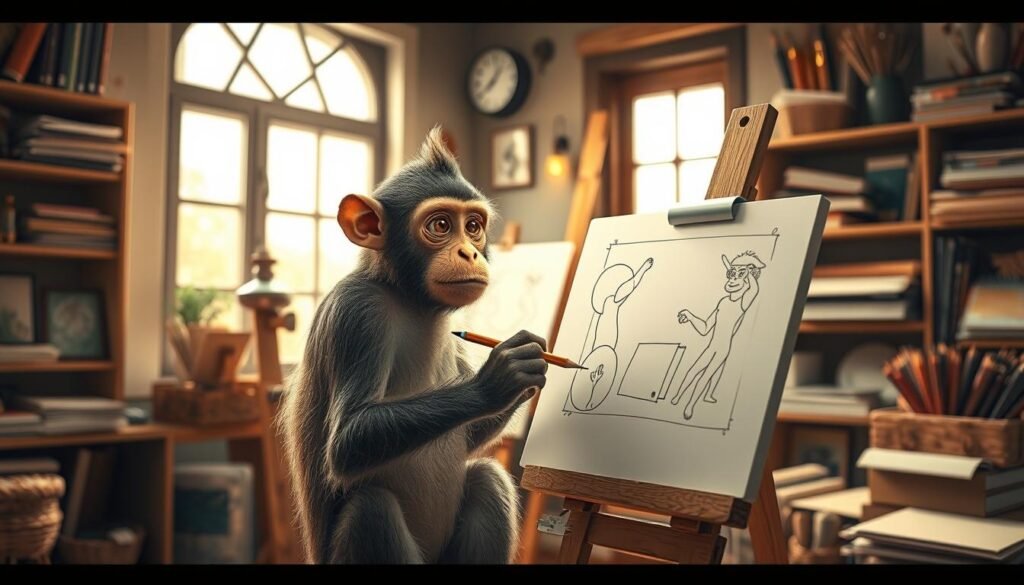
The moment has arrived to transform blank paper into a lively monkey illustration. This systematic approach builds confidence through manageable progression.
Starting with the Head and Facial Guidelines
Begin with a large circle for the main head structure. Add a vertical center line and horizontal guide for symmetrical feature placement.
Position two oval ears on each side of the head. Include inner curves for dimensional detail.
Sketching the Body, Limbs, and Tail
Create a U-shaped body beneath the head, slightly smaller for cartoon appeal. Add an oval belly inside the main shape.
Extend two long arms from the upper body and shorter legs below. Finish with a curved tail extending from the lower section.
Detailing Facial Features and Expressions
Place two circular eyes along the horizontal guideline. Add a heart-shaped nose and simple mouth line.
Subtle changes in eyebrow angle and mouth curve create distinct personalities. Light pencil strokes allow easy adjustments throughout the process.how-to-draw-goku
Tips for Adding Depth and Personality to Your Drawing
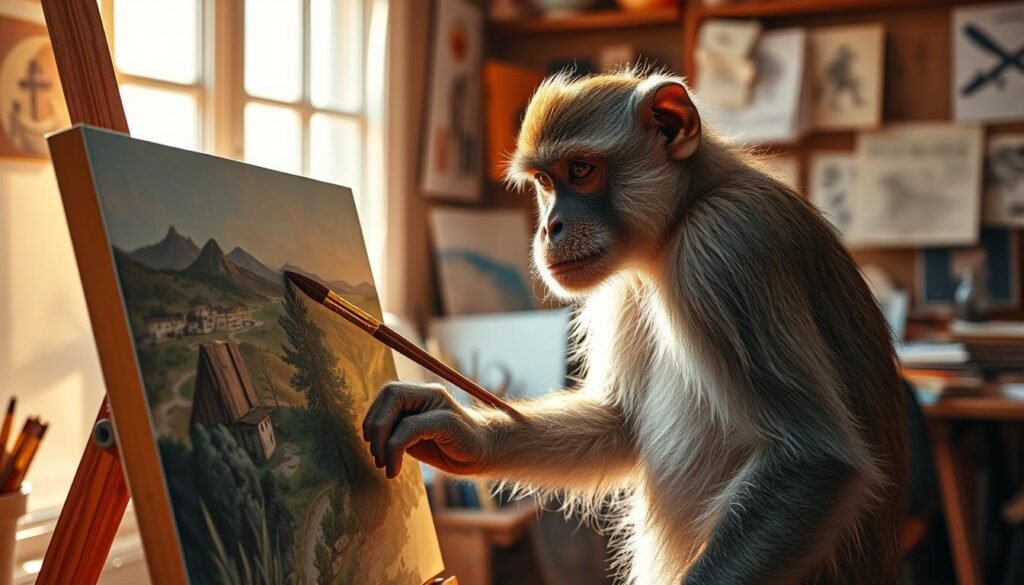
The final stage of your artwork focuses on infusing personality and dimension. These advanced techniques separate a basic sketch from a compelling piece of art.
Careful attention to these details brings your creation to life. It allows you to convey specific moods and a sense of realism.
Incorporating Realistic Lines and Proportions
Accurate proportions form the foundation of a believable illustration. Observe that primate arms are typically longer than their legs.
Hands and feet feature elongated palms and fingers. Studying reference images helps capture these distinguishing features correctly.
This guide emphasizes observing real monkeys to understand their unique structure. Taking time for this study improves accuracy significantly.
Coloring Techniques and Shading for Texture
Selecting the right color is crucial for your color monkey artwork. Realistic species often use browns, tans, grays, or blacks.
Cartoon styles welcome vibrant, creative choices. Layering your medium builds intensity gradually for a professional finish.
Shading creates essential depth. Apply darker values near edges and under the chin. Keep the center of the face lighter.
Use a blunt pencil or tortillon to blend shades smoothly. This technique suggests the texture of fur and adds dimension.
Small strokes following hair growth patterns suggest fur texture. Short strokes work for the face, longer ones for the body.
Experimenting with expressions is powerful. Vary eyebrow angles and mouth shapes to show different moods.
| Technique | Tool | Best For | Pro Tip |
|---|---|---|---|
| Base Coloring | Markers, Crayons | Establishing primary fur color | Use light pressure for initial layers. |
| Shading | Blunt Pencil, Tortillon | Adding depth and shadow | Smudge gently for smooth transitions. |
| Texture Details | Fine Liners, Pencil | Creating fur illusion | Follow the natural direction of hair growth. |
These final details determine if your artwork leans realistic or stylized. Practice helps you develop a unique style over time.
Stepping back periodically to assess your work prevents overworking effective areas. This mindful approach ensures a balanced and expressive final color monkey portrait.
Across art classrooms worldwide, monkeys consistently rank among the top five most popular animal subjects for beginner artists. Their expressive faces and dynamic poses make them irresistible to capture on paper.
Throughout my career teaching artistic techniques, I’ve witnessed countless students discover their creative potential through primate illustrations. These playful creatures offer exceptional opportunities for developing fundamental skills.
This comprehensive guide presents multiple approaches to creating compelling monkey artwork. We’ll explore everything from simple cartoon styles to more detailed realistic representations.
My methodology breaks complex processes into manageable steps that build confidence progressively. Starting with basic shapes, we’ll gradually incorporate details that bring your creation to life.
The techniques you’ll master here extend beyond primate portraiture. They provide a solid foundation for illustrating various animals with accuracy and personality.
Key Takeaways
- Monkeys are ideal subjects for developing fundamental drawing skills
- Multiple artistic approaches will be covered, from cartoon to realistic styles
- The process builds progressively from basic shapes to detailed features
- Techniques learned apply to drawing many other animals
- Focus on making the artistic process accessible and enjoyable
- Each attempt improves your skills and builds confidence
- Structured guidance ensures manageable learning progression
Introduction to Monkey Drawing
The expressive nature of monkeys makes them particularly engaging subjects for artistic exploration. Their versatile features allow for creative interpretation while maintaining recognizable characteristics.aeroplane-how-to-draw
Overview of the Drawing Process
My approach begins with basic geometric shapes that form the foundation. Each step builds logically upon the previous one, creating a manageable progression.
This structured method ensures the entire process feels accessible rather than overwhelming. Students quickly gain confidence as familiar shapes transform into recognizable primate features.
Why Drawing Monkeys is Fun and Accessible
I appreciate how monkeys offer tremendous versatility in artistic expression. You can create charming cartoon characters or pursue detailed realistic depictions based on your interest level.
The facial features provide exceptional opportunities for conveying emotion. Subtle changes in eyes, eyebrows, and mouth create distinct expressions and personalities.
The time investment remains reasonable for beginners. A simple version can be completed quickly, while more detailed approaches offer engaging challenges. This monkey drawing tutorial demonstrates how these techniques develop observation skills applicable to various artistic endeavors.how-to-draw-lips
Materials and Basic Sketching Techniques
Every great artistic creation begins with a solid foundation of quality materials and a comfortable workspace. I recommend starting with basic, affordable tools that won’t intimidate beginners. A standard pencil, good eraser, and plain paper form the essential toolkit.
Using a pencil for initial sketches proves essential for flexibility. Light, sketchy strokes allow easy corrections before committing to permanent lines. This approach lets you map out the basic shape without pressing hard.
Essential Tools for Beginners
I suggest having coloring supplies like crayons or markers available for later stages. For wet media like markers, thicker paper prevents bleeding. A black pen becomes valuable for tracing final pencil lines, creating clean outlines.
The eraser quality matters more than many realize. I prefer soft, kneaded erasers that remove marks cleanly without damaging paper. This attention to details in tool selection makes the process smoother.how-to-draw-a-nose
Setting Up Your Workspace and Paper
Organize materials before starting to maintain creative focus. Good lighting reduces eye strain and reveals subtle details. A comfortable setup makes following a step-by-step monkey tutorial more enjoyable.
Keep your pencil strokes light during early stages. This technique allows clean erasure of guidelines once the basic form is established. The right pencil pressure creates a foundation for successful artwork.
Step-by-Step Guide: How Can I Draw a Monkey
The moment has arrived to transform blank paper into a lively monkey illustration. This systematic approach builds confidence through manageable progression.
Starting with the Head and Facial Guidelines
Begin with a large circle for the main head structure. Add a vertical center line and horizontal guide for symmetrical feature placement.
Position two oval ears on each side of the head. Include inner curves for dimensional detail.
Sketching the Body, Limbs, and Tail
Create a U-shaped body beneath the head, slightly smaller for cartoon appeal. Add an oval belly inside the main shape.
Extend two long arms from the upper body and shorter legs below. Finish with a curved tail extending from the lower section.
Detailing Facial Features and Expressions
Place two circular eyes along the horizontal guideline. Add a heart-shaped nose and simple mouth line.
Subtle changes in eyebrow angle and mouth curve create distinct personalities. Light pencil strokes allow easy adjustments throughout the process.how-to-draw-goku
Tips for Adding Depth and Personality to Your Drawing
The final stage of your artwork focuses on infusing personality and dimension. These advanced techniques separate a basic sketch from a compelling piece of art.
Careful attention to these details brings your creation to life. It allows you to convey specific moods and a sense of realism.
Incorporating Realistic Lines and Proportions
Accurate proportions form the foundation of a believable illustration. Observe that primate arms are typically longer than their legs.
Hands and feet feature elongated palms and fingers. Studying reference images helps capture these distinguishing features correctly.
This guide emphasizes observing real monkeys to understand their unique structure. Taking time for this study improves accuracy significantly.
Coloring Techniques and Shading for Texture
Selecting the right color is crucial for your color monkey artwork. Realistic species often use browns, tans, grays, or blacks.
Cartoon styles welcome vibrant, creative choices. Layering your medium builds intensity gradually for a professional finish.
Shading creates essential depth. Apply darker values near edges and under the chin. Keep the center of the face lighter.
Use a blunt pencil or tortillon to blend shades smoothly. This technique suggests the texture of fur and adds dimension.
Small strokes following hair growth patterns suggest fur texture. Short strokes work for the face, longer ones for the body.
Experimenting with expressions is powerful. Vary eyebrow angles and mouth shapes to show different moods.
| Technique | Tool | Best For | Pro Tip |
|---|---|---|---|
| Base Coloring | Markers, Crayons | Establishing primary fur color | Use light pressure for initial layers. |
| Shading | Blunt Pencil, Tortillon | Adding depth and shadow | Smudge gently for smooth transitions. |
| Texture Details | Fine Liners, Pencil | Creating fur illusion | Follow the natural direction of hair growth. |
These final details determine if your artwork leans realistic or stylized. Practice helps you develop a unique style over time.
Stepping back periodically to assess your work prevents overworking effective areas. This mindful approach ensures a balanced and expressive final color monkey portrait.
Conclusion
Mastering the art of capturing these charismatic creatures on paper represents a significant achievement in your creative development. This comprehensive tutorial has equipped you with versatile skills for creating engaging primate artwork.
Regular practice remains essential for artistic growth. Each session with your sketchbook builds confidence and refines your technique.
The fundamental principles learned here extend beyond primate subjects. You can apply these drawing techniques to various animals and characters.
I encourage you to continue exploring different styles and expressions in your monkey artwork. Your unique artistic voice will emerge through consistent creative exploration.
Remember that artistic progression happens through dedicated effort. Every sketch brings you closer to mastering animal illustration.
FAQ
What is the best way to start sketching a monkey?
How do I capture different expressions on the monkey’s face?
What are the key steps for drawing a realistic tail?
Which coloring techniques work best for monkey fur?
Can you recommend tools for a beginner’s first attempt?
Conclusion
Mastering the art of capturing these charismatic creatures on paper represents a significant achievement in your creative development. This comprehensive tutorial has equipped you with versatile skills for creating engaging primate artwork.
Regular practice remains essential for artistic growth. Each session with your sketchbook builds confidence and refines your technique.
The fundamental principles learned here extend beyond primate subjects. You can apply these drawing techniques to various animals and characters.
I encourage you to continue exploring different styles and expressions in your monkey artwork. Your unique artistic voice will emerge through consistent creative exploration.
Remember that artistic progression happens through dedicated effort. Every sketch brings you closer to mastering animal illustration.