


Did you know that over 65% of professional artists credit instructional guides as a foundational part of their training? This fact reveals a powerful truth: artistic skill is not a mysterious gift but a craft built with the right tools.
My own journey into the art world began not in a classroom, but with a stack of well-chosen guides. They offered a flexible, pressure-free environment to explore techniques and develop my abilities at my own pace.
This comprehensive resource is designed to demystify the process of selecting and using these powerful learning aids. I will share essential techniques, material recommendations, and practical exercises. Whether you are an illustrator seeking to expand your technical knowledge or a book lover wanting to appreciate visual storytelling, this guide is for you.
You will discover that with consistent practice and the right resources, like the excellent recommended drawing books for adults, you can confidently translate what you see onto paper.
Key Takeaways
- Artistic skill is a learnable craft, not just an innate talent.
- Instructional guides provide a flexible, self-paced learning environment.
- The right book can build a strong foundation for any skill level.
- This guide covers essential techniques, materials, and exercises.
- Consistent practice is the key to developing your abilities.
Overview of Drawing Books and Their Value
The tactile nature of instructional manuals offers a learning experience that screen-based resources cannot replicate. My own artistic journey began with physical guides long before digital options existed. These resources provided my foundation in visual creation.
Structured guides deliver focused instruction without digital distractions. You can fully immerse yourself in the creative process. The physical format encourages deep concentration on skill development.how-to-draw-an-elephant
Quality instructional materials become trusted companions throughout your artistic growth. They offer comprehensive information organized for effective learning. The best resources combine technical guidance with creative inspiration.
These timeless tools allow personal exploration at your own pace. They support artistic development without external pressure. Many excellent guides have proven their value across generations of creators.
Why I Love Drawing as a Form of Self-Expression

The meditative quality of artistic practice brings clarity to thoughts that words struggle to capture. This form of creation serves as my primary method for processing complex emotions. Visual expression provides an outlet where verbal description falls short.how-to-draw-a-gun
I discovered that engaging in this activity creates a therapeutic space for self-reflection. The rhythmic motion of mark-making induces a state of flow where time becomes irrelevant. Daily stresses fade away during these focused creative sessions.
Regular practice has sharpened my observational skills in remarkable ways. I notice details in ordinary scenes that most people overlook. This heightened awareness makes me more present in daily interactions.
| Expression Method | Emotional Depth | Accessibility | Therapeutic Value |
|---|---|---|---|
| Visual Art | High | Universal | Significant |
| Verbal Communication | Medium | Language-dependent | Moderate |
| Written Word | High | Literacy required | High |
| Musical Expression | High | Skill-dependent | Significant |
I believe this creative path offers joy and fulfillment to anyone willing to explore it. The process remains accessible regardless of perceived talent levels. Personal growth emerges naturally through consistent engagement with visual creation.
How to Draw Books: Essential Techniques for Beginners

The initial phase of artistic development requires specific approaches that build confidence through gradual progress. I’ve found that structured resources provide the perfect framework for this journey.
Foundational Exercises and Step-by-Step Practices
Starting with basic shapes rather than complex objects creates a manageable entry point. These initial lessons focus on perception shifts that professional artists use daily.how-to-draw-mickey-mouse
Many instructional guides include timed gesture sketches. These quick exercises train your eye to capture essential forms efficiently. The step-by-step format ensures steady improvement.
Developing a Keen Artist’s Eye
Seeing the world through an artist’s lens means observing relationships between elements. This skill develops through consistent practice with quality resources.
Contour drawing and negative space exercises prove particularly effective. They teach you to recognize proportions and spatial arrangements accurately.
| Exercise Type | Primary Focus | Skill Level | Practice Time | Key Benefit |
|---|---|---|---|---|
| Shape Recognition | Basic Perception | Absolute Beginner | 10-15 minutes | Visual Simplification |
| Gesture Sketches | Quick Observation | Novice | 2-5 minutes | Essence Capture |
| Contour Drawing | Line Accuracy | Beginner | 15-30 minutes | Precision Training |
| Negative Space | Spatial Awareness | Beginner+ | 20-40 minutes | Relationship Understanding |
These foundational methods form the bedrock of all advanced skills. Regular engagement with these practices transforms your creative vision permanently.
Essential Tools and Materials for Your Drawing Journey
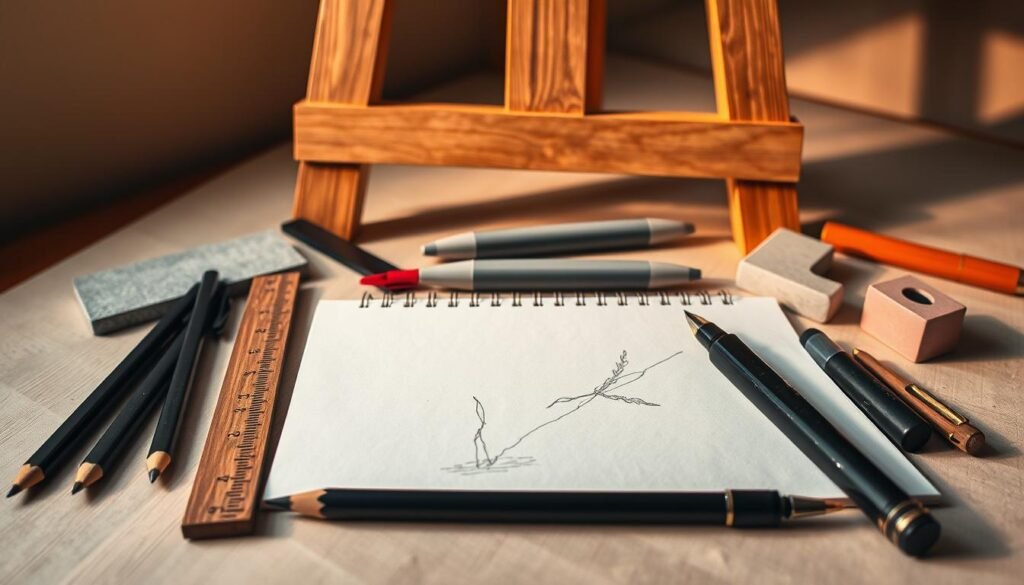
The relationship between an artist and their materials is deeply personal and evolves over time. My own collection has grown from a simple pencil set to include various mediums that inspire different creative approaches. Quality instructional books often provide excellent guidance on building your toolkit.how-to-how-to-draw-a-unicorn
Pencils, Paper, and Beyond
Starting with graphite pencils offers the most accessible entry point. I recommend a range from hard (H) to soft (B) grades for versatile mark-making. The right paper significantly influences your results.
Smooth surfaces work beautifully for detailed work, while textured paper enhances charcoal or conte crayon sketches. Beyond basics, materials like ink create crisp lines, and watercolor or oil painting supplies open new expressive possibilities.
Digital Apps Versus Traditional Methods
Digital tools like Procreate offer remarkable advantages for beginners. The undo function reduces fear of mistakes, saving time and materials. Layers allow flexible experimentation with composition.
Traditional methods provide irreplaceable tactile experiences that many artists cherish. Each approach has merits, and trying both helps you discover what resonates. Many contemporary creators blend digital and traditional techniques in their practice.how-to-draw-a-spider
Your choice of tools should support your creative vision rather than limit it. Experimentation reveals which materials feel most natural for your personal drawing style. Quality resources and instructional books can guide this exploration quite a bit.
Step-by-Step Exercises to Build Drawing Skills
Systematic practice transforms artistic potential into tangible skill through deliberate exercises. I’ve found that structured approaches yield the most consistent improvement for developing creators.
Quality resources like Kimon Nicolaides’ The Natural Way to Draw demonstrate this progression beautifully. The method presents lessons through timed scheduled activities.how-to-draw-a-chook
Gesture Sketches and Contour Drawing
Gesture sketches capture a subject’s essence in 30 seconds to 2 minutes. These quick drawings focus on movement rather than details.
Contour exercises involve tracing outlines while your hand follows your eyes. This technique develops crucial eye-hand coordination over time.
Both methods work best with timed sessions that prevent overthinking. They help you capture energy and flow effectively.
Practical Practice Routines
Establishing consistent routines creates lasting skill development. I recommend warm-up exercises followed by focused skill-building.how-to-draw-a-leaf
Step instructions in quality resources break complex subjects into manageable steps. This approach makes intimidating subjects approachable for beginners.
| Exercise Type | Time Investment | Primary Benefit | Skill Level |
|---|---|---|---|
| Gesture Sketches | 30 sec – 2 min | Movement Capture | All Levels |
| Contour Drawing | 15-30 min | Precision Training | Beginner+ |
| Step-by-Step Studies | 20-60 min | Complex Subject Mastery | Intermediate |
| Free Exploration | Variable | Creative Expression | All Levels |
Dedicate specific pages in your sketchbook to these exercises. Date them to track progress over weeks and months.
Regular practice of these methods dramatically improves your ability to see and capture forms. Focus on the process rather than perfect finished drawings.
Drawing Books for Adult Learners

Adult artists seek resources that resonate with their current interests and daily observations. Mature practitioners approach visual creation with perspectives shaped by life experience rather than childhood curiosity.how-to-draw-poultry
These instructional materials focus on subjects relevant to adult lives. They explore the beauty in ordinary objects like morning coffee or potted plants.
Advanced Techniques and Creative Inspiration
Quality resources for grown-ups incorporate sophisticated approaches to composition and value. They move beyond basic representation toward personal expression.
Over the years, I’ve observed that adult learners appreciate philosophical elements about creativity. These books often blend technical instruction with intellectual engagement.
| Feature | Adult-Focused Books | Children’s Instructional Guides | Key Difference |
|---|---|---|---|
| Subject Matter | Everyday objects, personal experiences | Fantasy characters, animals | Relevance to daily life |
| Learning Approach | Observational, reflective | Step-by-step imitation | Depth of engagement |
| Technical Level | Advanced composition, value studies | Basic shapes, simple forms | Sophistication of instruction |
| Integration Method | Personal style development | Copying established styles | Creative autonomy |
Integrating Personal Style into Practice
The idea of documenting your day through sketches appeals strongly to mature learners. This approach creates meaningful visual records of experiences.
Many people discover that drawing ordinary items reveals their hidden beauty. Everyday scenes become special through careful observation and rendering.
Leveraging Art Books for Timeless Lessons

My personal library stands as a testament to decades of collecting invaluable art books. Many treasured volumes are now out of print, their wisdom preserved only in these physical copies. The worn spines and marked-up pages are not flaws but badges of honor.how-to-draw-boobs
These classic resources contain lessons that transcend fleeting trends. They teach fundamental principles of observation and form that never become outdated. A well-chosen series offers a coherent educational path unmatched by scattered online tutorials.
The most profound learning comes from masters like Da Vinci and Michelangelo. Their anatomical studies, often featured in these books, provide unparalleled insight into human form. This knowledge separates competent draftspeople from true artists.
True mastery lies not in copying formulas, but in understanding the underlying structure.
I recommend investing in quality art instruction manuals. They become lifelong companions you revisit at different stages of development. The physical engagement with a book—turning pages, studying illustrations—creates a deeper connection to the material.
Top Recommended Drawing References from My Collection

After decades of collecting art instruction resources, certain volumes stand out as perennial favorites. This curated list represents the most valuable book selections from my personal library.
Each recommendation has proven its worth through years of practical application. They offer distinct approaches to visual learning.how-to-draw-in-hair
Classics Like Drawing on the Right Side of the Brain
Betty Edwards’ seminal work fundamentally changes perceptual skills. Its exercises rewire how you process visual information.
Kimon Nicolaides’ method provides a complete course in figure studies. The timed exercises build observational accuracy progressively.
The most profound learning comes from understanding underlying structure rather than copying surface details.
An Atlas of Anatomy for Artists and More
Fritz Schider’s anatomy reference remains indispensable for figure work. It combines master studies with detailed musculature drawings.
Rex Vicat Cole’s perspective guide offers mathematical foundations for spatial representation. Clare Walker Leslie teaches nature observation techniques.
| Reference Type | Primary Focus | Skill Level | Key Benefit |
|---|---|---|---|
| Foundational Guides | Perceptual Shift | All Levels | Brain Retraining |
| Anatomy References | Structural Understanding | Intermediate+ | Form Accuracy |
| Specialized Subjects | Technical Mastery | Advanced | Niche Expertise |
| Workbook Formats | Practical Application | Beginner+ | Active Learning |
This selection provides comprehensive coverage for serious artists. Each book contributes unique lessons to your development.
Exploring Diverse Drawing Styles and Genres
Diversity in artistic expression provides endless opportunities for growth and discovery across different visual approaches. I’ve explored everything from realistic rendering to cartooning and technical illustration. Each style presents unique challenges that expand your creative capabilities.
Genre-specific resources focus on particular subjects like wildlife, architecture, or mechanical objects. These specialized guides teach you about specific techniques for different things. Wildlife illustration requires understanding animal anatomy and movement patterns.
Character creation involves more than just anatomy—it captures personality through expression and costume design. Drawing various animals presents challenges in capturing fur texture and species-specific features. Farm animals and pets each require a different approach.
Understanding basic shapes remains fundamental across all genres. Breaking complex things into simple geometric forms is key to construction. This approach works whether you’re sketching characters or mechanical things.
Experimenting with different styles helps you discover where your natural strengths lie. It keeps practice engaging and prevents creative stagnation. I find this exploration adds a fresh bit of excitement to daily artistic practice.
Integrating Digital Drawing Tools with Traditional Methods
Modern technology has introduced powerful tools that complement, rather than replace, the classic feel of pencil on paper. I find this hybrid approach unlocks a unique creative flexibility. It combines the tactile satisfaction of traditional methods with the dynamic capabilities of digital applications.
Procreate and Other Digital Resources
Apps like Procreate provide an engaging platform for artistic exploration. Features like unlimited undo and layers make experimentation risk-free. You can lose track of time while exploring a vast library of brushes.
Digital resources also integrate well with instructional materials. You can screenshot a page from a digital book and import it directly into your canvas for reference. This creates an efficient workflow for practicing techniques.
Blending Digital and Analog Techniques
One effective method involves starting with a sketch on physical paper. After completing the initial drawing, you photograph it and import the image into Procreate. This allows you to add color and refine details digitally.
This process gives you the best of both worlds. Traditional sketching builds fundamental observational skills. Digital finishing offers powerful editing tools for a polished result.
Becoming proficient in both realms is an essential part of contemporary artistic development. Each method serves a distinct purpose in a versatile creative practice.
How Drawing Enriches Creativity and Daily Life
Creative expression through visual media provides a unique pathway to mindfulness and stress reduction. The rhythmic motion of mark-making induces a calming state where daily pressures fade away. This practice offers a portable creative outlet requiring minimal setup.
Regular engagement with artistic practice enhances your ability to notice details in ordinary scenes. Common objects become special when you take time to truly observe them. This heightened awareness makes each day more interesting and fulfilling.
The meditational quality of focused creation offers mental health benefits similar to formal mindfulness practices. Many people discover that losing yourself in the creative process provides a healthy respite from constant stimulation. Watching your skills improve builds confidence through tangible evidence of growth.how-to-draw-spider-man
This experience transforms routine moments into opportunities for creative engagement. The learning process itself becomes a source of satisfaction and personal discovery. Making art should feel like fun, not just work or obligation.
Ultimately, consistent creative practice enriches your overall quality of life. It fosters deeper connections with your environment and personal experiences. The benefits extend far beyond technical skill development.
Establishing a Daily Drawing Practice
Consistency transforms artistic aspirations into tangible skills through daily commitment. My current practice began in January 2024 with a simple decision to sketch during morning coffee. This low-barrier approach made creation an automatic part of my day.
Setting a Routine and Finding Inspiration
Choose a specific time and place for your creative sessions. I recommend designating a dedicated space with supplies readily available. This eliminates decision fatigue and makes practice inevitable.
Inspiration surrounds us constantly. Sketch ordinary objects like your breakfast or workspace items. These everyday things become fascinating subjects when observed closely.
Following structured instructions provides guidance on uninspired days. Quality resources offer exercises that maintain momentum when creativity feels elusive.
Tracking Progress Over Time
Date every sketch to create a visual timeline of improvement. Review older work periodically to appreciate your growth. This documentation builds motivation during challenging periods.
Some days yield better results than others—this is normal. The habit of showing up matters more than perfect outcomes. Over years, this consistency compounds into significant skill development.
| Tracking Method | Frequency | Benefit |
|---|---|---|
| Dated Sketches | Daily | Visual Progress Timeline |
| Monthly Reviews | 30-Day Intervals | Skill Assessment |
| Theme Challenges | Quarterly | Creative Expansion |
Consider a “100 days” challenge to build accountability. Short daily sessions prove more effective than occasional marathon practices. The goal is steady progress, not instant mastery.
Drawing Books for Kids: Nurturing Young Artists
The search for truly age-appropriate drawing guides often reveals a gap in resources for the youngest artists. Finding materials that work for children ages 3-4 requires careful selection. These beginners need simple instructions that match their developing abilities.
Step-by-Step Guides Tailored for Little Hands
After testing many options over the years, I’ve identified several outstanding choices. My First I Can Draw stands out with 207 pages covering diverse subjects like wild animals and farm friends. Each object breaks down into four clear steps with practice space on every page.
The Usborne series offers excellent alternatives for different skill levels. Their books feature colorful illustrations that engage young learners effectively. Simple 4-6 step instructions help children follow along without frustration.
Creating an Inspiring Home Art Space
Dedicate an accessible area stocked with quality materials and a curated list of age-appropriate books. This setup encourages independent exploration and builds confidence. Children love choosing their own subjects, especially animals and familiar things.
These resources develop more than artistic skills—they teach following multi-step directions and improve fine motor control. The benefits extend beyond the pages of any single book. Watching children engage with these materials brings genuine joy to the learning process.
Choosing the Ideal Drawing Book for Your Skill Level
Selecting the perfect instructional guide requires matching its content directly to your current abilities and artistic goals. The right resource accelerates progress, while the wrong one can cause frustration.
I always recommend previewing sample pages online before you make a purchase. This ensures the teaching style resonates with you.
Comparing Beginner, Intermediate, and Advanced Guides
Beginner guides focus on fundamental skills, like shifting your perception of shapes and space. They often include step-by-step exercises on each page.
Intermediate resources, such as The Artist’s Handbook, assume basic competency. They introduce complex subjects like composition and advanced shading techniques.
Advanced volumes serve more as detailed reference manuals. They provide in-depth information on anatomy or perspective for seasoned artists.
| Skill Level | Primary Focus | Teaching Style | Best For |
|---|---|---|---|
| Beginner | Foundational Seeing | Step-by-Step Exercises | Building Confidence |
| Intermediate | Technical Expansion | Project-Based Learning | Skill Refinement |
| Advanced | Specialized Knowledge | Reference Material | Mastering Nuances |
Factors to Consider When Purchasing a Book
Your learning style is a critical part of the decision. Some people prefer dense technical information, while others need highly visual guidance.
Consider if you want a workbook with practice space or a reference guide for your sketchbook. The subject matter should also align with your interests, be it figures, landscapes, or animals.
If you only get one book, make it Drawing on the Right Side of the Brain. It offers lasting value for all skill levels.
My curated list includes options for various ages and stages, all readily available for purchase. This careful selection process ensures your chosen guide becomes a trusted companion.
Embedding Drawing Lessons into Your Artistic Journey
The most effective approach to developing drawing proficiency integrates complementary teachings from different sources. Your artistic journey benefits from a curated series of resources rather than relying on a single guide.
I recommend starting with foundational titles that teach perceptual skills. Progress to specialized materials covering anatomy or perspective. Each book builds upon previous lessons, creating comprehensive understanding.
Maintain a personal list of completed resources with notes on valuable exercises. Revisiting materials at different stages reveals new insights. Your series of drawings becomes a visual record of progress.
Alternate between instructional guides and art references to keep learning fresh. Some artists find that studying painting enriches their approach to visual creation. The goal is active engagement, not collection.
Apply techniques from instructional materials to real-world observation. Carry a sketchbook and practice daily. This integration transforms isolated lessons into lasting artistic tools.
Conclusion
This comprehensive guide offers a clear pathway for people of all ages to begin their creative journey. From young kids to adult beginners, the right instructional books provide a structured way to learn.
The curated list of recommended art resources includes series for various interests. You can find excellent book options for purchase that cover animals, characters, and technical skills like anatomy.
Remember, consistent practice over days and months builds real skill. Start with simple shapes and progress to more complex things. Your drawings will improve as you work through the pages.
I hope these ideas inspire you to pick up a pencil and start your drawing adventure today.