

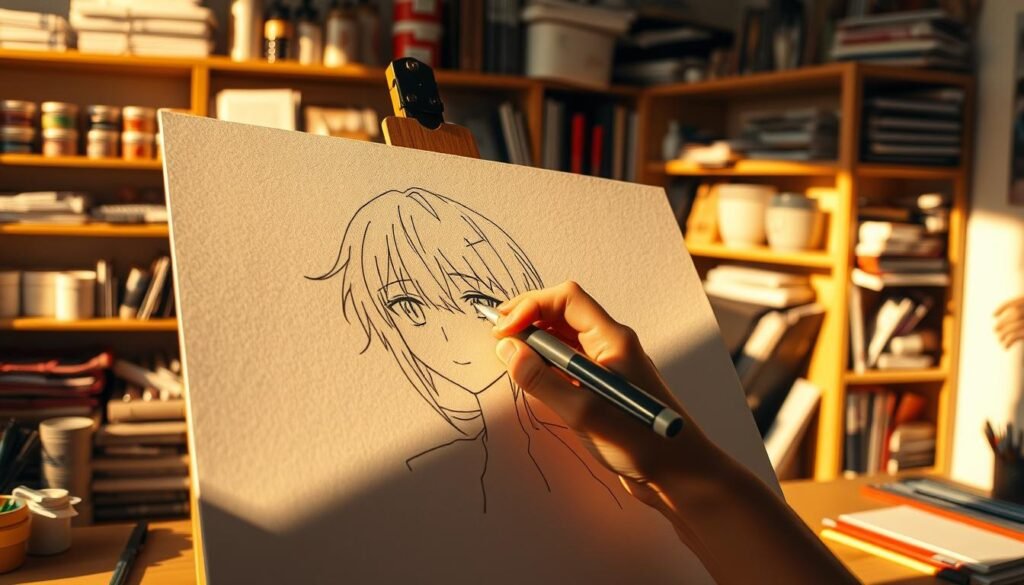
Creating anime characters is fun and rewarding. With the right guidance, you can bring your favorite characters to life. In this guide, I’ll show you how to create your own unique anime characters.
This guide covers everything from anime basics to mastering techniques. It’s perfect for beginners and intermediate artists. Follow this step-by-step guide to improve your skills and create amazing anime art.
Key Takeaways
- Understand the basics of anime and its unique characteristics
- Learn the step-by-step process of drawing anime characters
- Master the techniques to create unique and personalized anime art
- Improve your drawing skills with practical tips and exercises
- Create your own anime characters with confidence
Understanding Anime and Its Style
Getting to know anime’s unique traits is key for drawing it well. Anime, a Japanese animation style, has grown worldwide, loved by many fans.
To explore anime, knowing its history and growth is important. The word “anime” comes from “animation” and describes Japanese animation since the early 1900s.
What is Anime?
Anime stands out with its bright colors, exciting scenes, and many genres like action and romance. It often comes from manga or light novels.
For more on anime’s start and growth, check out https://www.animeoutline.com/. It’s a great place to learn about anime art.
The Evolution of Anime Art
Anime art has changed a lot since it began. Early anime was influenced by Japanese art, like ukiyo-e woodblock prints. It has also been shaped by Western animation and other cultures.
Anime art’s evolution shows its ability to change and keep its special traits. This has helped it become popular all over the world.
Key Characteristics of Anime Styles
Anime is famous for its unique look, with big eyes, bright hair, and lively poses. These features are key to making anime art that grabs attention.
| Characteristic | Description |
|---|---|
| Exaggerated Facial Expressions | Anime characters often have large, expressive eyes and dramatic facial expressions to convey emotions. |
| Vibrant Hair Colors | Hair colors in anime are often vibrant and unrealistic, adding to the visual appeal of the characters. |
| Dynamic Poses | Characters are often depicted in dynamic, action-packed poses that reflect their personality and the scene’s context. |
Knowing these key traits helps artists capture anime’s essence in their work. Whether you’re new or experienced, mastering anime style can be very fulfilling.
Gathering Your Materials
Before you start drawing anime, you need the right tools. The right materials can make learning easier and improve your art.
Essential Drawing Tools
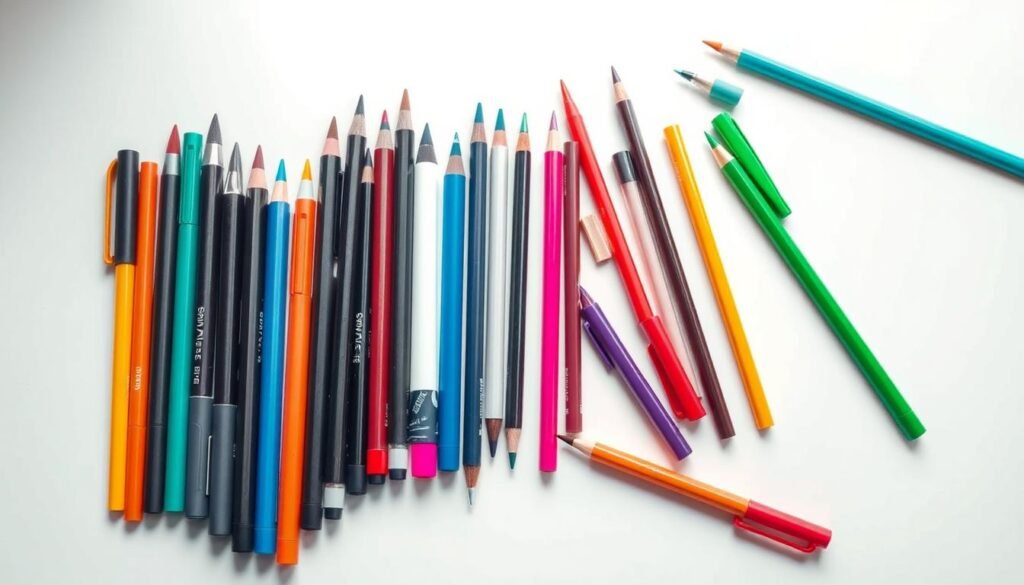
You’ll need basic tools to draw anime. This includes pencils (HB, 2B, 4B, 6B), erasers (kneaded and white vinegar), and a sharpener. A good quality pencil helps with lines and shading. You also need a sketchbook with the right paper for practice.
Recommended Paper Types
The paper you choose matters for your drawings. For pencil work, use cartridge paper or sketchbook paper with 80-100 gsm weight. For ink, try Bristol board or hot press watercolor paper.
Digital Tools for Anime Art
Many artists draw digitally today. You’ll need a drawing tablet or digital monitor for anime art. Brands like Wacom and Huion are popular. Software like Clip Studio Paint, Adobe Photoshop, or Krita offers tools and brushes for digital drawing.
When picking digital tools, look at pressure sensitivity, drawing area size, and software compatibility.
The Basics of Drawing
To draw anime well, you need to know the basics. Learning these will help you make your anime characters more interesting and engaging.
Understanding Shapes and Light
Shapes and light are key in drawing. Shapes are the base of any drawing, and light adds depth. In anime, knowing how to use light and shadow makes your characters look better.
Begin by breaking your subject into simple shapes. This helps get the proportions right. Then, think about how light affects these shapes to make your drawing more lively.
Proportions in Anime Characters
Getting the proportions right is crucial for anime characters. Anime proportions are different from real-life ones. Anime characters usually have bigger eyes and heads compared to their body size.
To get it right, practice dividing your drawing space into parts. This helps place facial features and other elements correctly. For more tips, check out a beginner’s guide to drawing anime.
Creating Dynamic Poses
Dynamic poses are essential for anime characters. They show emotion, action, and energy. To master this, study human movement and practice drawing various poses.
Use reference images or watch real-life movements to learn dynamic poses. Try different angles and views to make your drawings more interesting.
Drawing Characters: The Head
The key to drawing compelling anime characters lies in accurately depicting the head and its expressions. Mastering the head’s structure and facial features is essential for creating characters that convey emotion and personality.
Structure of the Anime Face
An anime face is known for exaggerated features and simplified shapes. I start by breaking down the face into basic shapes: a circle for the cranium and a triangle for the chin. The proportions of these shapes can vary depending on the character’s age and personality.
For instance, younger characters tend to have larger eyes and a rounder face, while older characters have more defined jawlines. Understanding these proportions is crucial for drawing anime faces that are believable and engaging.
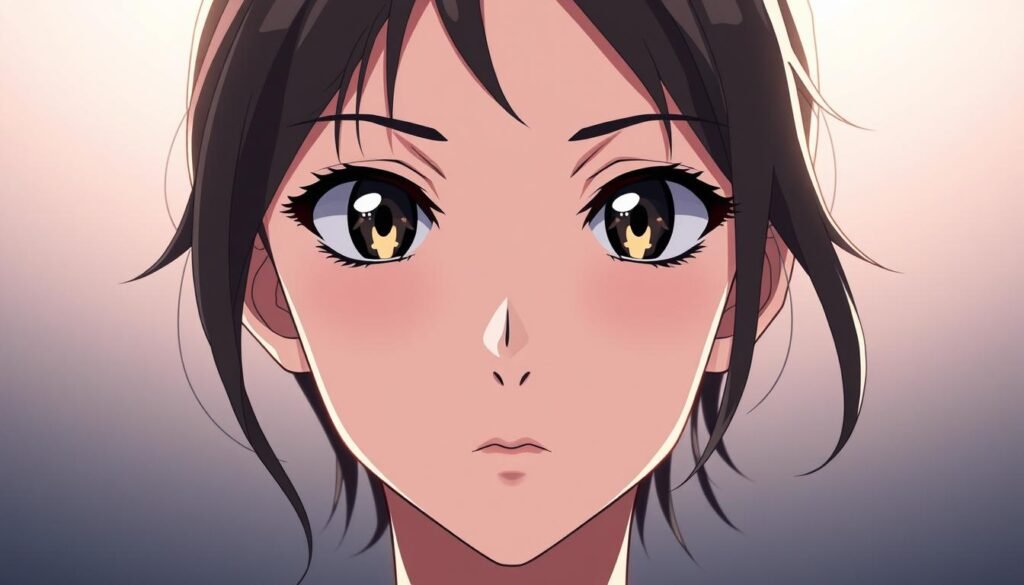
Facial Features Explained
Facial features in anime are often stylized, with large emphasis on the eyes. The eyes are typically large and expressive, conveying a wide range of emotions. Other features like the nose and mouth are often simplified.
To draw these features effectively, I focus on the overall expression and emotion I want to convey. For example, a character with a surprised expression might have wide eyes and an open mouth.
Expressions in Anime
Anime expressions are a vital part of character development, allowing artists to convey emotions and tell stories through their characters. From happiness to anger, each expression is achieved through subtle changes in the facial features.
For more detailed guidance on creating dynamic expressions, I recommend checking out resources like Clip Studio Tips, which offer valuable insights into the nuances of anime art.
| Expression | Eye Shape | Mouth Shape |
|---|---|---|
| Happy | Crescent shape | Smiling curve |
| Angry | Triangular shape | Straight line or frown |
| Surprised | Wide, circular shape | Open circle |
Drawing Eyes: A Focal Point
In anime, eyes are more than just facial features. They are key to showing emotion and character depth. Eyes grab the viewer’s attention and pull them into the story.
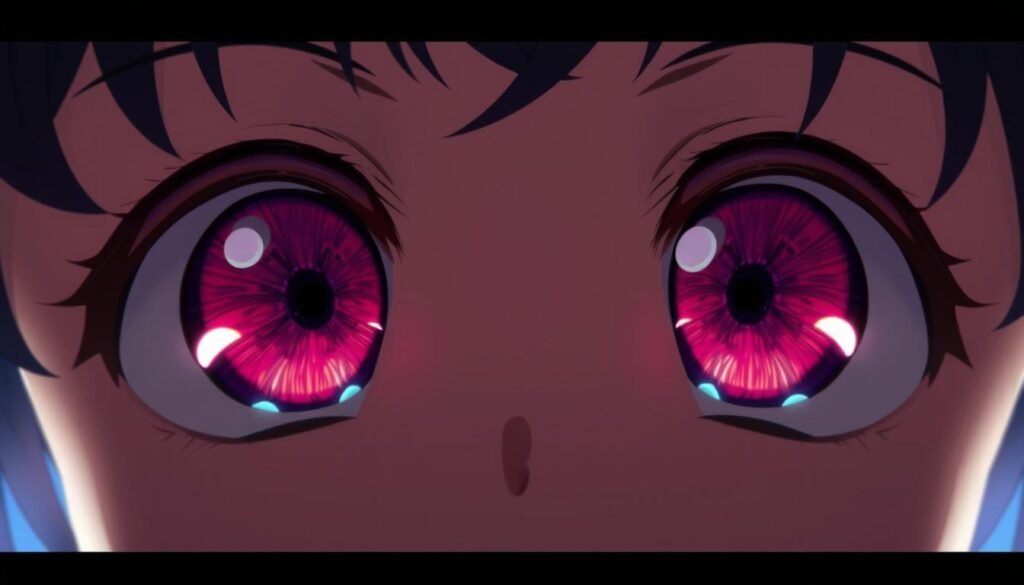
Anatomy of Anime Eyes
Anime eyes vary in shape and style, greatly affecting a character’s look. Knowing the different eye shapes in anime is key to making characters look good and expressive.
There are many eye shapes, like the rounded eye for younger characters and the angular eye for more mature ones. Trying out different shapes can help you find the right one for your character.
Techniques for Shading and Depth
Shading is vital for making anime eyes look real. It adds depth and makes characters more interesting. For more on shading, check out tips on digital shading.
Think about the light source when shading eyes. Soft shading looks natural, while sharp contrasts add drama.
Adding Emotion to Eyes
The eyes show a character’s feelings in anime. By changing the eye’s shape, size, and shading, you can express different emotions. This brings your character to life.
For example, big eyes show innocence or wonder, while small eyes might show suspicion or anger. Trying out different expressions helps you master drawing anime eyes full of emotion.
Creating Hair Styles
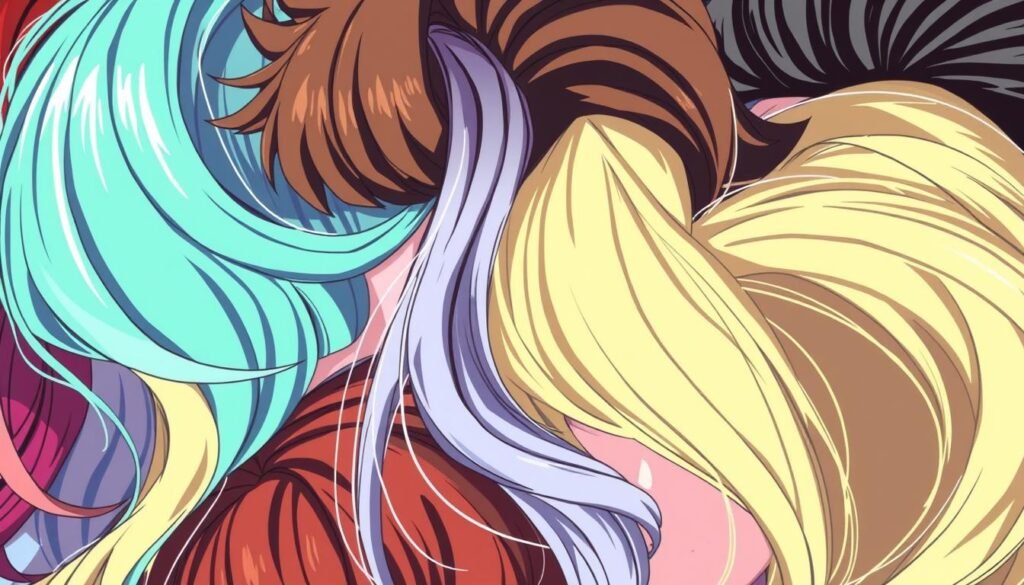
In anime, hair styles are more than looks; they show personality and feelings. A great hairstyle can make your character pop and add depth to their look.
Hair Shapes and Movement
When making hair styles for anime characters, think about the shape and how it moves. Dynamic hair styles bring energy and life to your characters. Use flowing lines and curves to show movement.
For characters with long hair, think about how it moves with them. This makes your character design more believable and interesting.
Texturing Hair in Anime
Texturing hair in anime adds depth and dimension to your character’s look. Use shading techniques to show the hair’s texture and volume. Layering and blending colors also make the hair look more real and appealing.
To texture hair well, first figure out the light source in your scene. Then, shade it right, using soft shadows for dense hair and hard shadows for less dense areas.
Designing Unique Hair Colors
Anime is famous for its bright and unique hair colors. When picking hair colors, think about the character’s personality, background, and the look you want. Unusual hair colors can make your character stand out.
To get unique hair colors, try different hues and shades. Match the hair color with your character’s outfit and setting to make it look good.
Building the Body
Learning to draw anime characters well means knowing their anatomy. This knowledge helps artists make characters that look good and feel real. It makes the characters more interesting to watch.
Anatomy Basics for Anime Characters
It’s key to know the basics of anatomy for anime drawing. You need to understand human body proportions and how to make them anime-like. Anime characters have bigger eyes, more detailed faces, and bigger body parts.
First, learn the human body’s basic structure. This includes bones and muscles. Knowing this helps you simplify and style the body for anime.
Creating Different Body Types
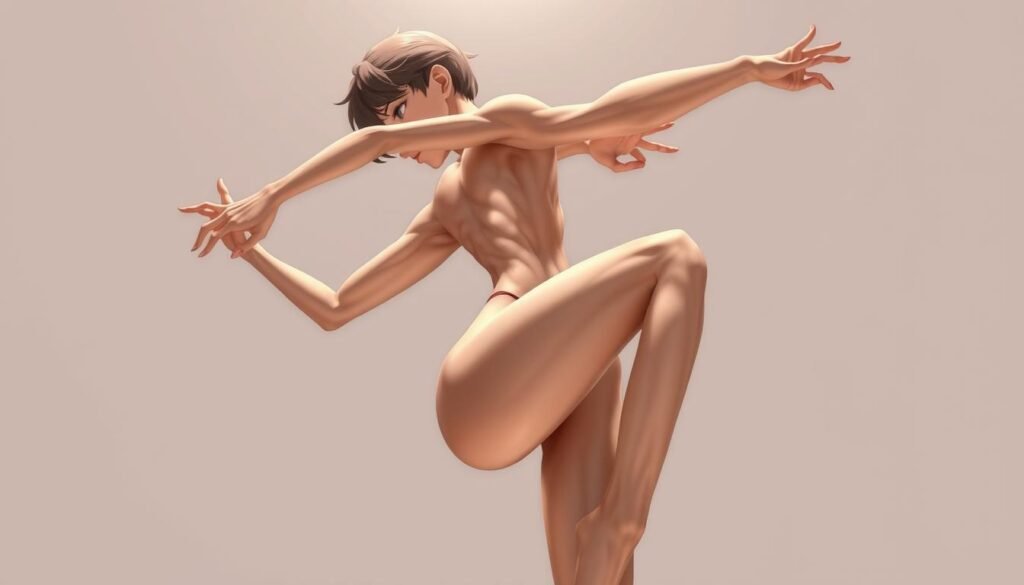
Anime characters have many body types, like tall and thin or strong and athletic. Learning to make different body types is important. It makes your characters more varied and interesting.
To make different body types, change the character’s body proportions. For example, a strong character might have wider shoulders and more muscles. A thin character might have narrower shoulders and less muscle.
Poses and Movement
It’s important to draw anime characters in action. Knowing how to show movement and energy makes them more real and fun to watch.
To draw lively poses, think about the character’s balance and how their limbs move. Doing gesture drawings helps you capture movement and add it to your anime art.
| Body Type | Characteristics | Tips for Drawing |
|---|---|---|
| Slender | Narrow shoulders, less muscle mass | Emphasize long limbs and slender proportions |
| Muscular | Broader shoulders, defined muscles | Focus on muscular definition and broader shoulders |
| Athletic | Toned muscles, agile physique | Capture the dynamic movement and flexibility of the character |
Clothing and Accessories
An anime character’s clothes and accessories tell a lot about them. When making your characters, think about how their clothes and accessories show who they are.
Designing Outfits
Creating outfits for your anime characters means knowing their personality and role. A warrior might wear armor that shows their status. Anime clothing can be simple or very fancy.
To design an outfit, think about the character’s:
- Personality traits
- Occupation or role
- Cultural background
- The world they live in
Fabric Movement
Knowing how fabric moves is key for realistic clothes. Different fabrics move and look different. For example, silk moves differently than denim.
When drawing fabric movement, remember:
| Fabric Type | Movement Characteristics |
|---|---|
| Lightweight (Silk, Cotton) | Flows, drapes, and folds easily |
| Heavyweight (Denim, Leather) | Holds its shape, less prone to flowing |
Accessorizing
Accessories can make your characters stand out. They can be useful, like a sword, or just for show, like jewelry. Think about how the accessory shows the character’s personality or role.
Accessorizing your characters means picking items that fit their outfit and personality. For example, bold characters might wear flashy jewelry, while quieter ones might prefer simpler things.
By designing outfits, understanding fabric movement, and accessorizing, you can make your anime characters unique. These details not only make your drawings look better but also help tell their stories and show who they are.
Mastering Backgrounds
Mastering anime backgrounds is key to creating engaging anime art. They set the scene and atmosphere, pulling the viewer into your world.
Importance of Backgrounds in Anime
Anime backgrounds are more than just a setting. They are crucial in storytelling. A well-crafted background can evoke emotions and establish the time and place. It can also influence the characters’ actions.
- Establish the setting and atmosphere
- Enhance the storytelling
- Create an immersive experience for the viewer
Techniques for Drawing Landscapes
Drawing landscapes for anime backgrounds needs technique and creativity. Here are some techniques to get you started:
- Understand perspective: Linear perspective creates a sense of depth, making your backgrounds believable.
- Use reference images: Reference images can inspire and inform your background designs.
- Experiment with textures: Adding textures can add depth and interest to your backgrounds.
Creating Depth and Perspective
Creating depth and perspective is vital for realistic and engaging backgrounds. Techniques like atmospheric perspective can create a sense of distance. Layering and shading can also enhance depth.
By mastering these techniques and understanding backgrounds’ importance, you’ll create immersive and engaging art. This art will draw viewers into your world.
Color Theory in Anime
The right use of color theory can make your anime art stand out. It’s key to making your art look good and feel right. By using color theory, you can make your anime drawings more impactful.
Choosing a Color Palette
Picking the right colors is the first step in using color theory. The colors you choose can set the mood of your art. Warm colors like orange and red can make things feel exciting. Cool colors like blue and green can make things calm.
For example, a bold character might have bright colors. A shy character might have softer colors. You can use a guide for picking colors to help decide.
| Color Palette | Mood/Tone | Example Use |
|---|---|---|
| Warm Colors (Orange, Red) | Exciting, Energetic | Action scenes, adventurous characters |
| Cool Colors (Blue, Green) | Calm, Serene | Landscapes, peaceful moments |
| Pastel Colors | Soft, Gentle | Character designs for young or innocent characters |
Techniques for Coloring
There are many ways to color anime art, from traditional to digital. Each method has its own benefits. Traditional media can give a unique look, while digital tools are easy to edit.
Think about texture and shading to add depth. Techniques like layer blending and gradient mapping can make your art look better.
Using Color to Convey Emotion
Colors can make people feel certain ways. By choosing colors carefully, you can control how people feel about your art. For example, red can make things feel urgent, while blue can calm.
Learning to use color to show emotion is important. Try different colors and techniques to see what works best for your story.
Digital vs Traditional Techniques
Both digital and traditional drawing have their own good and bad sides. They can change how an artist works. I’ve tried both and found each has special benefits.
Pros and Cons of Each Medium
Traditional drawing, like using pencils and paper, feels real and tactile. But, it can get messy and hard to fix. Digital drawing, on the other hand, lets you easily fix mistakes. Yet, it might not feel as natural as traditional methods.
Key differences between digital and traditional drawing include:
- Ease of correction: Digital drawing makes it easy to undo mistakes, while traditional drawing can be more challenging to correct.
- Texture and feel: Traditional drawing offers a unique tactile experience, while digital drawing can lack this organic feel.
- Flexibility: Digital drawing allows for a wide range of tools and effects that can be easily accessed and changed.
Transitioning from Paper to Digital
Switching from traditional to digital drawing can seem tough. But, with practice and the right tools, it’s doable.
Start by getting to know digital drawing software and hardware, like graphics tablets.
Tools for Digital Drawing
There are many tools for digital drawing, from software like Adobe Photoshop to hardware like Wacom tablets.
Some popular digital drawing tools include:
| Tool | Description | Platform |
|---|---|---|
| Adobe Photoshop | Industry-standard software for digital art | Windows, Mac |
| Wacom Tablet | Hardware for drawing directly on a digital surface | Windows, Mac |
| Krita | Free and open-source digital painting software | Windows, Mac, Linux |
Knowing the good and bad of each medium and the tools out there helps artists choose their drawing style wisely.
Creating Your Own Characters
To draw compelling anime characters, you need to develop their stories and appearances. Creating unique and believable characters is crucial for any anime or manga story. In this section, we will explore the key steps involved in creating your own anime characters.
Developing Character Backstories
Developing a character’s backstory is essential to understanding their motivations and behaviors. A well-crafted backstory can add depth to your character and make them more relatable to your audience.
- Consider their history: Where do they come from? What significant events have shaped them?
- Define their personality traits: Are they optimistic, pessimistic, or a mix of both?
- Determine their goals and conflicts: What do they want to achieve? What obstacles do they face?
For more insights on character development, you can visit https://www.animeoutline.com/ for additional resources.
Sketching Outfits and Accessories
Designing your character’s outfits and accessories is a fun and creative process. It not only reflects their personality but also their background and status.
- Start with the basics: Decide on the main clothing items such as shirts, pants, or dresses.
- Add accessories: Hats, scarves, jewelry, and other items can enhance their appearance.
- Consider the context: Are they a student, a warrior, or a casual character? Their attire should fit their role.
Bringing Your Character to Life
Bringing your character to life involves more than just drawing them. It’s about conveying their emotions and personality through their expressions and poses.
Tips for animation:
- Study anime and manga for inspiration.
- Practice drawing different expressions and poses.
- Use reference images to get details right.
By following these steps, you can create anime characters that are not only visually appealing but also rich in personality and depth.
Finding Your Style
Finding your style in anime art means trying out different styles and techniques. As you explore, you’ll see that your style shows your creativity and uniqueness.
Exploring Different Art Styles
Anime has many art styles, from shonen and shojo to chibi and mecha. Trying out these styles can help you find what you like.
You might draw inspiration from anime shows or manga. Look at the character designs and colors. Try different genres like action, romance, or fantasy to see what fits your style.
Experimenting with Techniques
Trying out different drawing techniques is key to finding your style. You can experiment with:
- Using different brushes and tools for unique textures.
- Practicing shading to add depth to your art.
- Trying coloring methods like digital painting or watercolor.
By trying these techniques, you’ll find what works best for you and improve your style.
Inspiration from Other Artists
Getting inspiration from other artists is helpful. Follow anime artists on social media, go to art shows, or join online groups to see new works.
For example, check out this blog post to learn about finding your art style. Reading about other artists can give you great ideas and advice.
| Technique | Description | Effect |
|---|---|---|
| Brushwork | Varying brush strokes and sizes | Textures and dynamic effects |
| Shading | Using light and shadow | Depth and dimension |
| Coloring | Exploring different color palettes | Mood and atmosphere |
Finalizing Your Artwork
The last steps in making anime art are key to improving your work. As you finish your piece, focus on the small details that make it special.
Tips for Inking and Finishing Touches
Inking is a vital step in finishing your anime art. It means tracing your pencil lines with a pen or digital tool for clear lines. Use a steady hand and pick the right tool for your medium. Digital artists can play with brush sizes and styles for the perfect look.
Don’t overlook the small details for your artwork’s finish. Work on refining lines, adding textures, and checking proportions. A well-done piece can greatly improve your art’s impact.
| Inking Technique | Description | Tool |
|---|---|---|
| Hatching | Creating shading with closely spaced parallel lines | Fine liner or digital brush |
| Cross-hatching | Layering hatching lines at different angles | Fine liner or digital brush |
| Stippling | Creating shading with small dots | Fine liner or digital pen |
How to Avoid Common Mistakes
A common error is over-inking or making lines too thick. Start with light lines and build up to the right thickness. Also, watch your proportions and make sure your subjects are correct.
Another mistake is ignoring the background or making it too simple. A good background can enhance your characters and add depth. Add details that support the scene without overshadowing the main subject.
Presenting Your Artwork
When you’re done, how you show your art matters. Think about the medium and format you’ll use. Optimize your images for web viewing by adjusting the resolution and file size. For physical shows, pick a frame or mount that fits your art.
By focusing on these details and using these tips, you can greatly improve your anime art. This will leave a lasting impression on your viewers.
Sharing Your Art with the World
Mastering anime drawing can be very rewarding. Sharing your art lets you connect with others who love anime. It also helps you grow as an artist.
Platforms for Showcasing Your Work
Use online platforms like Instagram, DeviantArt, or ArtStation to share your anime art. These sites let you upload your work and connect with many artists and fans. Remember to use hashtags to get more views and feedback.
Engaging with the Anime Community
Join online forums or social media groups for anime art lovers. Take part in discussions, ask for feedback, and listen to suggestions. This helps you improve and find your unique style.
Tips for Constructive Feedback
When giving feedback, focus on specific parts of the artwork. Be kind and offer helpful tips to improve. Sharing your art and getting feedback helps you grow and refine your skills.