

Did you know that cats are one of the most popular subjects for artists of all skill levels? Their graceful forms and expressive faces make them a timeless choice. This guide unlocks the secrets to creating your own charming feline portraits.
I believe anyone can learn this rewarding skill. Our method breaks the process into simple, manageable stages. You will build confidence with each step, moving from basic shapes to detailed artwork.
The techniques you master here are incredibly versatile. You can create everything from a realistic portrait to a whimsical, stylized character. Your personal artistic vision will shine through. This comprehensive tutorial covers foundational anatomy, advanced detailing, and coloring methods.
Do not fear mistakes; they are a natural part of the creative journey. Embrace the process and discover the joy of bringing a cute cat to life on the page.
Key Takeaways
- Drawing a cat is an accessible art form suitable for beginners and experienced artists alike.
- The process is broken down into easy-to-follow steps that build skills progressively.
- Mastering foundational techniques allows for creating various poses, expressions, and styles.
- Making mistakes is a valuable and expected part of the learning experience.
- The skills learned can be adapted for both realistic and whimsical illustrations.
- This guide covers everything from basic shapes to advanced coloring methods.
Overview and Introduction to Cat Drawing
The process of illustrating cats develops fundamental artistic skills while providing therapeutic benefits. This foundation prepares you for more complex artistic challenges ahead.how-to-draw-boobs
Purpose and Benefits of Drawing a Kitty
Creating feline artwork builds essential observation skills and hand-eye coordination. The satisfaction of bringing an adorable creature to life offers genuine creative fulfillment.
Mastering cat illustration teaches proportion, symmetry, and form principles. These fundamentals transfer effectively to other artistic subjects.
Required Materials and Tools
Quality materials ensure better results. I recommend starting with a reliable pencil and kneaded eraser for gentle corrections.how-to-draw-poultry
For coloring, Prismacolor Colored Pencils deliver vibrant results. Markers or paints work equally well for different effects.
Selecting the right reference photo is crucial. Choose images with clear features and good lighting. A close-up of the cat’s face creates engaging eye contact in your final artwork. This comprehensive guide demonstrates effective photo selection techniques.
| Material Type | Essential Items | Recommended Brands | Purpose |
|---|---|---|---|
| Drawing Tools | Graphite pencil, kneaded eraser | Staedtler, Faber-Castell | Sketching and outlining |
| Coloring Medium | Colored pencils, markers | Prismacolor, Copic | Adding color and depth |
| Surface | Quality drawing paper | Strathmore, Canson | Final artwork foundation |
| Reference | Clear cat photo | Personal photography | Accuracy and detail guide |
Heavier paper works better for colored pencils, while smooth paper suits fine line work. Your choice of materials should match your preferred artistic style.
Understanding Cat Anatomy and Basic Shapes
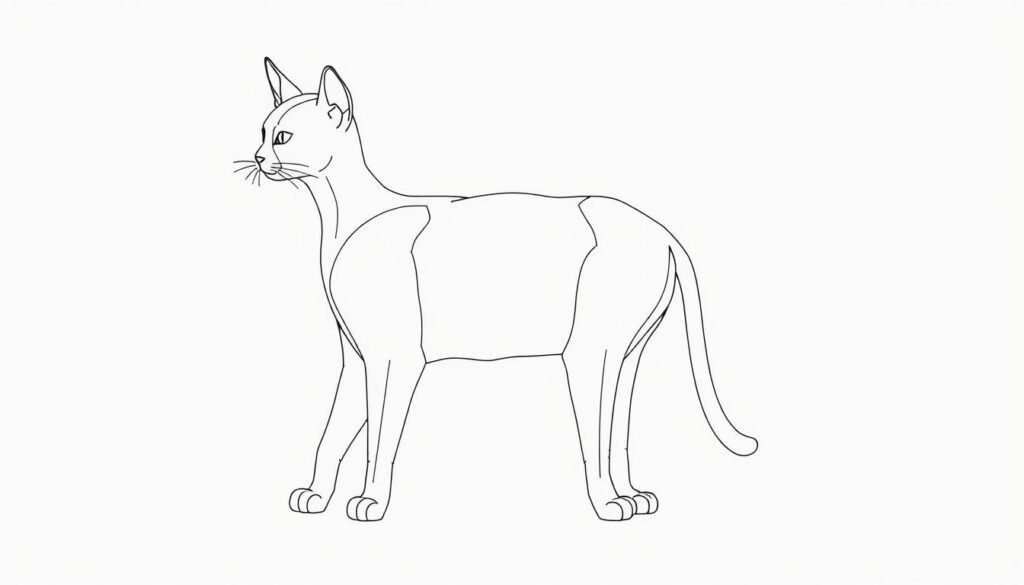
The key to a believable cat illustration lies in mastering the proportions and relationships of its basic shapes. I break down the complex form into simple geometric components. This approach makes the process manageable and accurate.how-to-draw-a-leaf
Observing the Cat’s Head, Eyes, Ears, and Body
I pay close attention to the cat head proportions. The eyes typically sit along the horizontal centerline of the face. They are almond-shaped or rounded, depending on the breed.
The cat ears form distinct triangles at the top corners of the head. Their angle greatly influences the cat‘s expression. A small triangular nose rests at the center of the cat face.
The body of a cat is generally larger than its head. The chest area often forms the second-largest circle in my construction. Observing how the neck connects the head to the body is crucial for a natural pose.
Using Shapes and Grids for Accuracy
I construct the entire cat using circles, ovals, and triangles. These basic shapes form the skeleton of the illustration. This method ensures proper proportion from the start.
For complex poses, I employ a grid method. Dividing the reference image and my paper into sections helps map features accurately. This technique is excellent for maintaining symmetry between the eyes and ears.
Studying a quality cat sketch reinforces these anatomical relationships. Practice builds an intuitive understanding of the feline form.
| Feature | Primary Shape | Key Proportion Tip |
|---|---|---|
| Head | Circle | Serves as the base measurement unit |
| Eyes | Almond/Oval | Positioned on the face’s horizontal midline |
| Ears | Triangle | Placed at the top corners of the head circle |
| Body | Oval | Typically 2-3 times larger than the head |
Step-by-Step Guide: How to Draw a Kitty
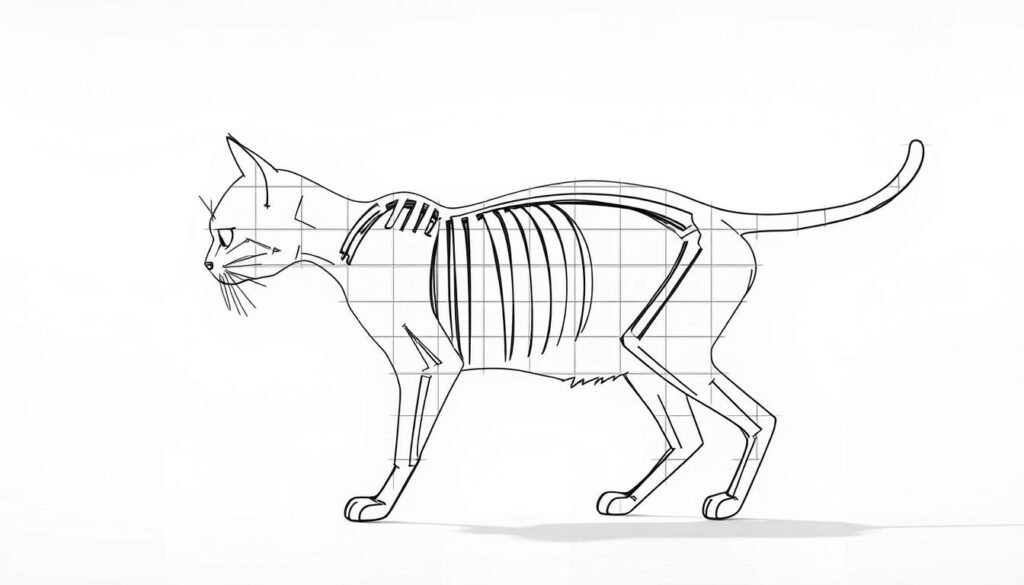
The construction phase transforms theoretical knowledge into tangible artwork through systematic shape assembly. I begin with light pencil strokes to allow for easy adjustments throughout the process.
Drawing the Cat’s Outline with Simple Lines
I start the outline using three overlapping circles. A small circle forms the head, while a larger one creates the chest area. The largest circle establishes the main body mass.
Connecting these shapes with smooth lines defines the neck and back contours. The front legs extend downward from the chest circle using parallel curved lines. For the back legs, I use oval shapes that overlap the body form.how-to-draw-a-chook
Establishing the Facial Grid and Mapping Features
Within the head circle, I draw a cross with one vertical line and one horizontal line. This grid creates four equal quadrants for precise feature placement.
The cat face elements align with this grid structure. Ears position at the top corners, while the chin rests near the bottom intersection point. This systematic approach ensures balanced proportions across the face.
I maintain light pressure during this phase for effortless corrections. The grid method provides reliable guidance for accurate feature mapping.
Exploring Alternative Drawing Methods
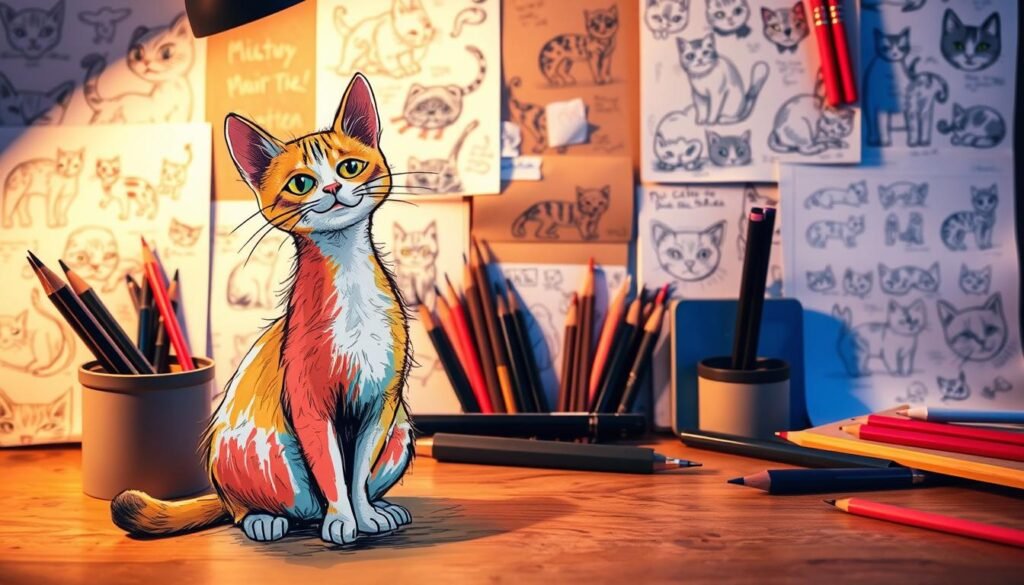
Alternative approaches to building a cat’s form can dramatically change the style and personality of your final artwork. I explore two distinct geometric strategies that offer different advantages.how-to-draw-a-spider
Circles and Triangles Approach
I begin with two large circles—one for the head and a larger one for the body positioned below and slightly right. This method creates instantly recognizable feline proportions.
Adding triangular ears at the top and circular eyes along a horizontal line establishes the basic cat face. The grid ensures symmetrical placement of features.
Rectangles, Ovals, and the Grid Method
For profile poses, I use a circle for the head and a horizontal rectangle for the body. Connecting these shapes with curved lines creates natural neck and back contours.
I position long oval shapes at the front and back of the rectangle to form the legs. Small circles below complete the paw structure.
Both methods provide reliable frameworks. Experimenting helps discover which way best matches your artistic vision.
Adding Details: Texture, Color, and Effects
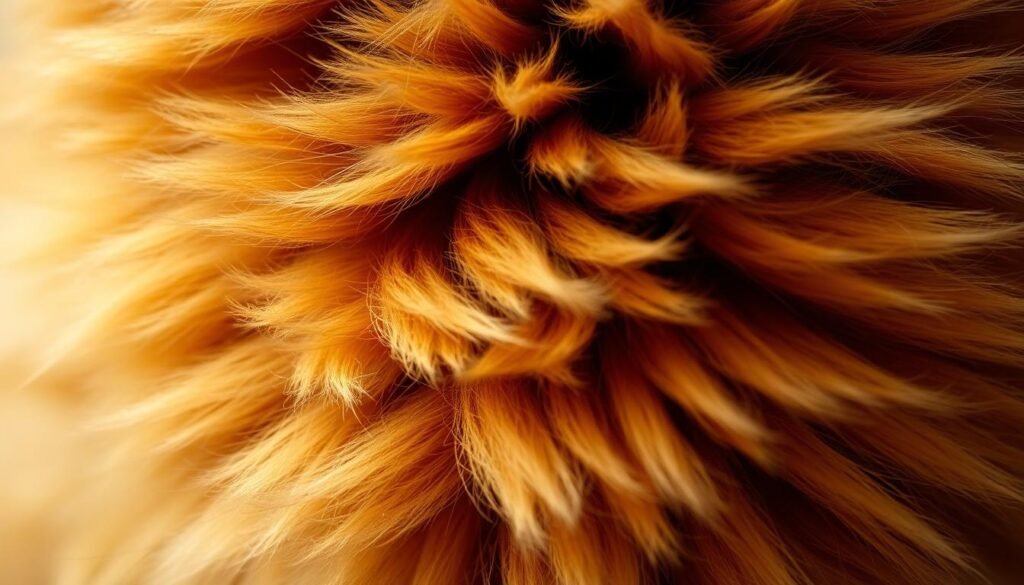
The final detailing stage brings personality and dimension to your illustration through strategic texturing and coloring. This phase transforms basic forms into vibrant, expressive artwork.
Techniques for Fur and Whiskers
I create realistic cat fur using soft, feathery strokes that follow natural growth patterns. Short, jagged marks along the outline suggest individual hairs.how-to-how-to-draw-a-unicorn
For whiskers, I use a clever technique with a blank sheet placed over the drawing. Drawing whiskers on the cover sheet creates indentations that remain white when colored.
Using Colored Pencils and Creative Shading
Colored pencils offer excellent control for building rich colors. I layer different hues to create depth in shadowed areas.
Angling soft pencils on their side creates smooth blends. Reflected light adds realism, like pinkish tones on legs from a colored shadow below.
Incorporating Unique Elements for a Cosmic Effect
I encourage imaginative approaches when you color cat illustrations. Cosmic designs with psychedelic patterns give cat drawings distinctive flair.
Strategic color choices transform dark areas into bold purples or deep blues. This cat oil pastel method demonstrates similar creative potential with different media.
Tips, Tricks, and Personal Drawing Insights
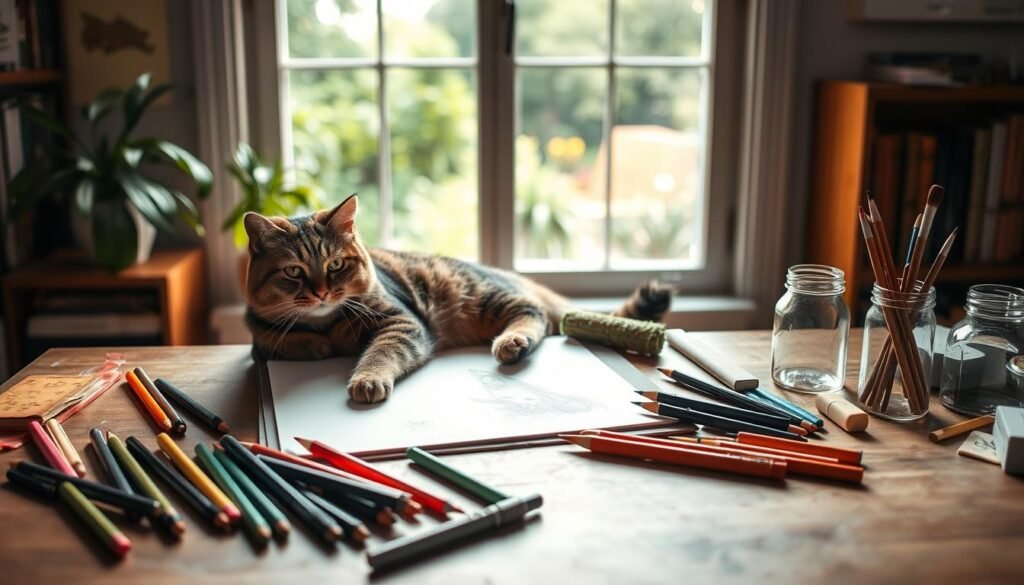
My journey in mastering cat illustration involved overcoming several common beginner errors. I want to share the solutions that transformed my artwork from stiff sketches to dynamic portraits.
These insights come from countless hours of practice and refinement. They will help you avoid frustration and accelerate your progress.
Common Mistakes and How I Overcame Them
Proportion errors plagued my early work. I frequently made the head too large or small relative to the body. Using a simple measuring technique saved me many times.
I compare feature sizes directly on my reference photo before starting the drawing. This prevents fundamental scaling issues from the beginning.
Another challenge was achieving symmetrical eyes. My solution involves drawing a light vertical line down the center of the face. I measure the distance from this line to each eye to ensure perfect balance.
Working with a light pencil touch is crucial. Gentle strokes allow for easy erasure and adjustment without damaging the paper. This approach gives you freedom to experiment.
I also learned to avoid flat, lifeless poses. Adding slight perspective creates depth. Having the back legs partially hidden behind the body makes the illustration more dynamic.
| Common Mistake | Personal Solution | Key Benefit |
|---|---|---|
| Uneven eyes | Use centerline grid for measurement | Creates balanced facial expressions |
| Stiff body posture | Add overlap and perspective | Makes the cat appear more natural |
| Dark sketch lines | Draw lightly with a hard pencil | Allows for clean erasures and adjustments |
| Ignoring light effects | Study reflected color in shadows | Adds realism and dimension to artwork |
When certain areas don’t turn out as expected, strategic shading can disguise proportion issues. I view every mistake as a learning opportunity rather than a failure.
The most important tip is to develop your own artistic way. Personal style emerges through consistent practice and experimentation.
Conclusion
Creating a charming feline portrait is an achievable goal. This guide has provided multiple methods, from basic shapes to a finished cat illustration. The systematic step-by-step process ensures a solid foundation.
Mastering the initial outline is crucial. Using a grid for the cat head guarantees proper proportions for the face and ears. This accurate outline sets the stage for creativity.
The real joy emerges when you color cat illustrations. Experiment with colored pencils on quality paper. Layer different colors to build depth in the fur and add delicate whiskers.
Every artist develops a personal style. Continue to draw cat portraits from various reference photos. This practice builds confidence and versatility. For further guidance on facial features, explore this detailed cat face tutorial.
Your artistic journey is unique. Embrace each drawing as a valuable step toward creating expressive cat art that brings personal satisfaction.