

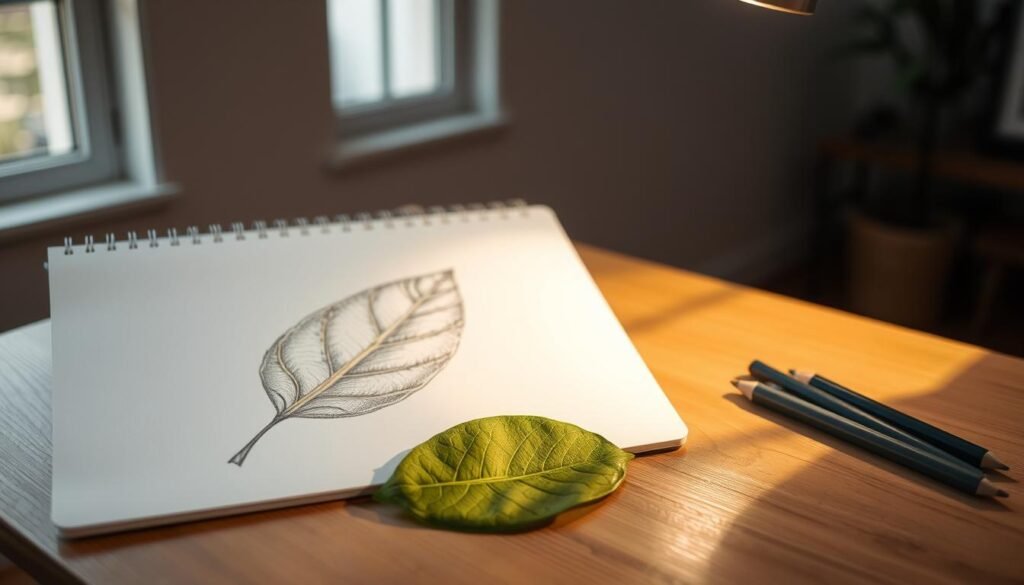
Did you know that botanical illustrators spend more time mastering leaf rendering than any other plant element? This foundational skill separates amateur sketches from professional artwork.
Capturing nature’s intricate designs requires understanding basic forms first. This comprehensive guide builds essential techniques for botanical illustration and nature journaling.
I’ve designed this professional approach to transform complex botanical concepts into manageable stages. You’ll discover methods for rendering realistic textures and three-dimensional forms.
The progression follows a logical path from simple outlines to detailed shading. Both beginners and experienced artists will find valuable insights for improving their nature artwork.
Key Takeaways
- Mastering foliage representation is essential for professional botanical artwork
- This guide breaks down complex techniques into achievable steps
- Learn professional methods for capturing light, shadow, and texture
- Suitable for artists at all skill levels seeking improvement
- Builds from basic shapes to detailed three-dimensional rendering
- Covers various leaf types and artistic approaches
- Focuses on enjoyable learning with room for personal expression
Getting Started with Your Leaf Drawing
The quality of your botanical artwork begins long before you make your first mark. Thoughtful preparation transforms the entire creative experience.how-to-draw-a-turkey
Gathering Your Materials and Tools
I recommend starting with graphite pencils ranging from H to B grades. This gives you different line weights for various stages of your work. Quality drawing paper and a good eraser are essential companions.
Never feel shy about making corrections. Erasing is a natural part of the process. For color work, consider colored pencils like Dark Sepia for initial toning.
Choosing the Right Leaf Subject
Always work from a real specimen when possible. Live plants engage all your senses in ways photographs cannot match. You observe how light interacts with three-dimensional forms.
Start with common net-veined leaves like rose or oak. They offer clear patterns and manageable shapes. Take time to observe your subject before you begin the drawing.
Connect with the plant and understand its basic shapes. This kind of preparation makes your final artwork feel alive rather than flat. Photographs can serve as handy backups if your specimen wilts.
Understanding Leaf Anatomy and Natural Forms
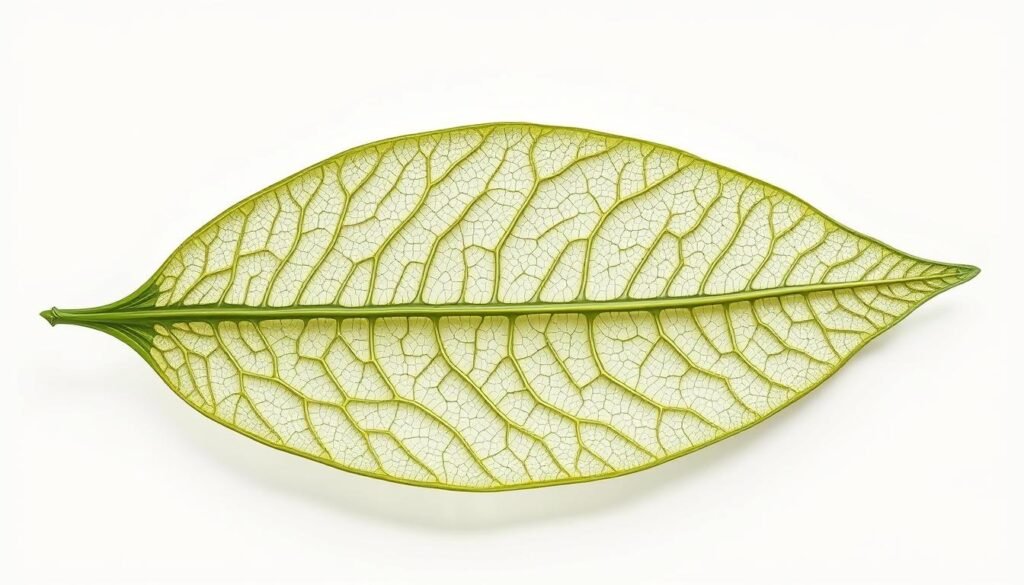
Before pencil touches paper, successful artists invest time studying the fundamental architecture of their subjects. Recognizing basic leaf structure provides the essential framework for creating accurate, realistic botanical artwork.
Exploring Shapes and Veining Patterns
Leaves display remarkable diversity in their basic shapes, from simple oval forms to complex lobed structures. Each shape follows consistent anatomical principles that artists can learn to recognize quickly.
The venation system acts as the leaf‘s structural skeleton. Primary veins originate from the stem connection at the base, gradually thinning toward the top and outer edges. Secondary veins branch out but typically disappear before reaching the perimeter.
According to botanical science, venation patterns follow specific biological functions that influence their visual appearance.
Observing Light and Shadow on Leaves
Think of leaf planes as two sides of an open book. When light strikes these surfaces, one side receives illumination while the opposite falls into shadow.
This simple concept creates dimensional quality despite minimal thickness. The front surface shows recessed venation, while the back displays raised lines.how-to-draw-a-bird
Observing these light interactions in nature reveals how curvature affects gradation from highlight to shadow. This understanding prevents rigid, mechanical-looking artwork.
how to draw a leaf: Fundamental Techniques
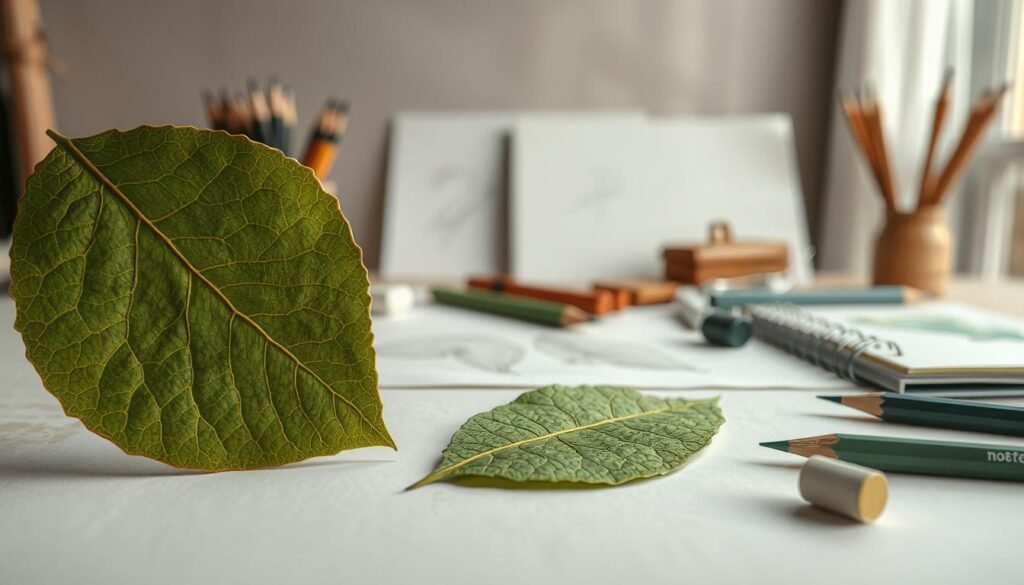
Professional illustrators understand that accurate foundational lines determine the final artwork’s realism. This stage establishes the structural integrity of your botanical composition.
Sketching the Central Stem and Outline
Begin with the center vein as your primary guideline. Use light pencil marks to create a slightly curved dotted line. This initial step establishes the leaf’s orientation and character.
Natural specimens rarely feature perfectly straight center stems. The subtle curve contributes to organic appearance. Keep an eraser handy for adjustments during this crucial phase.
Establishing the Basic Leaf Form
Connect the outside edges from bottom to tip along the central stem. Observe your specimen’s unique contours and irregularities. Avoid making edges too smooth or symmetrical.how-to-draw-a-cow
Measurements ensure life-size proportions. Use a see-through ruler to capture length and width accurately. This attention to detail pays dividends in later stages.
| Measurement Technique | Best For | Accuracy Level |
|---|---|---|
| See-through Ruler | Life-size proportions | High precision |
| Comparative Sizing | Quick sketches | Moderate accuracy |
| Grid Method | Complex shapes | Very high precision |
| Freehand Estimation | Practice sessions | Basic proportions |
Mastering these fundamental techniques through consistent practice sessions builds confidence in capturing nature’s intricate designs. Each curved line should feel organic rather than mechanical.
Mastering Shading, Color, and Texture
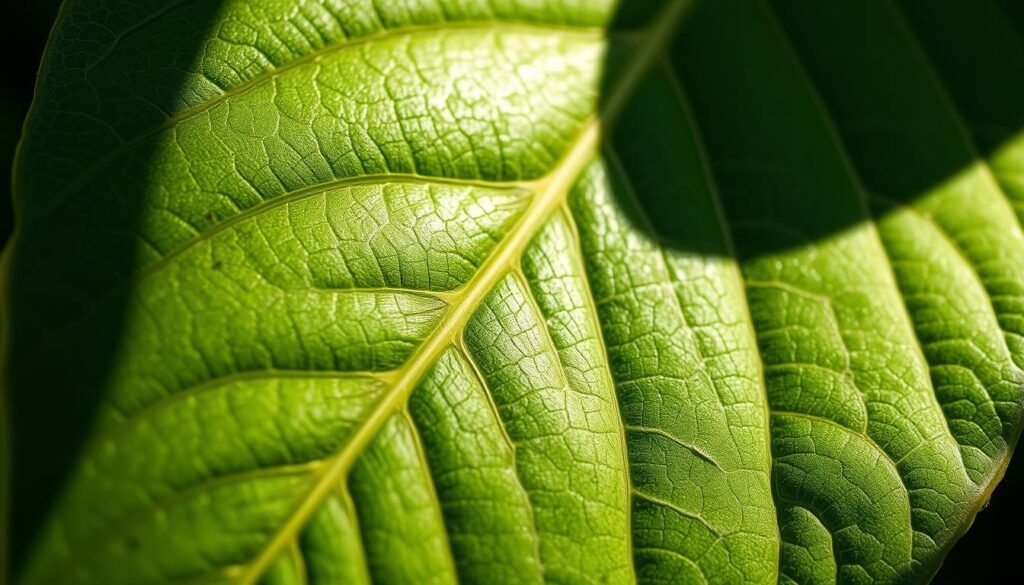
Dimensional realism emerges when artists master the interplay between light, shadow, and surface texture. This stage transforms flat outlines into convincing botanical forms.
Techniques for Realistic Shading
I begin with a light layer of Dark Sepia colored pencil to establish the leaf’s dimensional planes. The left side receives darker shading from the midvein toward the edge.
This creates the “open book” effect where one plane catches more light. The right side remains lighter with subtle tone near the center vein.
Applying Watercolor Washes and Colored Pencils
A green watercolor wash applied over the pencil foundation reinforces the two-plane concept. I graduate the wash to make the left side darker.
The center vein gets a very light wash to unify the drawing. This base layer prepares the surface for detailed texture work.
Adding Subtle Veins and Details
Secondary veins appear through careful shading along their paths. I keep these lines irregular and natural rather than mechanical.how-to-draw-godzilla
Layering green and Dark Sepia pencils creates subtle “pillowing” between veins. Remember that veins taper and disappear before reaching the edges.
If veins appear too prominent like fish bones, I narrow them and adjust color values. The goal is integrated, believable texture rather than literal representation.
Drawing Folded, Twisted, and Organic Leaves
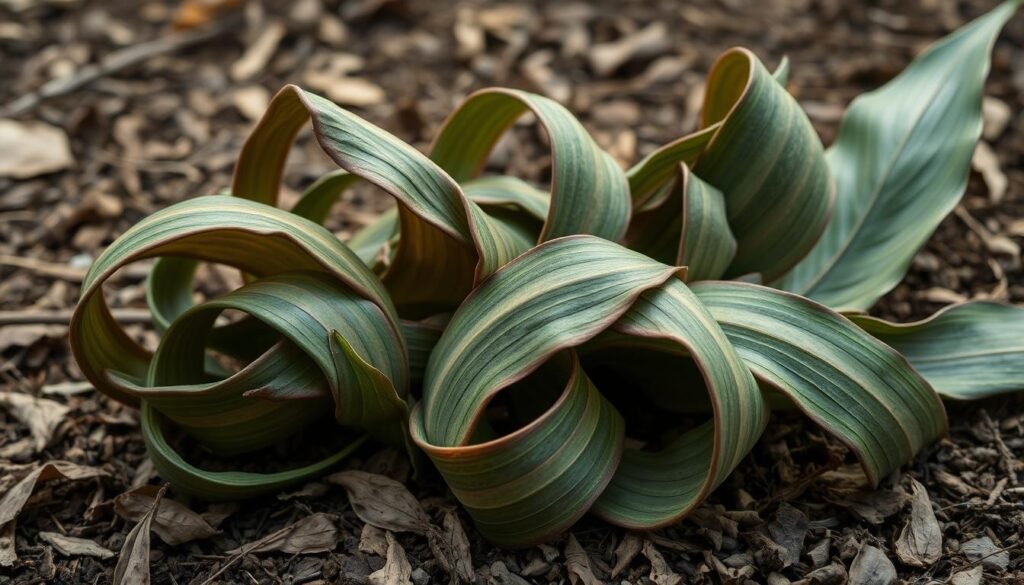
Observing any garden reveals that leaves are rarely perfectly flat. Mastering these dynamic folds and twists separates static sketches from vibrant, realistic artwork.
I start with a curved center line, like a ski slope. Next, I sketch one edge to the left, crossing the center and meeting at the bottom. The right edge mirrors this curve.
A straight line connecting the peaks defines the fold. The direction of the bend depends on which overlapping line you erase at the central “x”.
Creating Dynamic Leaf Folds and Twists
For a leaf folding toward you, I begin with a rough bat shape. A curved line emerges from the center of one side. A second line from the tip connects to the first.
Twisted forms require a different approach. I draw the stem first. A large hill shape flows from it, followed by a smaller one meeting at the tip.
A connecting line at the base establishes perspective. The nearest part appears to curve inward, creating a sense of depth.
Incorporating Organic Imperfections
True-to-life illustrations embrace natural variation. Alternate between sharp and rounded tips. Introduce slight asymmetries along the edges.
These subtle imperfections prevent your work from looking mechanical. They capture the unique character of each specimen.
Practice is essential for building confidence with these detailed leaf drawing steps. Fill a sketchbook with varied forms to develop your skills.
Expert Tips and Lessons from Botanical Illustrators
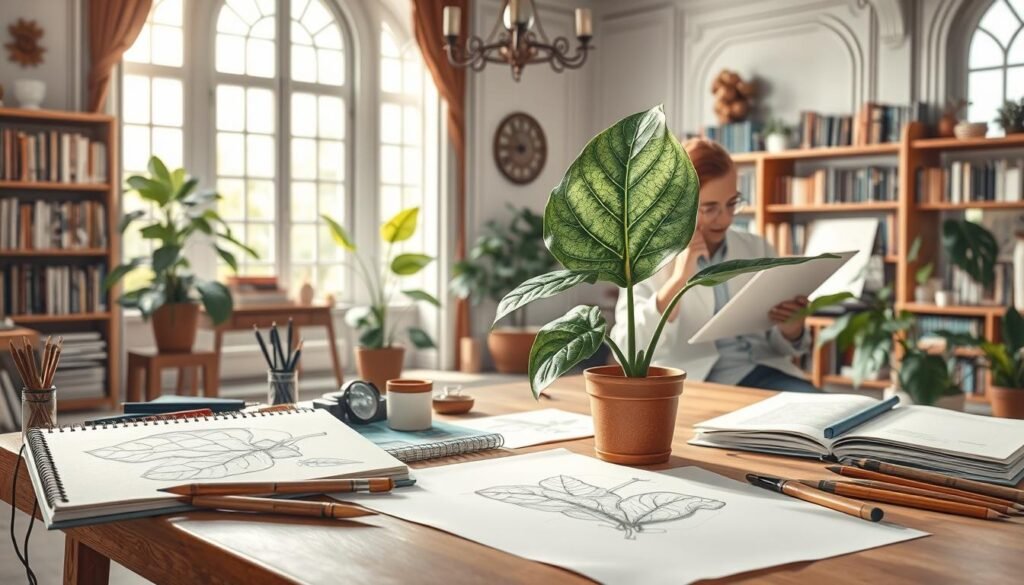
The transition from technical proficiency to artistic mastery often hinges on adopting professional practices. These insights from experienced illustrators can dramatically improve your botanical artwork.how-to-draw-a-unicorn
Learning from Live Observations and Workshops
I maintain a thumbnail sketch throughout my process. This small reference reminds me where shadows belong and where highlights should stay bright.
Working from live specimens provides dimensional understanding that photographs cannot match. The physical experience of connecting with plants prevents flat-looking drawings.
Before starting any artwork, take time to observe your subject thoroughly. Understand basic shapes and their relationships through careful study.
Integrating Practical Advice into Your Art
If veins appear too literal or “fish bone-like,” narrow them and adjust color values. Keep veining subtle rather than overemphasized in your drawings.
Practice regularly with different leaf specimens. Each new attempt builds confidence with organic forms and natural variations.
These fundamental techniques form the foundation for advanced botanical work. Mastering accurate observation and shading transfers to other plant elements.
Many professional artists share their methods through structured botanical workshops and educational resources. These opportunities provide valuable demonstrations and community connection.
Conclusion
Each completed leaf drawing builds confidence in capturing nature’s complexity. This comprehensive tutorial has guided you through essential steps—from understanding basic forms to rendering dynamic textures.
The skills developed here transfer to all botanical artwork. Observing live specimens remains the best way to create dimensional, realistic drawings. Embrace natural imperfections that make your work feel alive.
Review these methods whenever you need guidance. Consistent practice with different leaves strengthens your artistic foundation. I encourage you to revisit this step-by-step leaf drawing tutorial as you progress.
Your journey in botanical illustration continues beyond this guide. Apply these techniques to nature journals and scientific documentation. May your future leaf drawing endeavors bring both technical growth and personal satisfaction.