


Artists have depicted the rose for centuries, with over 60% of classical still-life paintings featuring this iconic flower. Its timeless appeal makes it a perfect subject for any artist’s sketchbook.
I find creating drawing roses to be a deeply rewarding practice. Capturing the soft curves of the petals is a mindful process. This guide breaks the complex form into simple shapes.
The rose symbolizes love and purity across cultures. Mastering its form connects you to a rich artistic history. This step-by-step method makes the process accessible for everyone.
You will build skills progressively on this page. We start with basic outlines and move to intricate details. With a bit of dedication, you can create a beautiful drawing.
Key Takeaways
- The rose is one of the most frequently depicted flowers in art history.
- Drawing roses is an accessible and relaxing skill for artists at any level.
- This guide uses a progressive method to build confidence.
- Mastering the rose’s petal structure connects you to a timeless symbol.
- Regular practice is the key to capturing the flower’s elegant form.
- The process is designed to be manageable, even for absolute beginners.
- Each drawing session offers a new opportunity for artistic growth.
Getting Started with Your Drawing
Proper preparation is the first step toward a successful drawing. Before your pencil touches the page, gathering the right tools and inspiration sets the stage for a rewarding practice session.
Essential Art Materials and Tools
Your choice of materials directly influences the final result. I recommend starting with a few key items.how-to-draw-a-frog
- Pencil: An HB pencil offers a perfect balance for sketching shapes and defining details. A propelling pencil with 0.7mm leads ensures consistent lines.
- Eraser: A quality soft eraser, like a Derwent Art Eraser, allows for gentle corrections. This is crucial for refining the form of your rose.
- Paper: Select paper with a weight above 150 gsm. Heavier paper handles shading better and prevents smudging.
Make sure your workspace is comfortable and well-lit. Taking a bit of time to set up properly makes the entire process smoother.
Inspiration from Real Life and Photography
Observation is the most critical skill for this drawing. I love working from real roses whenever possible.
Sitting with a fresh flower provides invaluable practice. You can see how light creates shadows and reveals the flower’s three-dimensional form. Pay close attention to how the petals layer and overlap; no two roses look exactly the same.how-to-draw-flowers
When a live subject isn’t available, photography is an excellent way to study. Close-up shots help you analyze intricate details at your own pace.
Whether from life or a photo, study your reference before you begin. Look at the shapes and the light. This observation will make your final drawing unique.
Understanding the Basic Shapes and Structure of a Rose
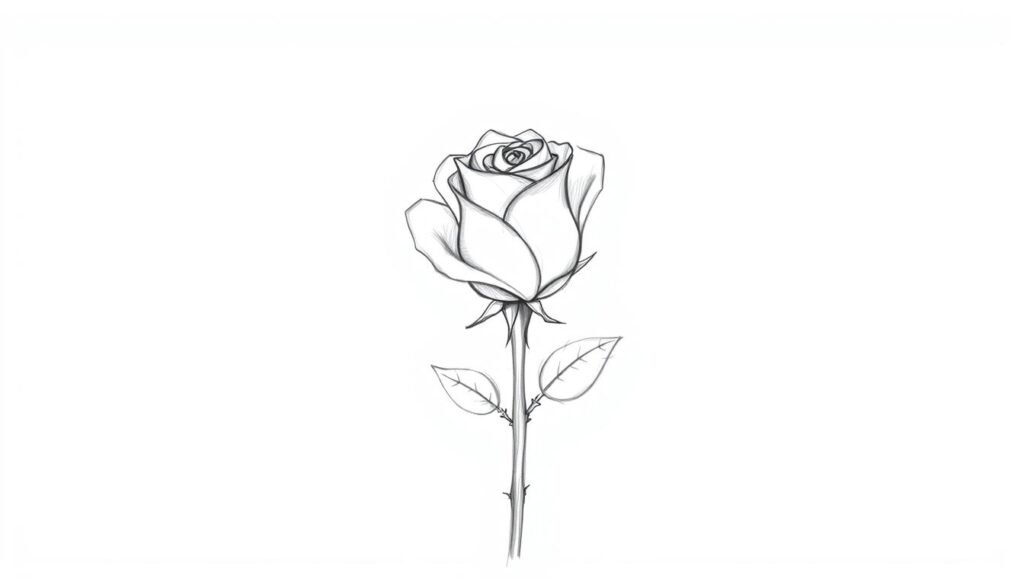
Every complex subject begins with simple components. I find that reducing the rose to its core shapes is the most effective way to grasp its form. This approach builds a strong framework before adding intricate details.
Breaking Down the Petals and Core
Visualize the flower as a series of concentric circles. The smallest circle at the center represents the tight bud. Progressively larger circles show how petals unfold in layers.
Start with an initial shape that is wider than it is tall. Think of a squished circle. Perfect geometry isn’t the goal; capturing the right proportion is.
For the core structure, I use a cylinder technique. Draw two slightly curved lines from the left and right edges of the circle. Angle them toward the middle without touching.
Connect them with a downward-curving line at the bottom. This creates a three-dimensional, cylinder-like shape.how-to-draw-batman
Now, focus on individual petals. Realistic petals are not simply rounded. They consist of two relatively straight edge lines and one curved line.
Understanding this structure is key to adding dimension. It prevents flat, unrealistic petals.
Add a semicircle inside the initial circle to define the inner petals. This semicircle should be more rounded. It leaves extra space on the sides for the layered structure.
Pay close attention to how petals overlap from the center outward. This staggered formation creates the depth that makes a rose look realistic.
Recognizing the Stem and Leaves
The stem connects to the center of the flower. Draw it with two parallel lines that can curve a bit for a natural look.
Leaves feature a center vein and slightly jagged edges. This contrasts with the soft, curved lines of the petals.
Studying your reference is crucial. Notice how these basic shapes exist within the actual rose. This foundational practice is a skill that benefits all your future drawing efforts.
Detailed Process: how to draw a rose step by step
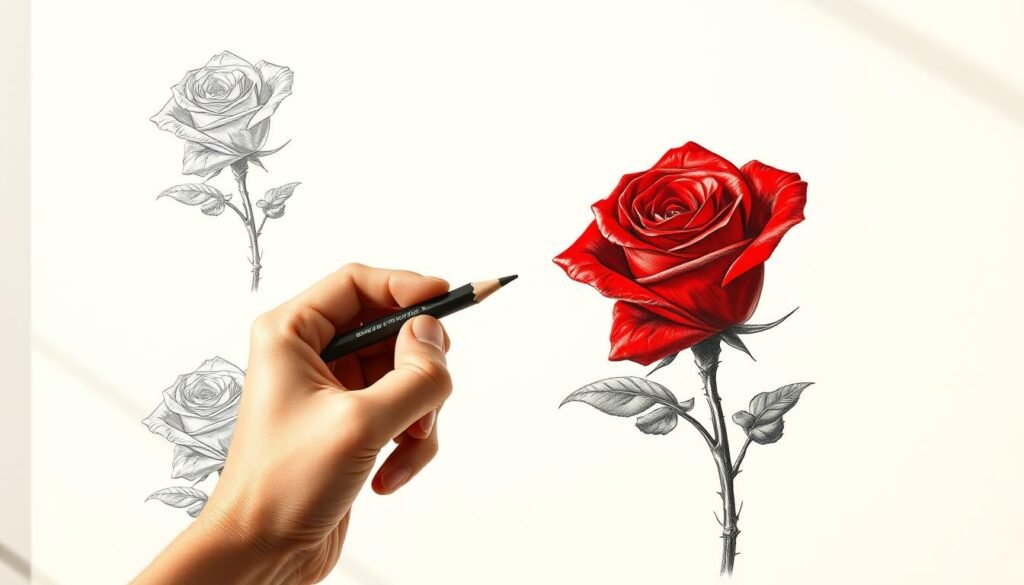
The transition from basic shapes to a fully formed flower requires careful attention to structure. This phase builds upon your foundational work with precise petal placement and line quality.
Establishing the Basic Outline and Cylinder Core
Begin with an elongated circle as your starting point. Add two lines on the left and right sides that angle slightly inward.how-to-draw-arms
Leave space between these lines to create a three-dimensional effect. Connect them at the bottom with a downward-curving line.
This forms the cylinder core that supports all subsequent petal layers. The shape should resemble looking down at the top of a cylinder.
Building Layers with Overlapping Petals
Start adding petals from the center outward. Each new layer should partially hide behind the previous one.
This overlapping technique creates depth and realism. Pay attention to how petals at different positions require unique characteristics.
Back petals appear smaller while front petals show more surface area. Keep adding layers until you achieve the desired fullness.
Integrating Curved and Straight Lines
The interplay between curved and straight lines defines the rose’s organic appearance. Use straighter lines along petal edges.
More dramatic curves work well at petal ends and folding points. This combination prevents flat, unrealistic petals.
Make sure each petal has two relatively straight edge lines and one curved connecting line. This structure gives proper dimension to your flower.
Techniques for Adding Shading and Texture
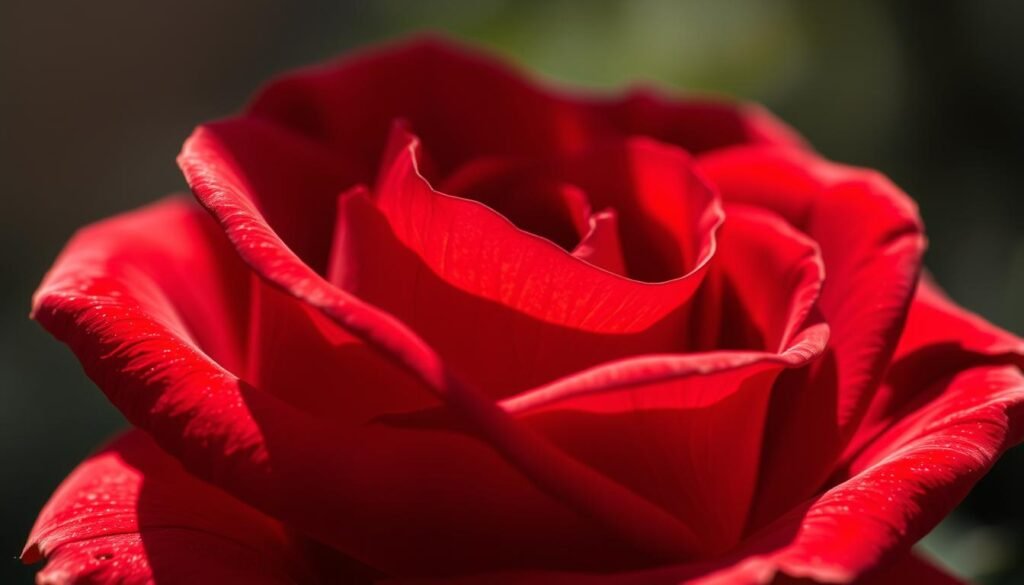
Shading techniques transform your rose from a simple outline into a lifelike creation. Before you begin to add shading, study your reference material carefully. Notice where light naturally hits the petals and where deep shadows form between overlapping layers.
Light and Shadow: Creating Depth
I always start by identifying the darkest areas first. The spiral center and spaces between petals typically need the most shading. These recessed areas receive minimal light, creating natural depth.
Directional shading follows each petal’s curve outward from the core. This technique creates organic texture rather than flat appearance. Strategic placement of shadows establishes that petals exist in different spatial planes.
Applying Subtle Shading and Highlights
Begin with minimal pressure and build darkness gradually. It’s easier to add more shading than to remove excess. Sometimes subtle application creates more realistic dimension than heavy-handed work.
For colored rose drawings, I recommend these approaches:
- Start with lightest colors and layer gradually
- Use curved strokes following petal direction
- Leave white spaces for highlight areas
- Practice blending on a test area first
Step back regularly to assess overall balance. Ensure no single area becomes too dark relative to the rest of your flower. This careful approach gives your drawing believable three-dimensional form.
Advanced Tips for Perfecting Your Rose Drawing

Mastering the final touches separates amateur attempts from professional-looking rose artwork. This phase focuses on refinement and overcoming common challenges.
Avoiding Common Mistakes
I often see beginners create petals that are too round. This approach lacks dimension. Realistic petals need two relatively straight edge lines with one curved connecting line.
Another critical error involves petal overlap. Understanding how petals layer creates essential depth. Some should appear hidden behind others.
Regularly step back from your work. This perspective helps assess overall composition. It prevents getting lost in small details.
Refining Details and Enhancing Realism
Drawing is an iterative process. Making adjustments to petal shapes is normal. This refinement creates a polished final piece.
Study your specific flower reference closely. No two roses look exactly alike. Capturing unique characteristics makes your artwork distinctive.
Keep all tools accessible throughout the process. This allows easy switching between pencils and erasers. Build up details gradually for consistency.
Know when your drawing is complete. If the rose looks three-dimensional, you’ve likely achieved your goal. Further work might diminish its spontaneous quality.
Conclusion
The journey from blank page to finished illustration demonstrates the power of structured learning. I sincerely thank you for investing your time in developing this rewarding skill with me.
Creating art is accessible to everyone, regardless of previous experience. I discovered my passion for illustration later in life, proving that artistic abilities can blossom at any stage.
I hope this guide has been both enjoyable and empowering. Please share it with friends who might also develop a love for creating beautiful roses. Your continued practice will make each new rose more refined than the last.
I welcome your questions and feedback in the comments below. Keep creating and exploring your artistic potential!