

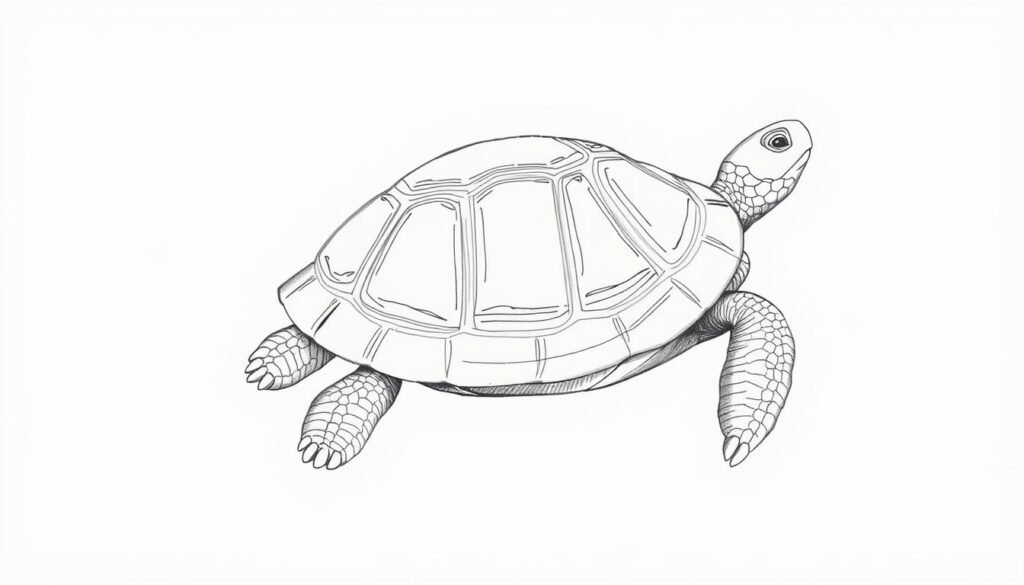
Drawing turtles is a fun and creative activity. With the right guidance, anyone can learn to do it. Turtles have been on our planet for over 220 million years. Their unique shell and gentle nature make them a favorite among artists.
I will guide you through creating a lifelike turtle drawing. You’ll get step-by-step instructions to capture the beauty of these amazing creatures on paper. This guide is for both beginners and experienced artists, aiming to improve your skills.
Key Takeaways
- Learn the basic steps to drawing a turtle
- Understand the importance of proportions in turtle drawing
- Discover techniques for adding details to your turtle artwork
- Improve your drawing skills with step-by-step guidance
- Create a realistic turtle drawing with ease
Introduction to Drawing a Turtle
Starting to draw a turtle is a fun journey for artists at any level. It’s not just about making something pretty. It’s also about learning about their body and capturing their spirit on paper.
Turtles are great for beginners because of their unique shapes and features. Drawing a turtle is both enjoyable and educational. You’ll learn about proportions, textures, and how to make your drawing come alive.
Why Drawing Turtles is Fun
Drawing turtles is fun for many reasons. First, their unique and recognizable shape makes them a joy to draw. Their shells offer endless creative possibilities, from simple to complex designs. Plus, turtles’ slow and gentle nature can inspire calm and creativity.
“The simple act of drawing can be a form of meditation, and turtles, with their serene nature, make perfect subjects for this.”
Also, drawing turtles lets you try out different techniques and mediums. You can use pencils, ink, or watercolors, making it even more engaging.
Tools You’ll Need for Drawing
To begin drawing a turtle, you’ll need some basic tools. These include:
- A set of graphite pencils (HB, 2B, 4B, 6B) for sketching and shading.
- A good quality eraser for correcting mistakes.
- Sketch paper that is suitable for drawing.
- A sharpener to keep your pencils sharp.
- Optional: colored pencils or watercolors for adding color to your drawing.
For more detailed tips and techniques on drawing turtles, visit Mastering the Art of Turtle Drawing. Having the right tools makes drawing smoother and improves your artwork’s quality.
Basic Shapes to Start Your Turtle
Drawing a turtle can be made easier by breaking it down into basic shapes. This method helps in creating a more accurate and proportionate drawing. By understanding the fundamental shapes, you can easily construct the turtle’s body.
Drawing the Shell: The Central Shape
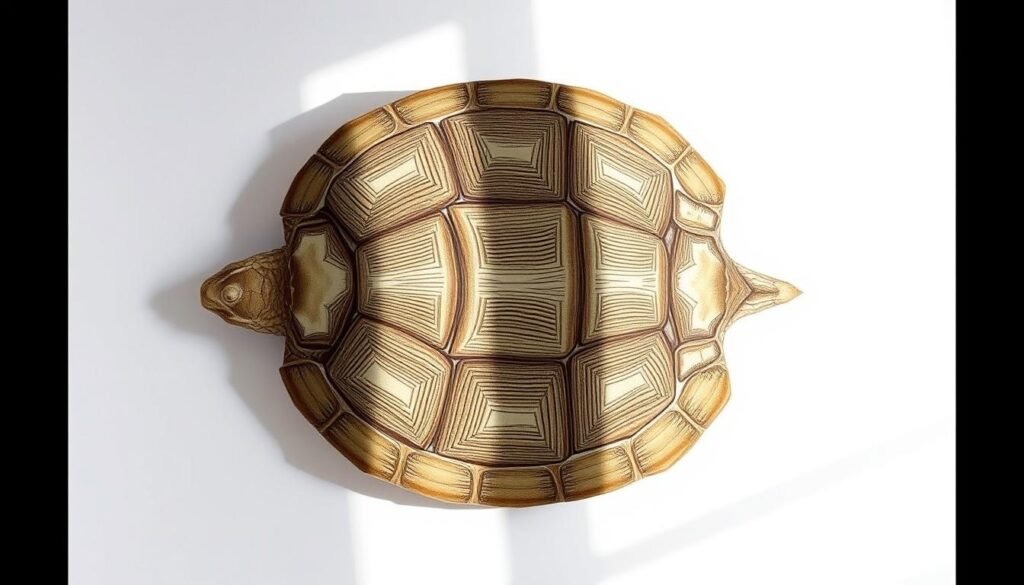
The shell is the most distinctive feature of a turtle and serves as the central shape around which the rest of the body is built. To draw the shell, start with a large oval shape. This oval will form the main part of the shell.
Adding the Turtle’s Head
Once the shell is drawn, you can add the turtle’s head. The head is typically a smaller oval or circle connected to the shell by the neck. The size and position of the head relative to the shell are crucial for a realistic drawing.
Sketching the Legs and Tail
The legs and tail are essential components that complete the turtle’s body. The legs are usually depicted as short and sturdy, while the tail is relatively short and thick. You can represent the legs and tail using simple geometric shapes such as rectangles and triangles.You can learn more about how-to-draw-people
| Body Part | Basic Shape | Description |
|---|---|---|
| Shell | Oval | Main body of the turtle |
| Head | Smaller Oval/Circle | Connected to the shell by the neck |
| Legs | Rectangles/Triangles | Short and sturdy |
| Tail | Triangle/Rectangle | Relatively short and thick |
For more detailed instructions and printable guides on how to draw a turtle, you can visit Arty Crafty Kids. Their step-by-step guide can help you refine your drawing skills.
“The simplest explanation is that it’s just a drawing, but the complexity lies in capturing the essence of the subject.” –
By mastering these basic shapes, you’ll be well on your way to creating a realistic and engaging turtle drawing. Practice is key, so don’t be afraid to experiment and refine your skills.
Outlining Your Turtle Drawing
Now that you have the basic shapes of your turtle, it’s time to add a clear outline. Outlining is key to making your artwork look great.
Use a Pencil for Easy Corrections
Outlining with a pencil makes it easy to fix mistakes. It’s a flexible tool that lets you tweak your drawing as you go. For a sharper outline, try a darker pencil or a fine-tip pen.
Creating Clean Lines with Ink
Once you’re sure of your sketch, ink can help you draw bold lines. You can use fine-tip pens or brushes for this. Ink can make your turtle drawing look more polished. For more tips on drawing, check out https://letsdrawthat.com/how-to-draw-a-turtle/.
The Importance of Outline Thickness
The thickness of your outline greatly affects your turtle’s look. A thicker line makes your turtle stand out more. A thinner line gives a softer, more delicate look.You can learn more about how-to-draw-a-girl
When choosing outline thickness, consider a few things:
- The size of your drawing: Bigger drawings can handle thicker lines, while smaller ones need finer ones.
- The style you’re aiming for: Cartoon styles often use thicker lines, while realistic ones use thinner ones.
- The medium you’re using: Different tools give different line widths, so experiment to find the best fit.
By paying attention to your outline, you can improve your turtle drawing’s quality. This will help you achieve the look you want.
Adding Details to Your Turtle
Adding details to your turtle drawing is where the magic happens. It turns a simple outline into a captivating piece of art. We’ll focus on enhancing our turtle with textures, expressive features, and detailed limbs.
Texturing the Shell
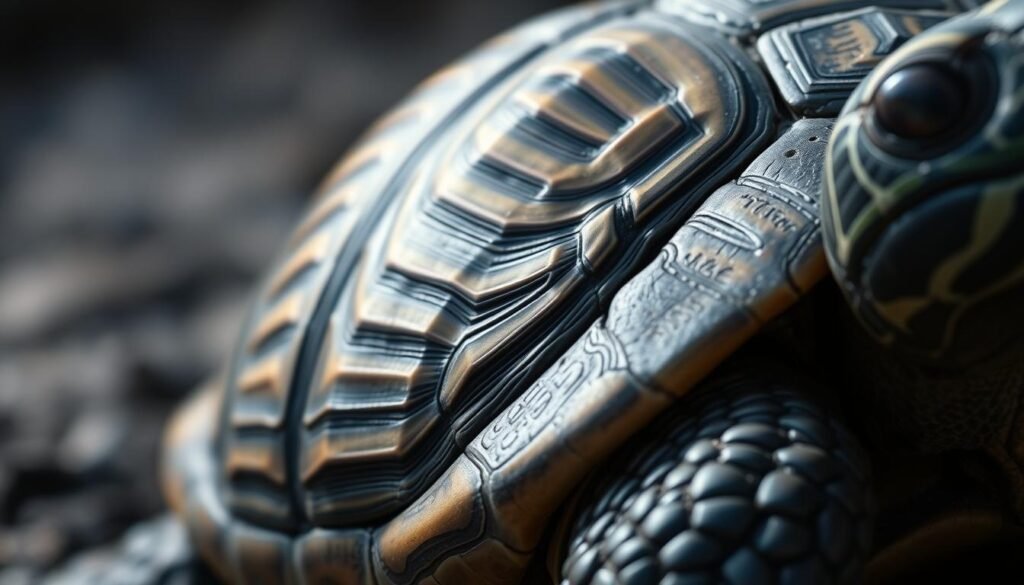
The shell is a defining feature of a turtle. To texture it, start by drawing scutes or the individual plates on the shell. These can be drawn with gentle, curved lines that follow the shape of the shell.
You can also add some texture by suggesting the growth rings on each scute.
Drawing the Eye: Making it Expressive
The eyes are crucial for bringing personality to your turtle. To draw an expressive eye, start with a simple circle for the eyeball.
Add a smaller circle or oval for the pupil, and consider adding a small highlight to give the eye a sense of life.
Detailing the Limbs and Tail
For the limbs and tail, add details such as scales or skin texture. You can use short, gentle lines to suggest the softness or roughness of the turtle’s skin.
Claws can be added at the end of the limbs, and the tail can be detailed with scales or a subtle texture.
By focusing on these details, you’ll be able to transform a simple turtle outline into a more engaging and realistic drawing.
Remember, the key is to observe the features you’re trying to draw and capture their essence.
Choosing the Right Colors for Your Turtle
Choosing the right colors is key to making your turtle drawing pop. The colors you pick can really change how your artwork looks. They can make it more interesting and eye-catching.
There are a few ways to color your turtle. You can go for realistic color palettes that match turtles in nature. Or, you can try innovative color combinations to make your turtle unique.
Realistic Color Palettes
For a realistic look, use green, brown, and yellow. These colors blend well with the environment. You can mix different shades to add depth and make your turtle look real.
Creative Color Combinations
Want to add your own twist? Try using bright colors like blues, purples, and oranges. This will give your turtle a fun and creative look. It’s a great way to show off your artistic side.
Using Watercolors vs. Colored Pencils
Choosing between watercolors and colored pencils depends on what you want. Watercolors are great for soft, blended effects. They’re perfect for backgrounds or subtle shading. Colored pencils offer more control for detailed work and bright colors.
For more tips on drawing turtles, including coloring and shading, check out https://www.emilydrawing.com/how-to-draw/how-to-draw-a-turtle/. This guide has step-by-step instructions to help you get better at drawing.
Shading Techniques for Depth
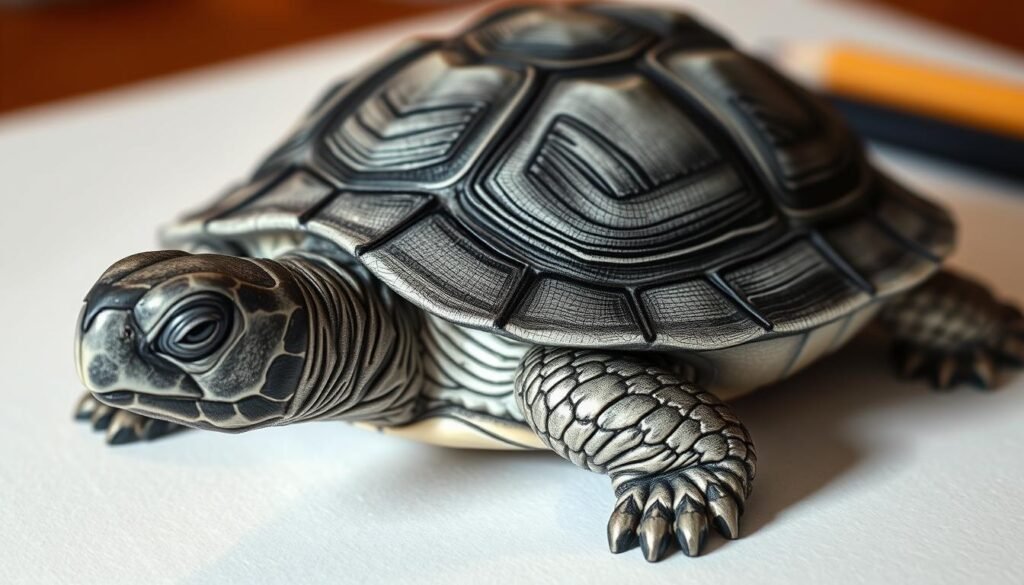
To make your turtle drawing come alive, learning shading is key. Shading adds depth and makes your drawing pop. It turns a flat image into a three-dimensional masterpiece that grabs your attention.
Basic Shading for Beginners
For beginners, basic shading is about understanding light and shadow. First, figure out where light falls and where shadows hide. Use pencils or charcoal to play with light and dark.
Simple shading techniques like hatching, cross-hatching, and stippling are great for starters. Hatching uses parallel lines to follow your turtle’s shape. Cross-hatching adds depth with lines at different angles. Stippling creates detailed shading with dots, with more dots for darker areas.
Advanced Shading Techniques
When you get the hang of basic shading, try more advanced methods. Smooth blending helps create realistic transitions between shades. This makes your turtle look more lifelike.
Another advanced trick is mastering cast shadows. These are dark spots where your turtle blocks the light. Getting these right adds a lot of depth to your drawing.You can learn more about how-to-draw-hello-kitty
Highlighting to Make Your Turtle Pop
Highlighting is all about adding bright spots where light hits your turtle. Use a white pencil or leave areas blank, depending on your medium.
To make your turtle stand out, balance contrasting highlights and shadows. The right mix of light and dark will catch the viewer’s eye. Don’t forget, subtle highlights can be just as powerful as bold ones. Experiment to find the perfect balance for your drawing.
Different Styles of Turtles to Explore
Once you get the hang of drawing a turtle, try out different styles. The style you pick can change how your artwork looks and feels. It lets you show your creativity in many ways.
Exploring different styles can improve your art skills. It also lets you express yourself in new ways. Let’s look at some popular styles you can try.
Cartoon Turtles
Cartoon turtles are fun and playful. They have big eyes, bright colors, and funny faces. To draw one, make the shapes simple and focus on the features that make it look friendly.
Tips for drawing cartoon turtles:
- Use bold lines and bright colors to make your turtle stand out.
- Exaggerate features like eyes and mouth to give your turtle personality.
- Keep the shapes simple and rounded for a more cartoonish look.
Realistic Turtles
If you like a more real look, try drawing realistic turtles. This style needs detail, from the shell texture to the skin patterns. Study images and practice shading to get the light and shadow right.
Key elements for realistic turtle drawings:
- Accurate proportions and anatomy.
- Detailed textures and patterns.
- Effective shading to convey depth and dimension.
Mythical or Fantasy Turtle Designs
Mythical or fantasy turtles let your imagination soar. You can mix turtle parts with other animals or add magic. This style is all about creativity and can lead to amazing artwork.
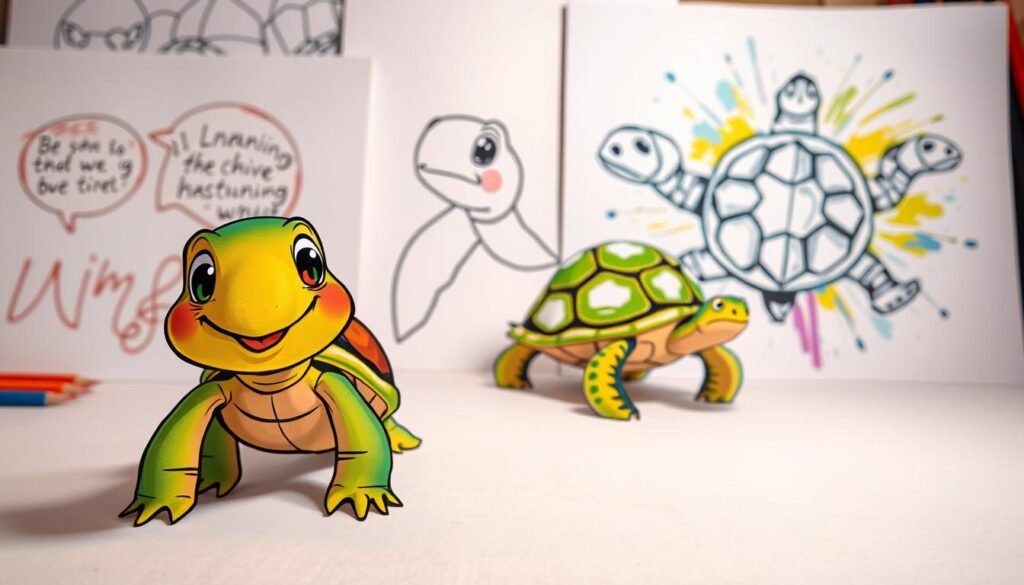
| Style | Characteristics | Tips |
|---|---|---|
| Cartoon | Exaggerated features, bright colors | Use bold lines, simplify shapes |
| Realistic | Detailed textures, accurate proportions | Study reference images, practice shading |
| Mythical/Fantasy | Imaginative elements, mixed features | Experiment with combinations, add magical elements |
Common Mistakes to Avoid When Drawing
When you start drawing a turtle, knowing common errors can boost your skills. Drawing a turtle is fun and creative. But, knowing the pitfalls can greatly improve your artwork’s quality.
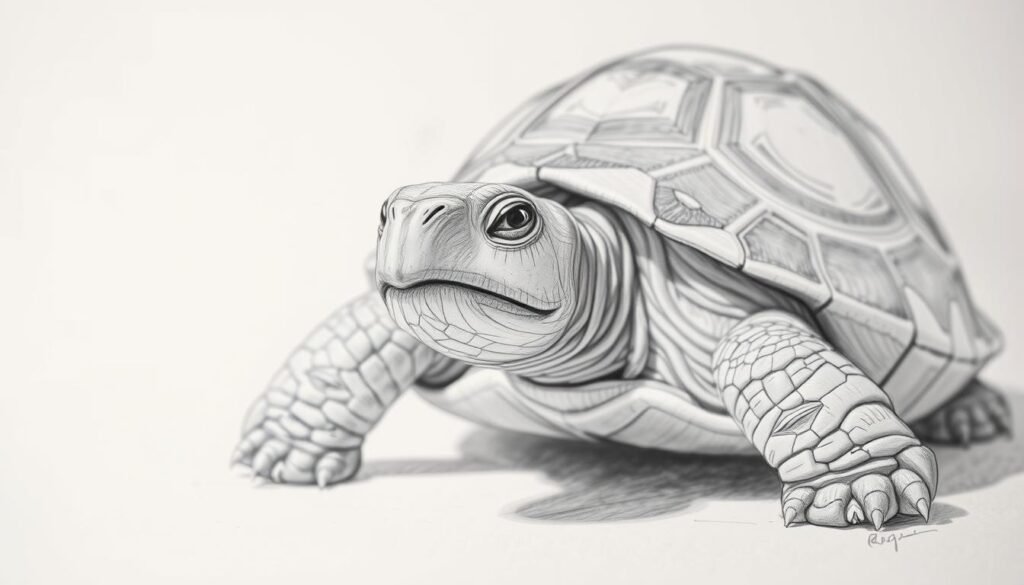
Overcomplicating the Shapes
One big mistake is making shapes too complicated. Beginners often add too many details at once. This makes the drawing cluttered and hard to follow.
To fix this, start with simple shapes. Use a big oval for the shell and a small circle for the head. This keeps your drawing clear and in proportion.
Neglecting Proportions
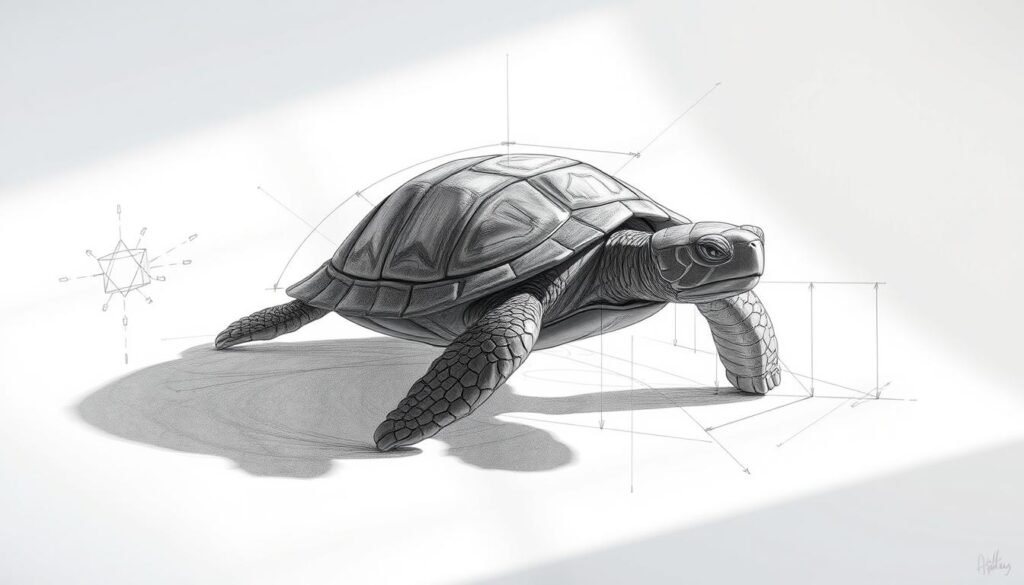
Another mistake is ignoring proportions. Making sure each part of the turtle is the right size is key for a realistic drawing. For example, the shell should be much bigger than the head and legs.
To get this right, use reference images or grid methods. If you want to draw a sea turtle, check out this guide.
Ignoring the Importance of Practice
Not practicing enough is a big mistake. Drawing, like any skill, needs regular practice to get better. Make time each day to draw turtles, focusing on texture, shading, and expression.
Regular practice boosts your skills and confidence. This lets you create more detailed and interesting drawings over time.
By knowing these common mistakes and avoiding them, you can greatly improve your turtle drawings. Remember, mastering how to draw a turtle takes patience, practice, and attention to detail.
Finalizing Your Turtle Drawing
The final stages of our turtle drawing are crucial. Let’s review and refine our work to ensure it meets our expectations. Taking a step back to evaluate it as a whole can reveal areas that need improvement.
Reviewing Your Work
Start by examining your turtle drawing for proportions, details, and overall aesthetic appeal. Check if the shell is textured right, the eyes are expressive, and the limbs are well-defined. This step is crucial in identifying any discrepancies or areas that require additional detailing.
Making Final Adjustments
Once you’ve identified areas for improvement, make the necessary adjustments. This could involve refining the outline, enhancing the shading, or adding more texture to the shell. If you’re interested in exploring different styles, such as drawing a sea turtle, you can find more resources on how to draw a sea turtle.
Signing Your Artwork
Signing your artwork is a significant step that marks the completion of your turtle drawing. It adds a personal touch and gives your work an identity. Consider signing your name in a corner or on the back of your artwork, depending on your preference.
By following these steps, you’ll not only finalize your turtle drawing but also gain satisfaction from creating something unique and personal. Remember, practice is key to improving your drawing skills, so don’t hesitate to start your next drawing project.You can learn more about how-to-draw-hands
Sharing Your Turtle Art
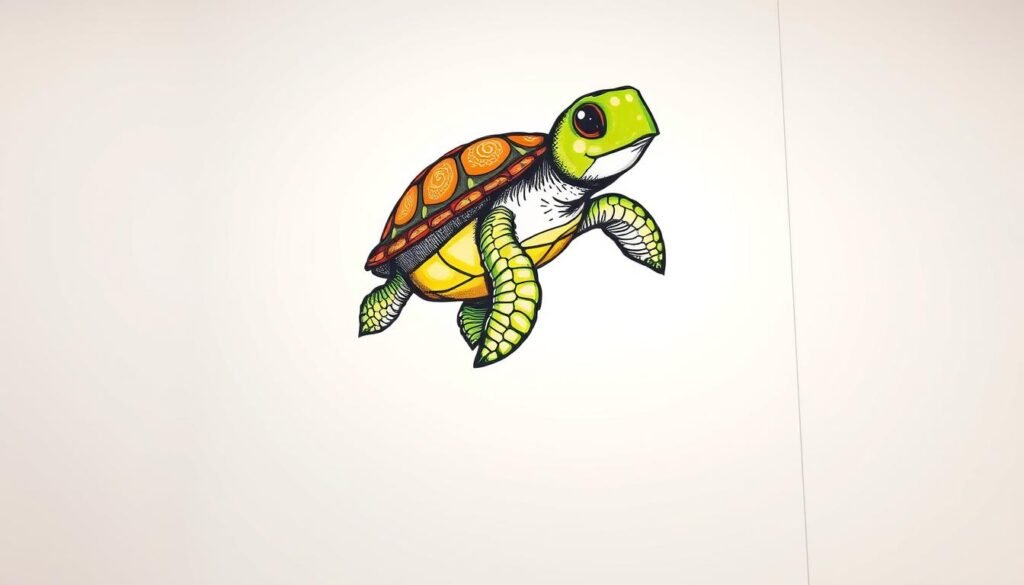
Sharing your artwork can be very rewarding. It lets you connect with other artists and get feedback. After finishing your turtle drawing, you’ll feel proud and want to show it off.
Where to Post Your Artwork Online
There are many places to share your turtle art. Start with social media sites like Instagram and Facebook. They have big communities of artists and art lovers.
You can also try art-specific platforms like DeviantArt or Behance. There, you can get feedback and meet other turtle drawing enthusiasts.
Joining Art Communities
Joining online art communities is very helpful. These places offer a supportive space to share your work and learn from others. Look for forums or groups focused on drawing and illustration.
Don’t be shy to share your turtle artwork and ask for feedback. This will help you grow as an artist.
Getting Feedback on Your Drawing
Feedback is key to improving your drawing skills. When you share your turtle art, be open to all kinds of feedback. Use it to get better and try new things in your drawings.
Remember, the more you practice and get feedback, the better you’ll get at drawing turtles and more.
By sharing your artwork and joining art communities, you’ll not only get better at drawing. You’ll also enjoy the process of creating and sharing your art with others.
Conclusion: Your Turtle Drawing Journey
Learning to draw a turtle is a fun and rewarding journey. With practice and patience, you can create stunning turtle drawings. Follow the steps in this guide to get started.
Practicing for Perfection
Keep practicing to get better at drawing turtles. Try out different techniques and don’t be scared to experiment. For more tips and techniques, check out The Art Chi for more resources.
Exploring New Subjects
After mastering turtle drawings, try drawing other animals. This will help you learn new techniques and styles. It’s a great way to grow as an artist.