

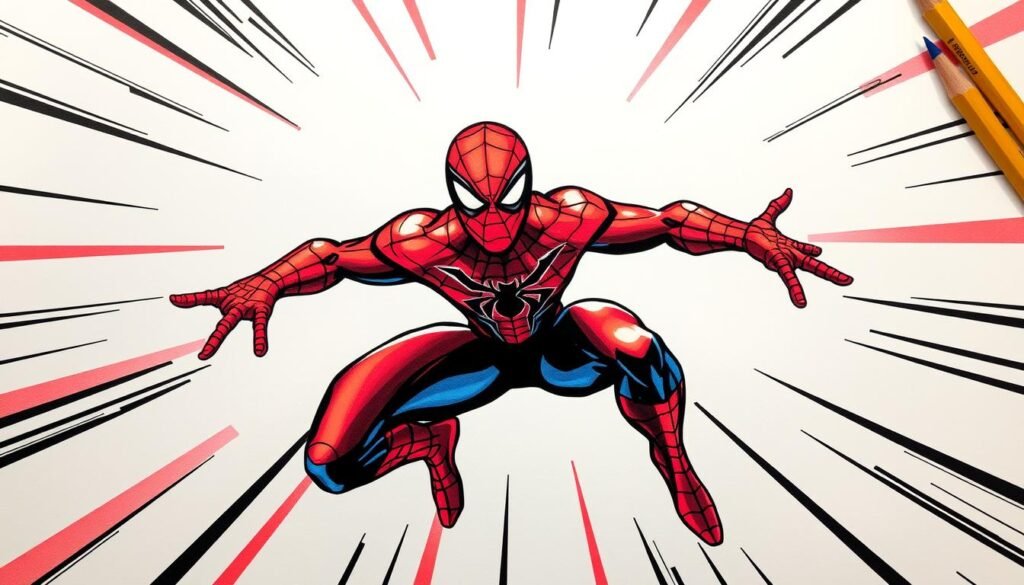
Did you know that Spider-Man is one of the most searched-for superheroes by aspiring artists online? His dynamic poses and iconic suit present a unique and exciting challenge. I am thrilled to guide you through mastering this classic character.
This comprehensive tutorial breaks down the process into clear, manageable steps. We will start with basic shapes and build up to the intricate details that make Spider-Man instantly recognizable. My goal is to make this artistic journey both enjoyable and highly educational.
Whether you are just starting out or looking to refine your illustration skills, the content here is designed for you. I will share professional techniques I use to capture the essence of your friendly neighborhood hero. You will learn not just the steps, but the reasoning behind them.
By the end of this guide, you will have the confidence to illustrate Spider-Man in various action-packed poses. Let’s begin this creative adventure together.
Key Takeaways
- Spider-Man is a highly popular subject for artists, making this skill valuable.
- The tutorial uses a step-by-step approach, starting from simple foundations.
- Techniques are provided for artists at different skill levels.
- Understanding the “why” behind each step enhances your overall artistic ability.
- You will learn to capture Spider-Man’s distinctive proportions and webbing.
- The guide aims to build confidence in drawing dynamic superhero poses.
- This artistic journey covers the entire process, from sketch to finished piece.
Materials and Basic Guidelines for Drawing Spider-Man
The equipment you choose plays a crucial role in capturing the dynamic essence of this popular hero. My material selection policy focuses on tools that offer precision without excessive cost.
Essential Tools for Sketching and Inking
For the initial sketching step, I rely on light graphite pencils like HB or 2H. These allow gentle pressure and easy guideline removal later. My preferred way involves having multiple pencil grades available.
Darker pencils (4B or 6B) create bold outlines and definition. A quality eraser is essential for transforming rough sketches into polished illustrations.
| Pencil Grade | Primary Use | Pressure Level |
|---|---|---|
| HB or 2H | Initial construction lines | Light pressure |
| 4B or 6B | Final outlines and shading | Firm pressure |
| Fine-tip pens | Inking finished artwork | Consistent pressure |
Setting Up Your Workspace and Paper Tips
Taking the time to organize your workspace significantly improves drawing quality. I position my paper in the upper portion, leaving room below for reference materials.
Choose smooth, medium-weight drawing paper that handles both pencil and potential ink applications. Adequate lighting ensures you see details clearly throughout the creative process.
how to draw spider-man: Mastering the Face and Webbing Details

Achieving the iconic Spider-Man look hinges on mastering two key elements: the expressive eyes and intricate webbing. These features define the character’s masked appearance more than any other detail. I approach this phase with careful attention to symmetry and proportion.
| how-to-draw-a-dragon-comprehensive-guide-for-beginners/ |
Creating the Mask and Eye Proportions
I begin by drawing a vertical guideline down the center of the head. This ensures perfect symmetry for both sides of the mask. The eyes become my primary focus at this stage.
For the eye shapes, I sketch two triangles with strategic point placement. One point rests in the middle of the face, another near the center guideline, and the final point extends toward the top sides of the head. I then round the bottom of each triangle to create that characteristic curved look.
Extending the top corners upward toward the temples achieves the dramatic, expressive shape Spider-Man is known for. Mirroring both eye shapes perfectly creates a professional-looking result.
Drawing the Intricate Webbing Patterns
The webbing pattern requires systematic application across the entire head surface. I draw straight lines radiating outward from between the eyes. These lines extend toward the top of the head at various angles.
Between each straight line, I add curved connectors that bow downward above the eyes and upward below them. The webbing segments gradually increase in size as they move away from the center toward the sides. This creates realistic perspective across the mask.how-to-draw-a-flower
I maintain clarity by avoiding webbing lines over the eye areas themselves. The combination of precise eyes and systematic webbing creates Spider-Man’s signature appearance.
Step-by-Step Breakdown of Spider-Man’s Body Construction
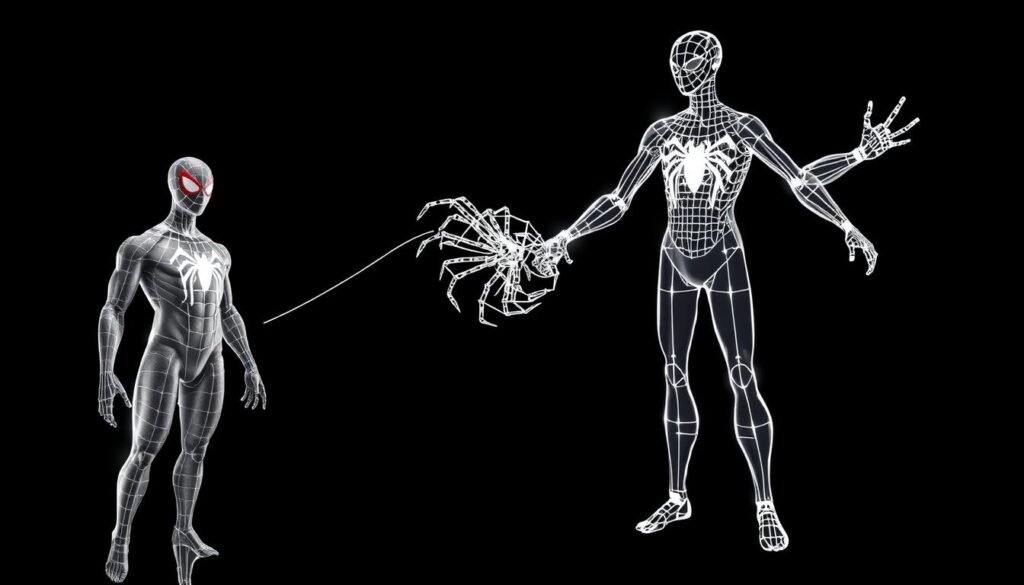
Proper proportions separate amateur sketches from professional-looking superhero illustrations. This phase focuses on building the character’s iconic athletic frame from basic shapes.
Sketching the Head, Torso, and Limbs
I begin with a small circle in the paper’s upper portion. Below it, I add an oval with a pointed bottom for the chin. The oval’s width is exactly half the circle’s width.
From the jaw’s sides, I draw two vertical neck lines. These connect to a horizontal chest oval positioned below. The chest length is twice the head length.how-to-draw-a-face
The torso uses two angled lines descending from the chest. These create a waistline about three-quarters the upper chest width. An upside-down pentagon completes the lower torso.
Mapping Out the Pose and Gestures
For arms, I sketch half-circles at the chest sides for shoulders. Rounded U-shapes form the upper arms. Vertical ovals create the forearms.
Narrow rectangles become wrists, with small circles for fists. The legs start with U-shapes extending from the bottom torso. Circles represent knees.
More U-shapes and vertical rectangles form the lower legs. I position one foot as an angled triangle. The other uses a square shape for forward direction.
Adjusting Proportions for a Dynamic Look
Throughout this construction step, I maintain light pencil pressure. This allows easy guideline removal later. I constantly verify proportions against Spider-Man’s athletic physique.
The upper legs are half as long as the entire torso. The final pose should appear action-ready rather than static. This creates the character’s signature dynamic presence.
Advanced Techniques to Enhance Realism and Dynamic Poses
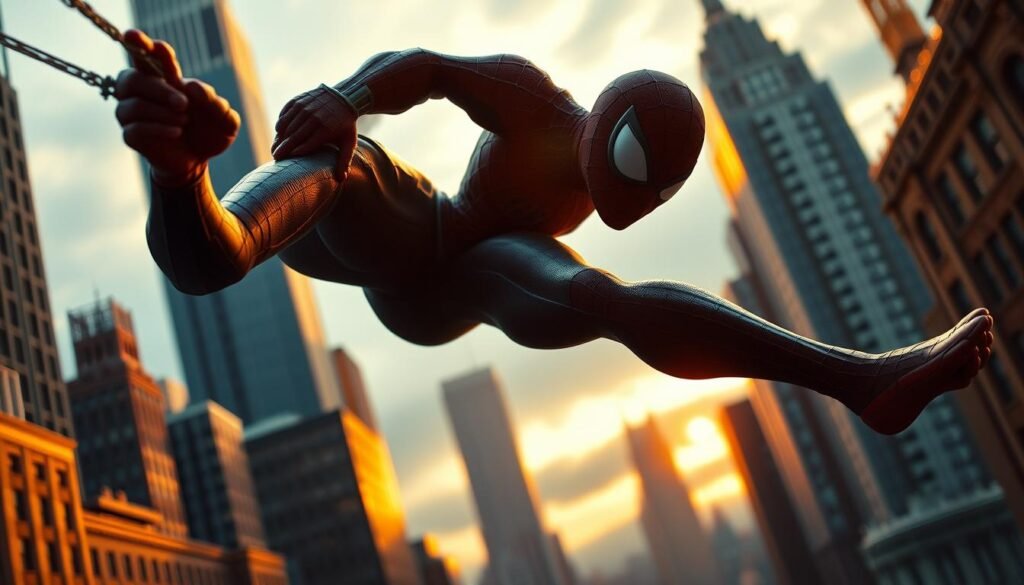
With the body construction complete, we now enhance the figure with anatomical and costume details. This phase transforms a basic sketch into a powerful, three-dimensional illustration.
I focus on defining the superhero’s physique and adding the iconic suit elements. These final touches create a truly authentic character.how-to-draw-a-person
Adding Muscle Definition and Textural Details
I switch to a darker graphite pencil for the final lines. My stroke is smooth and confident, connecting all shapes seamlessly. I make lines bulge slightly at joints like knees and elbows.
For muscle definition, I add curved lines near the bottom of the chest. Short, angled lines near the inner thighs suggest powerful leg muscles. I sketch horizontal lines curving up from the lower torso for the signature V-line abs.
The hands require careful attention. I outline thumbs close to the torso and add two or three knuckles on each clenched fist.
Creating the spider logo is a critical step. I draw a small diamond in the chest center, with a slightly smaller one overlapping above. Eight short lines extend from the center to form the legs.
The webbing pattern brings the costume to life. I draw vertical lines through the red segments, contouring to the body shape. Then, I add horizontal lines that curve upward between them. Around the eyes and across the head, the webbing must flow naturally with the mask’s contours.
Incorporating Shadows and Highlights for Depth
Shading adds dramatic depth. I consider how light falls on a three-dimensional form. Areas under muscles, in joint creases, and along the body’s sides receive darker tones. Raised areas remain lighter to suggest highlights.
Studying a reference video can be incredibly helpful at this time. It shows how shadows interact with the costume’s webbing and the large eye shapes on the head.
My preferred way to finish involves inking with a pen. After the ink dries, I erase all pencil guidelines. This reveals a clean, professional illustration ready for color.how-to-draw-stitch
I use colored pencils for the final touch. All webbed portions become red, and the remaining segments are blue. I use black to shade muscles, adding depth around the eyes and other features.
| Shading Area | Pencil Technique | Visual Effect |
|---|---|---|
| Under Muscles | Cross-hatching | Creates depth and weight |
| Joint Creases | Soft blending | Enhances realism of movement |
| Body Sides | Gradual tone gradient | Suggests rounded form |
Conclusion
Mastering the art of illustration requires dedication and consistent practice, much like any valuable skill. I hope this comprehensive content has equipped you with the confidence to create impressive artwork from your own creative space.
My policy throughout this guide has been to deliver clear, actionable instructions at every step. This approach ensures you understand both the techniques and the reasoning behind them.
Creating artwork of your friendly neighborhood hero is incredibly rewarding. Like all artistic pursuits, it demands patience. Don’t be discouraged if your first attempt doesn’t meet your expectations perfectly.
I encourage you to revisit each section. Following along with a reference video can reinforce your learning. For additional guidance, explore this detailed Spider-Man tutorial.
Remember that every professional artist began as a beginner. With regular practice, you’ll develop your unique style. You’ll soon create artwork that captures the energy and heroism of this iconic character.