

Did you know that over 85% of aspiring artists cite rendering hair as one of their top three artistic challenges? This single feature holds immense power in defining a character’s personality and mood. Yet, many creators struggle, treating it as a mass of individual lines rather than a cohesive, three-dimensional form.
I have compiled professional methods to transform this complex task. My goal is to simplify the process, moving beyond common mistakes. We will focus on volume, shape, and overall design. This approach turns a daunting project into a manageable and enjoyable part of character creation.
This guide walks you through my proven steps, from basic construction to lifelike details. You will learn to think about hair as a solid object first. This foundational understanding is more valuable than any formula. It allows you to adapt these techniques to any style, from realistic portraits to dynamic comic characters.
By breaking down the structure, you gain confidence. I’ll share insights from various professional artists and specialized art tutorials. These methods help you avoid repetitive lines and create natural flow. The result is hair that looks believable and full of life.
Key Takeaways
- Hair is a major point of expression for characters and a common challenge for artists.
- The key to success is simplifying the structure and thinking in three dimensions.
- Avoid drawing hair as a flat mass of lines; focus on volume and overall shape instead.
- Understanding the logic behind the technique is more important than memorizing steps.
- These methods can be adapted to various art styles, including realistic, comic, and anime.
- Professional approaches help you avoid common beginner mistakes for more natural results.
Understanding Hair Construction and Volume
Professional artists consistently emphasize that proper hair construction begins with visualizing the space between scalp and hair edge. This gap creates the essential volume that makes hair look natural rather than painted on.
Breaking Down Hair Anatomy and Structure
I approach hair anatomy by remembering the skull’s spherical shape. Each lock originates from specific points on the scalp. The form follows the head‘s curves.
Gravity pulls hair downward while the underlying head shape influences how it wraps around. This creates natural-looking volume. Hair forms in clumps rather than individual strands.
Defining the Hairline and Sectioning the Hair
I always define the hairline first. It serves as the base reference point. Even when covered by style, this foundation guides all sections.
Sectioning begins by identifying the part where hair divides. This helps manage directional flow in complex styles. Each area follows distinct curves and contours.
For detailed guidance on working with digital tools, explore this comprehensive digital art tutorial. It complements these foundational principles perfectly.
Essential Steps: How to Draw in Hair
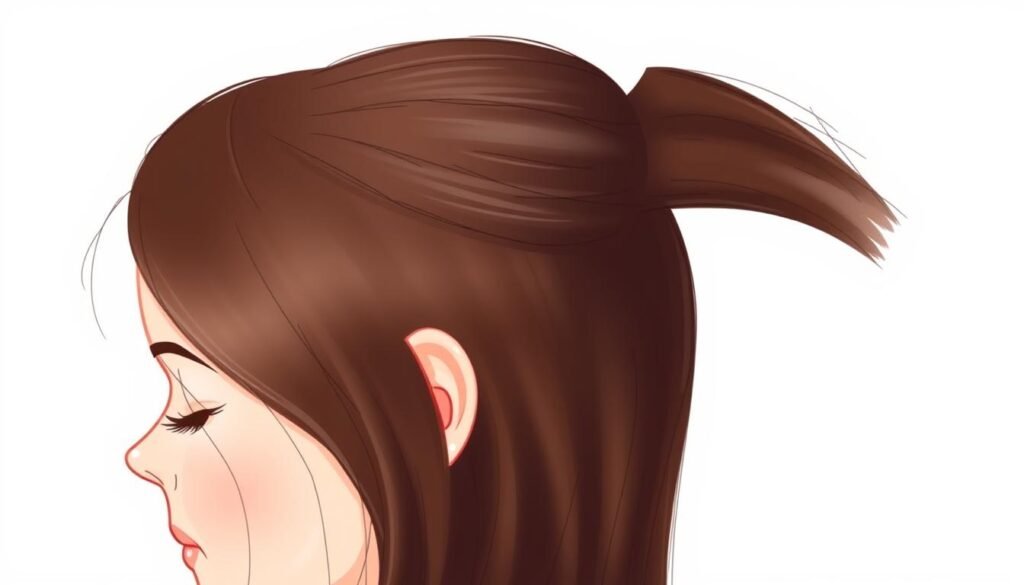
My process for rendering hair relies on a clear, three-step sequence. This method builds from a solid foundation to intricate details. It prevents overwhelm by focusing on one logical step at a time.
This systematic design ensures the final style has believable volume and flow. I start with the base, then the mass, and finally the movement. Each phase informs the next.
Establishing the Basic Hair Shape
The first step is defining the hairline, even if it’s hidden. This establishes the base from which all hair grows on the head. It’s a critical reference point for the entire character.
Next, I block in the overall shape using simple geometric forms. A style might resemble a bell, triangle, or have an “M” pattern near the scalp. This simplification is a powerful design tool.
Finally, I add directional lines to map the flow. These lines guide the placement of smaller clumps and shapes within the main form. This foundational approach to drawing hair creates a convincing structure every time.
Exploring the Ribbon Technique and Simplified Forms
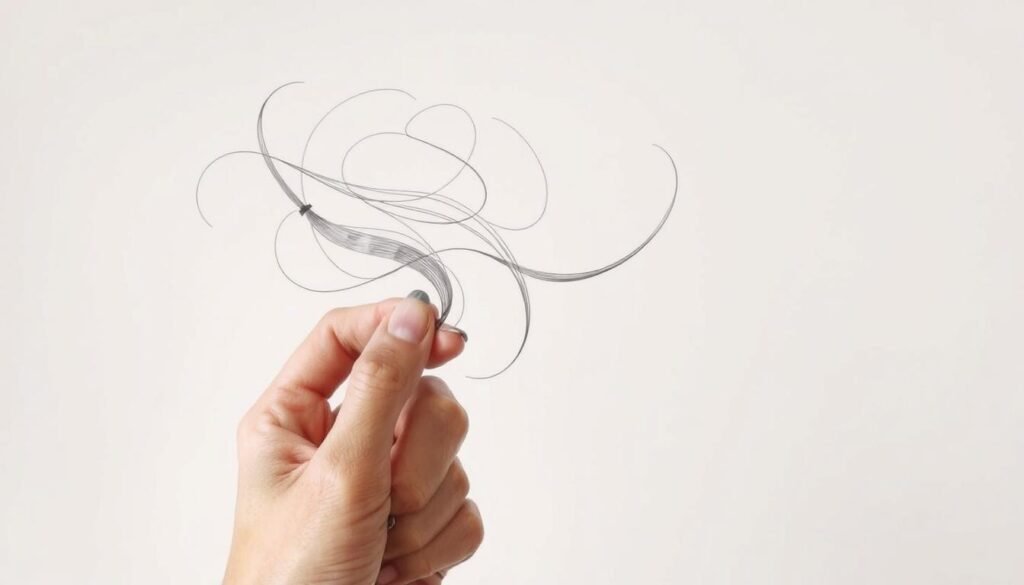
A significant breakthrough in my own work came from adopting the ribbon technique for creating hair. This approach moves beyond thinking in individual lines and instead focuses on flowing three-dimensional forms.
It immediately introduces natural curves and believable volume. The method builds depth logically, making complex styles manageable.how-to-draw-a-rose
Applying the Ribbon Effect for Natural Curves
I begin with a simple S-curve as the foundation. Adding successive ribbon shapes that wrap around each other builds the structure.
Each new ribbon adds dimension. The areas where they overlap are crucial for creating depth, which I later reinforce with shadows.
Small flips at the ends of the ribbons, often called “Beauty Lines,” add personality and movement to the design. These details prevent the hair from looking static.
Blocking in Complex Hair Shapes
I pair the ribbon method with blocking in the overall shape. This technique simplifies elaborate styles using basic geometric volumes.how-to-draw-people
Blocking makes the process more manageable. It also provides an excellent opportunity to inject personal character into the work.
For a more cartoony look, I use bigger, simpler shapes. Mastering both techniques allows me to tackle any hairstyle with confidence.
Mastering Texture, Shadows, and Highlights
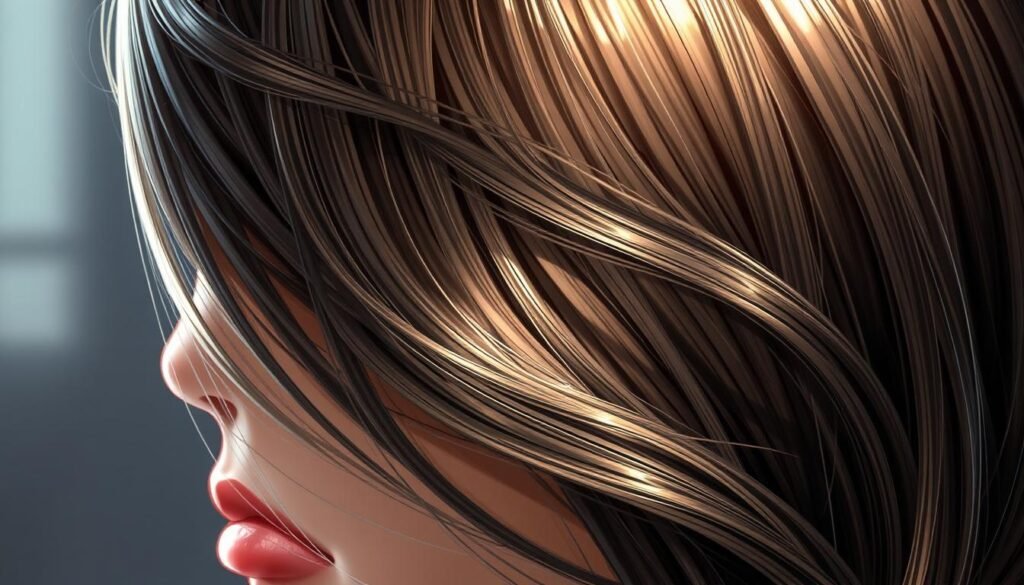
My rendering process focuses on four key elements that work together to create the illusion of real hair. This phase transforms simple shapes into dimensional forms with believable texture.
I build these elements in a specific order. This layered method ensures a strong foundation. It prevents the final work from looking flat or messy.how-to-draw-a-girl
Incorporating Light Sources and Value Changes
I always define my light source first. This decision guides every choice for shadows and highlights. Consistency here is vital for a believable result.
The first step is blocking in flat, graphic shadows. I connect these areas to create a strong value structure. This establishes the core separation of light and dark.
Next, I develop the halftone areas. This is the gradient between shadow and light. Here, I add most of the texture to separate smaller groups of strands.
Highlights are the final touch. I design these bright shapes carefully, as they catch the eye. I vary their length, thickness, and edge quality for visual interest.
This digital painting guide offers excellent methods for applying these values with software tools. The principles remain the same across mediums.
| Element | Primary Function | Key Consideration |
|---|---|---|
| Shadows | Establish volume and depth | Connect shapes for a strong design |
| Halftones | Create transition and texture | Add directional lines following the form |
| Highlights | Define surface and catch light | Vary shape and value for interest |
| Texture Lines | Break up contours and add realism | Use sparingly to suggest strands |
One essential tip is to look for patterns. I often see “W” shapes in highlights and half-moon forms in shadows. Repeating these patterns creates a cohesive texture.
Practicing Different Hair Styles and Textures
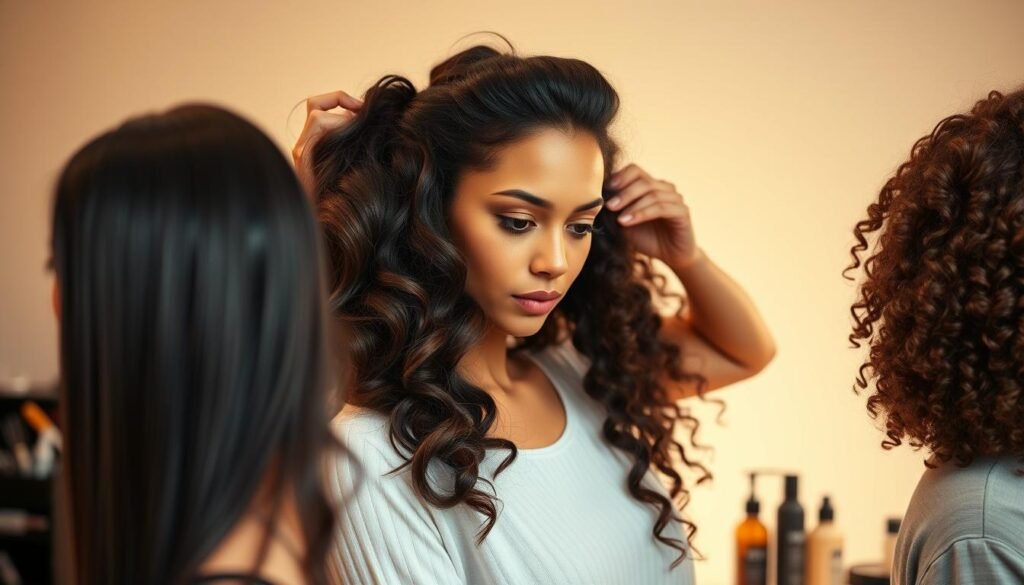
Once you understand the core principles of hair construction, applying them to various styles becomes an exciting exploration. Each hair type presents unique challenges and opportunities for artistic expression.
I dedicate significant time to studying diverse hair styles. This practice builds a mental library for creating authentic characters.
Variations: Curly, Wavy, and Braided Hair
For curly hair, I simplify the form using stipple shading. I render tiny, repeated curl patterns, spacing them out toward the light source.
This technique builds natural texture and volume effectively. Adding curls to the edges prevents a fake, smooth look.
Wavy hair requires a focus on flowing curves. I envision ocean waves with energy and movement.
My step step process for braids starts with a tapered centerline. I then build a zigzag template for the interwoven sections.
Studying different types hair textures is essential for any artist seeking versatility.
Overlap is crucial for a believable braid. I finalize the look by adding loose strands for realism.
Add Texture and Fine Details for Realism
The final step involves adding texture and fine details. This is where the hair truly comes to life.
One essential tip is to vary the direction of your lines. Uniformity flattens the form and makes the style look rigid.how-to-draw-hello-kitty
For example, short cropped hair has a prickly, carpet-like texture. Long, straight styles feature serene, elegant lines.
I am careful not to overdo these details. They should enhance the overall form, not distract from it.
| Hair Type | Primary Technique | Visual Feeling |
|---|---|---|
| Curly Hair | Stipple Shading, Repeated Patterns | Voluminous, Textured |
| Wavy Hair | Flowing Ribbon Curves | Energetic, Like Ocean Waves |
| Braided Hair | Step-by-Step Weaving | Structured, Intricate |
| Straight Hair | Simple, Elegant Lines | Calm, Serene |
Mastering these variations allows me to design characters with distinct personalities. Each style tells a different story.
Conclusion
This guide provides a clear path for your artistic journey. Confidence is the most important element for good design. Remember, lines alone do not create the illusion of volume.
Gradations in value that show plane changes build realistic form. Your focus should stay on the face, with areas of rest in the shadows. Variation at the edge between hair and skin is crucial.
Think of the skull’s base shape when working on overall value changes. Adding texture should not weaken the sense of volume. Confident strokes are always better than timid ones.
I urge you to practice these techniques regularly. For further inspiration, explore this excellent tutorial for artists. Keep studying different styles to build your visual library.
Mastering this subject takes time and patience. The reward is the ability to add life and personality to your characters. Your unique art will flourish.